
Bathroom Renovations in Hornsby - Realise Your Dream Bathroom Installation Project
Bathroom renovations are not just cosmetic changes that people invest into. They are also a way to make your bathroom more functional and comfortable. Bathroom renovations at your home in Hornsby can include things like changing the layout, adding new fixtures, or even installing a spa bathtub. However, bathroom renovations can be expensive if you don’t hire the right tradesmen for the job. Thankfully, Rectify Plumbing is here to help you with these renovations, and we’ve got a handy checklist to help make sure everything is done correctly.
Our team of plumbers can help you choose the perfect materials and budget for your bathroom remodelling project. Whether you need a full bathroom renovation in Hornsby, or just some handyman work done at your house, you can trust our tradesmen to provide you with the quality services you need. Call us for a free quote.
Same-Day Plumbing Services in Hornsby.
Get Your Plumbing Issues Resolved Today with Our Same-Day Service in Hornsby!
Emergency Plumbing Help Available 24/7.
Don't Let a Plumbing Emergency Wreak Havoc Contact Us 24/7 for immediate Help!
Quality Workmanship Guaranteed on All Jobs.
Experience the Best in Plumbing Service - Our Workmanship is Guaranteed on Every Job!
Affordable Pricing with No Hidden Fees.
Say Goodbye to Surprises and Hidden Fees. Affordable Plumbing Solutions!
rectify
our services

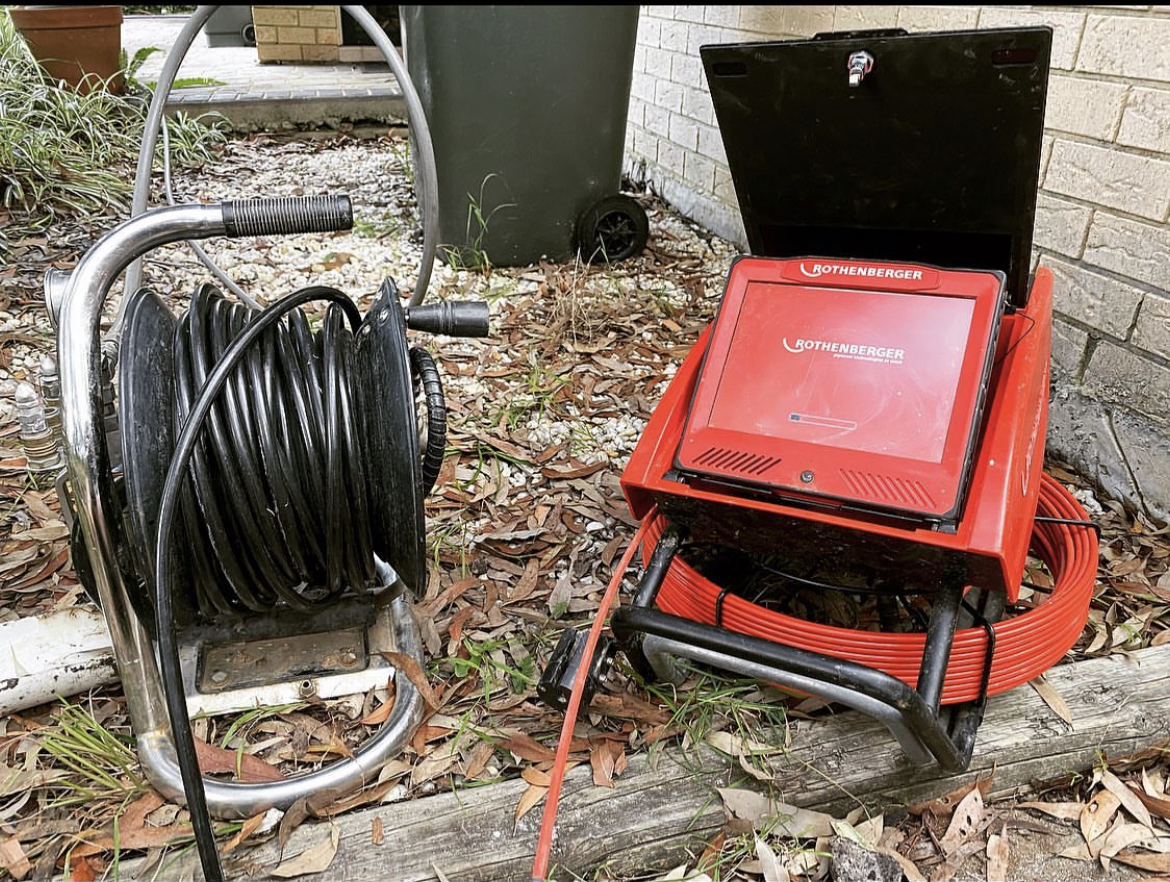

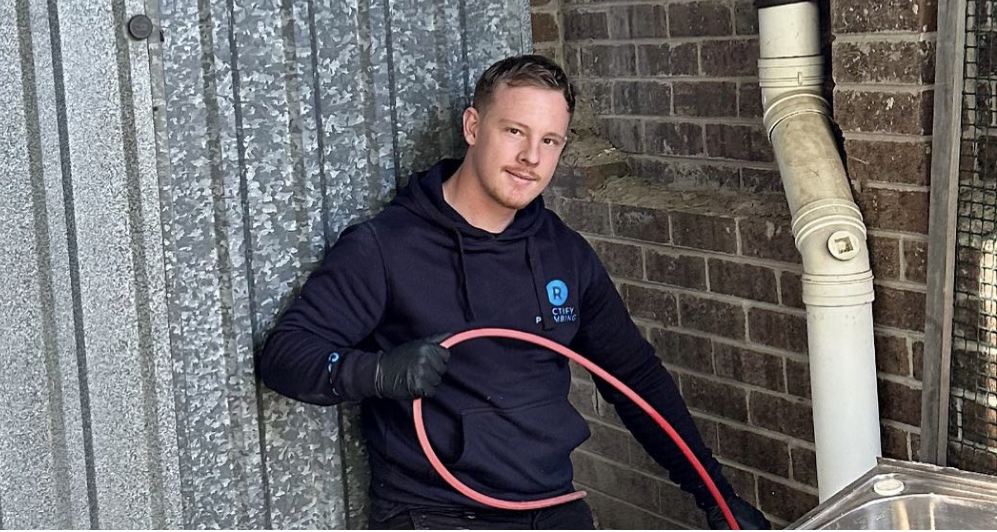


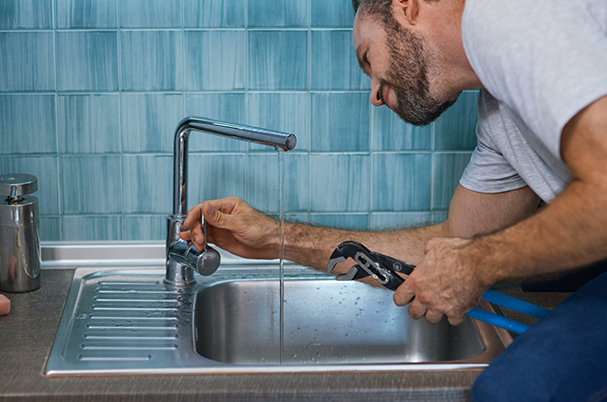

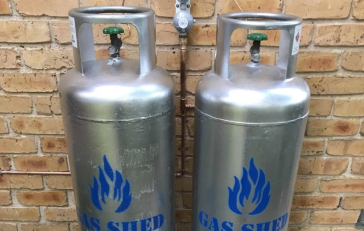

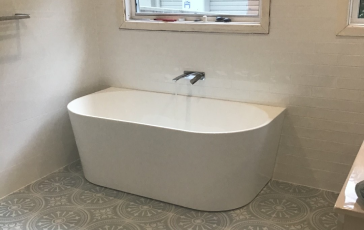

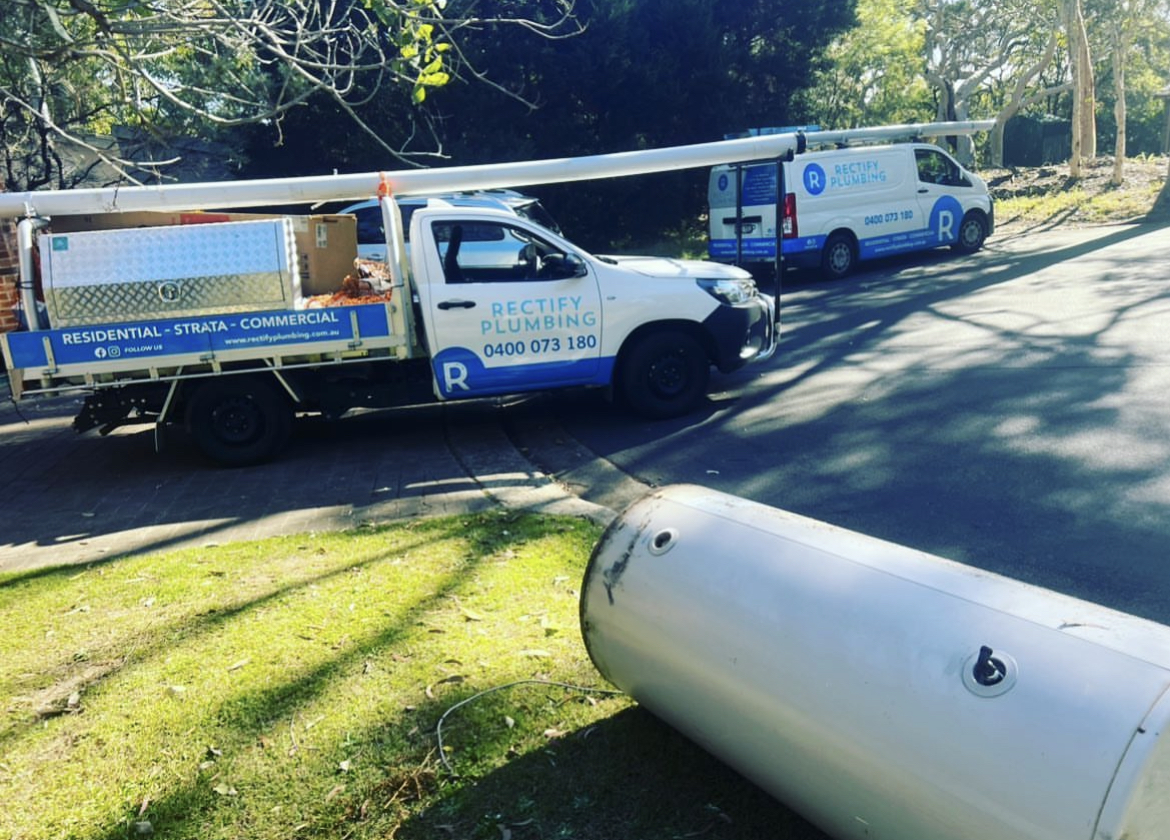

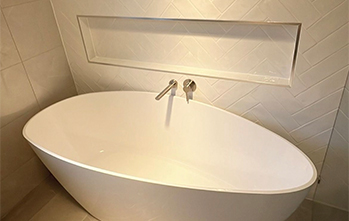










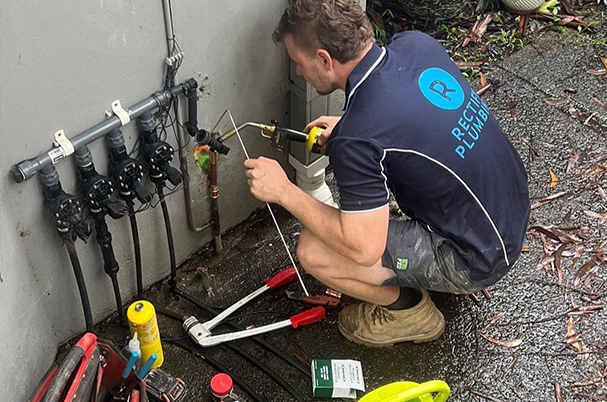
Get Your Plumbing Fixed In 4 Easy Steps.

Enquire Contact Us For A Free Quote

Get Expert Advice Consultation With Our Plumbing Specialists

Hassle Free Service Seamless Execution Of The Job

Job Done- Follow Up And Quality Assurance
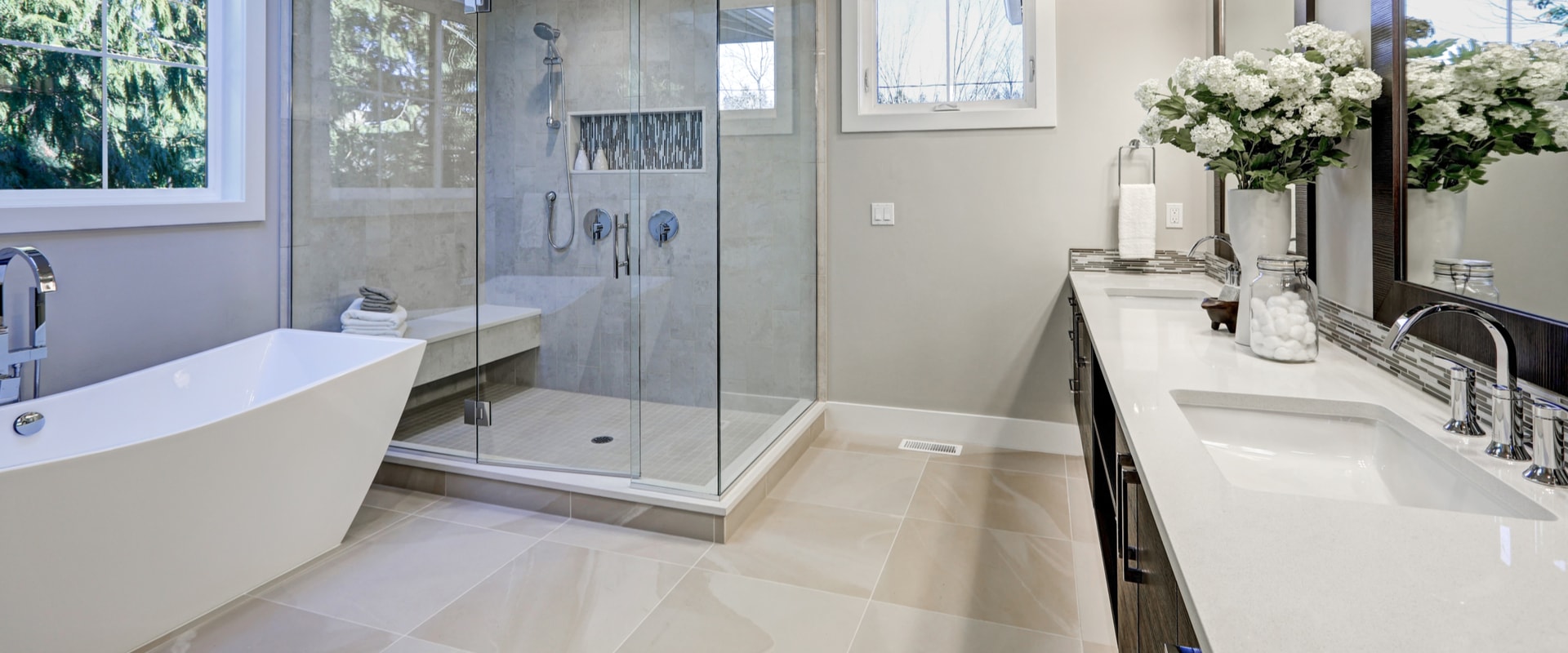
Custom Renovations - Get a Free & Detailed Consultation
Custom bathroom renovations are a great way to invest in your home - and make sure you're getting the most out of your money. They tend to be less expensive than a remodel, but more efficient than renovating an entire room. They can also make your bathroom seem brand new, without the need for many hours of construction.
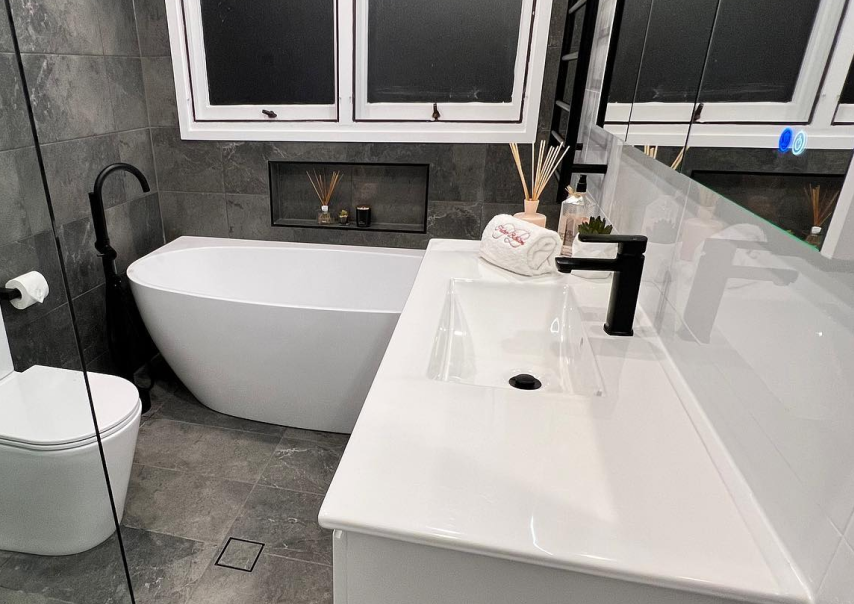
At Rectify Plumbing, we have a team of experts who can work on any custom bathroom renovations project in Hornsby and nearby suburbs. Over the years, we have helped many homeowners and businesses with the installation of their new bathrooms. Whether you prefer to install a new toilet, sink, bathtub, or shower enclosure with tile and glass partitions, our experienced team can help you achieve your dream bathroom. Rectify Plumbing can also renovate old bathrooms transforming them to amazing new ones. So, call us now and get a free quote!
Quick & Simple Bathroom Renovation Procedure
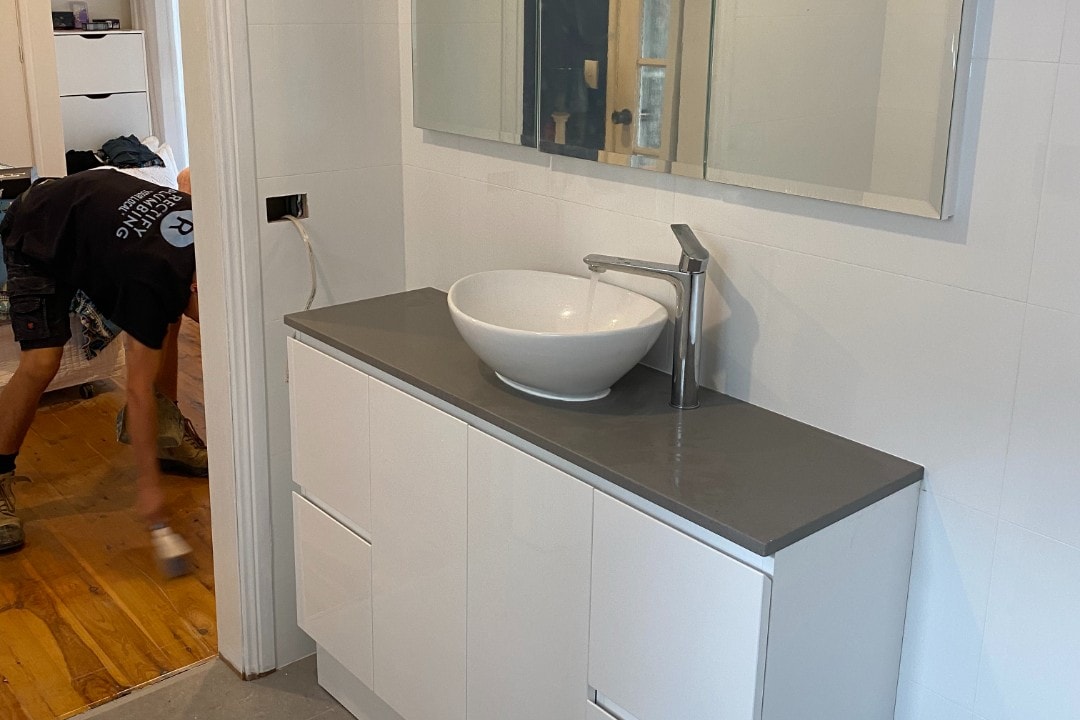
At Rectify Plumbing, the entire process of renovating the bathroom is simple and quick. We have the right team, tools & technology to make it a smooth process. Whether you want a fresh new look or a complete overhaul, we can do it. Our team of experts can help you with your bathroom renovation project and spare you the hassle and stress of dealing with different tradies..
- First, our team will assess the current situation of your bathroom and draw up an action plan.
- After that, we will start your bathroom renovations.
- Our specialists will help you choose materials and make suggestions on design schemes to create the perfect look for your new space.
Excellent Customer Support - It’s A Pleasure Working With You!
At Rectify Plumbing, we are focused on building close relationships with our clients across Hornsby and across NSW. We want to make sure that our customers feel like they are working with someone who understands their needs and wants them to be happy with their project.
Call us now on 0400 073 180 and get a free quote for your dream bathroom renovations project in Hornsby!
rectify
what our happy clients say
Rectify did all the renovation works for our bathrooms and laundry, and they truly live up to their name. Project can never be smooth and there are issues from time to time, Jake and his team always rectify these issues properly and in a timely manner. And he is very honest regarding what he can/can't do which we appreciate a lot.
Ying Chen
Rectify plumbing were friendly upfront and on time. Their communication was excellent and the tradesman identified the issue (leaking pipe underground) and got the job done with no fuss or BS. I recommend this plumbing company highly.
Stevo C
Incredibly professional, responsive and helpful. Great value plumbing service even on a Saturday call out. Big thanks to Jake and Jack for solving my tap issue quickly. Would absolutely recommend! ⭐️
Beth H

Latest Blog
05May
Best Licensed Gas Fitters in Hornsby: How to Verify and What It Costs (2026)
Unlicensed gas work in NSW carries fines of $5,500 to $25,000 under the Gas and Electricity (Consumer Safety) Act, and if anything goes wrong — a leak, an explosion, a carbon monoxide incident — your home insurance is almost always void. Insurers know this. They check. And when a claim sits on the wrong side of that licence boundary, they decline.
The hard part is that most Hornsby homeowners don't know how to tell whether the bloke quoting to install their new BBQ, replace their hot water system, or extend a gas line is actually licensed. The van might say "plumbing & gas." The website might mention "qualified team." None of that is verification. Licensing is.
Here's exactly how to verify a Hornsby gas fitter's NSW licence in 30 seconds, what gas work legally requires one, and what each common job actually costs in the Hornsby Shire in 2026. No marketing fluff, no padded scare tactics — just the information you need to hire someone you can trust around your gas meter.
 If you've owned a Hornsby home for a while, you've probably noticed that you get more gas-related plumbing issues than friends in newer Western Sydney estates. There's a reason.
A large share of the housing stock in Hornsby, Waitara, Asquith, Mount Colah and Hornsby Heights was built between the 1950s and the early 1980s. The original gas service pipes in those homes were typically wrought iron or early galvanised steel, designed for the appliances of the era. Sixty years on, those pipes have corroded internally, the threaded joints have worked loose with thermal cycling, and the rubber regulators at the meter have hardened.
At the same time, the appliances those homes were built around are reaching end of life — original gas hot water systems, old wall furnaces, ovens installed in the 1990s. The combination of ageing pipework and end-of-life appliances drives a constant stream of repair, replacement and compliance work.
The Energy & Water Ombudsman NSW reports that complaints related to gas appliance safety and installation defects have risen consistently across older Sydney suburbs over the past decade — the pattern matches what we see weekly across Hornsby Shire.
The honest read: if your home is older than 35 years and the gas appliances haven't been inspected this decade, it's not a question of if you'll need a licensed gas fitter, it's when.
If you've owned a Hornsby home for a while, you've probably noticed that you get more gas-related plumbing issues than friends in newer Western Sydney estates. There's a reason.
A large share of the housing stock in Hornsby, Waitara, Asquith, Mount Colah and Hornsby Heights was built between the 1950s and the early 1980s. The original gas service pipes in those homes were typically wrought iron or early galvanised steel, designed for the appliances of the era. Sixty years on, those pipes have corroded internally, the threaded joints have worked loose with thermal cycling, and the rubber regulators at the meter have hardened.
At the same time, the appliances those homes were built around are reaching end of life — original gas hot water systems, old wall furnaces, ovens installed in the 1990s. The combination of ageing pipework and end-of-life appliances drives a constant stream of repair, replacement and compliance work.
The Energy & Water Ombudsman NSW reports that complaints related to gas appliance safety and installation defects have risen consistently across older Sydney suburbs over the past decade — the pattern matches what we see weekly across Hornsby Shire.
The honest read: if your home is older than 35 years and the gas appliances haven't been inspected this decade, it's not a question of if you'll need a licensed gas fitter, it's when.
How to Verify a Gas Fitter's NSW Licence in 30 Seconds
There's exactly one place in NSW where licence verification lives — NSW Fair Trading's free public lookup tool. Anyone telling you otherwise (including the gas fitter themselves) is wrong.Step 1: Find the licence number on their van, business card, or website
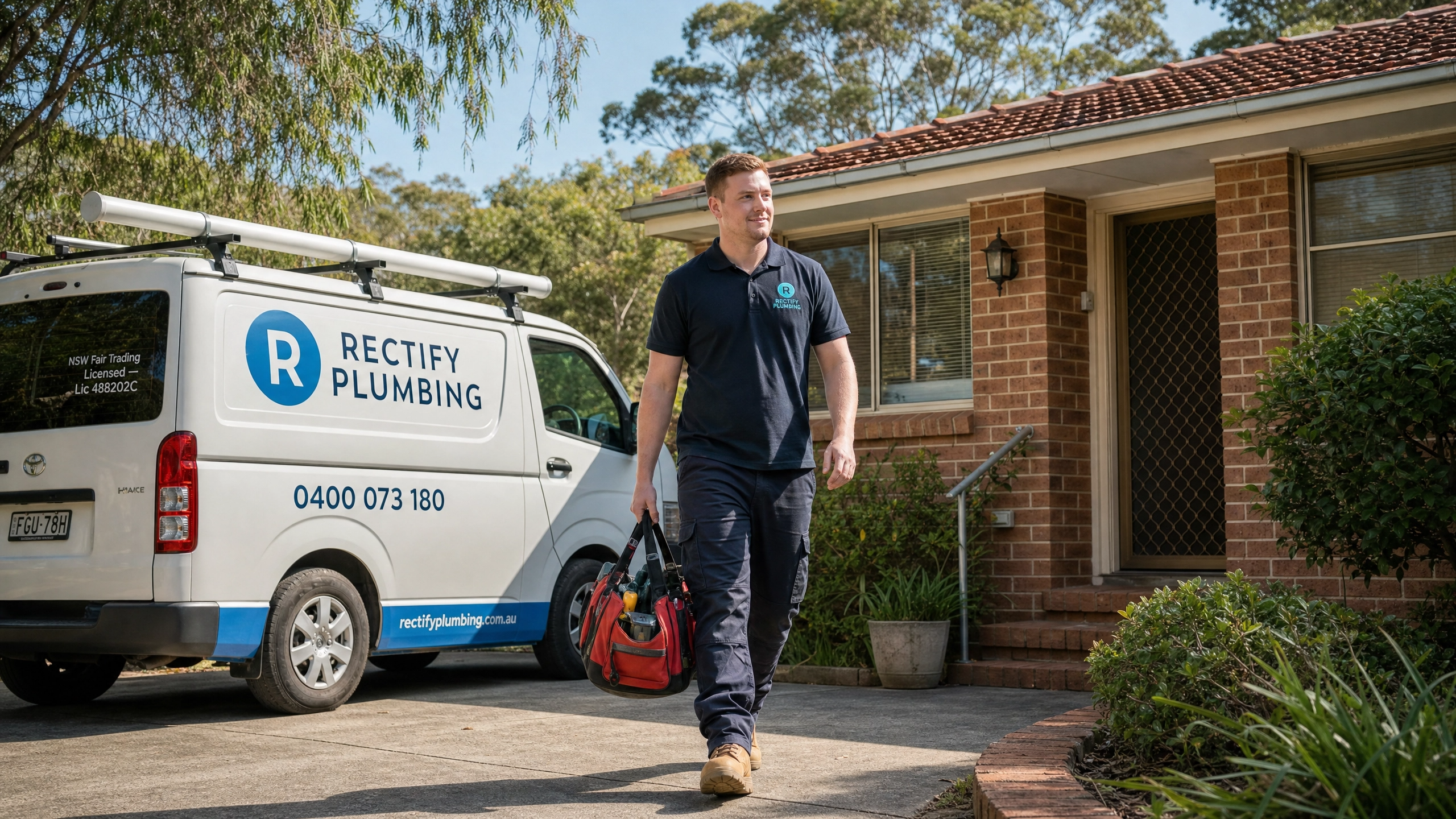
A legitimate NSW gas fitter is legally required to display their licence number on:- Their work vehicle (visible on the side, not just inside the cab)
- Their business card
- Their website footer or contact page
- Their written quote and invoice
Step 2: Go to NSW Fair Trading's licence check tool
Open fairtrading.nsw.gov.au — Check a licence on your phone. It's free, no login required, takes about 10 seconds to load.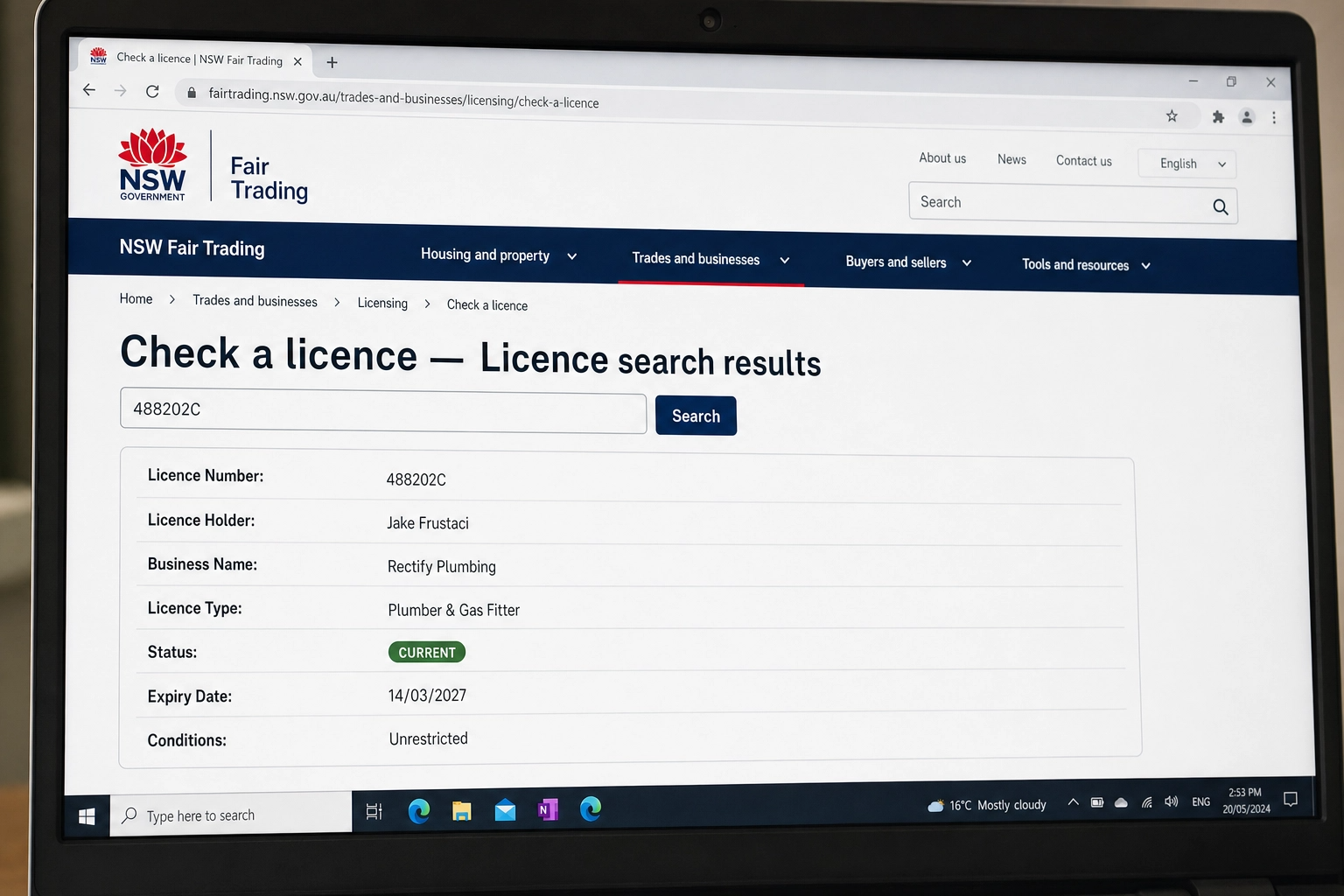
Step 3: Enter the number and match three things
Type in the licence number, hit search, and the result shows:- The licence holder's name (should match the person quoting you, or their business)
- The business name (should match the van or invoice)
- The status — must say "Current" and not be expired, suspended, or cancelled
- The conditions — which categories of gas work they're allowed to do
What "restricted" or "conditional" licences mean
Some NSW gas licences carry restrictions. The most common ones are:- Gas Fitting (Restricted) — limited to specific appliance types or work classes
- Conditional licences — issued during training or transition periods
- Endorsement-specific licences — for niche work like LPG installation only
Red flags before you even pick up the phone
You can usually spot a problem before you book:- No licence number anywhere visible — van, website, business card, Google profile
- Generic phone number (1300/1800) with no local Hornsby Shire address
- No ABN listed anywhere (Rectify's is 93 647 087 394 if you're checking)
- Reviews mention "quote changed on site" or "tried to upsell"
- Refuses to write the callout fee down before arriving
7 Things Only a Licensed Gas Fitter Can Legally Do in NSW
This is a short list because the law is short. If the work touches the gas system, a licensed gas fitter must do it. There are no DIY exceptions, no "small jobs" carve-outs, and no "handyman who used to be a plumber" workarounds.1. Install or replace any gas appliance
That includes hot water systems, gas cooktops, gas ovens, gas space heaters, BBQs that are hard-plumbed to natural gas, and pool heaters. Buying the appliance from a retailer doesn't change the rule — only a licensed gas fitter can connect it.2. Repair gas leaks — no exceptions
If you smell gas, the only legal path is to call the gas supplier (Jemena's emergency line is 131 909) to isolate supply, then have a licensed gas fitter repair the leak. Tightening a fitting yourself or using sealant tape is illegal and dangerous.3. Modify or extend gas lines
Adding a new gas outlet for an outdoor kitchen, extending a line for a fireplace, or relocating a stove all require a licensed gas fitter. Even moving the line by half a metre is regulated.4. Disconnect or reconnect gas at the meter
This includes the gas isolation work that's needed before a renovation, demolition, or any plumbing work near the gas line. Sydney Water and other tradies will not work near a gas line that hasn't been properly isolated by a licensed fitter.5. Certify gas work for insurance and property sales
When you sell a Hornsby home, the buyer's solicitor often requests a gas compliance certificate. Only a licensed gas fitter can issue one — and only after inspecting work they did themselves. If you've had unlicensed gas work in the past, this often surfaces at the worst possible time.6. LPG to natural gas appliance conversions
Common when you move from a regional property to a Hornsby home, or when a previous owner installed an LPG appliance and you've since had natural gas connected. Conversions require correct jets, regulator changes, and pressure testing — all licensed work.7. Test for gas leaks after a quake, tree fall, or major works
After ground movement (or after Sydney Water digs near your line for water mains work), a leak test is the only safe way to confirm your gas system is intact. Licensed gas fitter only — they have the calibrated pressure-test equipment and the legal authority to recertify the system.What Gas Work in Hornsby Specifically Costs (2026)
Honest pricing. These are real Hornsby Shire ranges from this year's jobs.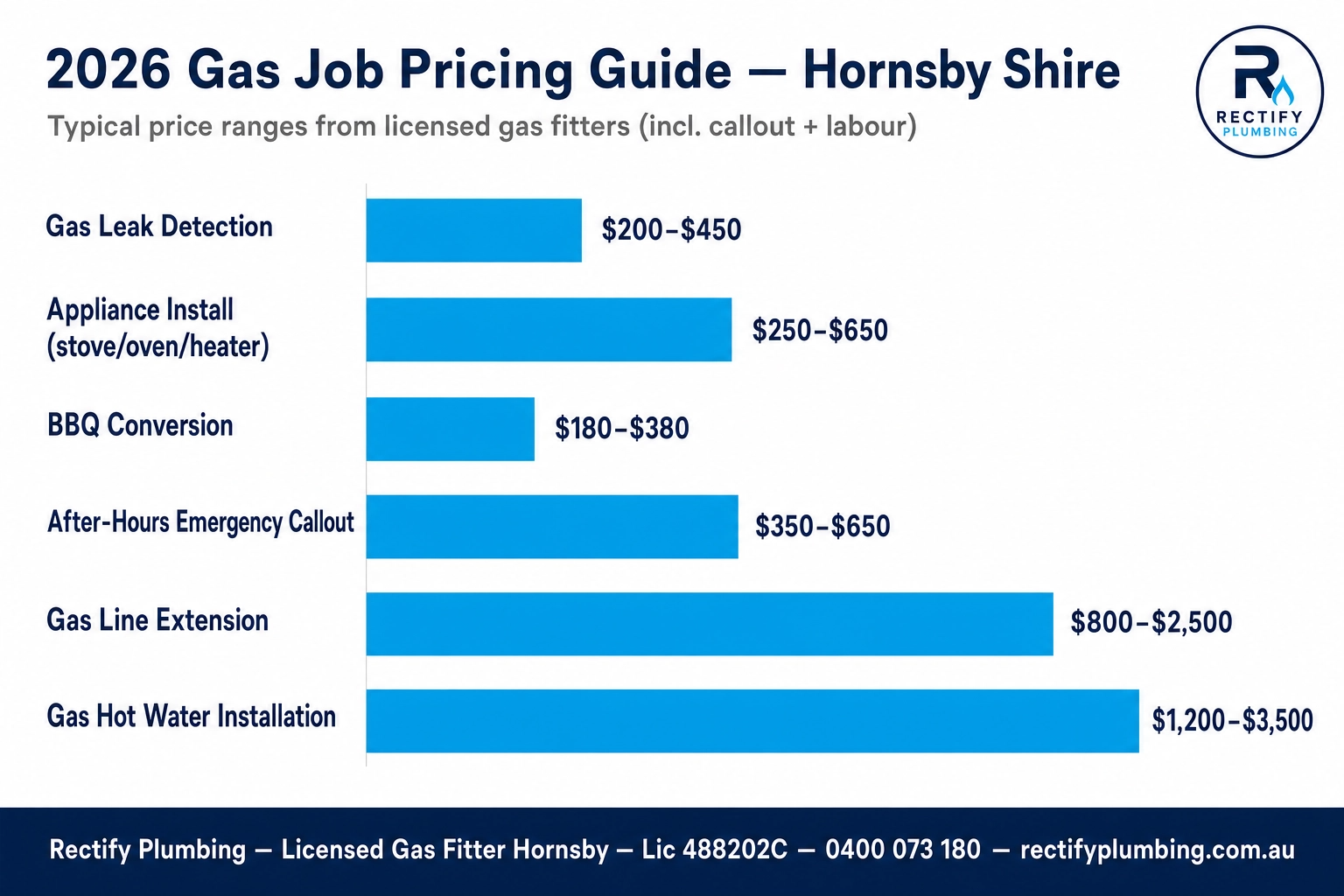
Standard gas leak detection callout: $200–$450
Licensed gas fitter arrives, isolates supply if needed, runs pressure test, locates the leak, gives a fixed-price quote for the repair. The callout fee covers diagnosis. Repair is quoted separately and confirmed before work starts.Gas hot water installation: $1,200–$3,500 supplied + installed
Range depends on system type (storage, continuous flow, heat pump), brand (Rinnai, Rheem, Dux, Bosch), and any extras like new gas line length or electrical work. We carry common units on the van for same-day swaps on most Hornsby callouts. See our hot water installation page for the brand and capacity-specific pricing.New gas appliance installation (stove, oven, heater): $250–$650
The appliance you've bought from Harvey Norman or Reece sits in the garage for a week because the retailer's installer can't get to you for ten days. We can fit a stove or oven in 60–90 minutes — but if the existing connection isn't compliant, expect another $150–$300 in upgrades.BBQ conversion (natural gas to LPG or vice versa): $180–$380
Includes the correct jet/orifice replacement, regulator change if needed, and pressure test. A 30-minute job for an experienced gas fitter, but absolutely not a DIY job — wrong jets cause incomplete combustion and carbon monoxide.New gas line extension: $800–$2,500
Depending on length, access, and whether it's running through walls, under floors, or external. Common quotes in Hornsby are for extending the line to a new outdoor kitchen, adding a gas heater in a renovated bathroom, or relocating the stove during a kitchen renovation.Emergency after-hours gas leak: $350–$650 callout + parts
If you smell gas at 2am, you call us, we attend within 30–45 minutes across Hornsby, Waitara, Asquith, Mount Colah and Hornsby Heights. The after-hours callout is higher than business hours — that's standard across the industry — but the repair pricing is exactly the same as daytime.Why Hornsby Has More Gas Service Calls Than Newer Suburbs
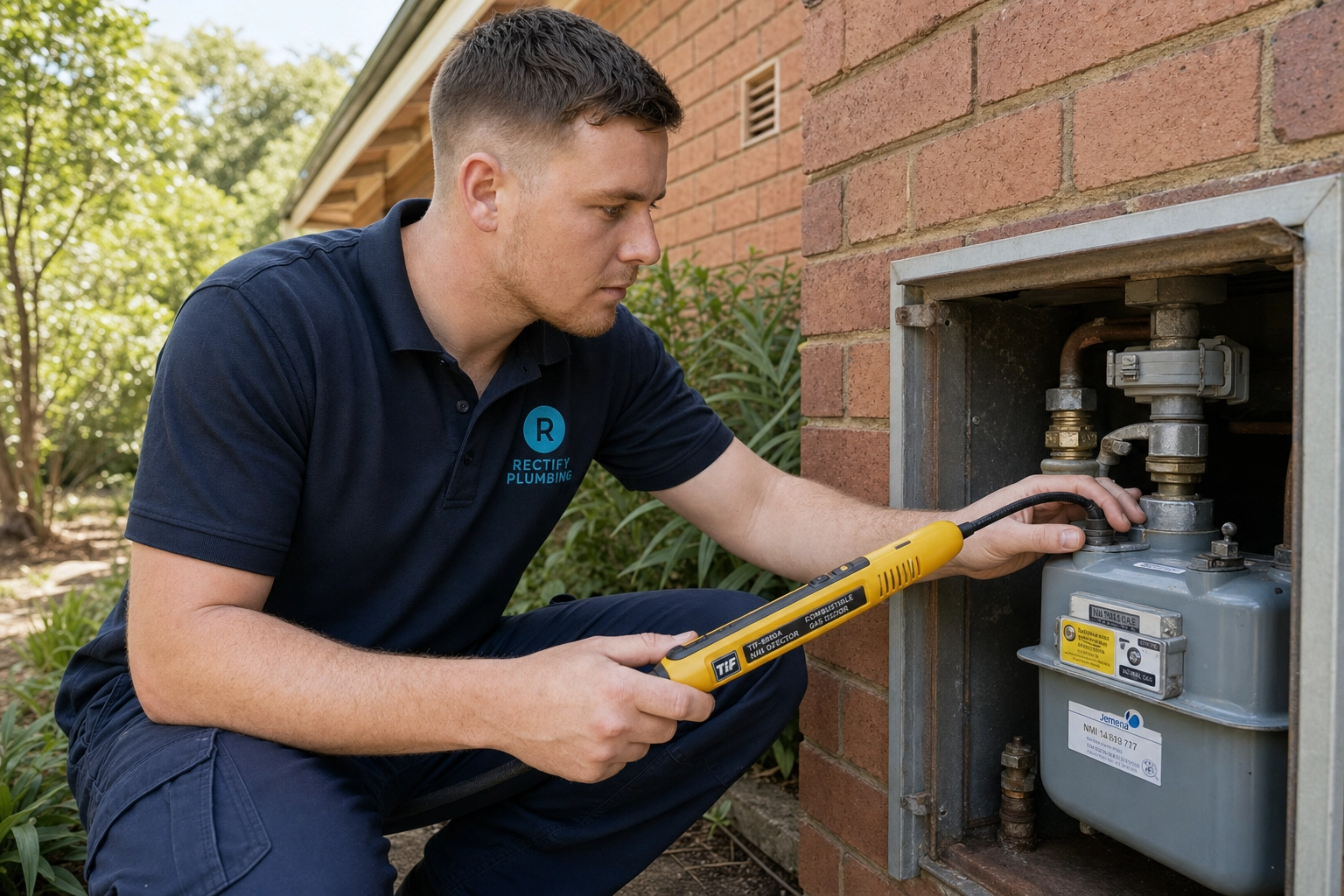 If you've owned a Hornsby home for a while, you've probably noticed that you get more gas-related plumbing issues than friends in newer Western Sydney estates. There's a reason.
A large share of the housing stock in Hornsby, Waitara, Asquith, Mount Colah and Hornsby Heights was built between the 1950s and the early 1980s. The original gas service pipes in those homes were typically wrought iron or early galvanised steel, designed for the appliances of the era. Sixty years on, those pipes have corroded internally, the threaded joints have worked loose with thermal cycling, and the rubber regulators at the meter have hardened.
At the same time, the appliances those homes were built around are reaching end of life — original gas hot water systems, old wall furnaces, ovens installed in the 1990s. The combination of ageing pipework and end-of-life appliances drives a constant stream of repair, replacement and compliance work.
The Energy & Water Ombudsman NSW reports that complaints related to gas appliance safety and installation defects have risen consistently across older Sydney suburbs over the past decade — the pattern matches what we see weekly across Hornsby Shire.
The honest read: if your home is older than 35 years and the gas appliances haven't been inspected this decade, it's not a question of if you'll need a licensed gas fitter, it's when.
If you've owned a Hornsby home for a while, you've probably noticed that you get more gas-related plumbing issues than friends in newer Western Sydney estates. There's a reason.
A large share of the housing stock in Hornsby, Waitara, Asquith, Mount Colah and Hornsby Heights was built between the 1950s and the early 1980s. The original gas service pipes in those homes were typically wrought iron or early galvanised steel, designed for the appliances of the era. Sixty years on, those pipes have corroded internally, the threaded joints have worked loose with thermal cycling, and the rubber regulators at the meter have hardened.
At the same time, the appliances those homes were built around are reaching end of life — original gas hot water systems, old wall furnaces, ovens installed in the 1990s. The combination of ageing pipework and end-of-life appliances drives a constant stream of repair, replacement and compliance work.
The Energy & Water Ombudsman NSW reports that complaints related to gas appliance safety and installation defects have risen consistently across older Sydney suburbs over the past decade — the pattern matches what we see weekly across Hornsby Shire.
The honest read: if your home is older than 35 years and the gas appliances haven't been inspected this decade, it's not a question of if you'll need a licensed gas fitter, it's when.
How to Choose Between 3 Quoted Hornsby Gas Fitters
You should always get at least two quotes for any gas job over $500. Here's how to compare them so price isn't the only factor.Compare licence numbers (cross-check each on NSW Fair Trading)
The 30-second check from Step 1 above. Three quotes, three licence numbers, three lookups. Any fitter who isn't on the register doesn't get a third look.Ask: "What's your gas work warranty?"
Standard for licensed work in NSW is 12 months on workmanship and the manufacturer's warranty on parts. Some fitters offer longer — Rectify warranties workmanship for 25 years on continuous-flow hot water installation. A 30-day warranty is a red flag.Ask: "Can I see your insurance certificate of currency?"
Public liability insurance for gas work is legally required — the minimum cover is $10 million. A current certificate of currency takes the fitter five minutes to send. If they hesitate or send something that doesn't say "current" with a clear expiry date, walk away.Ask: "Will you give me a written gas safety certificate when finished?"
For new appliance installations and major modifications, a signed gas safety certificate is your proof for insurance, council records, and future property sale. It costs nothing to provide if the work is licensed. Anyone who says "we don't do certificates" is telling you they're not doing licensed work.Look at recent Google reviews — filter for gas-related jobs
Sort the fitter's Google reviews by recent and skim for the word "gas." Read those specific reviews. A fitter with 200 plumbing reviews and zero gas-specific reviews probably doesn't do much gas work. You want recent, specific gas-related reviews that mention named appliances or types of work.Common Hornsby Gas Issues We See Weekly
The same five issues account for most of our Hornsby gas callouts:- Pilot light failure on older hot water systems — usually a worn thermocouple, occasionally a gas valve fault. Standard fix is the thermocouple replacement ($180–$280 all in)
- Gas smell at the meter after Sydney Water digs — ground movement loosens the meter-side fittings. Pressure test, retighten or replace fittings, recertify
- Leaking BBQ regulator — the small rubber diaphragm hardens over 5–8 years. Replacement is $80–$160 supplied + fitted
- Gas heater not igniting in winter — usually a pilot or ignition fault that's been dormant since last winter. Same-day diagnosis and repair
- LPG to natural gas conversion after renovation — common when a home gets connected to natural gas mains for the first time. Jet change on every appliance plus regulator change
Need a licensed gas fitter in Hornsby today? Call Jake direct on 0400 073 180. NSW Plumber & Gas Fitter Licence 488202C — verify it in 30 seconds at NSW Fair Trading before you call. We cover Hornsby, Waitara, Asquith, Mount Colah and Hornsby Heights, 24 hours a day.For more on what work specifically requires a licensed gas fitter in NSW, read our companion guide on gas plumbing in Sydney and what only a licensed gas fitter can legally do. If you're in or near Hornsby and need a general plumber as well as gas work, our Hornsby plumber page covers all services across the Hornsby Shire. For any other gas-related service we offer across Sydney, see the gas plumbers hub. ----------------------------------------------------------------------------------------------------------------------------------- [service_faqs]
30Apr
Is My Blocked Drain the Council’s Responsibility in Epping NSW? Here Is the Clear Answer
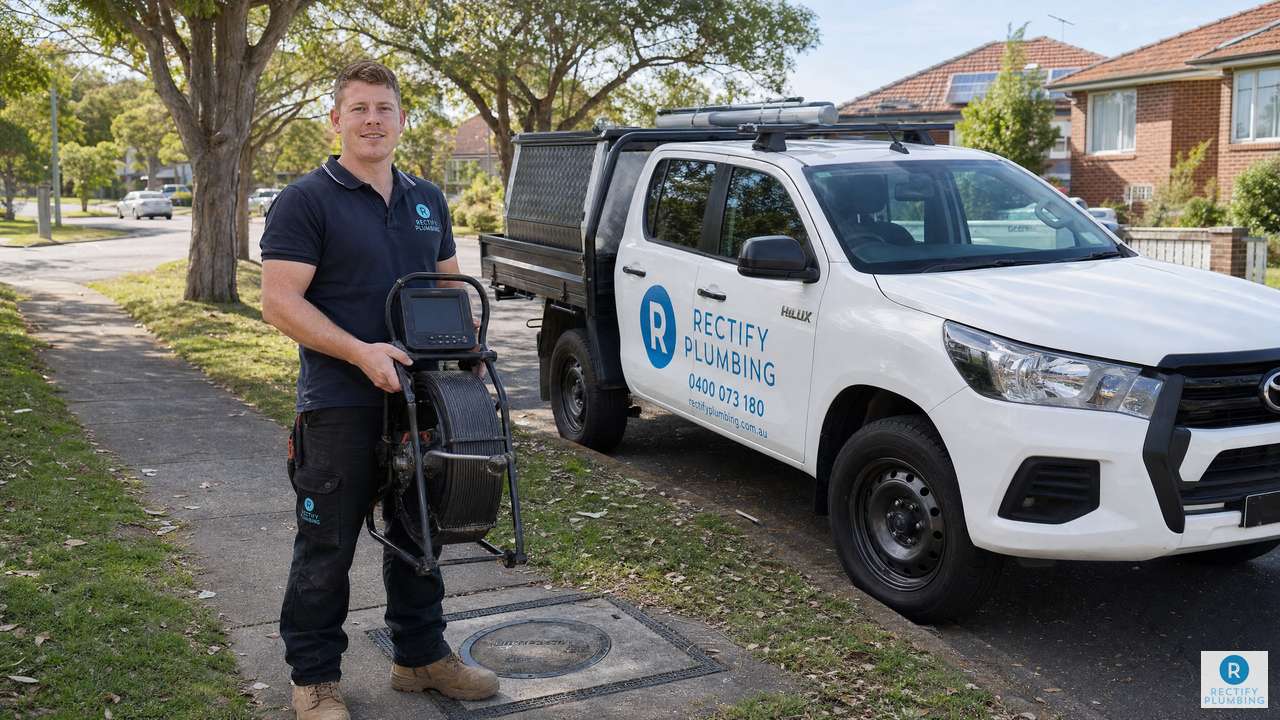
Quick answer: if your toilet, sink or shower is backing up inside the house, it is almost certainly your drain — not the council's. But it is worth confirming before you pay anyone to fix it. Call 0400 073 180 and we can help you work out which side of the line the problem is on.It is one of the most common questions we get from Epping homeowners who are dealing with a drain problem and are not sure what to do next. The short answer is that the majority of residential drain blockages — including most of the ones that affect toilets, sinks, showers and laundries — are on the homeowner's side of the responsibility line and are therefore yours to fix. But the full answer is more useful than that. Understanding exactly where that responsibility line sits, what is on each side of it, and how to confirm which side your specific problem is on will save you time, money and the frustration of paying a plumber to clear a drain that the council should have fixed — or worse, spending weeks trying to get the council to fix a drain that is actually your responsibility. This guide covers the NSW drainage responsibility framework as it applies to Epping and Hornsby Shire properties specifically, the practical steps to confirm where your blockage is, and what to do depending on what you find. For emergency blocked drain situations in Epping, see our emergency blocked drain service or our guide on blocked drains in Epping NSW.
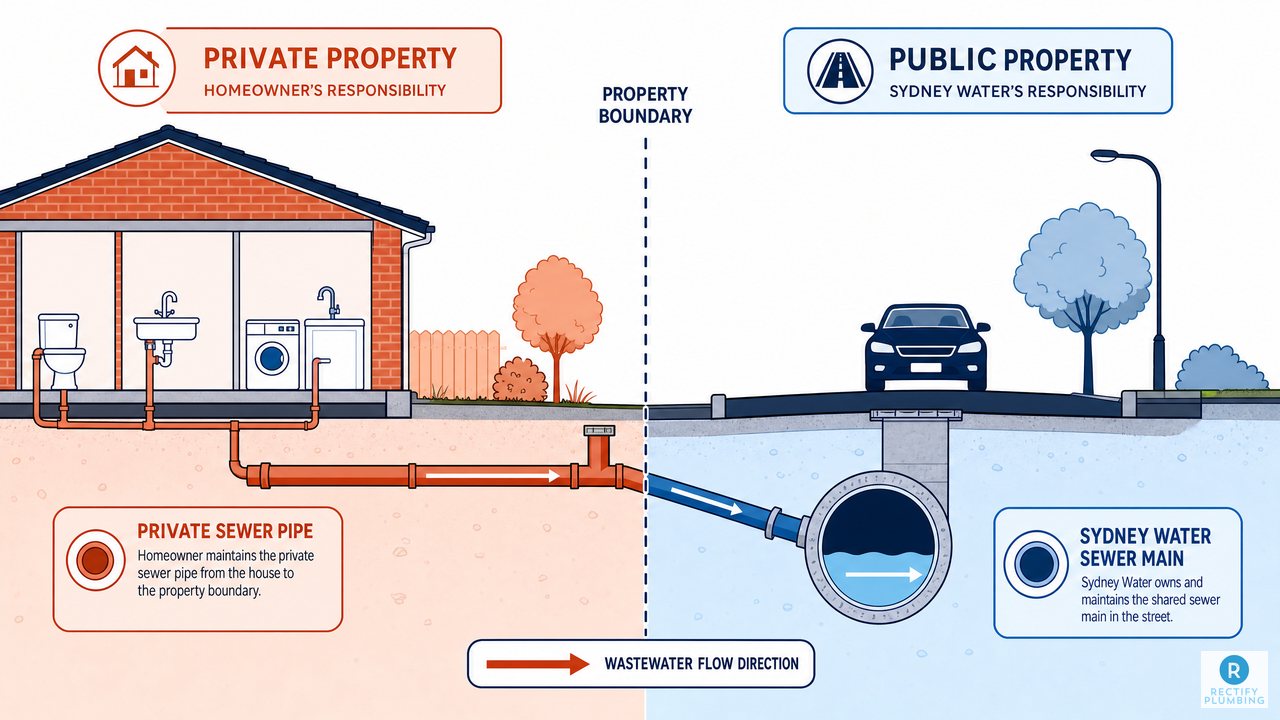 Two Separate Drainage Systems Run Under Every Epping Property
The Sewer System — Wastewater
The first system is the sewer network, which carries wastewater from bathrooms, kitchens and laundries to Sydney Water's treatment facilities. Every home in Epping is connected to this network. Sydney Water owns and operates the public sewer main — the large shared pipe that typically runs under the street and collects wastewater from multiple properties along the road.
Your private connection to that main runs from the public sewer main to your house. This private connection pipe runs through your yard and under your home. It is your responsibility to maintain and repair, not Sydney Water's — with one small exception that we will explain below.
The Stormwater System — Rainwater
The second system is the stormwater network, which carries rainwater from roofs, driveways and surface areas away from properties and into creeks, waterways and eventually the ocean. The public stormwater pipes in streets and public land are the responsibility of Hornsby Shire Council. The private stormwater pipes within your property — roof gutters, downpipes, surface drains and any stormwater pipes running through your yard — are your responsibility.
The two systems are completely separate and should never be connected. If wastewater enters the stormwater system (known as a cross-connection), that is a serious issue that both Sydney Water and Council take seriously. It is illegal and the homeowner is responsible for remediation.
Key point: If your toilet, sink or shower is backing up, you are dealing with the sewer system. If your yard floods after rain or your surface drains are not taking water away, you may be dealing with stormwater. The two systems have different responsibility frameworks and different reporting channels.
Who Is Responsible for What — The Complete Epping Breakdown
This table summarises the responsibility framework for drainage in Epping under NSW law. Use it as a quick reference before calling anyone.
Two Separate Drainage Systems Run Under Every Epping Property
The Sewer System — Wastewater
The first system is the sewer network, which carries wastewater from bathrooms, kitchens and laundries to Sydney Water's treatment facilities. Every home in Epping is connected to this network. Sydney Water owns and operates the public sewer main — the large shared pipe that typically runs under the street and collects wastewater from multiple properties along the road.
Your private connection to that main runs from the public sewer main to your house. This private connection pipe runs through your yard and under your home. It is your responsibility to maintain and repair, not Sydney Water's — with one small exception that we will explain below.
The Stormwater System — Rainwater
The second system is the stormwater network, which carries rainwater from roofs, driveways and surface areas away from properties and into creeks, waterways and eventually the ocean. The public stormwater pipes in streets and public land are the responsibility of Hornsby Shire Council. The private stormwater pipes within your property — roof gutters, downpipes, surface drains and any stormwater pipes running through your yard — are your responsibility.
The two systems are completely separate and should never be connected. If wastewater enters the stormwater system (known as a cross-connection), that is a serious issue that both Sydney Water and Council take seriously. It is illegal and the homeowner is responsible for remediation.
Key point: If your toilet, sink or shower is backing up, you are dealing with the sewer system. If your yard floods after rain or your surface drains are not taking water away, you may be dealing with stormwater. The two systems have different responsibility frameworks and different reporting channels.
Who Is Responsible for What — The Complete Epping Breakdown
This table summarises the responsibility framework for drainage in Epping under NSW law. Use it as a quick reference before calling anyone.
| Drainage Zone | Responsible Party | Examples |
| All pipes inside your home | YOU | Kitchen drain, bathroom drain, toilet waste pipe, laundry drain, hot water overflow |
| Private sewer pipe — yard | YOU | Drain pipe running under your garden or driveway from house to boundary |
| Connection to public main | SYDNEY WATER | The section from the public main to approx. 1m inside your property boundary |
| Public sewer main | SYDNEY WATER | Large shared pipe under the street. Call 13 20 92 to report faults |
| Private stormwater pipes | YOU | Roof gutters, downpipes, surface drains, stormwater pipes in your yard |
| Public stormwater network | HORNSBY COUNCIL | Street drains, kerb inlets, stormwater pipes in roads and footpaths |
| Shared pipes in easements | SYDNEY WATER | Sewer pipes shared between multiple properties — report via Sydney Water |
How to Tell Which Side of the Line Your Epping Blockage Is On
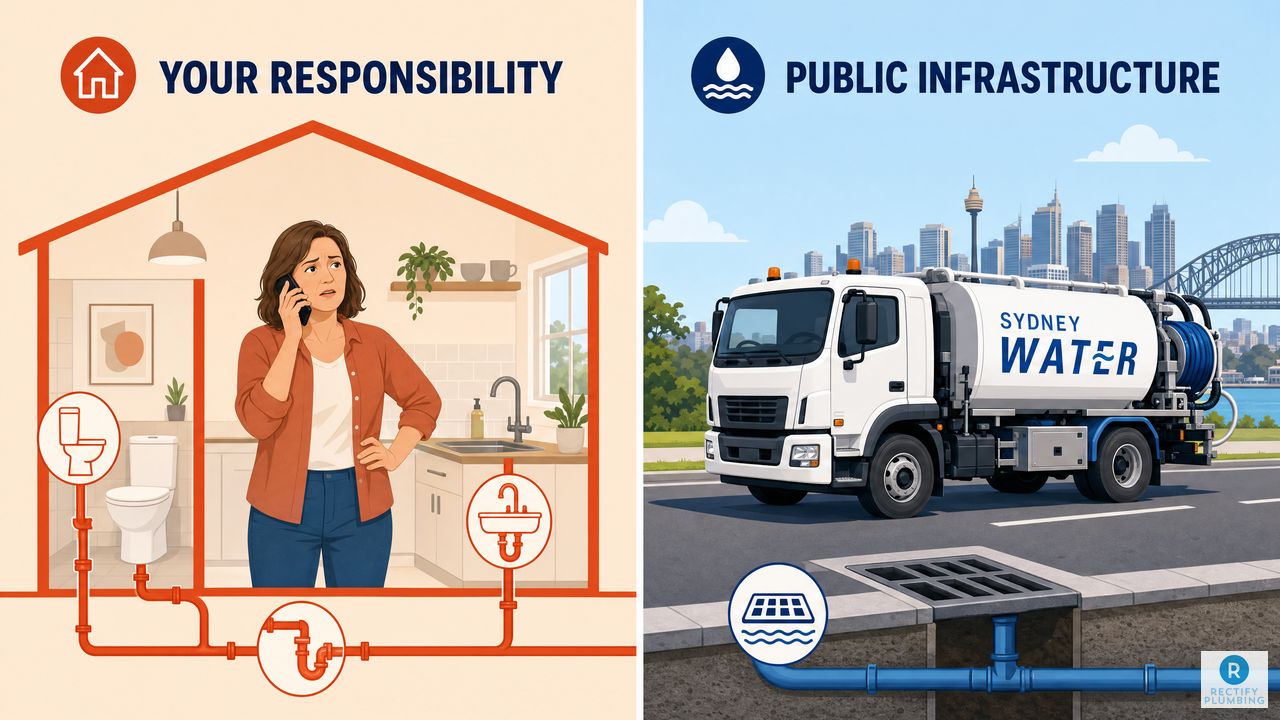
Signs It Is Almost Certainly Your Drain If any of the following describe your situation, the blockage is almost certainly within your private sewer drainage — which means it is your responsibility to fix and a licensed plumber is the right first call.- One or more toilets in the house will not flush or are backing up when flushed.
- The kitchen sink, bathroom sink or shower is draining slowly or not at all.
- You can hear gurgling sounds from drains that are not being used — particularly from the shower when you flush the toilet.
- You can smell sewage inside the house, even intermittently.
- Water is backing up through a floor waste drain inside the property.
- Multiple fixtures in the house are affected at the same time — this typically indicates a blockage in the main drain line rather than an individual fixture pipe.
- Signs It Might Be a Council or Sydney Water Issue
The following situations are more likely to indicate a problem with public infrastructure — though they still need to be confirmed before assuming the council will fix them.
- Your yard is flooding after heavy rain and the street drain directly in front of your property is visibly blocked with debris or overflowing.
- Multiple neighbours on the same street are experiencing the same drainage problem at the same time.
- Your house drains are working normally but water is pooling in the street and not draining through the kerb inlet.
- A camera inspection of your private drain pipes shows all pipes are clear within your property boundary — the problem is further down the line than your pipes reach.
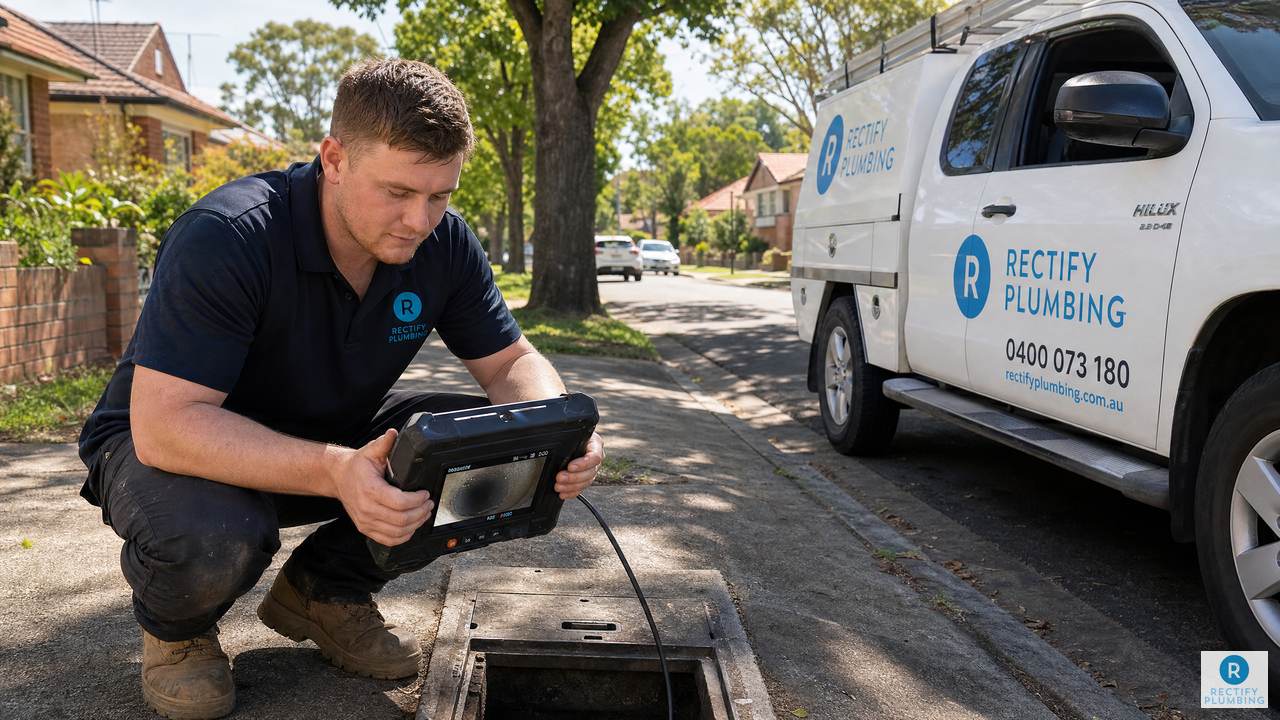 Quick tip: Keep a copy of the camera inspection report and footage. If you need to report a public drainage issue, documented evidence from a camera inspection significantly speeds up the response from Sydney Water or Council compared to a verbal description of the problem.
The Grey Areas — Shared Pipes and Easements in Epping
What Is a Drainage Easement?
A drainage easement is a legal right for a pipe to run through a property that belongs to someone else. In Epping and the surrounding Hornsby Shire, drainage easements are not uncommon in older suburbs where the sewer network was built before property boundaries were finalised or where the most practical pipe route runs through multiple private lots. If your property has a drainage easement — and many Epping properties do without the owners being fully aware — there may be a shared sewer pipe running through your yard that is Sydney Water's responsibility to maintain, not yours.
Your property title documents and the deposited plan held by Land Registry Services NSW will show any easements on your land. If you are uncertain, contact Sydney Water or your solicitor — easements are a legal interest in land and are disclosed on title searches.
What Happens If Two Neighbours Share a Private Drain?
In older Epping properties particularly, it is sometimes the case that a drain pipe runs from one property through or under an adjacent property before connecting to the public main. In these configurations, maintenance responsibility can become genuinely complicated — it depends on the specific easement conditions, whether the pipe is registered with Sydney Water as a shared private pipe, and what agreements if any exist between the property owners.
If you believe you have a shared drain situation and you are uncertain about your responsibilities, a camera inspection documents the pipe layout clearly and gives you accurate information to take to Sydney Water or a solicitor for guidance. We regularly identify shared pipe configurations during camera inspections in older Epping streets and can explain what we find clearly.
Preventing Drain Blockages in Epping — Regardless of Responsibility
Whether a drain blockage is yours to fix or the council's, prevention is always better than the alternative. Here is what actually reduces the frequency of drain problems in Epping residential properties.
Quick tip: Keep a copy of the camera inspection report and footage. If you need to report a public drainage issue, documented evidence from a camera inspection significantly speeds up the response from Sydney Water or Council compared to a verbal description of the problem.
The Grey Areas — Shared Pipes and Easements in Epping
What Is a Drainage Easement?
A drainage easement is a legal right for a pipe to run through a property that belongs to someone else. In Epping and the surrounding Hornsby Shire, drainage easements are not uncommon in older suburbs where the sewer network was built before property boundaries were finalised or where the most practical pipe route runs through multiple private lots. If your property has a drainage easement — and many Epping properties do without the owners being fully aware — there may be a shared sewer pipe running through your yard that is Sydney Water's responsibility to maintain, not yours.
Your property title documents and the deposited plan held by Land Registry Services NSW will show any easements on your land. If you are uncertain, contact Sydney Water or your solicitor — easements are a legal interest in land and are disclosed on title searches.
What Happens If Two Neighbours Share a Private Drain?
In older Epping properties particularly, it is sometimes the case that a drain pipe runs from one property through or under an adjacent property before connecting to the public main. In these configurations, maintenance responsibility can become genuinely complicated — it depends on the specific easement conditions, whether the pipe is registered with Sydney Water as a shared private pipe, and what agreements if any exist between the property owners.
If you believe you have a shared drain situation and you are uncertain about your responsibilities, a camera inspection documents the pipe layout clearly and gives you accurate information to take to Sydney Water or a solicitor for guidance. We regularly identify shared pipe configurations during camera inspections in older Epping streets and can explain what we find clearly.
Preventing Drain Blockages in Epping — Regardless of Responsibility
Whether a drain blockage is yours to fix or the council's, prevention is always better than the alternative. Here is what actually reduces the frequency of drain problems in Epping residential properties.
- Annual camera inspection for any Epping home over 30 years old with established trees near the sewer line. A
- Drain screens in all shower, bath and kitchen drains. Hair and food debris blockages are almost entirely preventable with a screen that takes two minutes to clean.
- No cooking fat down the kitchen sink. Grease solidifies inside clay and older PVC pipes, progressively narrowing the bore until flow is restricted and a blockage forms.
- Only toilet paper in the toilet. Wet wipes — including those labelled flushable — do not break down in pipes the way toilet paper does. We remove them from drain pipes in Epping properties regularly.
- Address a slow-draining fixture as soon as you notice it, rather than waiting for it to block completely. A partial blockage costs far less to clear than a complete one.
- If you have established fig trees, jacarandas or other large species within 10 metres of your sewer line, the risk of root intrusion is real and ongoing. Annual camera inspection is the most cost-effective way to catch it early.
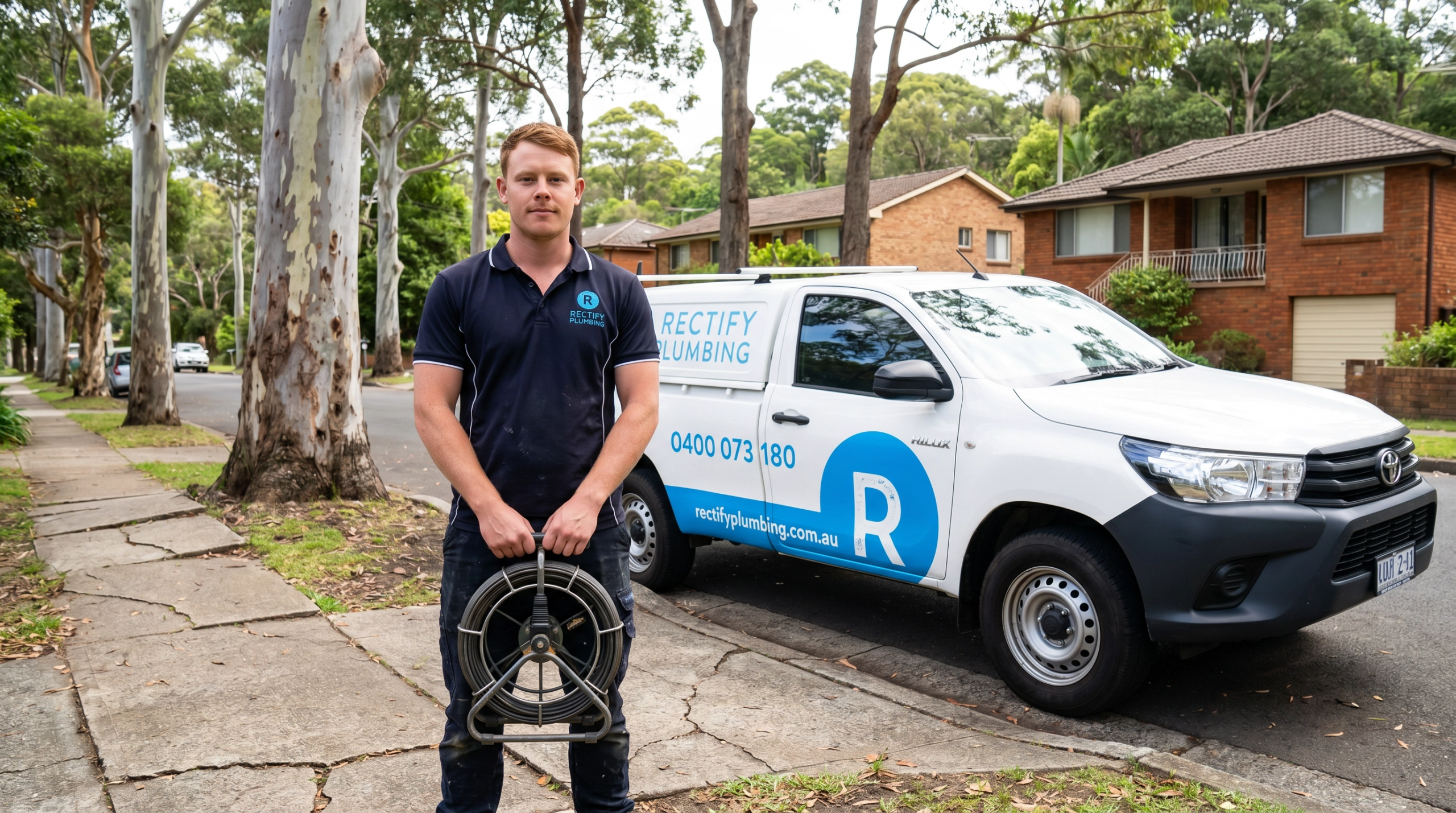
25Apr
Why Do My Drains Keep Blocking in Hornsby? The Real Reasons — and the Permanent Fix
Same Hornsby drain blocked more than twice in 12 months? A camera inspection is the only way to find out why it keeps coming back. Call 0400 073 180 — we cover Hornsby, Waitara, Asquith, Mount Colah and Hornsby Heights.
If you're asking this question, the drain has probably already been cleared at least once. Maybe twice. You paid the callout fee, the plumber cleared it, everything was fine for a few months, and then it blocked again. You don't want another quick fix. You want to know why it keeps happening.
For Hornsby homeowners, the answer almost always comes down to two things specific to this suburb: the age of the drainage pipes under your property, and the size of the trees above them. Once you understand how those two factors work together, you understand why clearing alone will never be the permanent answer.
This guide covers the real causes of recurring drain blockages in Hornsby, how to diagnose which one you are dealing with, what clearing does versus what relining does, and what the right fix looks like for your property. For drain blockages that have become a genuine emergency — sewage backing up inside the house or total loss of drainage — see our emergency blocked drain service or our guide on emergency plumbing in Hornsby.
 When Excavation Is Actually the Right Answer
There are circumstances where excavation is the correct approach, and being honest about this is part of giving homeowners a useful recommendation. If a pipe section has collapsed completely — not just cracked or sagged, but physically crushed or broken to the point where a resin liner cannot be inserted — excavation to replace that section is necessary. This is a less common finding than root intrusion or cracking, but it does occur in very old clay pipe systems that have had significant ground movement or tree root pressure over many decades.
When the camera identifies a collapsed section, we show you the footage, explain the finding clearly, and give you a fixed-price quote for the remediation before any work begins. We also identify whether the collapsed section is isolated or part of a broader pipe condition issue that requires a more comprehensive approach.
The Real Cost Comparison
The question homeowners ask most often is whether relining is worth the higher upfront cost compared to continued clearing. The honest answer depends on the specific situation, but here is the framework we use. If the camera shows a single root entry point and the surrounding pipe is in reasonable condition, relining that section permanently closes the entry point for 50 years. If you have been paying $300 to $500 for clearing callouts every six months, the relining cost is recovered within two to three years and you never pay another clearing callout for that entry point.
If the camera shows multiple entry points across a longer pipe run, a longer relining job is more expensive but the same principle applies — one job versus an ongoing series of clearing callouts that never fix the underlying problem. We give you all of this information transparently so you can make an informed decision rather than committing to relining without understanding why it is being recommended.
What Does Not Work — and Why Some Advice Is Wrong
Copper Sulphate Treatments
Copper sulphate crystals are sometimes marketed as a way to kill tree roots in drain pipes. They work by killing the root tips that are already inside the pipe, which can temporarily reduce regrowth. However, they do not repair the entry point the roots used to get into the pipe, they do not kill the root system of the tree — which simply sends new growth — and they can corrode older pipe materials if used repeatedly. The Hornsby Council tree preservation framework also means that treatments affecting the root systems of protected trees require care. Copper sulphate is at best a temporary measure and at worst accelerates pipe deterioration.
Chemical Drain Cleaners
Supermarket chemical drain cleaners are not effective against tree root intrusion. They are formulated to dissolve organic matter like grease and hair — they have no meaningful effect on established root growth. On older clay or galvanised pipes, repeated chemical treatment can accelerate corrosion. They are also a safety hazard for any plumber who subsequently works on the pipe and finds it full of caustic chemicals. If your Hornsby drain is blocking repeatedly, chemical cleaners will not help and may make the situation more difficult to address.
Clearing Without a Camera
Clearing a drain without a camera inspection first is legitimate for a single one-off blockage that has no history. For a drain that has blocked before, or where there is any reason to suspect structural pipe damage, clearing without a camera investigation treats the symptom and leaves the cause in place. This is not a character failing of the plumber — it is a scope-of-service decision. If you are asking a plumber to clear a drain, that is what they will do. If you want to know why it keeps blocking, ask specifically for a camera inspection as part of the job.
Quick tip: When calling about a blocked drain in Hornsby that has blocked before, specifically request a CCTV camera inspection as part of the job — not just a clearing. A camera inspection before clearing gives you the most useful information about the cause.
Keeping Hornsby Drains Clear — What Actually Helps
For Hornsby homes with older clay pipe systems and established tree canopy, there is no set-and-forget solution. But there is a maintenance approach that significantly reduces the frequency and severity of drain problems.
When Excavation Is Actually the Right Answer
There are circumstances where excavation is the correct approach, and being honest about this is part of giving homeowners a useful recommendation. If a pipe section has collapsed completely — not just cracked or sagged, but physically crushed or broken to the point where a resin liner cannot be inserted — excavation to replace that section is necessary. This is a less common finding than root intrusion or cracking, but it does occur in very old clay pipe systems that have had significant ground movement or tree root pressure over many decades.
When the camera identifies a collapsed section, we show you the footage, explain the finding clearly, and give you a fixed-price quote for the remediation before any work begins. We also identify whether the collapsed section is isolated or part of a broader pipe condition issue that requires a more comprehensive approach.
The Real Cost Comparison
The question homeowners ask most often is whether relining is worth the higher upfront cost compared to continued clearing. The honest answer depends on the specific situation, but here is the framework we use. If the camera shows a single root entry point and the surrounding pipe is in reasonable condition, relining that section permanently closes the entry point for 50 years. If you have been paying $300 to $500 for clearing callouts every six months, the relining cost is recovered within two to three years and you never pay another clearing callout for that entry point.
If the camera shows multiple entry points across a longer pipe run, a longer relining job is more expensive but the same principle applies — one job versus an ongoing series of clearing callouts that never fix the underlying problem. We give you all of this information transparently so you can make an informed decision rather than committing to relining without understanding why it is being recommended.
What Does Not Work — and Why Some Advice Is Wrong
Copper Sulphate Treatments
Copper sulphate crystals are sometimes marketed as a way to kill tree roots in drain pipes. They work by killing the root tips that are already inside the pipe, which can temporarily reduce regrowth. However, they do not repair the entry point the roots used to get into the pipe, they do not kill the root system of the tree — which simply sends new growth — and they can corrode older pipe materials if used repeatedly. The Hornsby Council tree preservation framework also means that treatments affecting the root systems of protected trees require care. Copper sulphate is at best a temporary measure and at worst accelerates pipe deterioration.
Chemical Drain Cleaners
Supermarket chemical drain cleaners are not effective against tree root intrusion. They are formulated to dissolve organic matter like grease and hair — they have no meaningful effect on established root growth. On older clay or galvanised pipes, repeated chemical treatment can accelerate corrosion. They are also a safety hazard for any plumber who subsequently works on the pipe and finds it full of caustic chemicals. If your Hornsby drain is blocking repeatedly, chemical cleaners will not help and may make the situation more difficult to address.
Clearing Without a Camera
Clearing a drain without a camera inspection first is legitimate for a single one-off blockage that has no history. For a drain that has blocked before, or where there is any reason to suspect structural pipe damage, clearing without a camera investigation treats the symptom and leaves the cause in place. This is not a character failing of the plumber — it is a scope-of-service decision. If you are asking a plumber to clear a drain, that is what they will do. If you want to know why it keeps blocking, ask specifically for a camera inspection as part of the job.
Quick tip: When calling about a blocked drain in Hornsby that has blocked before, specifically request a CCTV camera inspection as part of the job — not just a clearing. A camera inspection before clearing gives you the most useful information about the cause.
Keeping Hornsby Drains Clear — What Actually Helps
For Hornsby homes with older clay pipe systems and established tree canopy, there is no set-and-forget solution. But there is a maintenance approach that significantly reduces the frequency and severity of drain problems.
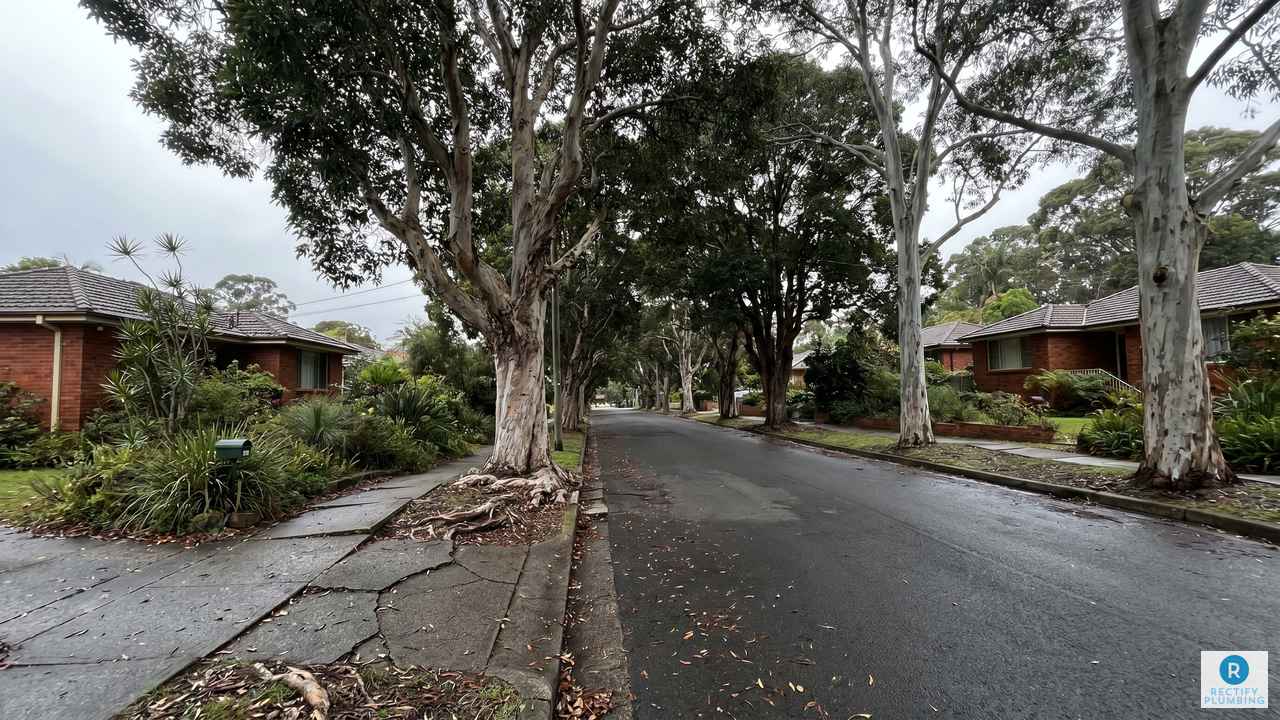
The Real Reason Your Hornsby Drain Keeps Blocking
Clearing a Blocked Drain Is Not the Same as Fixing It This is the most important thing to understand about recurring drain blockages in Hornsby, and it is something that does not get explained clearly enough to homeowners. When a plumber clears a blocked drain using a jet blast, they remove the root growth, grease buildup or debris that has accumulated inside the pipe to the point where it is restricting flow. The pipe drains freely again. The job appears to be done. But if the blockage was caused by tree root intrusion — which is the cause of the majority of recurring blocked drain calls in Hornsby — clearing the roots does not repair the crack or the separated joint that the roots entered through in the first place. That entry point is still there. Within weeks or months, new root growth from the same tree finds the same gap and starts growing back in. The drain blocks again. You call again. The cycle repeats. This is not a failure of the clearing work — jet blasting is the correct tool for removing accumulated root growth from inside a pipe. The problem is that it is being used as the only solution when the correct approach is camera inspection first, then clearing, then assessing whether the pipe has structural issues that need to be addressed to prevent recurrence. The Two Root Causes in Hornsby Specifically There are two underlying causes that drive nearly every case of recurring drain blockage in Hornsby, and they are almost always present together in older properties. The first is the pipe material. Most Hornsby homes built before the early 1970s have terracotta clay drainage pipes. Clay is more brittle than modern PVC, it develops hairline cracks as the surrounding soil shifts and settles over 50 years, and the mortar used to join individual pipe sections dries out and separates over time. By the time a 1960s Hornsby clay pipe has been in the ground for 60 years, it almost certainly has multiple small cracks and at least some joint separation — even if it is still technically functioning. The second is the tree canopy. Hornsby is part of Sydney's Bushland Shire, and the tree cover in this area is among the most established in metropolitan Sydney. Angophoras, spotted gums, turpentines, council-protected figs — all of them have extensive root systems that have been growing for 40 to 60 years. Tree roots grow toward moisture, and a clay drainage pipe carrying household wastewater is the most reliable moisture source in any residential property. Once a root finds a crack in a clay pipe, it does not stop. Left for two to three years, root intrusion can completely fill a 100mm pipe.Key fact: If your Hornsby home was built before 1975 and has large established trees within 15 metres of the sewer line, root intrusion in the clay drain pipes is the most likely cause of any recurring blockage.
Does Your Hornsby Home Have Terracotta Pipes? How to Find Out
What Era Means What Pipe The type of drainage pipe under your Hornsby property depends primarily on when it was built. Homes built before approximately 1970 almost certainly have original terracotta clay drainage pipes. Homes built between 1970 and the late 1980s may have a mix — clay for the main sewer line and early PVC for internal drainage, or a complete PVC system if the builder adopted the new material early. Homes built from the late 1980s onward typically have full PVC drainage systems, which are significantly more durable and resistant to root intrusion. Supply pipes follow a similar pattern. Pre-1985 Hornsby homes typically have galvanised steel supply lines, which corrode internally over time and develop thin wall sections that can split under pressure. This is related to but separate from the drainage issue — it is the cause of burst pipe calls in older Hornsby homes rather than blocked drains. The Only Reliable Way to Confirm Your Pipe Type and Condition The most reliable way to understand what is under your property is a CCTV drain camera inspection. The camera gives us a live video feed from inside the pipe that shows the pipe material clearly, the current wall condition, any cracks or joint gaps, and any root intrusion that is already present. The inspection takes less than an hour in most Hornsby residential properties and gives you a definitive picture of what you are working with. The alternative — assuming the pipe condition is fine until something blocks or fails — is cheaper in the short term and significantly more expensive in the medium term. A hairline crack that we find during a preventative inspection is a pipe relining job. A crack that goes undetected until it allows several years of root growth and eventually causes a complete blockage is a camera inspection plus a jet blast plus a relining job — at minimum.Quick tip: A camera inspection before you have a problem costs less than a camera inspection when you are already in the middle of one. For Hornsby homes over 35 years old, booking an inspection before you need one is almost always the right economic decision.
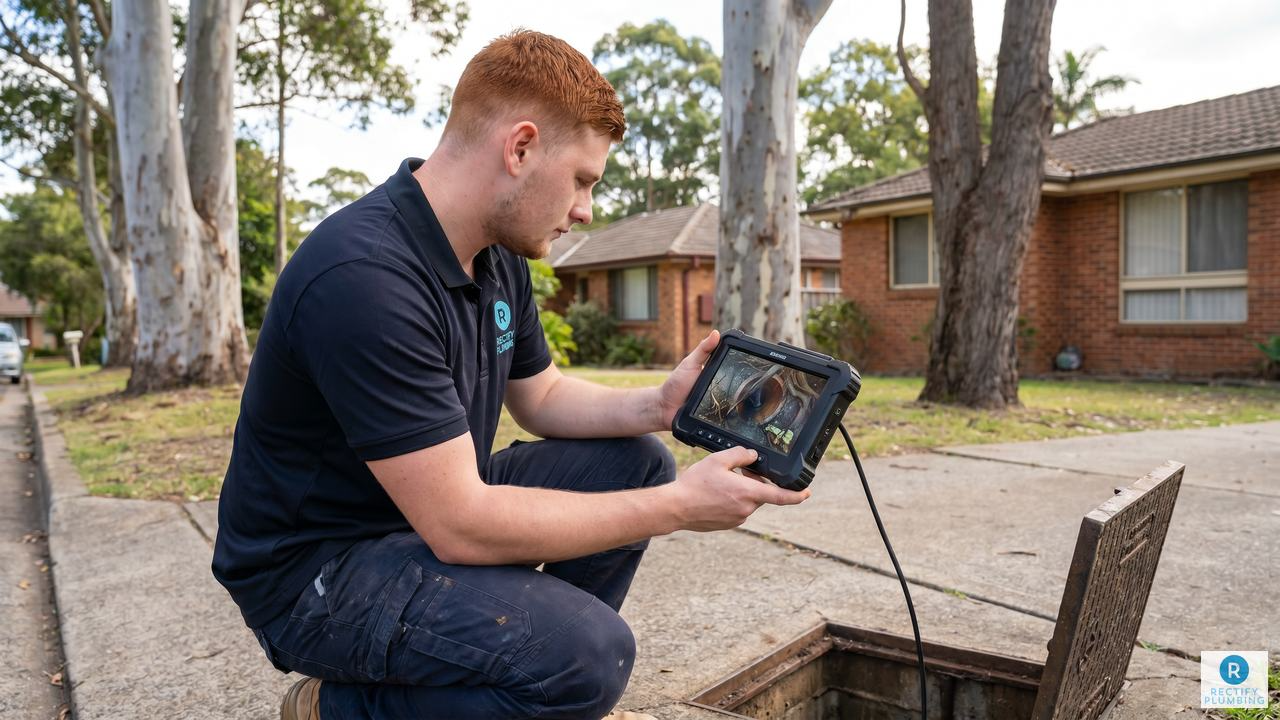
What the Camera Actually Shows — Typical Findings in Hornsby Properties
Root Intrusion at Pipe Joints The most common finding across Hornsby drain camera inspections is root intrusion at pipe joints — the points where one clay pipe section connects to the next. In a clay pipe system that has been in the ground for 50 or 60 years, the mortar at these joints has often dried and cracked to the point where a thin gap exists. That gap is enough for a fine root to enter. Once inside, the root thickens as it grows, the gap widens, more roots follow, and over a period of two to three years the joint area becomes a dense root mass that partially or completely obstructs the pipe. When the camera identifies root intrusion at one or more joints, it also shows us the severity — whether we are looking at fine root fibres that a jet blast will clear cleanly, or an established mass that requires careful clearing before the structural work can be assessed. It also shows us whether there are multiple entry points, which is relevant to whether relining a short section or a longer run is the more cost-effective approach. Cracked Pipe Sections Clay pipe cracks sometimes occur at joint locations, but they also occur along the body of individual pipe sections as the surrounding soil moves. This is more common in Hornsby's northern sections where sandstone geology creates harder, less forgiving sub-soil conditions. A crack in the body of a pipe allows root entry in the same way a joint gap does, and the repair approach is the same — relining that section of pipe creates a new interior surface that eliminates the entry point regardless of where it is located. Pipe Sag and Low Points In older clay pipe systems, individual sections sometimes settle unevenly as the ground shifts over decades, creating a low point — a section of pipe that has sagged below the natural fall gradient. Water and debris collect at this low point rather than flowing through, and blockages form repeatedly at the same location because the hydraulic conditions keep trapping material there. This finding is important because a jet blast does not fix a sagging pipe section — relining restores the smooth interior surface and can sometimes improve flow characteristics, but where the sag is severe enough, a section replacement may be the right recommendation.We were called to a property in Asquith — just south of Hornsby — where the owners had cleared the same kitchen drain three times in 18 months at approximately $300 each. When we put the camera in for the first time, we found a hairline crack in a clay pipe section about 2.5 metres from the clean-out access point, with a root mass from a liquid amber in the front garden that had been growing in for at least two years. We cleared the roots with a jet blast and then relined that 3-metre section of pipe. The total cost was more than a single clearing — but it was less than a fourth clearing would have been, and the drain has been clear for 16 months since. The three previous callouts were not wasted — they kept the drain functioning — but none of them solved the problem because no camera went in to identify the cause.
Pipe Relining vs Traditional Excavation — Which Is Right for Hornsby?
What Pipe Relining Actually Involves Pipe relining is the process of inserting a flexible resin-impregnated liner through an existing access point — typically a clean-out, an inspection opening, or via a toilet connection — and curing it inside the existing pipe. Once cured, the liner creates a smooth, seamless new pipe surface inside the old one. It eliminates cracks, seals joint gaps, and creates a surface that tree roots cannot penetrate. The liner is rated to last 50 years and does not require any excavation to install. For Hornsby properties specifically, the advantages of pipe relining over excavation are particularly significant. Established gardens with 40-year-old plantings, council-protected trees that cannot be disturbed, sandstone sub-soil that makes excavation slow and expensive, and heritage landscaping features that would be damaged by excavation — these are all factors that make relining the more practical and cost-effective solution for the vast majority of Hornsby residential drain repairs.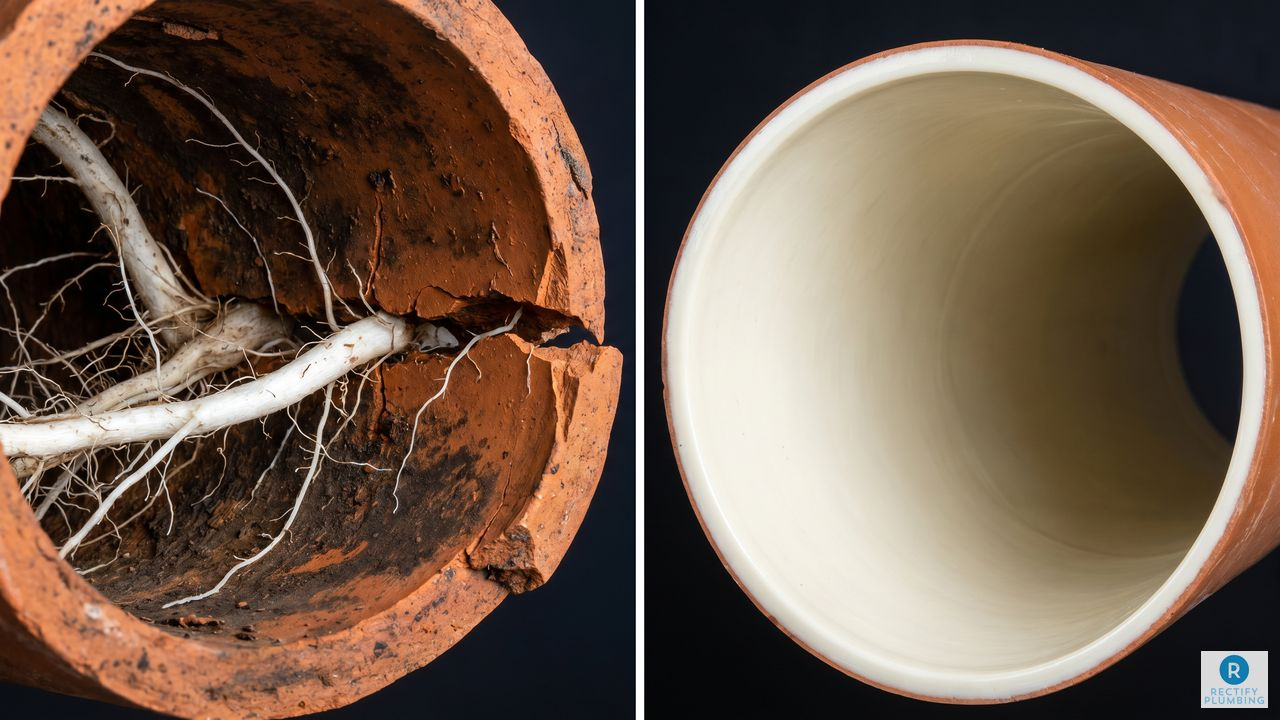 When Excavation Is Actually the Right Answer
There are circumstances where excavation is the correct approach, and being honest about this is part of giving homeowners a useful recommendation. If a pipe section has collapsed completely — not just cracked or sagged, but physically crushed or broken to the point where a resin liner cannot be inserted — excavation to replace that section is necessary. This is a less common finding than root intrusion or cracking, but it does occur in very old clay pipe systems that have had significant ground movement or tree root pressure over many decades.
When the camera identifies a collapsed section, we show you the footage, explain the finding clearly, and give you a fixed-price quote for the remediation before any work begins. We also identify whether the collapsed section is isolated or part of a broader pipe condition issue that requires a more comprehensive approach.
The Real Cost Comparison
The question homeowners ask most often is whether relining is worth the higher upfront cost compared to continued clearing. The honest answer depends on the specific situation, but here is the framework we use. If the camera shows a single root entry point and the surrounding pipe is in reasonable condition, relining that section permanently closes the entry point for 50 years. If you have been paying $300 to $500 for clearing callouts every six months, the relining cost is recovered within two to three years and you never pay another clearing callout for that entry point.
If the camera shows multiple entry points across a longer pipe run, a longer relining job is more expensive but the same principle applies — one job versus an ongoing series of clearing callouts that never fix the underlying problem. We give you all of this information transparently so you can make an informed decision rather than committing to relining without understanding why it is being recommended.
What Does Not Work — and Why Some Advice Is Wrong
Copper Sulphate Treatments
Copper sulphate crystals are sometimes marketed as a way to kill tree roots in drain pipes. They work by killing the root tips that are already inside the pipe, which can temporarily reduce regrowth. However, they do not repair the entry point the roots used to get into the pipe, they do not kill the root system of the tree — which simply sends new growth — and they can corrode older pipe materials if used repeatedly. The Hornsby Council tree preservation framework also means that treatments affecting the root systems of protected trees require care. Copper sulphate is at best a temporary measure and at worst accelerates pipe deterioration.
Chemical Drain Cleaners
Supermarket chemical drain cleaners are not effective against tree root intrusion. They are formulated to dissolve organic matter like grease and hair — they have no meaningful effect on established root growth. On older clay or galvanised pipes, repeated chemical treatment can accelerate corrosion. They are also a safety hazard for any plumber who subsequently works on the pipe and finds it full of caustic chemicals. If your Hornsby drain is blocking repeatedly, chemical cleaners will not help and may make the situation more difficult to address.
Clearing Without a Camera
Clearing a drain without a camera inspection first is legitimate for a single one-off blockage that has no history. For a drain that has blocked before, or where there is any reason to suspect structural pipe damage, clearing without a camera investigation treats the symptom and leaves the cause in place. This is not a character failing of the plumber — it is a scope-of-service decision. If you are asking a plumber to clear a drain, that is what they will do. If you want to know why it keeps blocking, ask specifically for a camera inspection as part of the job.
Quick tip: When calling about a blocked drain in Hornsby that has blocked before, specifically request a CCTV camera inspection as part of the job — not just a clearing. A camera inspection before clearing gives you the most useful information about the cause.
Keeping Hornsby Drains Clear — What Actually Helps
For Hornsby homes with older clay pipe systems and established tree canopy, there is no set-and-forget solution. But there is a maintenance approach that significantly reduces the frequency and severity of drain problems.
When Excavation Is Actually the Right Answer
There are circumstances where excavation is the correct approach, and being honest about this is part of giving homeowners a useful recommendation. If a pipe section has collapsed completely — not just cracked or sagged, but physically crushed or broken to the point where a resin liner cannot be inserted — excavation to replace that section is necessary. This is a less common finding than root intrusion or cracking, but it does occur in very old clay pipe systems that have had significant ground movement or tree root pressure over many decades.
When the camera identifies a collapsed section, we show you the footage, explain the finding clearly, and give you a fixed-price quote for the remediation before any work begins. We also identify whether the collapsed section is isolated or part of a broader pipe condition issue that requires a more comprehensive approach.
The Real Cost Comparison
The question homeowners ask most often is whether relining is worth the higher upfront cost compared to continued clearing. The honest answer depends on the specific situation, but here is the framework we use. If the camera shows a single root entry point and the surrounding pipe is in reasonable condition, relining that section permanently closes the entry point for 50 years. If you have been paying $300 to $500 for clearing callouts every six months, the relining cost is recovered within two to three years and you never pay another clearing callout for that entry point.
If the camera shows multiple entry points across a longer pipe run, a longer relining job is more expensive but the same principle applies — one job versus an ongoing series of clearing callouts that never fix the underlying problem. We give you all of this information transparently so you can make an informed decision rather than committing to relining without understanding why it is being recommended.
What Does Not Work — and Why Some Advice Is Wrong
Copper Sulphate Treatments
Copper sulphate crystals are sometimes marketed as a way to kill tree roots in drain pipes. They work by killing the root tips that are already inside the pipe, which can temporarily reduce regrowth. However, they do not repair the entry point the roots used to get into the pipe, they do not kill the root system of the tree — which simply sends new growth — and they can corrode older pipe materials if used repeatedly. The Hornsby Council tree preservation framework also means that treatments affecting the root systems of protected trees require care. Copper sulphate is at best a temporary measure and at worst accelerates pipe deterioration.
Chemical Drain Cleaners
Supermarket chemical drain cleaners are not effective against tree root intrusion. They are formulated to dissolve organic matter like grease and hair — they have no meaningful effect on established root growth. On older clay or galvanised pipes, repeated chemical treatment can accelerate corrosion. They are also a safety hazard for any plumber who subsequently works on the pipe and finds it full of caustic chemicals. If your Hornsby drain is blocking repeatedly, chemical cleaners will not help and may make the situation more difficult to address.
Clearing Without a Camera
Clearing a drain without a camera inspection first is legitimate for a single one-off blockage that has no history. For a drain that has blocked before, or where there is any reason to suspect structural pipe damage, clearing without a camera investigation treats the symptom and leaves the cause in place. This is not a character failing of the plumber — it is a scope-of-service decision. If you are asking a plumber to clear a drain, that is what they will do. If you want to know why it keeps blocking, ask specifically for a camera inspection as part of the job.
Quick tip: When calling about a blocked drain in Hornsby that has blocked before, specifically request a CCTV camera inspection as part of the job — not just a clearing. A camera inspection before clearing gives you the most useful information about the cause.
Keeping Hornsby Drains Clear — What Actually Helps
For Hornsby homes with older clay pipe systems and established tree canopy, there is no set-and-forget solution. But there is a maintenance approach that significantly reduces the frequency and severity of drain problems.
- Annual CCTV camera inspection for any Hornsby property over 30 years old with trees within 15 metres of the sewer line. An inspection booked on your terms — when the drain is functioning — costs significantly less than an emergency inspection after a complete blockage.
- Address a slow-draining fixture immediately rather than waiting for it to fully block. A slow drain in a Hornsby clay-pipe property is almost always early-stage root intrusion or a developing joint gap. Clearing it at that stage costs far less than clearing a complete blockage.
- Once a root entry point has been identified by camera inspection, reline that section of pipe rather than clearing and hoping it does not come back. The economics of relining versus repeated clearing favour relining decisively once a property has had the same drain cleared more than twice.
- Drain screens in all shower and bath drains. Hair and soap scum blockages in bathroom drains are completely preventable with a screen and two minutes of cleaning per month.
- No cooking fat down the kitchen sink. Fat solidifies inside clay pipes, which already have narrowed bores in older systems, and accelerates blockage formation.
Ready to Find Out What Is Actually Causing Your Hornsby Drain to Keep Blocking?
The first step is always a camera inspection. It takes less than an hour, it shows you exactly what is happening inside the pipe, and it gives you the information you need to make a decision about the right fix — rather than committing to ongoing clearing callouts that are treating the symptom while the underlying cause continues to develop. Rectify Plumbing covers Hornsby, Waitara, Asquith, Mount Colah and Hornsby Heights for camera inspections, jet blasting, pipe relining and all associated drain work. We carry camera equipment on every van — it goes in before we do anything else, on every blocked drain job, without exception. We show you the footage, explain what we find in plain language, and give you a fixed price for the recommended work before we start. Our licence number is 488202C — verify it at NSW Fair Trading before you call. Browse our full range of blocked drain and pipe relining services or call Jake directly on 0400 073 180 any time. If your drain has blocked completely and you need urgent help today, our emergency blocked drain team is available 24 hours a day. Same drain blocked again? Book a camera inspection — not just another clear. Call 0400 073 180. We cover Hornsby, Waitara, Asquith, Mount Colah and Hornsby Heights. Request a Quote or Make an Enquiry → rectifyplumbing.com.au -------------------------------------------------------------------------------------------------------------------------------------------------- [service_faqs]Contact The Team At Rectify Plumbing For All Your Plumbing & Gas Needs
rectify
Get in Touch
13+ YearsExperience