
- 31Jan

Burst Pipes, Leaks & Emergencies: What To Do RIGHT NOW While You Wait For A Plumber (Hornsby & Hills District)
A burst pipe is an emergency. Every minute it goes unattended, more water floods into your home and the damage gets worse. If you live in Hornsby, Castle Hill, or anywhere in the Hills District, you need to know exactly what to do — right now, before you even call a plumber. This guide gives you the step-by-step actions to take in the first 10 minutes of a burst pipe or plumbing emergency, plus everything you need to know about when and why to call a professional.
STEP 1: Turn Off The Water — Do This First
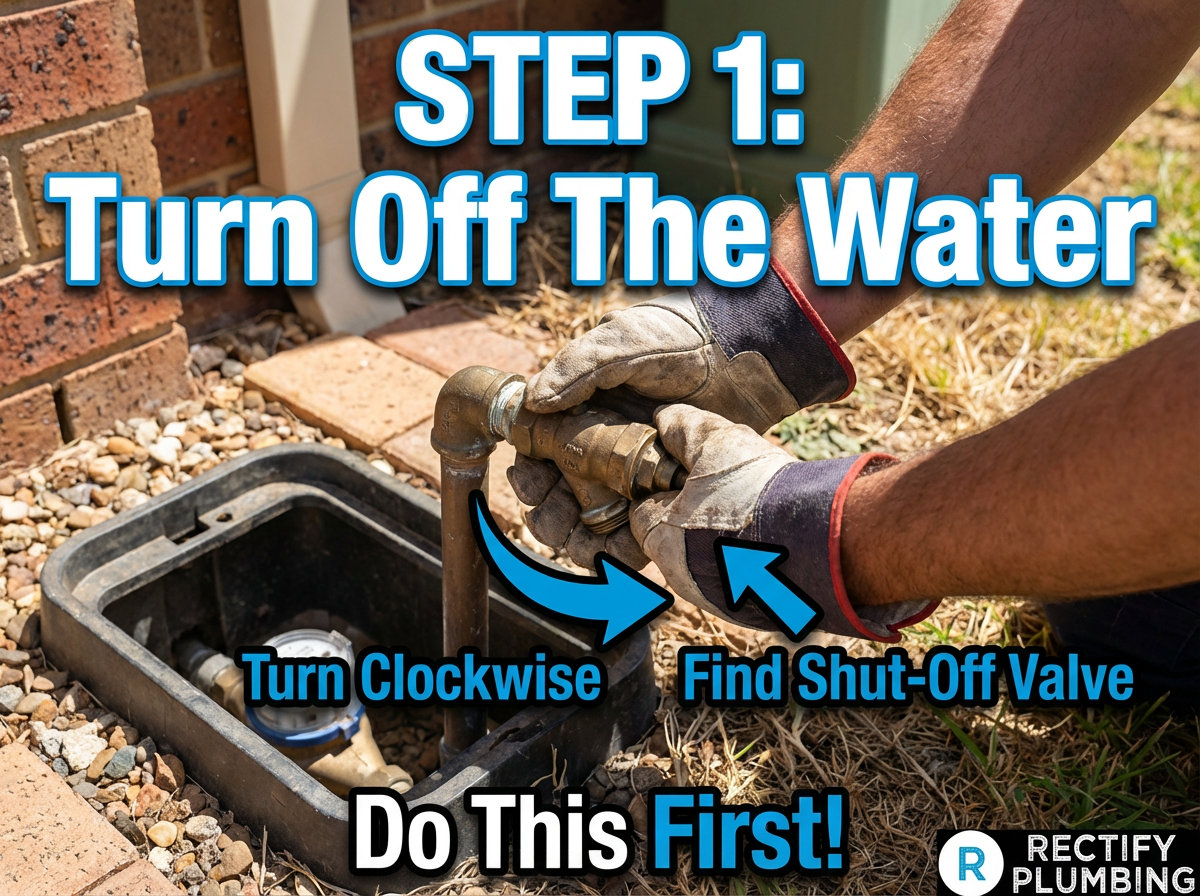
The very first thing you need to do is stop the water flow. If you do not know where your water shut-off valve is, find it now — do not wait until you have an emergency.
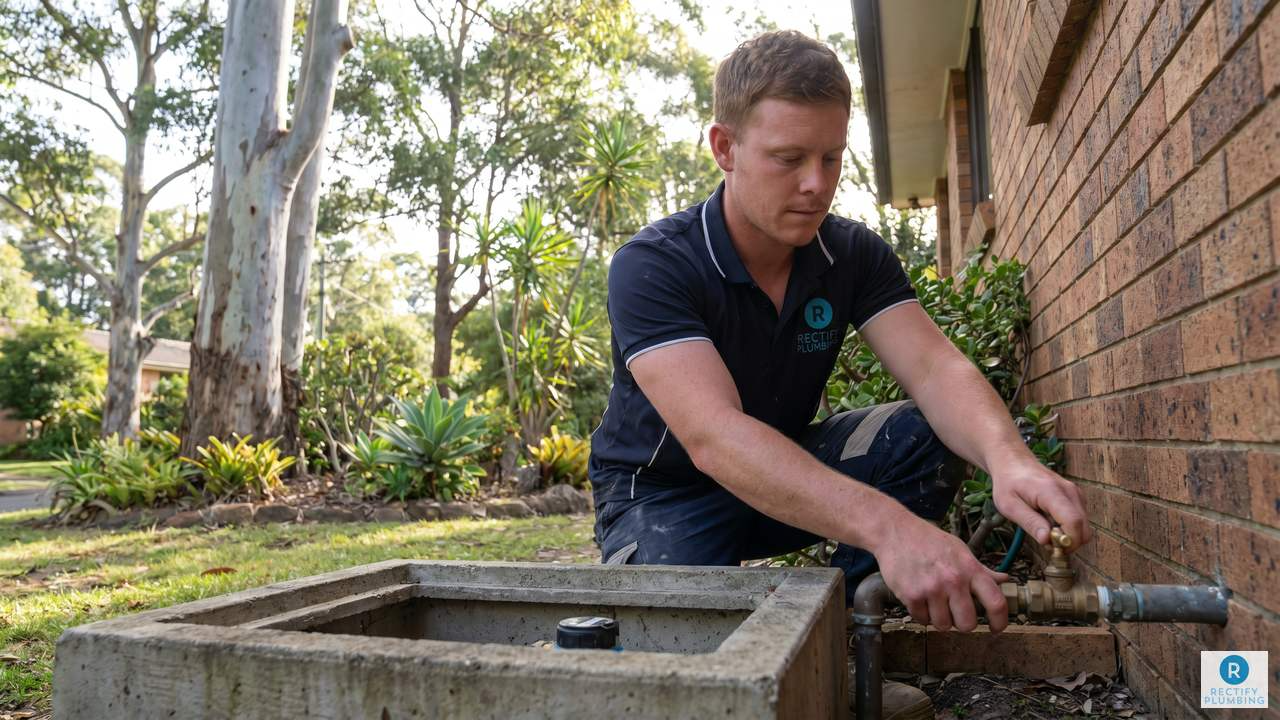
- Where to find your shut-off valve: In most homes in Hornsby and the Hills District, the main shut-off valve is located outside near the water meter, or just inside the wall near where the water main enters the house. In older homes — common across Castle Hill and parts of Hornsby — it may be in a different spot, such as under a sink or in a utility cupboard. Check now and note the location.
- How to turn it off: Turn the valve clockwise until it stops. If it is stiff or rusted and will not budge, do not force it. Call a plumber immediately.
- If you cannot find the main valve: Turn off the individual isolation valves under the relevant sink or behind the toilet. These are the small taps on the supply line. If none of these work, call an emergency plumber straight away.
STEP 2: Limit The Damage

Once the water is off, act fast to prevent it spreading:
- Grab towels, buckets, or anything absorbent: Soak up as much water as you can from the floor. The faster you contain it, the less damage to your flooring, walls, and cabinetry.
- Move furniture and belongings: If water is pooling near furniture, electronics, or anything valuable, move them out of the way now.
- Open windows if safe to do so: Air circulation helps slow down moisture damage to walls and flooring.
- Do NOT try to fix the pipe while water is still flowing: This is the most common mistake. If the shut-off valve did not work or you could not find it, do not attempt any repairs. Call a plumber.
STEP 3: Temporary Fixes That Buy You Time
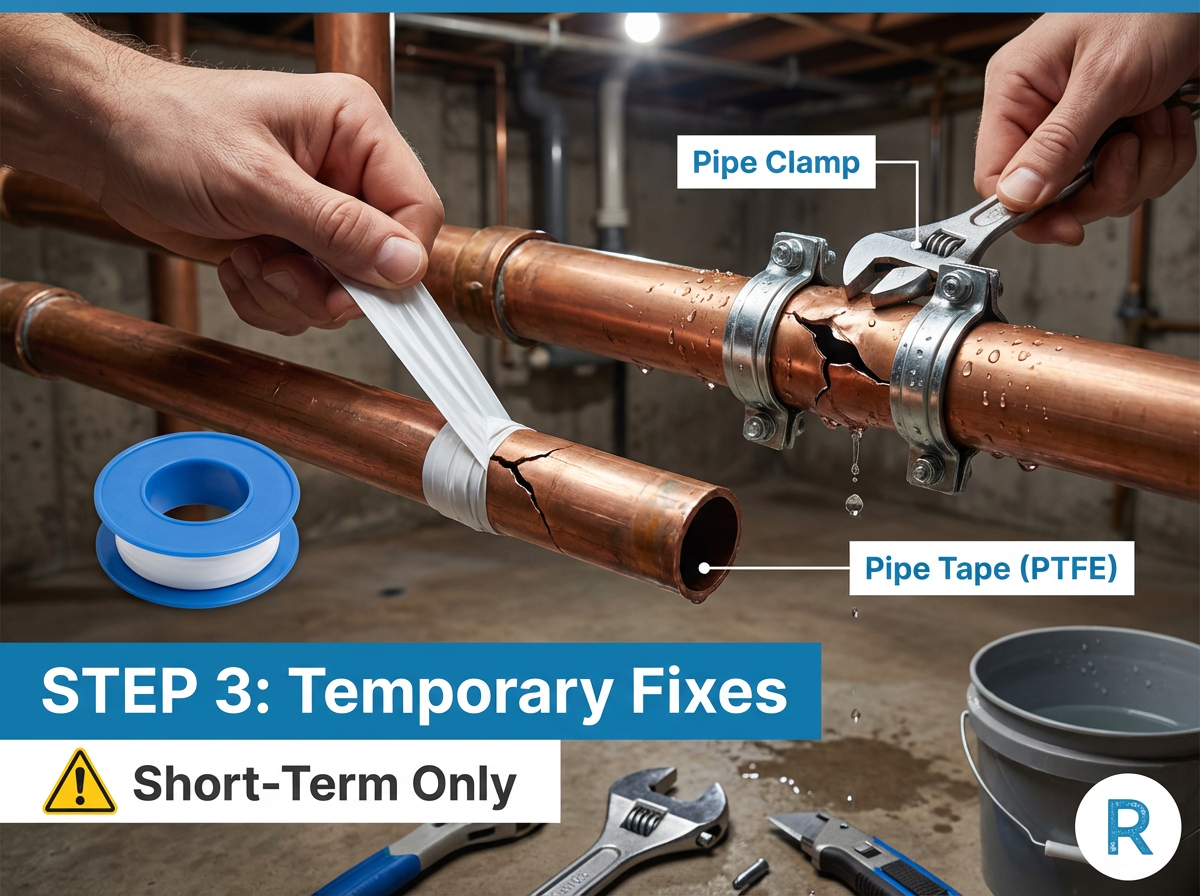
If the burst is minor and the water has been turned off, you may be able to do a temporary fix while you wait for a plumber. Only attempt this if you are comfortable and confident:
- Pipe tape (PTFE tape): Wrap tightly around the burst or crack in the pipe. This is a short-term fix only — it will not hold under full water pressure for long.
- Pipe clamp or repair sleeve: If you have one on hand, clamp it over the burst. These are available at most hardware stores and can hold for longer than tape.
These are temporary solutions only. A licensed plumber needs to inspect and properly repair or replace the damaged section.
Common Causes Of Burst Pipes In Hornsby & The Hills District
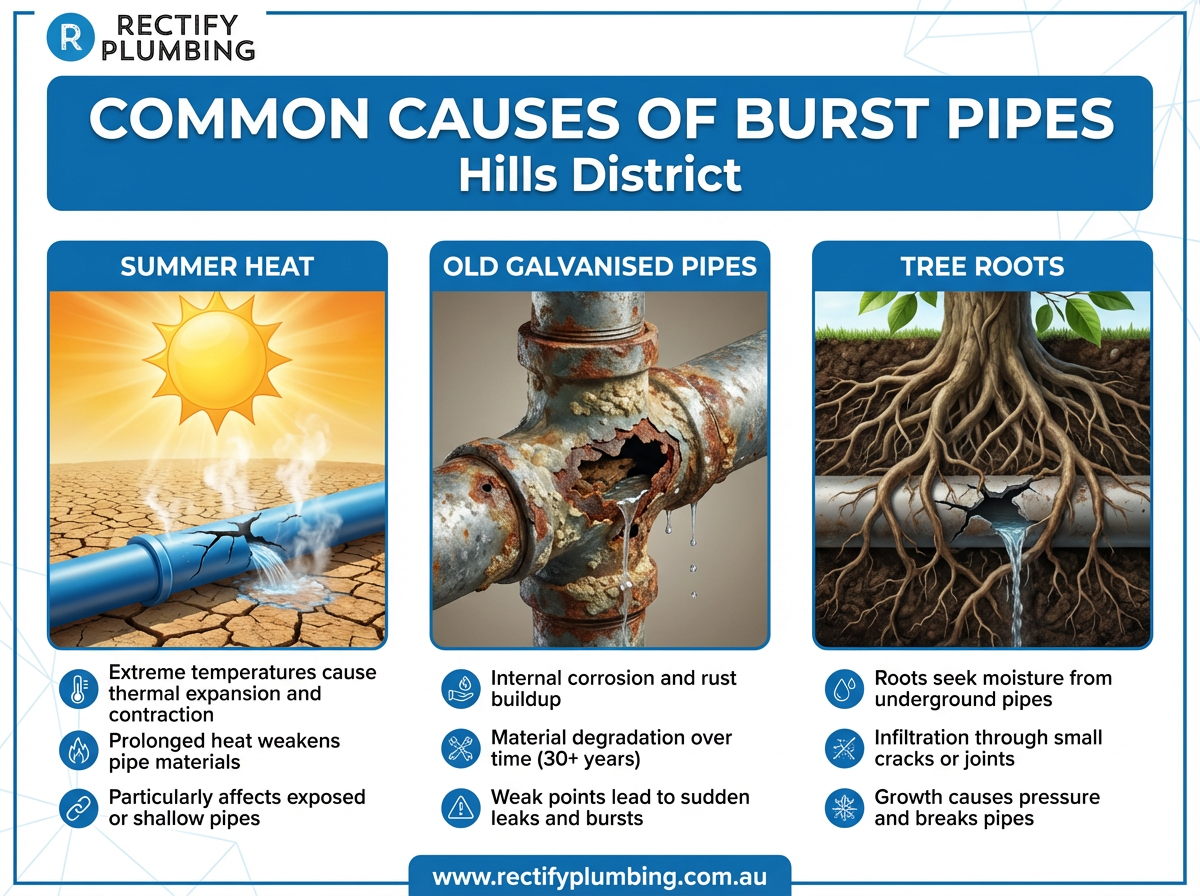
Understanding why pipes burst helps you know what to watch for:
- Summer heat: Extreme heat causes pipes — especially older ones — to expand. When they cool down again, the stress can cause cracks or splits. This is particularly common in the Hills District during hot January and February days.
- Old galvanised pipes: Many homes in Hornsby and Castle Hill were built in the 1960s–1980s with galvanised steel pipes. These corrode from the inside over decades and eventually fail. If your home is older and you have not had the pipes checked, this is your biggest risk.
- Water pressure surges: A sudden spike in water pressure — often caused by the water authority flushing mains — can burst a weakened pipe overnight.
- Tree roots: In the same way that tree roots block drains, they can also wrap around and damage underground water supply pipes, weakening them until they fail.
Leaking Taps vs Burst Pipes: How To Tell The Difference
A leaking tap is a slow drip — annoying but not urgent. A burst pipe is a fast, uncontrolled flow of water that will cause serious damage if not stopped immediately. Here is how to tell them apart:
- A leak: Water drips slowly from a tap, fitting, or joint. It may be wet around the area but water is not spraying or flowing freely. A leak should be fixed soon — but it is not an emergency.
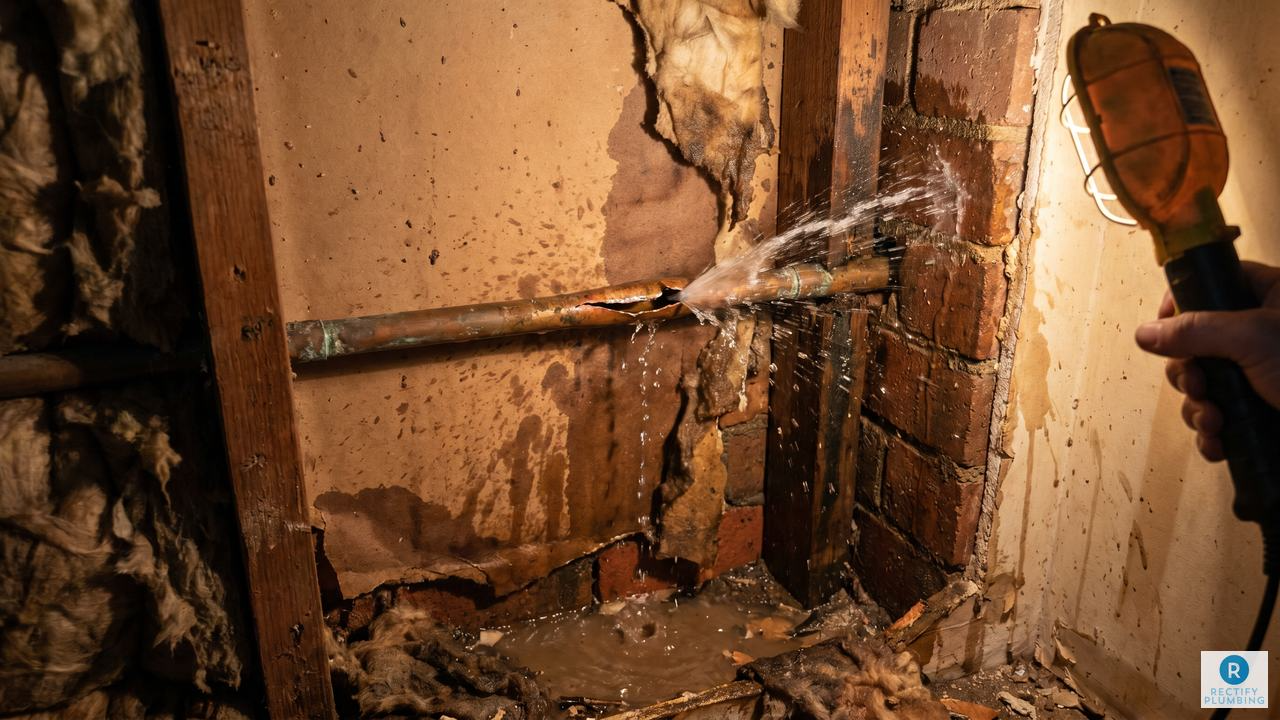
- A burst: Water is spraying, flowing, or flooding from a pipe. You can hear it. You can see water spreading quickly. This is an emergency — turn off the water and call a plumber immediately.
Why You Need A Licensed Plumber — Not A DIY Fix

It is tempting to try and fix a burst pipe yourself, especially if the damage looks small. Do not. Here is why:
- Safety: Burst pipes under pressure can cause serious injury. A pipe that looks fixed may fail again within hours.
- Insurance: If you attempt your own repair and it fails, causing further water damage, your home insurance may not pay out. Unlicensed plumbing work can void your policy.
- The real problem may be bigger: A burst pipe is often a symptom of a wider issue — corroded pipes, pressure problems, or tree root damage. A licensed plumber will find the cause, not just patch the symptom.
Contact Us
Rectify Plumbing offers comprehensive solutions for all of your residential and commercial plumbing needs across Sydney. Contact us today for a fast quote!
Get startedRelated Articles
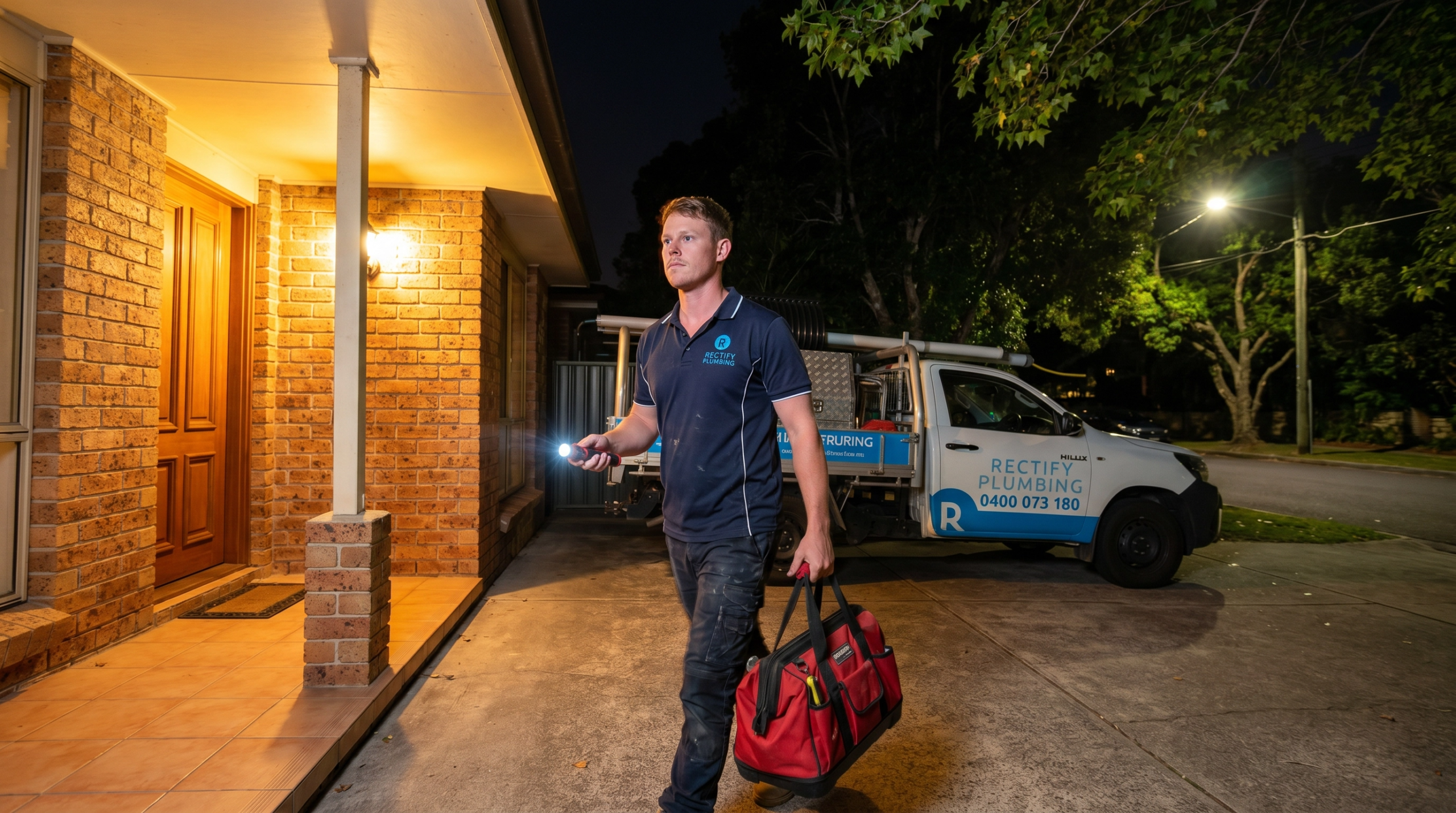
Best Emergency Plumber in Hornsby for Burst Pipes: What to Do Right Now
- Find your main water shutoff and turn it off.
- Take 30 seconds of video showing what is happening.
- Call 0400 073 180 — Jake and the team are available right now.
 Is This a Plumbing Emergency? Here Is the Clear Answer
Call Us Right Now If Any of These Apply
A pipe has burst or split and water is actively flowing. Water is coming through a ceiling, wall cavity or floor. Sewage is backing up inside your home — into the shower, laundry or bathroom. You have completely lost water supply to the whole property. You can smell gas anywhere inside the building or near appliances.
Every one of these situations gets worse with every passing minute. A burst pipe that runs for 90 minutes while you research your options causes significantly more structural damage — and costs significantly more to repair — than one that is isolated in five minutes. If any of the above apply, call us now on 0400 073 180 and read the rest of this guide while you wait.
These Can Safely Wait Until Morning
A tap that drips slightly more than usual. A toilet that runs but still flushes. A shower drain that takes a few seconds longer than it used to. Hot water that is slightly cooler than normal but still functioning. None of these are good and all of them should be booked in — but none of them require a 2am callout. Book a morning appointment, document what you are seeing, and get some sleep.
The Honest Grey Area
A hot water system that has stopped completely sits in the middle. In Hornsby's winters, particularly for households with young children or elderly residents, no hot water is a same-day job rather than a wait-until-morning situation. Call us and we will be straight with you about whether it warrants an after-hours response.
Quick tip: Every minute an active burst pipe runs, the water damage spreads further into walls, ceilings and flooring. Isolating the supply is always the right first move — it stops the damage clock while you arrange a plumber.
The First 5 Minutes — What to Do Before We Arrive
Step 1: Turn Off the Main Water Shutoff
Your main water shutoff valve is the single most important thing to know the location of in your home. In most Hornsby standalone houses, it is near the water meter — either in a box set into the footpath near the front boundary, or along the side of the house near an external tap. Turn it clockwise to close. Even if you are not completely certain which pipe has burst or where it is, cutting the supply limits the damage immediately.
Once the supply is off, open a tap inside the house to release the pressure remaining in the pipes. This reduces further water movement while you wait for us to arrive.
Step 2: Finding Your Shutoff in a Hornsby Unit Block
Hornsby has a significant number of apartment and unit blocks, particularly around the station precinct. If you are in a unit, there are two isolation points to know about. The first is the isolation valve inside your own unit — typically under the kitchen sink, behind the toilet cistern, or in the laundry near the washing machine connection. Turning this off cuts water to your unit without affecting anyone else in the building.
The second is the building main shutoff, which your building manager or strata committee controls. If water is already affecting common property — hallways, other units, the basement — notify your building manager immediately so the building main can be isolated. If you cannot reach them, call us and we can advise you on the phone while you locate alternative shutoffs.
Is This a Plumbing Emergency? Here Is the Clear Answer
Call Us Right Now If Any of These Apply
A pipe has burst or split and water is actively flowing. Water is coming through a ceiling, wall cavity or floor. Sewage is backing up inside your home — into the shower, laundry or bathroom. You have completely lost water supply to the whole property. You can smell gas anywhere inside the building or near appliances.
Every one of these situations gets worse with every passing minute. A burst pipe that runs for 90 minutes while you research your options causes significantly more structural damage — and costs significantly more to repair — than one that is isolated in five minutes. If any of the above apply, call us now on 0400 073 180 and read the rest of this guide while you wait.
These Can Safely Wait Until Morning
A tap that drips slightly more than usual. A toilet that runs but still flushes. A shower drain that takes a few seconds longer than it used to. Hot water that is slightly cooler than normal but still functioning. None of these are good and all of them should be booked in — but none of them require a 2am callout. Book a morning appointment, document what you are seeing, and get some sleep.
The Honest Grey Area
A hot water system that has stopped completely sits in the middle. In Hornsby's winters, particularly for households with young children or elderly residents, no hot water is a same-day job rather than a wait-until-morning situation. Call us and we will be straight with you about whether it warrants an after-hours response.
Quick tip: Every minute an active burst pipe runs, the water damage spreads further into walls, ceilings and flooring. Isolating the supply is always the right first move — it stops the damage clock while you arrange a plumber.
The First 5 Minutes — What to Do Before We Arrive
Step 1: Turn Off the Main Water Shutoff
Your main water shutoff valve is the single most important thing to know the location of in your home. In most Hornsby standalone houses, it is near the water meter — either in a box set into the footpath near the front boundary, or along the side of the house near an external tap. Turn it clockwise to close. Even if you are not completely certain which pipe has burst or where it is, cutting the supply limits the damage immediately.
Once the supply is off, open a tap inside the house to release the pressure remaining in the pipes. This reduces further water movement while you wait for us to arrive.
Step 2: Finding Your Shutoff in a Hornsby Unit Block
Hornsby has a significant number of apartment and unit blocks, particularly around the station precinct. If you are in a unit, there are two isolation points to know about. The first is the isolation valve inside your own unit — typically under the kitchen sink, behind the toilet cistern, or in the laundry near the washing machine connection. Turning this off cuts water to your unit without affecting anyone else in the building.
The second is the building main shutoff, which your building manager or strata committee controls. If water is already affecting common property — hallways, other units, the basement — notify your building manager immediately so the building main can be isolated. If you cannot reach them, call us and we can advise you on the phone while you locate alternative shutoffs.
 Step 3: For Gas — Leave First, Call Second
If you can smell gas anywhere inside the building, do not turn any electrical switches on or off, do not use your phone inside the property, and do not try to locate the leak yourself. Get everyone out — including pets — leave doors open as you exit to ventilate, and call from outside the building. Call Jemena's gas emergency line on 131 909 first to isolate the gas supply. Once the supply is off and the building is safe, call a licensed gas fitter to locate and repair the source before gas is restored. Our licensed gas plumbing team covers Hornsby and the surrounding area 24 hours a day.
Step 4: Document With Video
Once the water is off and the immediate situation is stable, take 30 seconds of video showing the damage — where the water came from, what surfaces are affected, any visible pipe damage. This is useful for two reasons: it helps us arrive with the right equipment for the specific job, and it provides clear evidence if you need to make a home insurance claim for water damage. Send it through when you call us.
Watch out: Do not turn electrical switches on or off if water is near any power points, light fittings or appliances. Water and electricity together are a serious risk. If water has reached electrical areas, call your electricity provider to have supply isolated before entering that part of the property.
Step 3: For Gas — Leave First, Call Second
If you can smell gas anywhere inside the building, do not turn any electrical switches on or off, do not use your phone inside the property, and do not try to locate the leak yourself. Get everyone out — including pets — leave doors open as you exit to ventilate, and call from outside the building. Call Jemena's gas emergency line on 131 909 first to isolate the gas supply. Once the supply is off and the building is safe, call a licensed gas fitter to locate and repair the source before gas is restored. Our licensed gas plumbing team covers Hornsby and the surrounding area 24 hours a day.
Step 4: Document With Video
Once the water is off and the immediate situation is stable, take 30 seconds of video showing the damage — where the water came from, what surfaces are affected, any visible pipe damage. This is useful for two reasons: it helps us arrive with the right equipment for the specific job, and it provides clear evidence if you need to make a home insurance claim for water damage. Send it through when you call us.
Watch out: Do not turn electrical switches on or off if water is near any power points, light fittings or appliances. Water and electricity together are a serious risk. If water has reached electrical areas, call your electricity provider to have supply isolated before entering that part of the property.
Why a Local Hornsby Plumber Gets There Faster — and Why That Matters
Response Time Is the Most Important Factor in a Burst Pipe When water is actively running into your walls, every additional 15 minutes matters. A plumber dispatched from a centralised booking centre could be coming from anywhere in metropolitan Sydney. A local team based on the North Shore who services Hornsby, Waitara, Asquith and Hornsby Heights regularly gets to you faster — often in under 45 minutes — and that difference in response time has a direct relationship to the total cost of damage you end up dealing with. We know the Hornsby Shire roads. We know the access challenges around the Hornsby Heights ridge, the unit block layouts near Hornsby station, and the older pipe configurations common in homes built before 1985 in this area. That local knowledge means we spend less time figuring out the situation and more time fixing it. How Fast We Actually Get to Hornsby Heights and Surrounding Suburbs Response time to Hornsby Heights specifically — which our question bank identifies as the most-asked response time question in this area — is typically 30 to 60 minutes from our North Shore base depending on the time of call and road conditions. We give you an honest ETA on the phone rather than a marketing promise. If our nearest available plumber is further away than that on a given night, we tell you so you can decide whether to call someone closer. For genuine active burst pipe situations, the most important thing while you wait is that the water supply is already off. A correctly isolated burst pipe causes zero additional damage while you wait — the damage is what accumulated before isolation. This is why finding your shutoff before an emergency is so valuable. What We Do When We Arrive The moment we walk through the door, we assess the full scope of what has happened — not just the visible damage but what caused it and whether there is anything else affected that is not immediately visible. For a burst pipe, that means finding and isolating the failure point, assessing the condition of the surrounding pipe work, and checking whether the burst was a one-off failure or a sign of broader pipe deterioration. We then give you a fixed price for the repair before any work starts. You agree to that price, we complete the work, and we leave you with a property that functions. Our emergency plumbing service covers Hornsby, Waitara, Asquith, Mount Colah and Hornsby Heights for all emergency callouts.Why Hornsby Homes Are More Vulnerable to Burst Pipes Than Newer Suburbs
The Pre-1985 Pipe Problem A large proportion of standalone homes in Hornsby, Waitara and the surrounding area were built between the 1950s and the early 1980s. The water supply pipes installed in those homes were predominantly galvanised steel — a material that was standard practice at the time but that corrodes from the inside over decades. As the zinc coating depletes, the steel rusts, and that rust builds up as scale on the inside of the pipe, gradually narrowing the diameter and weakening the pipe wall. A galvanised steel pipe that is 40 or 50 years old has a significantly thinner pipe wall than it did when it was installed. A pressure spike — from a water hammer when a tap is closed sharply, or from the network pressure fluctuating — can split a pipe that has been corroding from the inside for decades without any external warning signs. This is why burst pipe calls from Hornsby properties built before 1985 are a consistent and predictable part of our work. The Tree Root Problem Specific to the Hornsby Shire Hornsby is classified as part of Sydney's Bushland Shire — and that designation reflects something real about the tree cover in this area. Angophoras, spotted gums, turpentines, council-protected figs and liquidambars that have been growing in Hornsby gardens for 40 to 60 years have root systems that extend well beyond the visible canopy. The Hornsby Council tree preservation framework protects many of these trees, which means they are not going anywhere — and their roots are actively seeking moisture underground. The most reliable source of moisture in a residential property is a drainage pipe carrying household wastewater. Once a tree root finds a crack or a slightly separated joint in a clay drain pipe, it grows in. Left for a year or two, root intrusion can fill an entire 100mm drain pipe and cause the kind of chronic blockage that comes back every few weeks regardless of how many times it is cleared. A CCTV camera inspection is the only reliable way to confirm whether roots are the cause.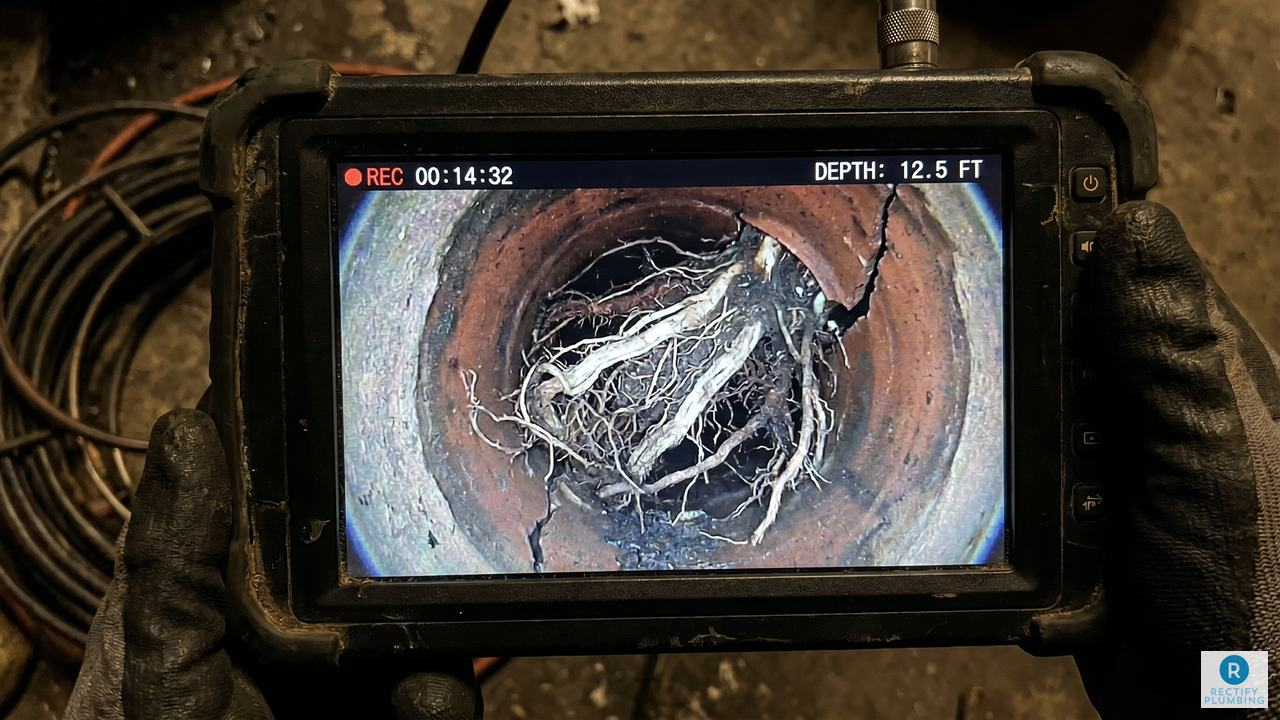
We attended a Hornsby Heights home last year where the owners had been told by two different plumbers over 18 months that they had a 'recurring grease blockage' in their main drain. Each callout cleared the drain, charged the callout fee, and left. When we put our camera down for the first time, we found a substantial angophora root mass that had been growing inside a cracked terracotta pipe joint for at least three years. We jet blasted the roots clear and then relined that section of pipe. That was 14 months ago. The drain has not blocked since. The previous callouts treated the symptom each time. The camera found the cause.Terracotta Pipes — Does Your Hornsby Home Still Have Them? Homes built before the 1970s in Hornsby frequently have terracotta (clay) drainage pipes in addition to galvanised steel supply lines. Terracotta is more brittle than modern PVC, develops cracks as the ground shifts over decades, and is the material most susceptible to root intrusion. If your Hornsby property was built before 1970 and you have established trees within 15 metres of the sewer line, a drain camera inspection is one of the most cost-effective things you can do for your home — catching a small root intrusion costs far less than dealing with a full drain failure.
How We Fix Burst Pipes and Drain Emergencies in Hornsby — Properly
Burst Pipe Repair — Finding It First Not every burst pipe is visible. A pipe that has split inside a wall cavity or under a concrete floor shows up as reduced pressure, a wet patch on a wall or ceiling, or the sound of running water somewhere in the house when everything is turned off. We use a combination of visual assessment and pressure testing to locate the failure point accurately before opening up any wall or floor. This approach avoids unnecessary damage to the property during the investigation. Once located, we assess the extent of the failure and the condition of the surrounding pipe work before quoting the repair. A single split in otherwise sound copper pipe is a different job from a section of 50-year-old galvanised steel that has multiple points of deterioration. Our burst pipe repair service covers Hornsby and the surrounding Bushland Shire for same-visit resolution wherever the pipe configuration allows. Blocked Drains — Camera Always Goes in First For any blocked drain job in Hornsby, we put the CCTV drain camera in before we do anything else. The camera gives us a live video feed of exactly where the blockage is, what is causing it, and what condition the surrounding pipe is in. This is how we avoid the pattern described in the story above — clearing a blockage that comes back because the underlying structural issue was never identified. For blockages where the pipe is structurally sound, jet blasting cuts through root growth, strips grease from pipe walls and flushes debris clear in a single visit. For blockages where the camera shows cracked sections, separated joints or root entry points that will allow regrowth, pipe relining is the permanent fix — a resin liner inserted and cured inside the existing pipe that seals every entry point without excavation. Same-Day Hot Water in Hornsby Hot water system failures are the second most common emergency callout in Hornsby after blocked drains. Our hot water repair and installation team carries common replacement units on the van for Hornsby callouts. If your system cannot be repaired on the first visit, we can usually install a replacement the same day rather than leaving you without hot water waiting for a return trip. We cover gas, electric and heat pump systems across all major brands.What Does an Emergency Plumber Cost in Hornsby?
Cost transparency is something Hornsby homeowners specifically ask about — it is the third most common question in our local question bank after finding a plumber and drain issues. Here are the honest ranges for emergency work in the Hornsby area.- Business hours callout fee: $150 to $250, before labour and parts
- After-hours callout fee (evenings, weekends, public holidays): $200 to $400, before labour and parts
- Labour rate: $120 to $200 per hour, higher on weekends and public holidays
- Burst pipe repair (depending on location and access): $400 to $900 all-in for most residential jobs
- Blocked drain clear including camera inspection and jet blast: $250 to $500
- Pipe relining (depending on length and diameter): $1,200 to $3,500
- Same-day hot water system replacement: $1,200 to $3,500 depending on system type
How to Protect Your Hornsby Home Before the Next Emergency
The homeowners we look after on a regular maintenance schedule almost never have plumbing emergencies. Here is what that schedule looks like for a typical Hornsby home:- Know your main water shutoff location — right now, before you need it. This is the most important single thing you can do.
- Annual camera inspection for any Hornsby property over 30 years old with established trees within 15 metres of the drain line. A
- Hot water system service every 5 years — element and anode check for electric systems, flue and burner for gas. Extends system life significantly and prevents overnight failures.
- Address slow drains early. A slow drain in a Hornsby clay-pipe property is almost always early-stage root intrusion. Clearing it now costs a fraction of what a full emergency clear costs after complete blockage.