
- 20Feb

Bathroom Renovation Plumbing in Berowra and Pennant Hills: What You Need to Plan Before You Start
Most bathroom renovations start the same way. Someone gets tired of the dated tiles, the slow-draining shower, the vanity that’s seen better days — and they decide it’s time for a refresh. They pick a style, choose their fixtures, get a quote from a tiler. And then at some point, usually a bit later than it should be, the question of the plumbing comes up.
We work on a lot of bathroom renovations across Berowra, Pennant Hills, Berowra Heights and the surrounding areas as your local plumber in Berowra, and the jobs that go smoothly are almost always the ones where the plumbing was considered from the beginning rather than bolted on at the end. The ones that run over budget or hit unexpected delays are usually the opposite.
This article covers what the plumbing side of a bathroom renovation actually involves, what to plan for before any tiles come off the wall, what the common mistakes are that cost people money, and what a realistic budget looks like for this kind of work in the northern suburbs.
Why the Plumbing Has to Come First — Not Last
Everything Else Is Built Around It
The position of your toilet, the height and location of your shower, where the vanity sits — all of these things are constrained by where your existing drain points and water supply lines are. You can move them, but moving plumbing is significantly more involved than most people expect, especially in a home that was built on a concrete slab.
If you lock in your bathroom layout and order your fixtures before talking to a plumber, there’s a real chance you’ll either need to modify your plans or spend considerably more than you budgeted to shift drain points and supply lines. Getting a plumber involved at the design stage — before anything is ordered — is the single most effective way to avoid that.
Older Homes Have Older Pipe Systems
Berowra and Pennant Hills both have strong pockets of older housing stock — homes built in the 1970s, 80s and into the 90s that have never had their plumbing touched since original construction. When we open up walls and floors in these properties, we sometimes find galvanised steel pipes that have been slowly corroding from the inside, rubber seals that have hardened and cracked, or drainage that wasn’t installed to modern standards.
None of this is a dealbreaker — it just needs to be identified early. Discovering a corroded supply line behind the wall after the new tiles are already up is a much bigger problem than discovering it before the renovation starts. A
preventative inspection before work begins is worth doing for any home over 25 to 30 years old, and it gives you a clear picture of what you’re actually working with.The Wet Area Waterproofing Rules Are Strict for a Reason
In NSW, wet areas — showers, baths, areas around floor wastes — have to be waterproofed to Australian Standard AS 3740 before any tiles go down. The waterproofing membrane has to be installed by a licensed tradesperson and it has to be done correctly, because if it fails, water gets into the wall and floor structure and the damage that follows is expensive and disruptive to repair.
This isn’t optional and it isn’t something that can be skipped to save money. Any builder, plumber or tiler who suggests otherwise is someone you should be cautious of. We make sure the wet area prep and waterproofing is done properly on every renovation we’re involved in.
Quick tip
: Tell your plumber what fixtures you’re planning before you buy them. Fixture rough-in dimensions vary between brands and models — knowing upfront avoids rework later.
What the Plumbing Scope of a Bathroom Renovation Actually Covers

People sometimes assume the plumber’s job is just connecting the new fixtures at the end. In a renovation, it’s a lot more than that. Here’s what we typically handle as part of our
bathroom renovation service:Rough-In Work — Before the Walls Are Closed
Rough-in is everything that goes inside the walls and under the floor before anything is tiled or fitted. This includes relocating or extending drain pipes to match your new layout, installing the shower drain and floor waste, running new water supply lines for the vanity, shower and toilet, and making sure all the rough-in heights and positions match the fixtures you’ve specified.
Get this stage right and the rest of the job goes smoothly. Get it wrong — or rush it — and you’re potentially retiling sections of wall to fix drain positions that are even a few centimetres out.
Hot Water Considerations
A bathroom renovation is a natural time to review your hot water setup. If the shower pressure has never been great, or if you regularly run out of hot water, the renovation is a good opportunity to address it. We often upgrade thermostatic shower valves as part of a renovation — they maintain a constant water temperature regardless of pressure fluctuations elsewhere in the house, which makes a real difference in daily use.
If the hot water system itself is getting on in age, it’s also worth factoring in a replacement at the same time rather than doing it as a separate job six months later. Our
hot water installation and repair team can assess the existing unit and give you a clear recommendation as part of the renovation scope.Fixture Connection and Final Fit-Off
Once tiling is complete, we come back for the fit-off — connecting and commissioning all the fixtures. Vanity tapware, shower heads, toilet suite, bath if there is one. We test everything properly, check for any leaks at every connection, and make sure water pressure to each fixture is balanced.
Fit-off sounds straightforward but it’s where a lot of the detail work happens. Tapware that isn’t installed square, a toilet that rocks slightly on the floor, a shower valve that isn’t balanced correctly — these are the kinds of things that become quietly annoying every single day. If anything is even slightly dripping after we leave, that’s a
leaking tap waiting to get worse and we catch it before it becomes one.Water Efficiency Upgrades
NSW has WELS water efficiency requirements for certain fixtures installed in renovations, and there are also genuine benefits to choosing efficient tapware and showerheads beyond just compliance. If you’re spending money on a renovation anyway, it’s worth considering. Our team can run you through a
water efficiency assessment as part of the renovation planning process to help you make informed choices on fixtures.
We did a bathroom renovation in Berowra Heights last year for a couple who had been putting it off for about a decade. When we opened the wall behind the shower, we found that the original waterproofing membrane had failed completely — water had been slowly tracking behind the tiles for years and the timber framing behind the shower wall was significantly deteriorated. It wasn’t visible from the outside at all. The extra work to replace the framing added time and cost to the renovation that nobody had planned for. The homeowners were understandably frustrated, but they were also relieved — if they’d left it another few years, the structural damage would have been considerably worse. This is exactly why we recommend a proper inspection before any renovation gets underway.
Common Mistakes That Blow Out Bathroom Renovation Budgets
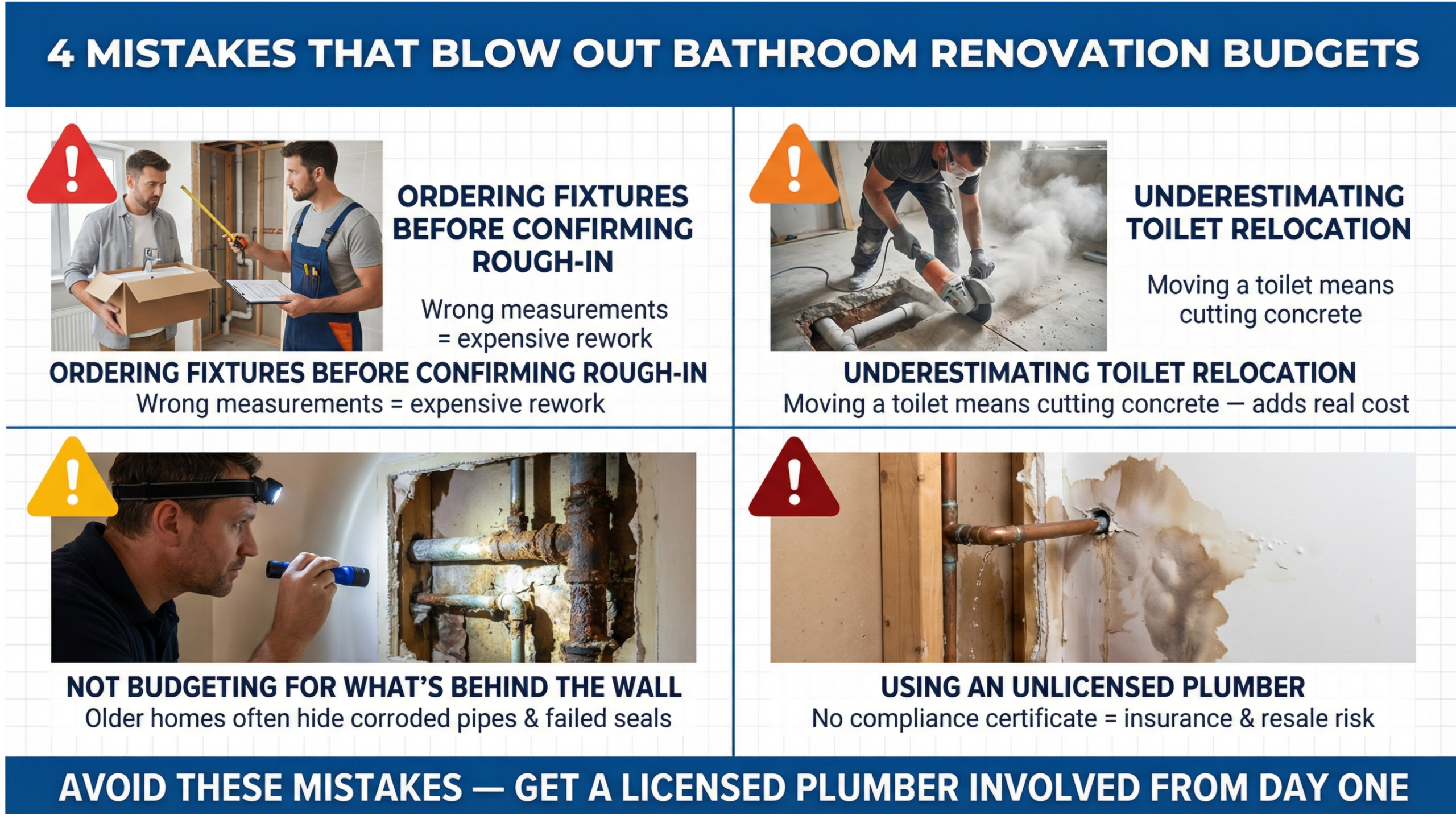
Ordering Fixtures Before Confirming the Rough-In
This one catches people out regularly. A homeowner finds a vanity they love, orders it, and then discovers the plumber needs the waste outlet in a position that doesn’t match the cabinet’s plumbing configuration. Some fixtures have fixed plumbing points that can’t be adjusted. Others have flexible configurations but the standard position doesn’t match what’s in the wall.
The fix is always the same — confirm rough-in measurements with your plumber before you order anything. Ten minutes of conversation at the right time saves hours of rework.
Underestimating What Moving a Toilet Actually Involves
Moving a toilet even a small distance — half a metre, say — means relocating the drain, which means cutting into the floor. If the floor is concrete, that’s a concrete saw, temporary shoring, and making good after. It’s doable and we do it regularly, but it’s a job that adds meaningful cost and time to a renovation. If your current toilet position works with your new layout, there’s real value in keeping it where it is.
Not Budgeting for What’s Behind the Wall
In older Berowra and Pennant Hills homes especially, there’s always a chance that opening up the walls reveals something that needs attention — corroded pipes, failed seals, substandard original work. It doesn’t happen on every job, but it happens enough that having a small contingency in your renovation budget is genuinely prudent. We’d rather tell you upfront that this is a possibility than have you feel blindsided if it comes up.
Using a Non-Licensed Plumber to Save Money
We hear about this one more than we’d like to. Someone gets a cheap quote from someone who isn’t licensed, the work gets done, and then 18 months later there’s a leak inside the wall. Or the renovation can’t be signed off because the plumbing wasn’t done by a licensed tradesperson. Licensed plumbing work in NSW comes with a certificate of compliance — unlicensed work doesn’t, and that matters both for insurance and for resale.
Quick tip
: Ask your plumber for their licence number before they start. Every licensed plumber in NSW has one and is happy to provide it. You can verify it on the NSW Fair Trading website in about 30 seconds.
What Does Bathroom Renovation Plumbing Cost in the Berowra and Pennant Hills Area?
The Range Is Wide — Here’s Why
Honest answer: bathroom plumbing costs vary a lot depending on what’s involved. A straightforward like-for-like renovation — same fixture positions, new fixtures, no structural changes — is significantly less involved than a full layout change in a 1970s home with original galvanised pipes. Both are valid projects, they just have very different scopes.
As a rough guide, plumbing labour for a standard bathroom renovation in the northern suburbs sits somewhere between $2,500 and $6,000 depending on complexity, not including fixtures. If there’s a hot water system replacement involved, or significant pipe work due to layout changes, that figure goes up. We always provide a fixed-price quote once we’ve seen the space and understood the scope — there are no moving goalposts on price.
What Affects the Cost Most
- Whether you’re changing the layout or keeping fixtures in the same positions
- The age of the home and the condition of the existing pipe work
- Whether the hot water system needs attention at the same time
- Access — slab-on-ground versus suspended timber floor makes a significant difference for drain work
- Whether a second visit is needed for fit-off after tiling is complete
The Best Time to Get a Quote
Once you have a rough idea of your new layout and the fixtures you’re considering, that’s the right time to bring us in. We don’t need final selections — just enough to understand the scope. The earlier we’re involved, the more useful we can be in terms of flagging anything that might affect cost or timeline before you’re committed to a design.
Our
renovation plumbing team works on bathroom renovations across Berowra, Pennant Hills, Berowra Heights, Turramurra and the surrounding northern suburbs. We’re happy to come out for a no-pressure consultation before any work starts.Choosing the Right Fixtures for Your New Bathroom
Tapware — Quality Matters More Than People Think
The tapware is one area where it genuinely pays to spend a bit more. Cheaper tapware uses lower-quality ceramic discs and seals that wear out faster — and when they start leaking, they’re often not worth repairing because replacement parts aren’t available. Better quality tapware from reputable brands lasts significantly longer and performs more consistently.
We’ve installed a lot of different brands over the years and we have a clear view on what holds up and what doesn’t. If you’re not sure what to choose, ask us — we’d rather steer you toward something that’ll still be working perfectly in 15 years than fit something we know will be causing problems in three.
Shower Heads and Water Pressure
The shower head you choose needs to match your water pressure situation. Some high-flow shower heads need good mains pressure to perform properly — if your home has lower pressure, you’ll be disappointed. Rain-style overhead showers in particular can feel underwhelming at low pressure. We can test your existing water pressure and advise on what will actually perform well in your home before you buy anything.
Toilets — Back-to-Wall vs Floor-Mounted
Back-to-wall toilets and in-wall cisterns look great in a renovation and are popular right now, but they have a longer rough-in process and if the in-wall cistern ever needs maintenance, accessing it requires removing a panel. Floor-mounted close-coupled toilets are simpler, easier to service, and perform just as well. It’s worth thinking about long-term serviceability, not just how it looks on day one.
Berowra and Pennant Hills Homeowners — Let’s Get the Planning Right
A bathroom renovation is one of the more significant investments you’ll make in your home, and the plumbing is the part that has to be right from the beginning. Get it right and everything else falls into place. Get it wrong and you’re looking at rework, delays and costs that nobody planned for.
Rectify Plumbing has worked on bathrooms across Berowra, Pennant Hills, Berowra Heights, Turramurra and the wider northern suburbs for years. We know the housing stock, we know what the older homes in this area tend to throw up when you open the walls, and we give people straight answers about what’s involved before any work starts.
If you’re planning a bathroom renovation and want to understand the plumbing scope before you go any further, get in touch. We’ll come out, have a look at what you’re working with, and give you a clear picture of what’s involved and what it’ll cost. Take a look at our full plumbing services or reach out whenever you’re ready.
Request a Quote or Make an Enquiry -> rectifyplumbing.com.au
Do I need council approval for a bathroom renovation in Berowra or Pennant Hills?
For most standard bathroom renovations — replacing fixtures, retiling, changing the layout within the existing footprint — you don’t need a DA (development application). The work is covered under exempt development provisions in NSW. However, any licensed plumbing work does require a plumbing compliance certificate, and if you’re making structural changes or extending the bathroom footprint, that’s a different conversation. When in doubt, check with Hornsby Shire Council directly. We can also point you in the right direction when we see the scope of the job.
How long does the plumbing side of a bathroom renovation take?
The rough-in stage — everything before tiling — typically takes one to two days depending on scope. Fit-off after the tiling is complete is usually half a day to a full day. There’s a gap in between while the tiler works, which can be anywhere from a few days to a few weeks depending on their schedule. Total plumbing time on site is usually two to three days across the full project, but the overall renovation timeline is driven by trade sequencing rather than just the plumbing.
Can we use the rest of the house while the bathroom is being renovated?
Yes, in almost all cases. We isolate the bathroom’s water supply when we need to do supply line work, which might mean brief periods without water to that bathroom or the whole house depending on how your system is configured. We give you advance notice when this is going to happen and keep those interruptions as short as possible. If you’re in a home with only one bathroom, it’s worth having a conversation with us about sequencing so you’re not without a working bathroom for longer than necessary.
Recent Articles
 Gas Plumbing in Sydney: What Only a Licensed Gas Fitter Can Do — and Why It MattersFebruary 28, 2026Gas plumbing is one of those areas ...
 Bathroom Renovation Plumbing in Berowra and Pennant Hills: What You Need to Plan Before You StartFebruary 20, 2026Most bathroom renovations start the ...
 Hot Water System Problems on Sydney’s North Shore: Repair or Replace?February 15, 2026There is nothing quite like stepping ...
 Emergency Plumber Epping: What to Do When a Plumbing Crisis Hits at the Worst TimeFebruary 12, 2026It’s always 11pm. Or Sunday ...
Contact Us
Rectify Plumbing offers comprehensive solutions for all of your residential and commercial plumbing needs across Sydney. Contact us today for a fast quote!
Get startedRelated Articles

Planning a Bathroom Renovation in Dural or Pennant Hills? Here Is What Plumbing Actually Costs
Step 1: Planning & Design — Get This Right First
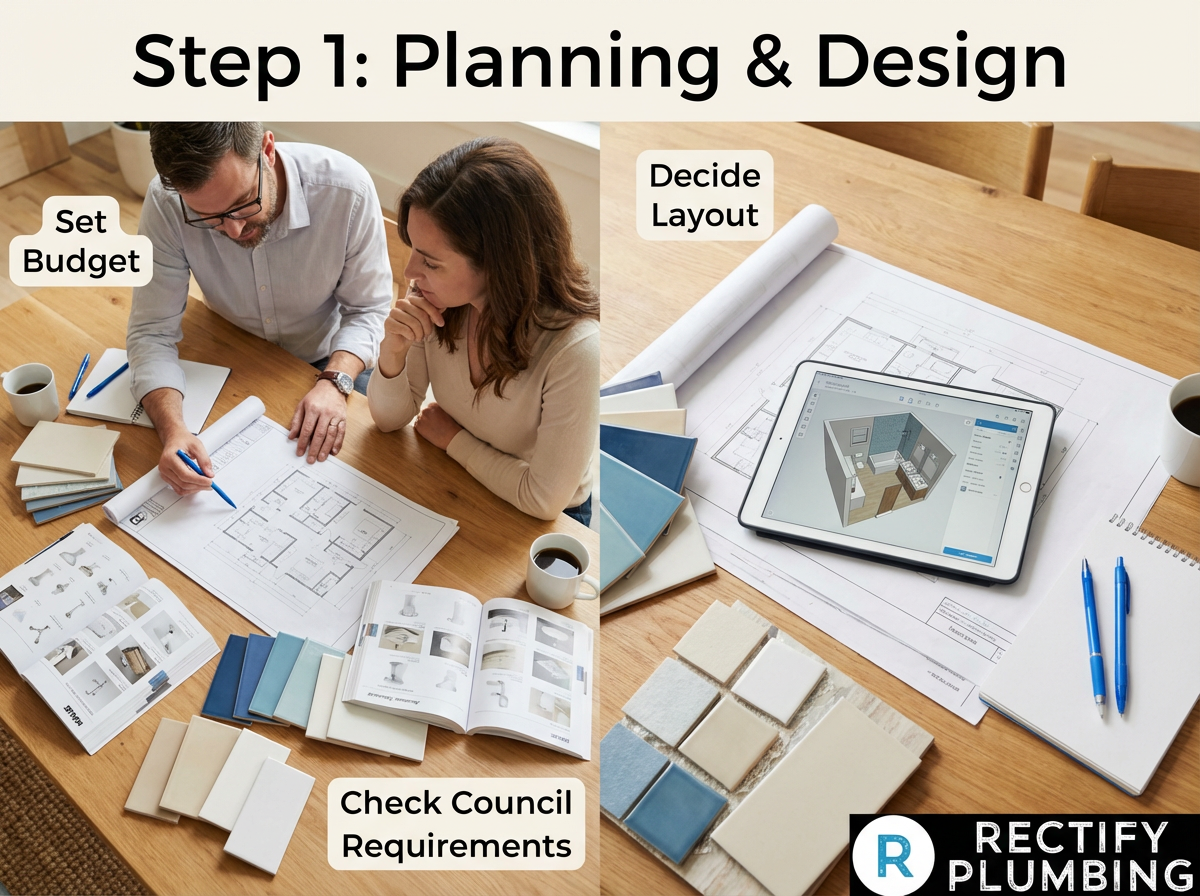 Before any work starts, you need a clear plan. This is where most renovation budgets go wrong — people jump into the build without thinking through the decisions first.
- Set a realistic budget: For a standard bathroom renovation in Dural or Pennant Hills, most homeowners spend between $5,000 and $30,000 depending on size, fixtures, and complexity. Plumbing typically makes up 20–30% of that total.
- Decide on the layout: If you can keep your fixtures (toilet, shower, vanity) in the same positions, plumbing costs drop significantly. Moving fixtures means rerouting pipes — which adds time, labour, and cost.
- Know your council requirements: Some renovations in Dural and Pennant Hills require a development application or building approval. Your plumber and builder can advise on this, but it is worth checking early so it does not delay the project.
Step 2: The Plumbing Work — What Actually Happens Behind the Walls
 This is the part most homeowners do not fully understand — and it is often where costs come from. Here is exactly what a plumber does during a bathroom renovation:
- Waterproofing: This is critical and non-negotiable. The wet area behind tiles and around the shower and bath must be waterproofed before anything else goes on. In Sydney's climate, skipping or cutting corners on waterproofing leads to leaks, mould, and expensive damage within a few years. A good plumber will insist on this.
- Drainage: New or upgraded drainage is needed for the shower, bath, and vanity. The plumber ensures everything drains properly and meets the building code.
- Hot water connections: If you are adding or moving a shower or bath, the hot water supply needs to be connected or rerouted. This may also mean upgrading your hot water system if the current one cannot handle the demand.
- Shower and vanity plumbing: All water supply lines, waste pipes, and connections for your new fixtures are installed by a licensed plumber. This includes the shower head, taps, vanity basin, and toilet if it is being replaced.
Step 3: Materials & Fixtures — What to Choose
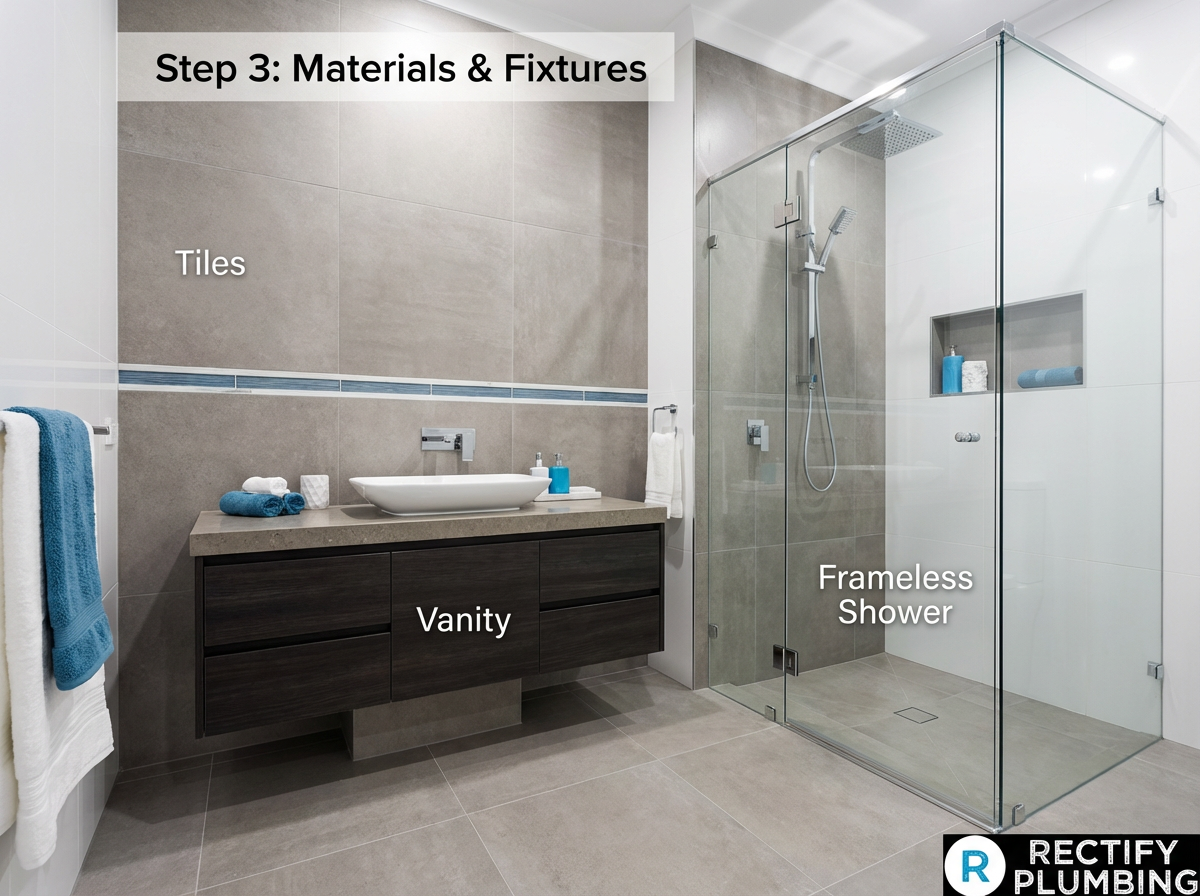 Once the plumbing is planned, it is time to choose what goes in. Here is what to think about:
- Tiles: Porcelain and ceramic are the most popular choices for Dural and Pennant Hills bathrooms. Large-format tiles (600mm x 600mm or bigger) are trending in 2026 and reduce the amount of grout — which means less maintenance.
- Vanity: Wall-hung vanities are popular in smaller bathrooms because they make the room feel bigger. Freestanding vanities work better in larger spaces. Make sure the vanity depth suits your rough-in measurement — your plumber can confirm this.
- Shower: Frameless glass screens are the standard choice now. They open the space up and are easier to clean than framed options. For the shower itself, consider a rain shower head — they are more expensive upfront but make a big difference to the experience.
How Much Does Plumbing Actually Cost in a Bathroom Renovation?
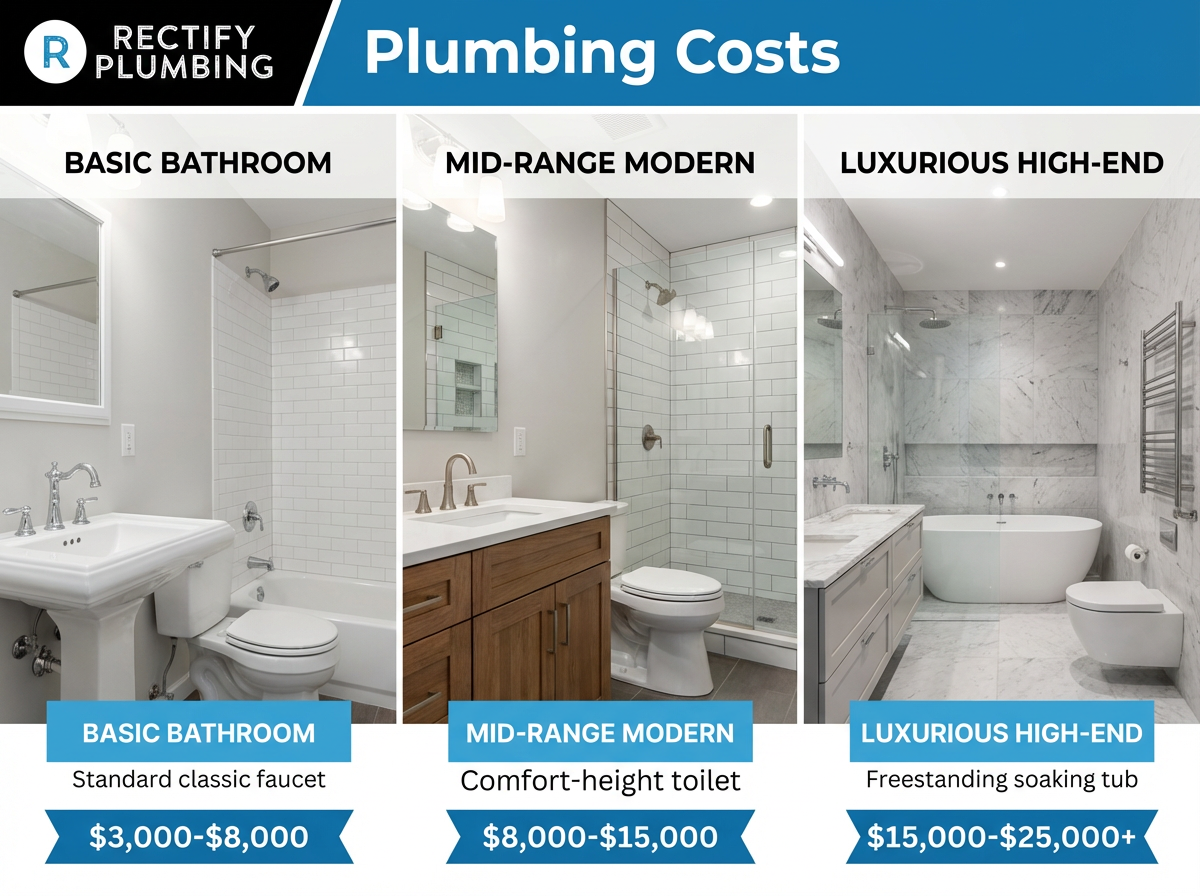 Here are realistic price ranges for plumbing work in a standard bathroom renovation in Dural or Pennant Hills:
- Basic plumbing (keeping fixtures in place, new connections only): $3,000–$8,000
- Mid-range (moving one or two fixtures, full replumb of wet area): $8,000–$15,000
- Full replumb with new shower, vanity, and bath — complex layout: $15,000–$25,000+
Common Mistakes That Blow Out Your Budget
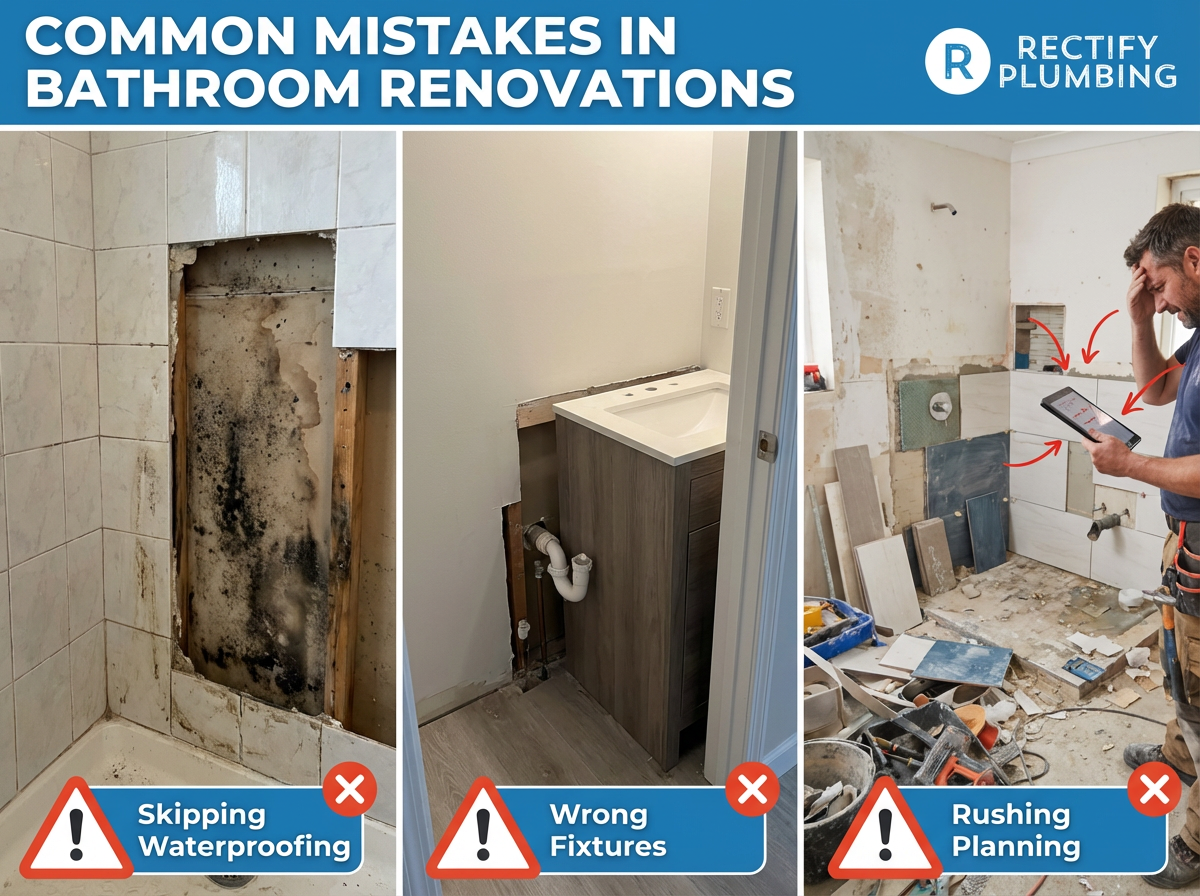 These are the errors that come up again and again in bathroom renovations across the Hills District:
- Skipping waterproofing or using cheap materials: This is the number one mistake. It looks fine for a year or two, then the leaks start. Fixing waterproofing damage after tiles are laid costs far more than doing it properly the first time.
- Choosing fixtures before consulting the plumber: If the vanity you love does not match your rough-in measurement, or the shower you want requires a different water pressure setup, you end up changing plans mid-build — which costs money.
- Not budgeting for the unexpected: Older homes in Dural and Pennant Hills sometimes have surprises behind the walls — corroded pipes, incorrect sizing, or non-standard connections. Set aside 10–15% of your budget as a contingency.
- Rushing the planning: A bathroom renovation done properly takes 2–4 weeks from start to finish. If you rush the design decisions, you end up making changes during the build — and changes during the build are expensive.
How To Choose The Right Plumber For Your Renovation
Not all plumbers specialise in renovation work. Here is what to look for when choosing one for your Dural or Pennant Hills bathroom:- Licensed and insured: This is a must. Any plumber working on your renovation must hold a current licence and public liability insurance.
- Experience with bathroom renovations specifically: General plumbing and renovation plumbing are different skills. Ask for examples of previous bathroom renovation jobs they have completed.
- Transparent pricing: A good renovation plumber will give you a detailed quote before work starts — not a vague estimate. If they will not put it in writing, walk away.
- Willing to work with your builder or designer: Bathroom renovations involve tilers, electricians, and builders as well as plumbers. Your plumber needs to coordinate with the rest of the team.