
- 25Mar
Gas Plumbing in Sydney: What Needs a Licensed Gas Fitter — and What Happens If You DIY
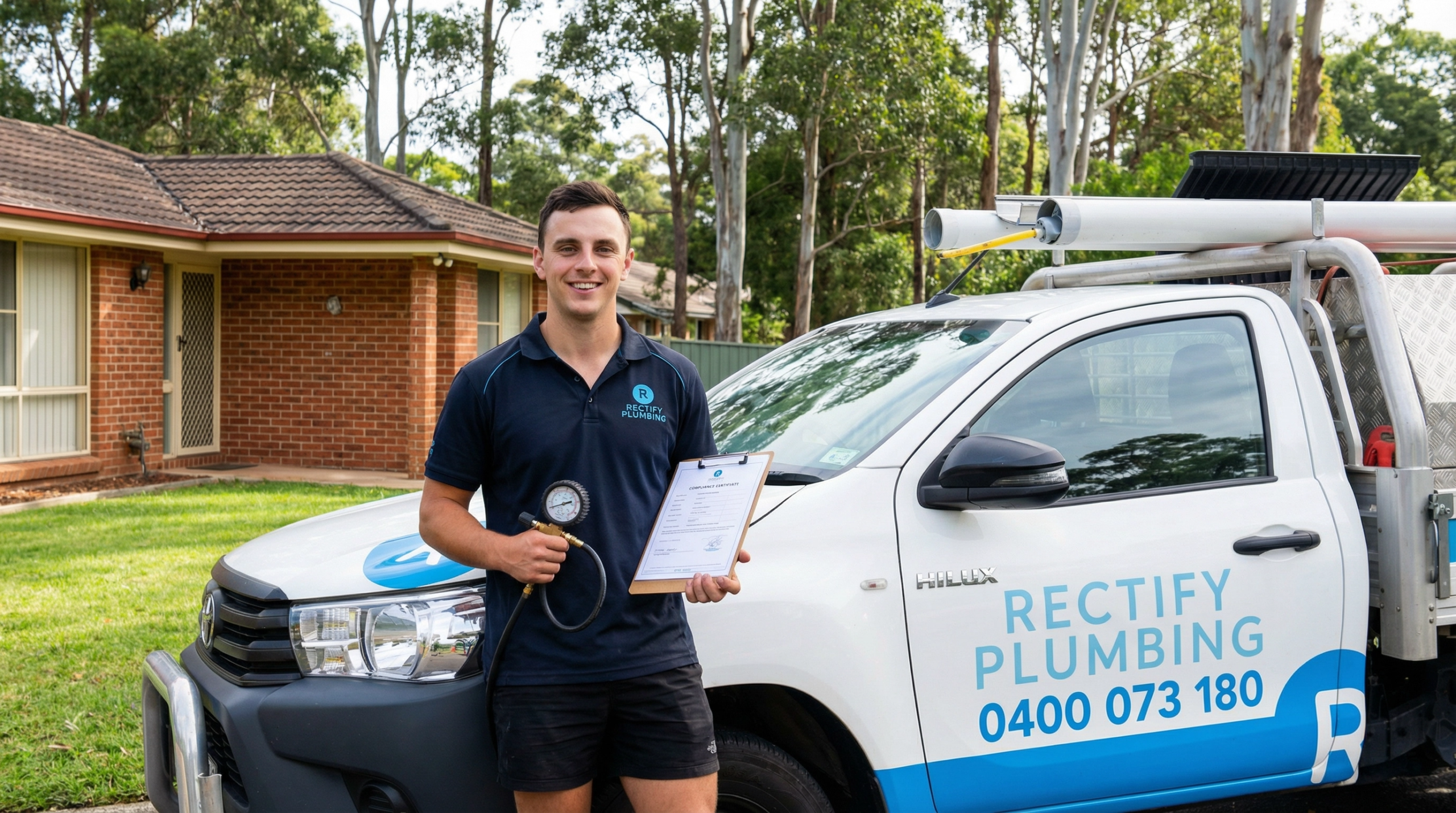
There’s a version of this conversation we have more often than we’d like. A homeowner has done something gas-related themselves — connected a cooktop, relocated a gas point, relit a pilot light on a fixed appliance — and then something has gone wrong. Or they’re selling a property and their solicitor is asking for compliance paperwork that doesn’t exist.
Gas work in NSW is one of the most tightly regulated areas of residential maintenance, and for very good reason. A gas installation done incorrectly doesn’t always fail immediately. It can leak slowly for months before reaching a concentration anyone notices. And when it does fail, the consequences are not a burst pipe or a flooded room — they’re potentially life-threatening.
This article covers what NSW law actually requires, what counts as gas work that needs a licensed fitter, what the real consequences of DIY gas work are, and what you should check before anyone starts work on your gas system. We also cover the suburbs we service across Sydney and where to verify our own licence if you want to confirm it before you call.
What NSW Law Actually Says About Gas Work
Gas Fitting Is a Licensed Trade — Separate from Plumbing
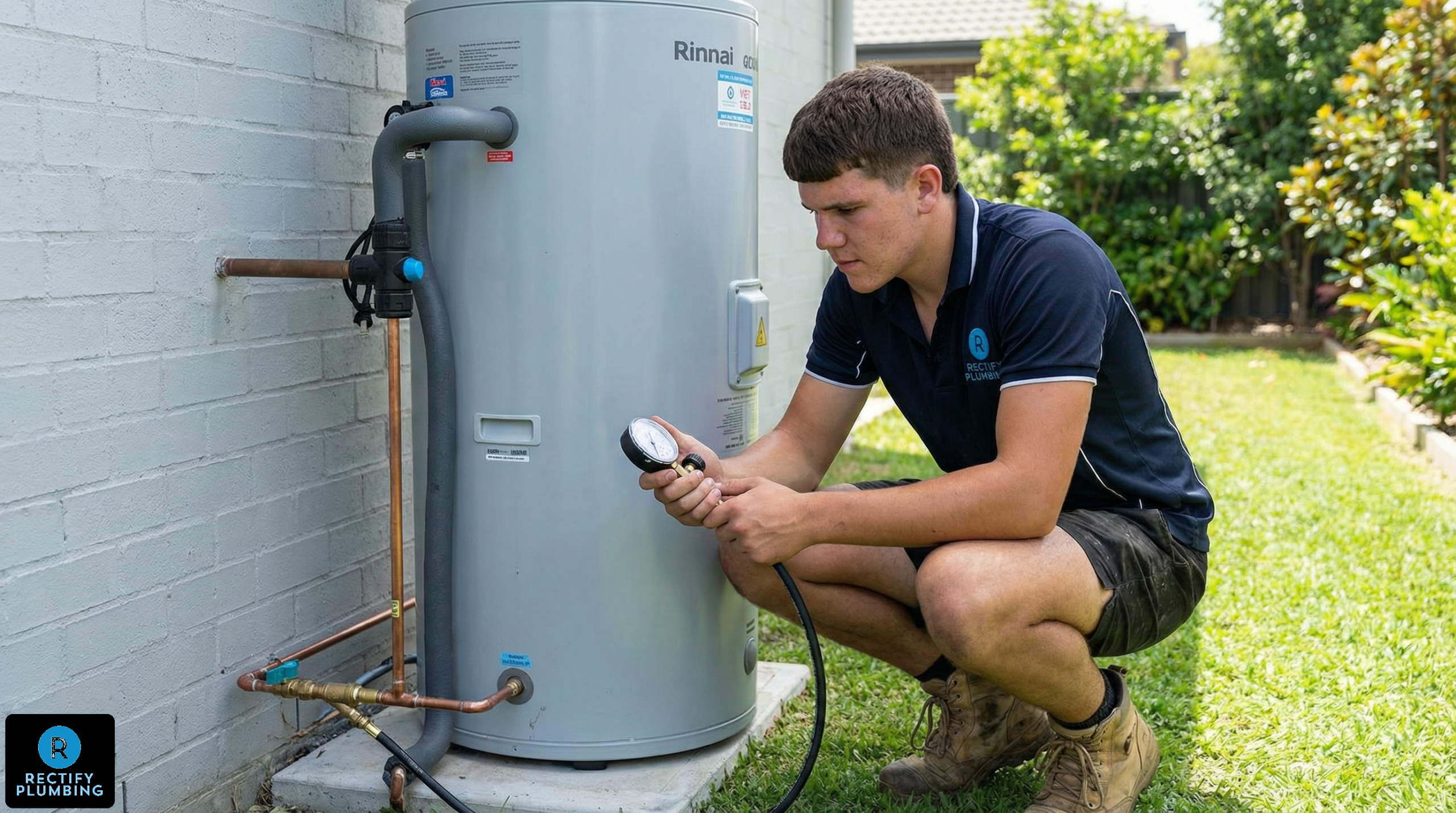
In NSW, gas fitting and plumbing are regulated separately under the Home Building Act 1989 and the Gas and Electricity (Consumer Safety) Act 2017. A plumbing licence does not automatically authorise gas fitting work. A licensed plumber who has not completed the specific gas fitting endorsement cannot legally work on your gas system — even if they’re fully licensed to do everything else.
When you call a tradesperson for gas work, ask specifically whether they hold a gas fitting endorsement on their plumbing licence. A general plumbing licence alone is not sufficient. Rectify Plumbing holds both — licence number 488202C, verifiable at NSW Fair Trading — which is why we handle everything from gas line installation to appliance connection to compliance testing in a single visit.
What Counts as Gas Work Under NSW Law
The scope of what requires a licence is broader than most homeowners expect. Under Australian Standard AS/NZS 5601, which governs gas installations in Australia, licensed gas fitting work includes:
- Installing, altering, extending or repairing any gas fitting — including supply pipes, valves, flexible connectors and appliance connections
- Connecting or disconnecting any gas appliance from a fixed supply — cooktops, ovens, gas heaters, hot water systems, pool heaters, outdoor kitchen equipment
- Installing new gas points or extending existing gas lines — including outdoor BBQ points, fire pit connections and outdoor kitchen supplies
- Commissioning and pressure testing any gas installation after work is complete
- Gas leak detection and repair on fixed installations
The one thing homeowners can legally do themselves is connect a portable appliance to an existing bayonet fitting — such as plugging a portable gas heater into a bayonet outlet on the wall, or connecting a freestanding BBQ to a bayonet point that’s already been installed. The bayonet fitting is designed for end-user connection. Everything upstream of the bayonet fitting requires a licensed gas fitter.
The Australian Standard Reference
AS/NZS 5601 is the Australian and New Zealand standard for gas installations. Every piece of gas work done on a residential property in NSW is supposed to comply with it. When a licensed gas fitter issues a Certificate of Compliance after completing a job, they are certifying that the work meets this standard. That certificate is then lodged with NSW Fair Trading and becomes part of the record for the property.
Quick tip: If you’re ever unsure whether something counts as gas work, err on the side of calling a licensed gas fitter to ask. Most of us will tell you in two minutes over the phone whether it’s something you can do yourself or not.
What Actually Happens When People DIY Gas Work
It Doesn’t Always Fail Immediately — That’s the Problem
The most dangerous thing about an incorrectly installed gas connection is that it often appears to work fine. The appliance lights. The flame looks normal. Nothing smells wrong. So the homeowner assumes they’ve done it correctly, because everything seems to function.
What they may have is a connection that’s not pressure-tight — not leaking enough to smell immediately, but losing gas slowly into a confined space under the bench or behind the wall. Natural gas is odourised specifically so people can detect it, but a very slow leak in a well-ventilated kitchen may not reach a detectable concentration for weeks. In a less-ventilated space — under a cooktop, behind a wall, in a roof cavity — it can accumulate without anyone noticing until something triggers ignition.
The Insurance Problem
Most home and contents insurance policies contain exclusions for damage caused by work that was required to be done by a licensed tradesperson but wasn’t. Gas work almost universally falls into this category under NSW regulations. If there’s a gas-related fire or explosion at your property and the investigation reveals the gas installation wasn’t certified, your insurer’s first question will be who connected it and whether they were licensed.
If the answer is ‘I did it myself’ or ‘someone who wasn’t licensed,’ the claim is very likely to be declined. Not reduced — declined. The installation was illegal, the work was required to be certified, and it wasn’t. This is not a technicality insurers overlook.
The Property Sale Problem
This is the scenario we hear about most often after the fact. A homeowner has had various gas appliances connected over the years — sometimes by licensed tradespeople, sometimes not — and when they go to sell the property, their solicitor or the buyer’s solicitor asks for compliance certificates.
If the certificates don’t exist for work that required them, there are a few options: retrospectively engage a licensed gas fitter to inspect, certify and document the existing installations (which requires the installations to meet current standards — sometimes they do, sometimes they don’t), negotiate with the buyer, or disclose the issue. None of these are free or simple. Doing it right in the first place is significantly cheaper.
The Carbon Monoxide Risk Nobody Talks About
An appliance that isn’t properly commissioned — specifically one where the gas pressure or combustion isn’t set up correctly — can produce carbon monoxide rather than carbon dioxide during combustion. Carbon monoxide is colourless, odourless and has no smell. There are no sensory warnings that it’s present. Symptoms of carbon monoxide exposure are frequently misidentified as flu or fatigue. This is the risk that makes gas work categorically different from most other DIY maintenance tasks around the house.
We attended a property in Hornsby last year that had been sold six months earlier. The new owners had discovered during the sale process that the gas cooktop — installed by the previous owners as part of a kitchen renovation — had no compliance certificate. The previous owners had connected it themselves. We inspected the installation: the flexible connector was the wrong type for the appliance, the isolation valve was positioned incorrectly, and the connection had not been pressure tested. The installation had been in use for three years. We disconnected it, replaced the connector and valve, pressure tested the connection, and issued the compliance certificate. The house had been occupied for three years with a gas installation that had never been properly tested.
How to Check a Gas Fitter Is Licensed in NSW
The NSW Fair Trading Licence Check
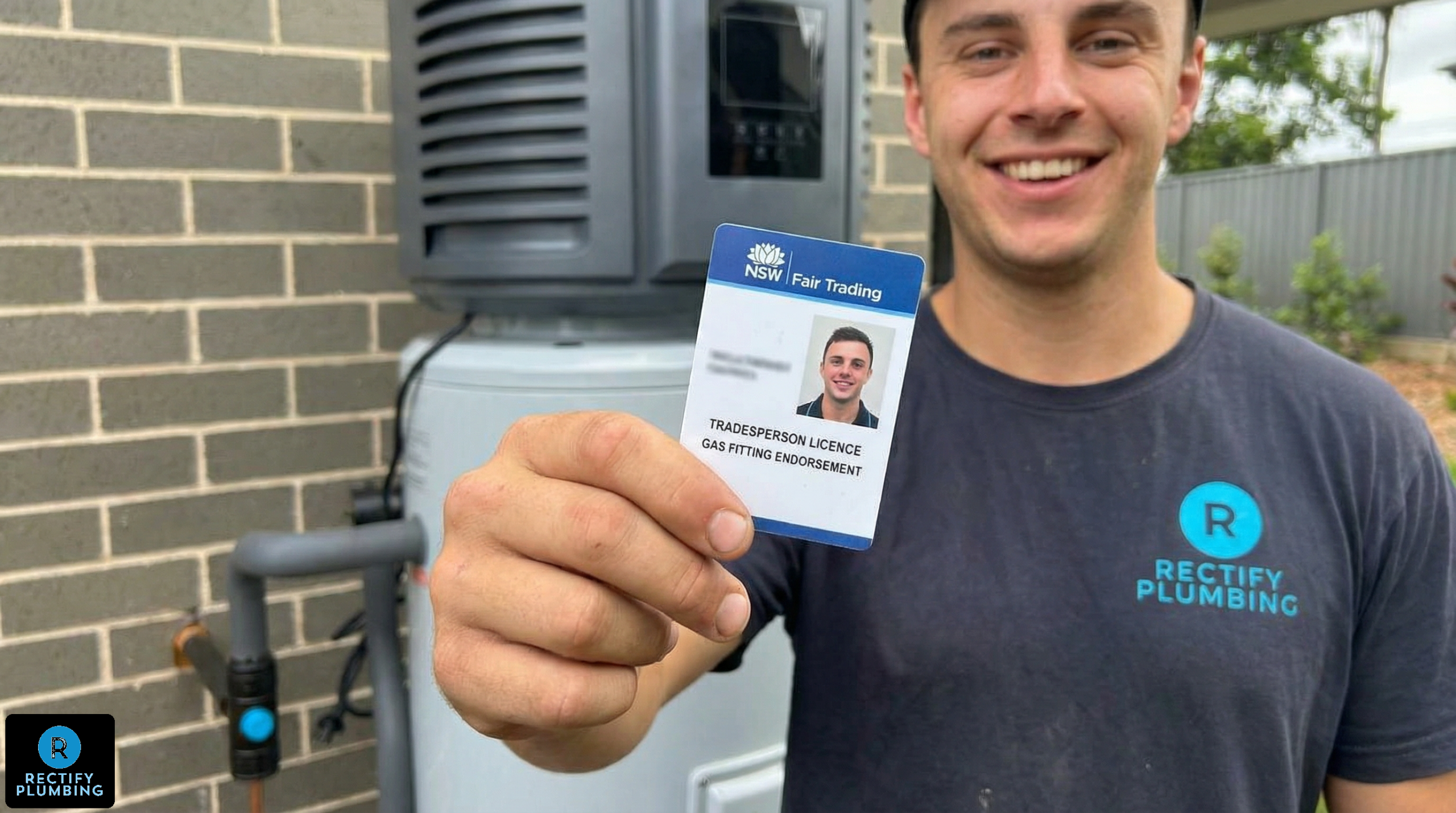
The NSW Government maintains a public licence register at www.fairtrading.nsw.gov.au. You can search by the tradesperson’s name or licence number to confirm they hold a current plumbing and drainage licence with a gas fitting endorsement. Both the licence and the endorsement need to be current — a licence that has lapsed or an endorsement that was not renewed does not authorise gas fitting work.
This takes about 30 seconds and can be done from your phone. We encourage every customer to check before booking any gas tradesperson — including us. Rectify Plumbing’s licence number is 488202C. Look it up. Confirm the gas fitting endorsement is current. That’s exactly what you should do with anyone who works on your gas system.
What to Ask Before Work Starts
Three questions before any gas work begins on your property:
- Are you licensed for gas fitting in NSW specifically — not just general plumbing?
- Can I have your licence number to verify on Fair Trading before you start?
- Will I receive a Certificate of Compliance when the job is complete?
A legitimate licensed gas fitter answers all three immediately and without hesitation. Anyone who deflects, gets defensive, or suggests the paperwork isn’t necessary is someone you should not have working on your gas system.
What the Compliance Certificate Looks Like and Where It Goes
A Certificate of Compliance for gas fitting work is a formal document that records what was done, the licence number of the gas fitter who did it, and the certification that it meets AS/NZS 5601. The original goes to the property owner. A copy is lodged with NSW Fair Trading and becomes part of the permanent record for that property. It’s not optional documentation — it’s a legal requirement attached to licensed gas fitting work in NSW.
What Gas Work We Do Across Sydney
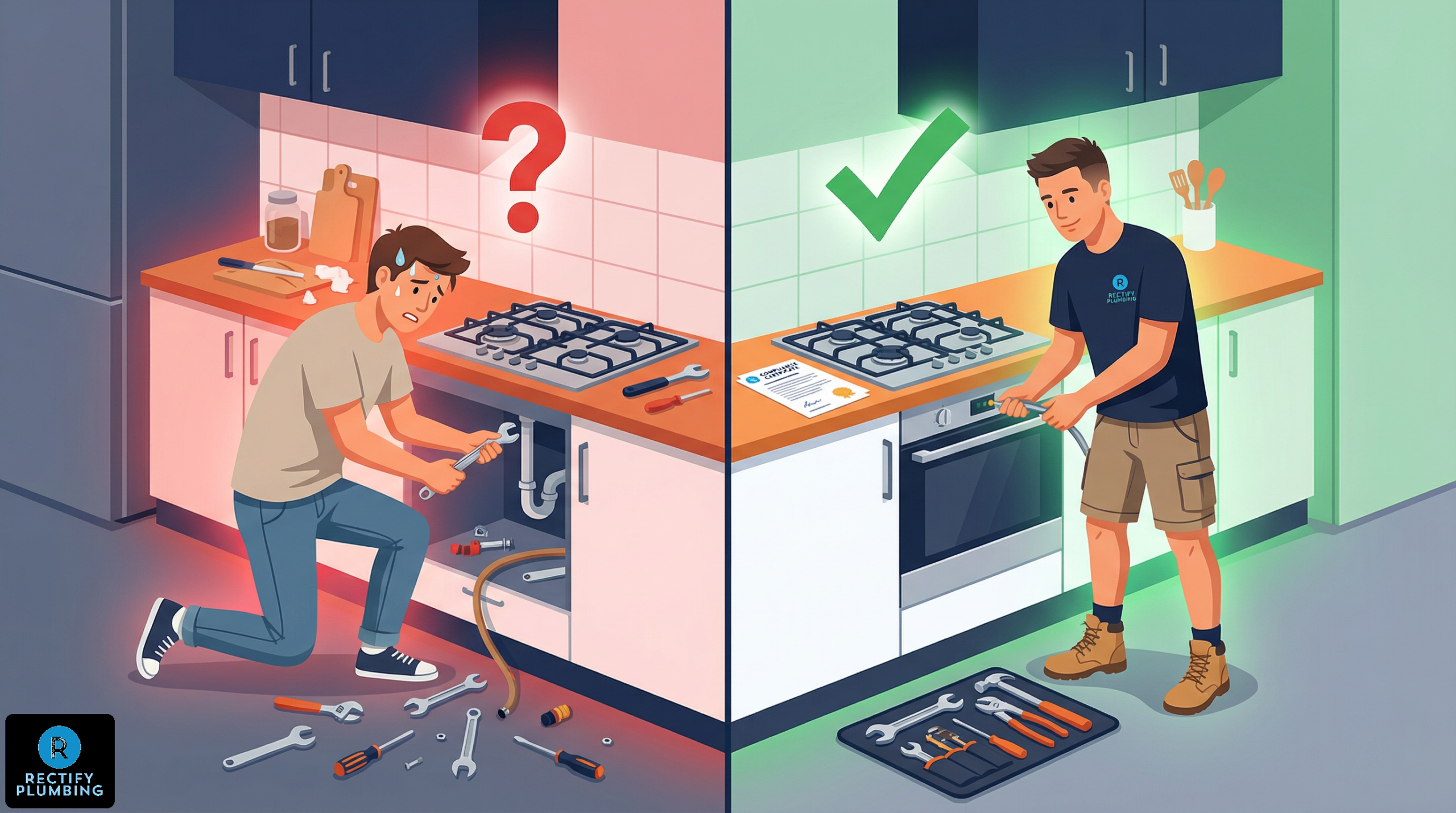
Our gas plumbing team handles the full range of residential and light commercial gas work across Sydney’s North Shore, Hills District, Central Coast and inner west. Here’s what we do regularly:
Gas Appliance Installation and Connection
Cooktops, ovens, gas heaters, pool and spa heaters, outdoor kitchen equipment. Every connection includes an appropriate isolation valve, the correct flexible connector for the appliance type, and a pressure test before the appliance is commissioned. Every job produces a compliance certificate.
Gas Hot Water System Installation and Replacement
Gas hot water is the most common gas job we handle. Storage systems, continuous flow, and heat pump-gas hybrid systems across all major brands. Our hot water installation and repair team carries common replacement units on the van for same-day installation — including emergency replacements when a system fails overnight. All hot water installations include gas commissioning and compliance certification as standard.
New Gas Lines and Outdoor Gas Points
Running a new gas supply line from your existing gas meter — for an outdoor BBQ point, a fire pit connection, an outdoor kitchen, or a new appliance location inside the home. We design the line to deliver the correct flow rate for the appliances it will supply, install isolation valves at appropriate points, and pressure test the entire installation before certifying.
Gas Leak Detection and Repair
If you can smell gas — even faintly, even intermittently — treat it seriously and call us. We use gas detection equipment to locate leaks in supply lines, at appliance connections, and at meter fittings. We do not try to locate leaks by smell alone or by turning appliances on and off. Detection equipment finds small leaks that haven’t yet reached a concentration you can detect reliably.
Compliance Inspections for Property Sales and Renovations
If you’re selling a property and need compliance documentation for existing gas installations, or if you’re buying a property and want the gas system inspected before settlement, we carry out compliance inspections and issue certificates for installations that meet the standard. A preventative maintenance inspection that includes the gas system is something we recommend for any home over 15 years old — gas flexible connectors have a service life that most homeowners are unaware of.
Suburbs We Service for Gas Work
Our gas fitting team based in Berowra and Berowra Heights services the North Shore, Upper North Shore and Hills District as our home ground — Hornsby, Waitara, Asquith, Mount Colah, Turramurra, St Ives, Pymble, Gordon, Castle Hill, Dural, Epping, Carlingford, Chatswood, and surrounding suburbs. We also cover the Central Coast and inner west. If you’re not sure whether we service your area, call us — the answer is almost certainly yes.
Get the Gas Work Done Right — First Time
Gas plumbing is not an area where cutting corners saves money. The short-term saving of not paying a licensed gas fitter is routinely outweighed by insurance complications, compliance issues at property sale, and in the worst cases, outcomes that no amount of money can fix.
Rectify Plumbing holds a current gas fitting licence — number 488202C, verifiable at NSW Fair Trading in 30 seconds. Every gas job we complete includes a pressure test and a Certificate of Compliance as a matter of course. We work across Berowra, Berowra Heights, Hornsby, Castle Hill, Epping, Carlingford, Chatswood and wider Sydney — 24 hours a day for gas emergencies.
Browse our full range of gas plumbing and general plumbing services or call Jake directly on 0400 073 180 any time. If you can smell gas right now, get outside first and call from there.
Request a Quote or Make an Enquiry → rectifyplumbing.com.au
——————————————————————————————————————
What gas work can a homeowner legally do themselves in NSW?
Almost nothing. NSW gas legislation is more restrictive than most homeowners expect. You can connect a portable appliance to an existing bayonet fitting — such as a freestanding gas heater or a portable BBQ — because the bayonet is designed for end-user connection. Everything else — installing, altering, extending or repairing any gas fitting or appliance connection — requires a licensed gas fitter. That includes connecting a gas cooktop, installing a gas oven, adding a gas point, relighting a pilot light on a fixed appliance in some circumstances, and any work on gas supply lines. If you are unsure whether a specific task requires a licence, call us and we will tell you in two minutes.
How do I check if a gas fitter is licensed in NSW?
Go to the NSW Fair Trading licence check at www.fairtrading.nsw.gov.au and search by the tradesperson’s name or licence number. A licensed gas fitter in NSW will hold a plumbing and drainage licence with a gas fitting endorsement — both need to be current. Ask the tradesperson for their licence number before they start work. Any legitimate gas fitter will provide it immediately and without hesitation. Our licence number is 488202C — you can verify it directly on the Fair Trading website.
What is a gas compliance certificate and why does it matter?
When a licensed gas fitter completes work on your property, they are required to issue a Certificate of Compliance for gas fitting work. This document records what was done, certifies that it meets Australian Standard AS/NZS 5601, and is lodged with NSW Fair Trading. It matters for several practical reasons: if you make an insurance claim for gas-related damage and the work was not certified, your insurer may decline it. If you sell the property and a buyer or their solicitor requests evidence of compliance for the gas installation, uncertified work is a problem. And if there is ever an incident, uncertified work shifts liability significantly.
What are the penalties for doing unlicensed gas work in NSW?
Under NSW legislation, carrying out gas fitting work without a licence carries significant penalties — fines of up to several thousand dollars per offence for individuals, and higher for corporations. But the financial penalty is often the smaller concern. Unlicensed gas work that causes a fire, explosion, or carbon monoxide incident can result in criminal liability. Home insurance policies almost universally exclude damage caused by unlicensed work. And in a strata building, unlicensed work in one lot that causes damage to common property or other lots creates serious legal exposure for the person who did it.
Can a gas fitter also do plumbing work, or do I need two different trades?
In NSW, gas fitting and plumbing are related but separate licence endorsements. Not every licensed plumber holds a gas fitting endorsement, and not every gas fitter holds a full plumbing licence. Rectify Plumbing holds both — which means for jobs that involve both plumbing and gas work (a bathroom renovation that includes a gas hot water system, for example, or a kitchen renovation involving both water supply and gas cooktop connection) we handle everything in one visit rather than coordinating two separate trades. It is always worth confirming both endorsements before booking anyone for combined work.
Recent Articles
 Plumbing Problems in Ryde, Carlingford & the Parramatta Area: A Local Plumber’s GuideApril 1, 2026Ryde, Carlingford and the Parramatta ...
- Gas Plumbing in Sydney: What Needs a Licensed Gas Fitter — and What Happens If You DIYMarch 25, 2026There’s a version of this ...
- Blocked Drains in Chatswood, Mosman & the Lower North Shore: What’s Actually Causing ThemMarch 20, 2026If you live in Mosman, Chatswood, ...
- Emergency Plumber Blacktown, Dural, Belrose & Western Sydney: What to Do When It Goes WrongMarch 15, 2026It’s always the worst moment. ...


Contact Us
Rectify Plumbing offers comprehensive solutions for all of your residential and commercial plumbing needs across Sydney. Contact us today for a fast quote!
Get startedRelated Articles
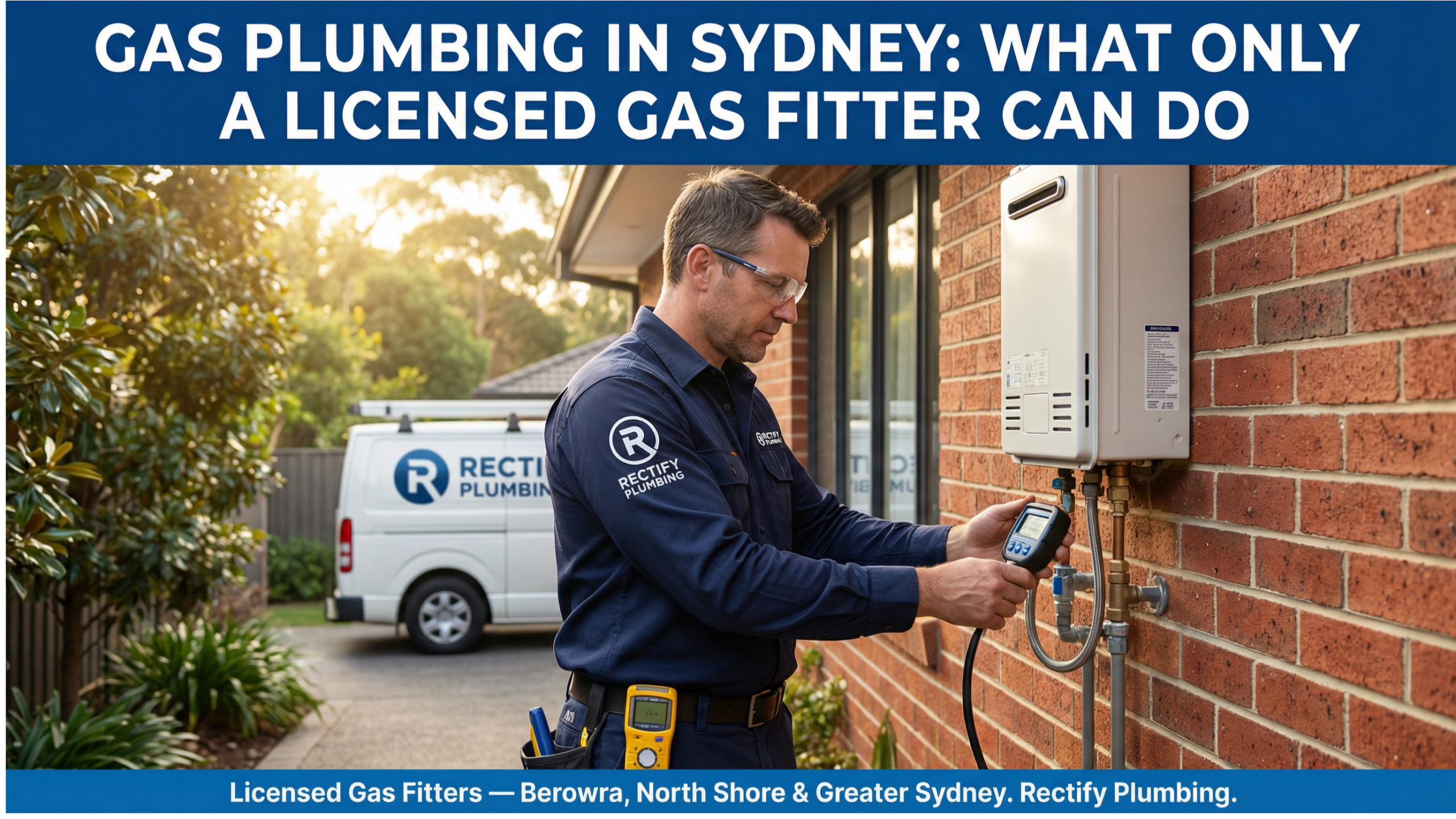
Gas Plumbing in Sydney: What Only a Licensed Gas Fitter Can Do — and Why It Matters
What Is Licensed Gas Work and Why Can't Anyone Just Do It?
Gas Fitting Is a Separate Licence in NSWIn NSW, plumbing and gas fitting are related but separate licences. A licensed plumber is not automatically licensed to do gas work — they need specific gas fitting qualifications on top of their plumbing licence. When you're hiring someone for gas work, it's worth specifically asking whether they hold a gas fitting licence, not just a plumbing licence.
Rectify Plumbing holds both. All gas work we complete is carried out by licensed gas fitters and comes with the required compliance certificate. That certificate matters — for insurance, for your safety, and if you ever sell the property. Take a look at our dedicated gas plumbing services page if you want to understand the full scope of what we cover.
What the Law Says Homeowners Can and Cannot DoIn NSW, homeowners can do some minor plumbing work themselves — replacing tap washers, for example. Gas is different. There is almost nothing gas-related that a homeowner can legally do without a licence. You cannot install, alter, extend, or repair any gas fitting or appliance. You cannot connect or disconnect gas appliances from the supply.
Even something as apparently simple as moving a gas cooktop a few centimetres to fit a new benchtop technically requires a licensed gas fitter to disconnect and reconnect it. We're not saying this to generate work — we're saying it because people get caught out, and more importantly, because gas work done incorrectly is dangerous in a way that a poorly fitted tap washer simply isn't.
What a Gas Compliance Certificate Actually MeansWhen a licensed gas fitter completes work on your property, they issue a Certificate of Compliance for gas fitting work. This document records what was done, confirms it was inspected and meets Australian Standard AS/NZS 5601, and is held on record with NSW Fair Trading.
If you ever have a gas incident on your property and the work wasn't certified, your insurer may decline the claim. If you're selling the property and a buyer asks for evidence of compliance on the gas installation, uncertified work is a problem. The certificate isn't just a piece of paper — it has real, practical value.
Quick tip: Before any gas work starts on your property, ask the tradesperson for their gas fitting licence number and confirm they will issue a compliance certificate on completion. Any legitimate gas fitter will have both and won't hesitate to provide them.
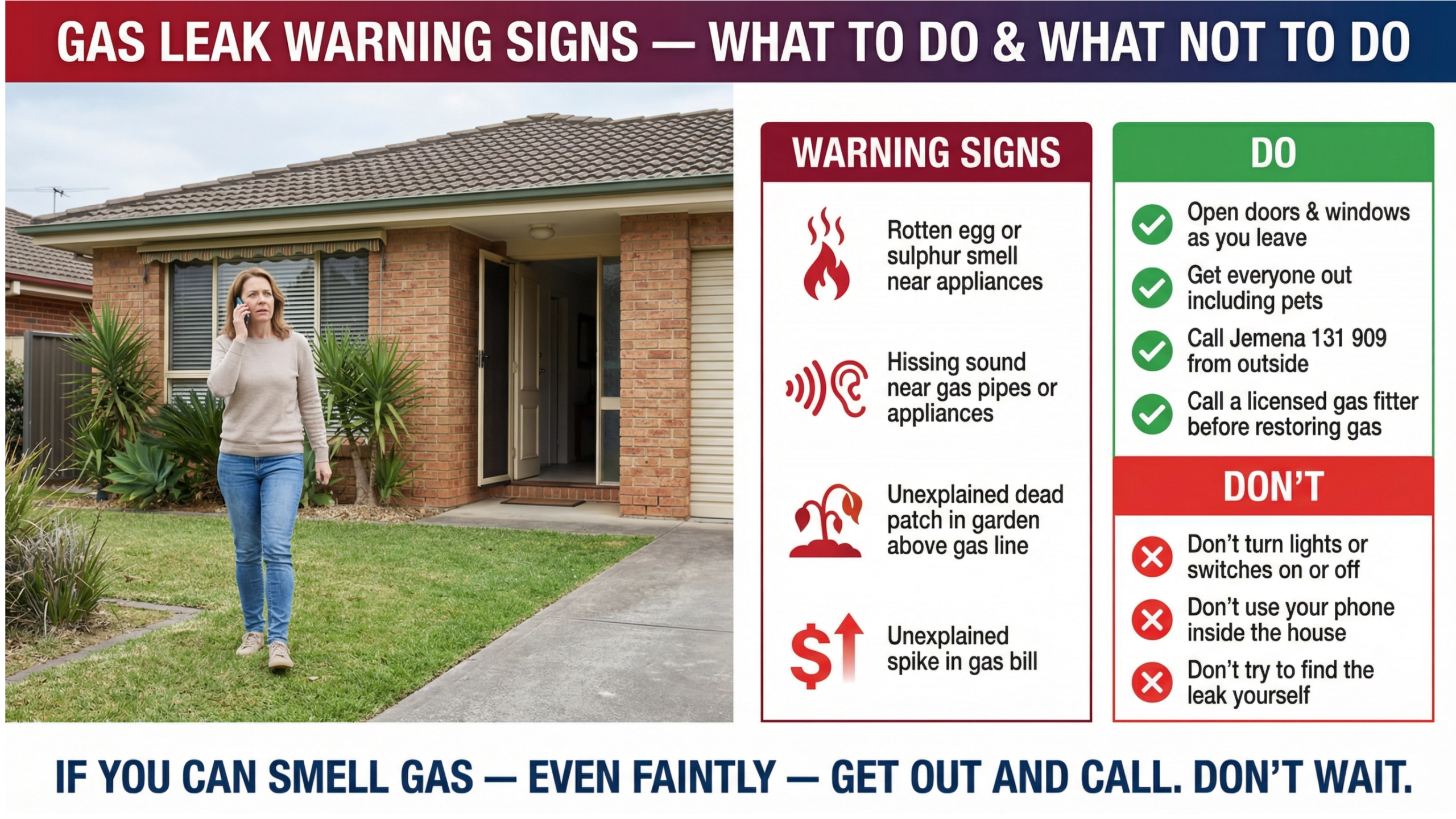
Warning Signs of a Gas Leak — What to Do and What Not to DoThis is the section to read carefully, because the response to a suspected gas leak is different from almost any other home problem. Getting it wrong can cause serious harm.
The Signs That Something Is WrongThe smell is the most obvious one — natural gas has a distinctive rotten egg or sulphur smell added to it specifically so leaks can be detected. If you can smell that anywhere in your home, near your appliances, or around your gas meter, treat it as a leak until confirmed otherwise.
Other signs are subtler: a hissing sound near a gas appliance or pipe, an unexplained dead patch in the garden directly above where a gas line runs underground, or a gas bill that's noticeably higher than usual without a change in usage. Underground gas lines can also be damaged by the same tree root intrusion that causes blocked drains and pipe damage — roots don't discriminate between a drainage pipe and a gas line when they're looking for a path through the soil.
What to Do If You Suspect a Gas LeakDo not turn any lights or switches on or off. Do not use your phone inside the house. Do not try to find the leak yourself or turn appliances on to test them. Open doors and windows as you leave to ventilate, get everyone out of the house including pets, and call from outside.
Call your gas network provider's emergency line first — in NSW that's Jemena on 131 909 for natural gas. They will isolate the gas supply to your property. Once the supply is isolated and the area is safe, call a licensed gas fitter to find and repair the source of the leak before gas is restored.
After a Suspected Leak — Don't Just Reset and Move OnWe've attended jobs where a homeowner has had the gas turned off due to a suspected leak, the smell has cleared, and they've turned the gas back on themselves assuming it sorted itself out. It doesn't sort itself out. A gas leak doesn't seal itself. If there was a leak, it's still there — it just isn't at a detectable concentration at that moment.
If you've had a gas incident at your property, have a licensed gas fitter inspect the installation — and if needed, run a CCTV inspection of any underground gas pipework — before the gas supply is restored. Our gas team covers Berowra, Berowra Heights, the North Shore and wider Sydney for gas inspections and leak repairs.
We were called to a property in Berowra Heights where the homeowner had noticed a faint gas smell near the hot water system for about two weeks. She'd mentioned it to a family member who told her it was probably just the pilot light and not to worry about it. When we arrived and tested the connections, we found a slow leak at a corroded fitting on the gas supply line to the unit — it had been leaking at a low level for some time. The fitting was replaced, the installation was tested and certified, and that was the end of it. If she'd left it another few weeks, particularly with the warmer weather coming and windows being closed more often, the concentration could have built to a dangerous level. The lesson is simple: if you can smell gas, even faintly, even occasionally, get it checked.
Common Gas Plumbing Jobs We Do Across Sydney and the North Shore
Gas Hot Water System Installation and Replacement
This is the most common gas job we handle. Whether it's replacing an ageing gas storage system, upgrading to a continuous flow unit, or installing gas hot water in a home that's switching from electric, the job involves more than just swapping one unit for another. The gas supply line has to deliver sufficient flow rate for the new appliance, the flue has to be correctly positioned and terminated, and the installation has to be commissioned and tested before we sign it off.
If you're considering switching to gas hot water or upgrading your existing system, our hot water installation and repair team can assess your current gas supply and advise on what's involved before you commit to anything.
Gas Cooktop and Oven ConnectionsConnecting a new gas cooktop or oven — or reconnecting an existing one after a kitchen renovation — is one of the most common gas jobs in residential properties. It's also one of the most commonly done incorrectly, often by people who assume it's as simple as screwing a flexible hose onto the appliance and turning the gas back on.
The correct process involves checking the gas supply pressure is appropriate for the appliance, installing an isolation valve in the right location, using the correct flexible connector for the appliance type, and pressure testing the connection before the appliance is commissioned. All of this has to be done by a licensed gas fitter and documented with a compliance certificate.
Outdoor Gas Lines — BBQs, Fire Pits, Outdoor KitchensRunning a permanent gas line to an outdoor entertaining area is something a lot of Sydney homeowners want, and it's a job we do regularly across Berowra, Berowra Heights and the North Shore. A permanent gas point for a BBQ or outdoor kitchen eliminates the hassle of swapping gas bottles and gives you a consistent, controlled flame.
The work involves running a gas supply line from your existing gas meter, installing isolation valves, fitting the outdoor connection point, and pressure testing the entire installation. Done properly with the right materials, an outdoor gas line is very reliable. Done with the wrong pipe type or fittings — which we've seen — it's a slow leak waiting to happen.
Gas Leak Detection and Pipe RepairsFinding a gas leak isn't always as simple as following your nose. Slow leaks in underground lines or inside wall cavities can be present for some time before they reach a concentration you can detect by smell. We use pressure testing and gas detection equipment to locate leaks accurately rather than guessing. Underground lines can also be damaged by ground movement, corrosion, or accidental impact — in the same way that a burst pipe can go undetected inside a wall until the damage is already done. Once located, the repair is straightforward — but finding it precisely first is what makes the repair reliable.
Gas vs Electric — Is It Worth Switching in a Sydney Home?
The Running Cost ArgumentGas has traditionally been cheaper to run than electricity for heating and cooking in NSW, but this comparison has become more complicated in recent years as energy prices have shifted. The honest answer is that it depends on your usage, your current tariffs, and whether you're comparing gas to standard electricity or to solar-assisted electricity.
For hot water in a household with moderate to high demand, gas — particularly continuous flow — tends to still offer a running cost advantage over standard electric storage. For cooking, most people who cook seriously prefer gas for the control it gives over heat, independent of cost.
Natural Gas vs LPGProperties connected to the natural gas network — which includes most of Berowra, Berowra Heights and the North Shore — pay reticulated gas rates, which are generally more economical than LPG. Properties not connected to the network have to use LPG bottles or bulk tanks, which have higher per-unit fuel costs. If you're on LPG and considering switching to natural gas, the first step is checking whether your property is within reach of the network — contact Jemena to confirm availability at your address.
When Gas Makes Clear SenseIf your existing gas infrastructure is already in place — gas meter, supply lines to the areas you need — then adding or upgrading gas appliances is usually cost-effective. The infrastructure cost has already been paid. If you're starting from scratch, the cost of running a new gas supply line from the street needs to be factored in. We can assess your existing setup and give you a realistic picture of what any changes would involve. Browse our full plumbing and gas services for more on what we cover.
Gas Appliance Servicing — Something Most People Skip Entirely
Gas Appliances Need Periodic ChecksMost homeowners service their car but never think about servicing their gas appliances. Burners accumulate debris and carbon buildup over time, which affects combustion efficiency and can cause incomplete burning — producing carbon monoxide rather than carbon dioxide. Flexible connectors have a service life and should be replaced periodically. Flues can become blocked or develop leaks at joints.
None of this is dramatic, but a gas appliance that's running poorly or has a deteriorated connection is a safety concern as much as an efficiency one. A periodic check — particularly for hot water systems, which run constantly — is worth including in a regular home maintenance inspection schedule.
How Old Is Your Gas Hot Water System?If you don't know how old your gas hot water system is, it's worth finding out. The age is usually encoded in the serial number — call us and we can help you decode it from the unit's data plate. Gas storage systems have an expected lifespan of around 10 to 12 years. Continuous flow units last longer — often 15 to 20 years with good maintenance — but the gas valve and burner assembly do wear over time.
A system that's approaching end of life and starting to have issues — slow recovery, pilot light problems, unusual smells — is worth replacing proactively rather than waiting for it to fail completely. We cover hot water system replacement as part of our hot water installation and repair service — same-day service available across Berowra, the North Shore and wider Sydney.
Quick tip: If your gas hot water system is over 10 years old and hasn't been serviced, it's worth a quick inspection. A service visit costs a fraction of an emergency replacement and often extends the life of the unit significantly.
Gas Work Done Right — From Berowra to the CBD

Gas plumbing isn't complicated when it's done properly by someone who knows what they're doing. What makes it different from other trades is that the margin for error is narrower — a gas installation that's 95% right is not good enough. It has to be right, it has to be tested, and it has to be certified.
Rectify Plumbing's gas fitting team works across Berowra, Berowra Heights, the North Shore, and wider Sydney. We're licensed, we test everything before we leave, and every gas job comes with a compliance certificate as a matter of course — not as an optional extra. Whether it's a gas leak you need investigated today, a hot water system you need replaced, or an outdoor gas line you've been meaning to get installed for years, we're the team to call.
Take a look at our full range of plumbing and gas services or get in touch directly. We'll give you a straight answer on what's involved before any work starts.
Request a Quote or Make an Enquiry -> rectifyplumbing.com.au [service_faqs]