
- 07Feb

How To Safely Unblock An External Drain
A blocked external drain can quickly become a messy and inconvenient problem for homeowners. Whether due to debris, leaves, or a buildup of foreign objects, tackling a blocked drain outside your house requires a systematic approach to prevent a disaster. In this step-by-step guide, we’ll explore how to unblock external drains safely and effectively to prevent any potential damage or inconvenience. Rectify Plumbing is a leader in unblocking outdoor drains so read on.
Identifying the Blocked External Drain
The first step in resolving an issue related to drain blockage outside your house is identifying the location of the blockage. Take note of any signs, such as water pooling around the drain, foul odours, or slow drainage. Once you’ve pinpointed the blocked external drain, gather the necessary tools for the task.
Tree Roots
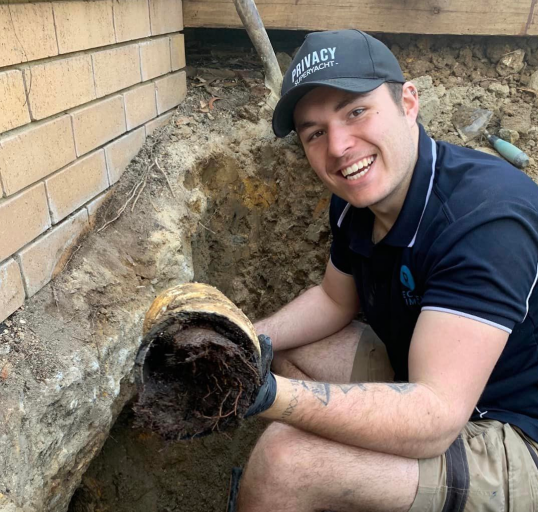
One common cause of external drain blockages is the intrusion of tree roots into the pipes. If you suspect tree roots are the culprit, consider using root-killing products specifically designed for drains. These products, usually available at hardware stores, can help eliminate tree roots without causing significant harm to your landscaping.
Community Collaboration
If you notice recurring external drain blockages in your neighbourhood, consider collaborating with your community to address the root causes. Organise clean-up events to remove debris from common drain areas and raise awareness about proper waste disposal. By working together, you can create a cleaner and more efficient drainage system for the entire community.
Safety Precautions You Should Know
Before you proceed with unblocking the outdoor drain, ensure your safety by wearing gloves and, if needed, protective eyewear. Additionally, keep in mind that certain chemical drain cleaners can be harmful to both you and the environment, so consider opting for more eco-friendly alternatives.
Clearing Debris from the Drain Entrance
Begin by removing any visible debris or leaves from the drain entrance. Before you proceed, ensure your safety by wearing gloves and, if needed, protective eyewear. A pair of gloves and a small shovel or trowel can be handy for this task. This preliminary step helps create easier access to the underlying blockage.
Using a Plunger
If the drain blockage outside persists, try using a plunger specifically designed for outdoor drains. Apply firm, rhythmic pressure to create a vacuum and dislodge the blockage. Repeat this process several times until you notice improved water flow.
Homemade Drain Cleaner
For a natural and environmentally-friendly solution to unblocking an outside drain pipe, create a homemade drain cleaner. Mix equal parts of baking soda and vinegar, and pour the mixture down the blocked drain. Allow it to sit for at least 30 minutes before flushing the drain with hot water. This combination can help break down organic matter causing the blockage.
Drain Snake or Auger
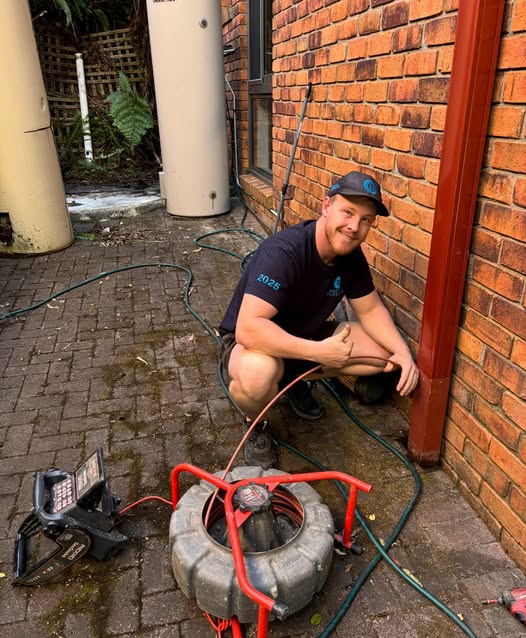
If the blockage persists, it’s time to bring out the heavy artillery – a drain snake or auger. Insert the tool into the drain and turn the handle clockwise to navigate through the pipe. The rotating motion helps dislodge and break apart stubborn blockages. Be patient and persistent, as it may take some time to reach the source of the issue.
High-Pressure Water Jet
For more challenging blockages, consider using a high-pressure water jet. This tool can be particularly effective in clearing away accumulated grime, grease, or tree roots. Exercise caution and follow the manufacturer’s instructions to prevent any potential damage to the drain pipes.
Chemical Drain Cleaner (as a Last Resort)
As a last resort on how to unblock a drain pipe outside, consider using a chemical drain cleaner. However, use these products with extreme caution, as they can be harsh on both your plumbing and the environment. Follow the instructions carefully, and ensure proper ventilation during application.
Take Professional Assistance
In some cases, despite your best efforts, a blocked external drain may persist. If you’re unable to resolve the issue on your own, it’s wise to seek assistance from a blocked drain expert. Drainage experts have specialised tools and knowledge to tackle complex blockages efficiently. Contacting a professional can save you time and frustration and potentially prevent further damage to your drainage system.
Regular Maintenance to Prevent Future Blockages
Once you’ve successfully unblocked the external drain, implement regular maintenance to prevent future issues. Install drain guards or covers to catch debris and leaves before they enter the drainage system. Periodically flush the drains with hot water to minimise the accumulation of grease and soap scum.
Bottom-line
How to fix a blocked drain is a very challenging task, but with the right approach, you can safely and effectively resolve the issue. By following this step-by-step guide and incorporating regular maintenance practices, you can keep the blocked drain outside your house clear and prevent future blockages.
Contact Us
Rectify Plumbing offers comprehensive solutions for all of your residential and commercial plumbing needs across Sydney. Contact us today for a fast quote!
Get startedRelated Articles
Blocked Drain Sydney: How to Clear It and When to Call a Plumber
Quick answer: how to clear a blocked drain
To clear a blocked drain, flush a slow sink or shower with boiling water and plunge it with the overflow covered; if more than one fixture is affected, the blockage is in your main sewer line and needs a licensed plumber with a drain camera and water jetter. Skip supermarket drain chemicals — they rarely reach a main-line blockage and can damage older Sydney pipework. For a same-day blocked drain plumber across Sydney and the Central Coast, call Rectify Plumbing on 0400 073 180.What actually causes blocked drains in Sydney?
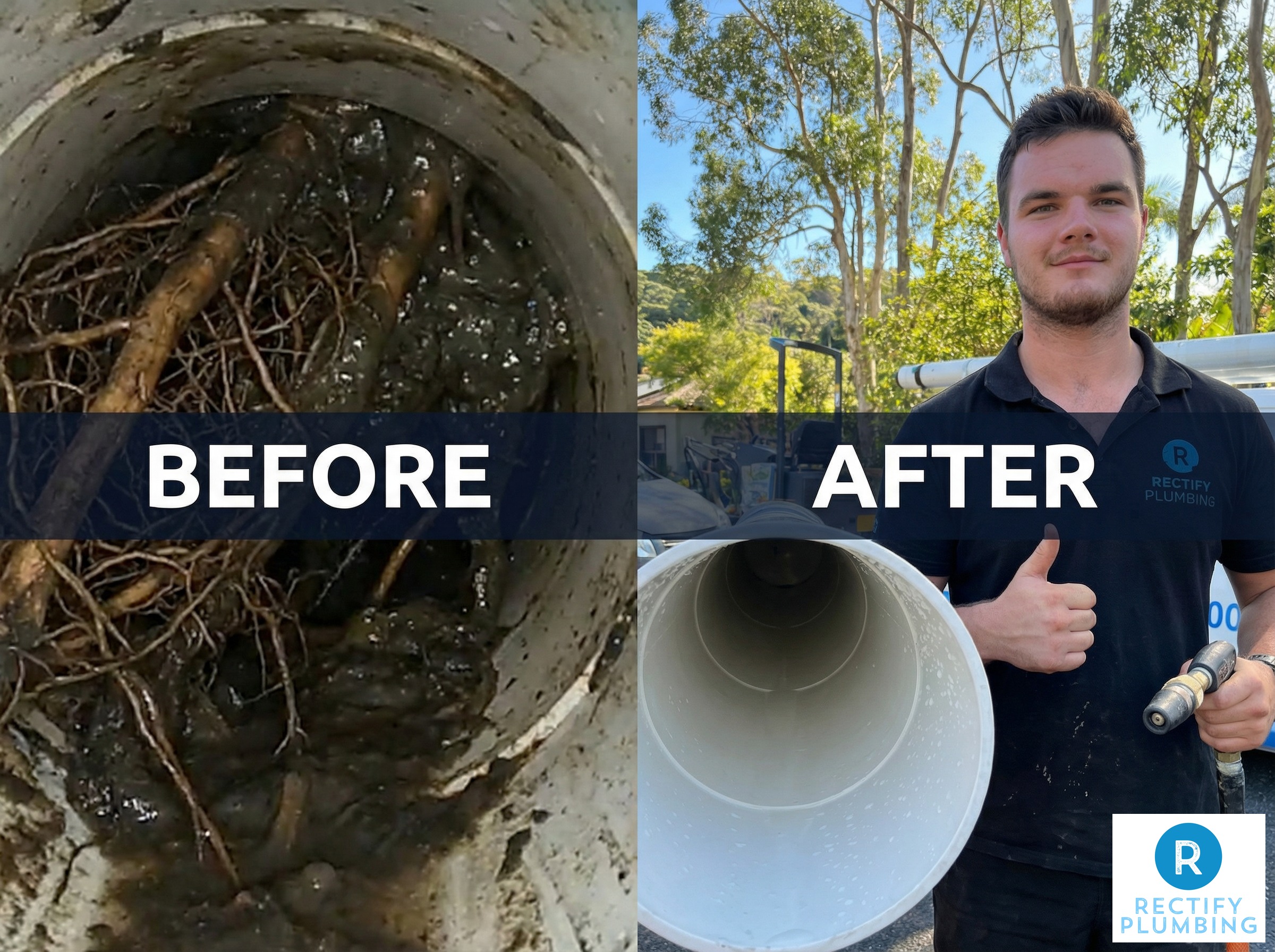
Tree roots are the number one cause we find. Large parts of Sydney and the Central Coast still run on clay or earthenware sewer lines with rubber-ring joints, and roots from figs, paperbarks and gums push straight into those joints. Kitchen fat, wet wipes, hair and collapsed pipe sections make up most of the rest.Symptom to cause: what your drain is telling you
| What you notice | Most likely cause | What it needs |
|---|---|---|
| One slow sink, everything else fine | Fat, soap or hair in the trap | Boiling water, plunger, clean the trap |
| Gurgling toilet when the washing machine drains | Main sewer line partially blocked | CCTV inspection + jetting |
| Multiple fixtures backing up at once | Main line blockage downstream | Same-day licensed plumber |
| Water pooling at the overflow relief gully in the yard | Sewer blockage forcing water out by design | Emergency call-out |
| Same drain blocks every few months | Tree roots or a cracked, misaligned pipe | Camera inspection then pipe relining or repair |
| Sewage smell outside with no visible water | Cracked pipe or dry trap | CCTV drain inspection |
| Stormwater pit overflowing in heavy rain | Silt, leaves or root-choked stormwater line | Jetting and pit clean-out |
What can you safely try yourself before calling a plumber?
If only one fixture is affected, it is worth ten minutes of your time. These steps are safe on Sydney's older pipework and will clear a fair share of kitchen and bathroom blockages without any chemicals.- Boiling water. Pour a full kettle slowly down the drain in three stages. Best on kitchen sinks where cooking fat has set.
- Clear the trap. Put a bucket under the P-trap beneath the sink, unscrew it by hand, and pull out the hair and gunk. This is the single most effective DIY fix for a basin or kitchen sink.
- Plunge properly. Cover the overflow hole with a wet cloth, fill the basin with a few centimetres of water so the plunger seals, then push and pull firmly about twenty times.
- Bicarb and vinegar. Half a cup of bicarbonate of soda, then a cup of white vinegar, left for fifteen minutes and flushed with hot water. Gentle on pipes and works on light grease.
- Hand auger on the shower. A small drain snake will pull out the matted hair sitting just below a shower waste.
- Stop and call. If none of that shifts it in ten minutes, or a second fixture is misbehaving, the problem is past the trap. Further DIY at that point usually just adds to the mess.
What makes a blocked drain worse
- Caustic drain cleaners. Corrosive, ineffective on main-line blockages, and dangerous for whoever opens the pipe next.
- Repeated flushing. Every flush adds to water that has nowhere to go, which is how a blocked drain becomes a sewage overflow inside the house.
- Forcing a garden hose down the line. Can push the blockage into a tighter section or damage an already cracked pipe.
- Lifting a maintenance hole cover yourself. Sewer gas and contaminated water are genuine health risks.
How do professionals clear a blocked drain?
The order matters. We look before we cut, because clearing a blockage without knowing why it formed means you will see us again in three months. A typical Rectify Plumbing blocked drain job runs like this.- Locate the access point. Usually an inspection opening or the overflow relief gully in the yard.
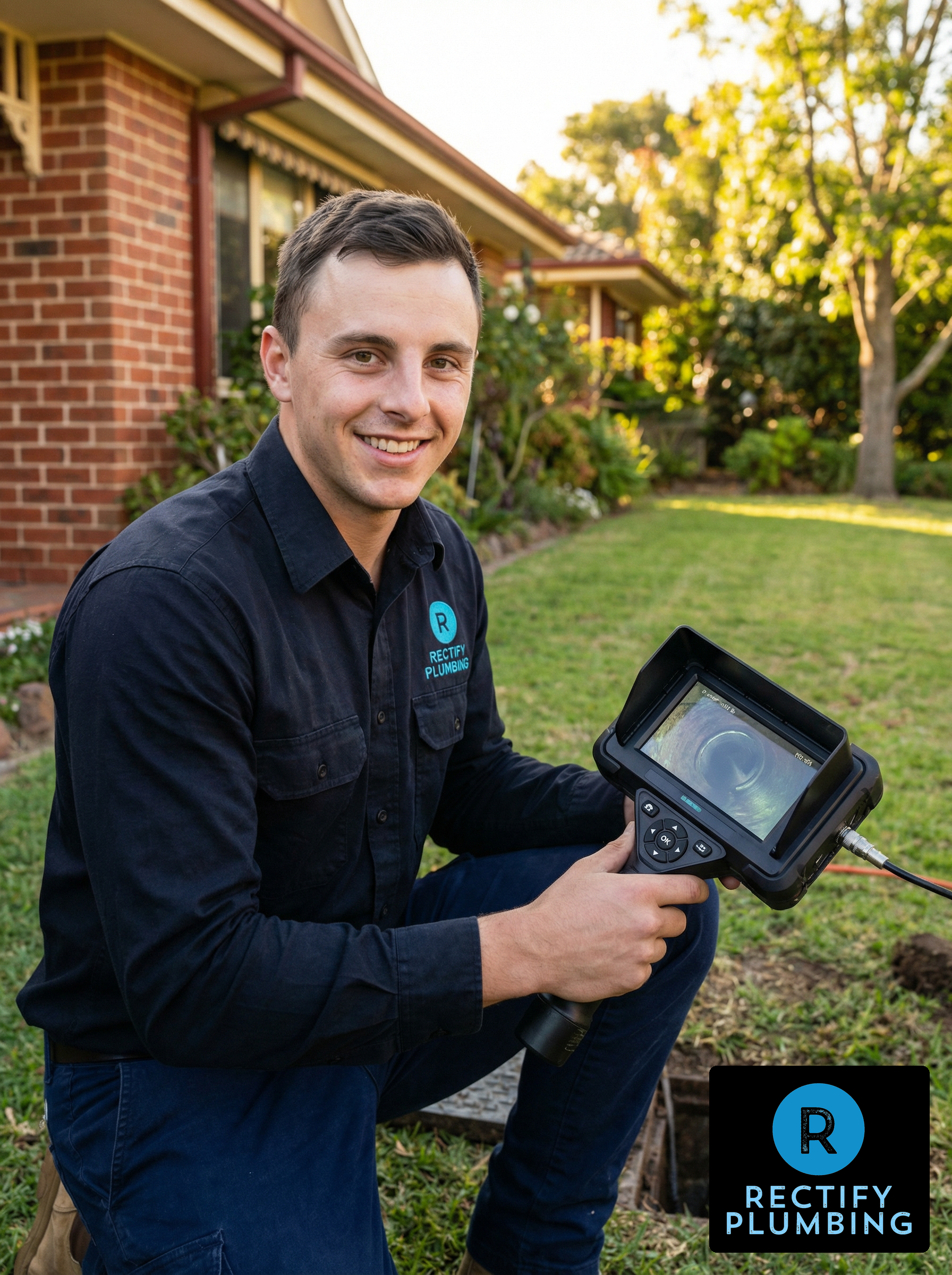
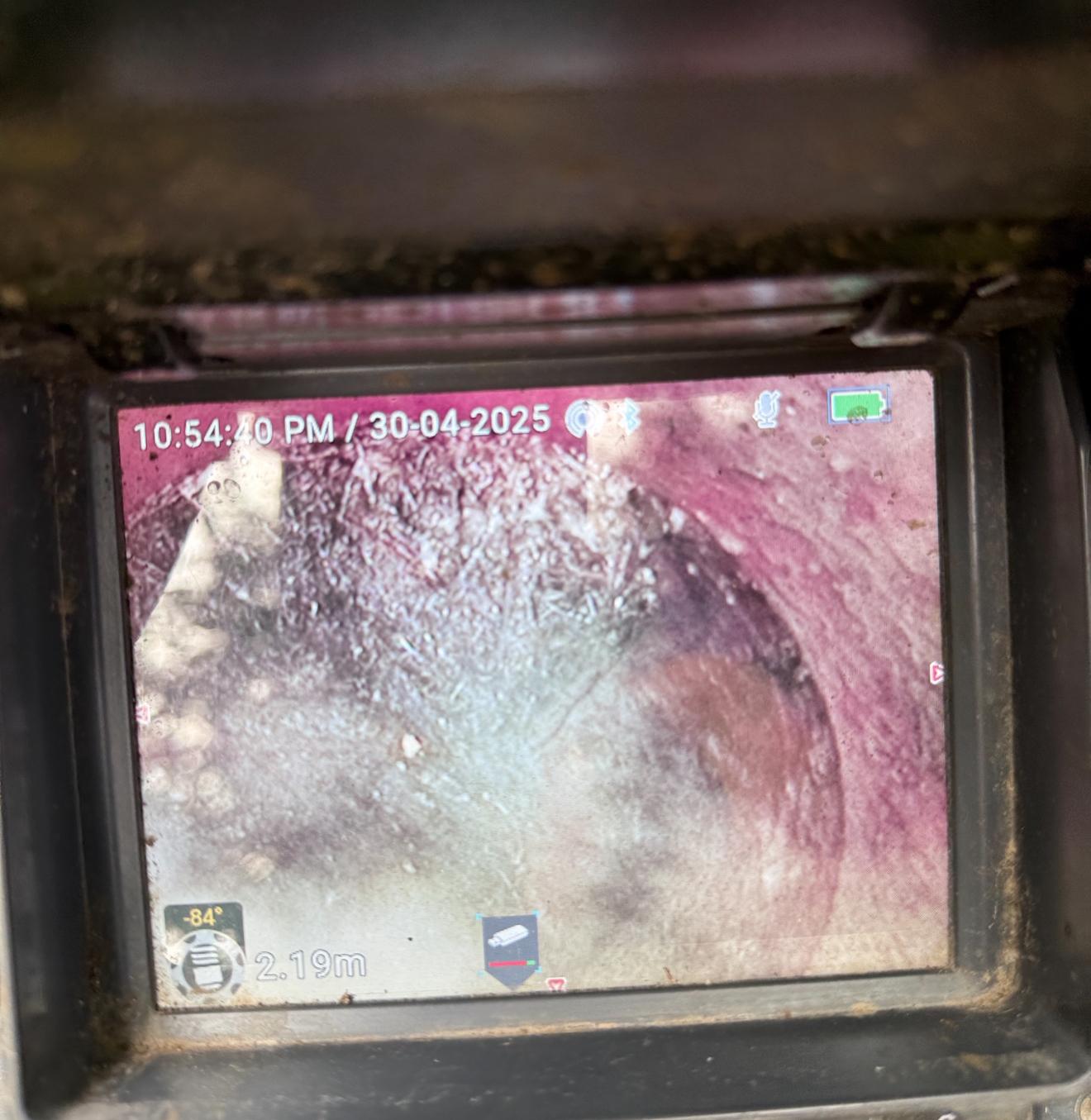
- CCTV drain camera. We push a camera down the line to find the blockage, measure how far along it sits, and see whether the pipe itself is damaged.
- Clear it. An electric eel cuts through roots and compacted debris; a high-pressure water jetter scours the pipe walls clean of fat and silt.
- Re-camera and show you. We run the camera again and show you the footage, so you can see the pipe is clear rather than take our word for it.
- Recommend a fix if the pipe is damaged. If roots are entering through a broken joint, clearing alone is a temporary result — relining or replacing that section is the permanent one.
Who is responsible for a blocked drain — you or Sydney Water?
You are responsible for the pipework on your property up to the point of connection with Sydney Water's system. Sydney Water looks after its own network. If the overflow is outside your boundary, your neighbours have the same trouble, or the street is flooding, it is Sydney Water's problem — call them on 13 20 90. Sydney Water sets out the split in its wastewater blockages guidance. When it is not obvious, a camera and pipe locator settles it. We regularly find blockages sitting within a metre of the boundary, and knowing which side it is on decides who pays.When is a blocked drain an emergency?
Call straight away if sewage is surfacing inside the house or at the gully, if you have no usable toilet, or if water is backing up faster than it drains. Those situations do not improve on their own and every hour of use makes the clean-up bigger.- Sewage or grey water coming up through a floor waste, shower or laundry tub
- The only toilet in the house is unusable
- Water pooling around the overflow relief gully in the yard
- A strong sewage smell inside the house
- Repeat blockages within weeks of each other
Which suburbs does Rectify Plumbing cover for blocked drains?
We are a licensed Sydney and Central Coast plumbing business working from Berowra Heights and the Central Coast. Blocked drain work takes our team through Epping, Ryde, Hornsby, Berowra, Mount Colah, Thornleigh, Pennant Hills, Chatswood, Terrey Hills, St Ives and Parramatta, and north to Gosford, Wyoming, Erina and the wider Central Coast. Same-day service is standard for blockages and we carry cameras, eels and jetters on every ute.- Blocked drain services — what we do and how we price it
- Blocked drains Hornsby and blocked drains Epping
- Blocked drains Chatswood and Terrey Hills
- Why drains keep blocking in Hornsby
- Council and Sydney Water responsibility explained
How do you stop drains blocking again?
Prevention is mostly about what goes in and what grows nearby. These habits cut repeat call-outs more than any product you can buy.- Scrape fat and oil into the bin, never down the sink — it sets solid in the line
- Bin wet wipes, cotton buds and sanitary products; only the three Ps go down a toilet
- Fit a hair strainer to shower and basin wastes
- Clear leaves from stormwater pits and gutters before storm season
- Think twice about planting large trees over a sewer line, and get a camera inspection if you already have them
- Book a CCTV inspection before buying a property with mature trees — it is cheap insurance
Why choose a licensed plumber for blocked drains?
In NSW it is illegal to carry out plumbing or drainage work without a licence, regardless of the size of the job — the rules are set out by NSW Government licensing. Rectify Plumbing is fully licensed and insured, our drainage work is done by our own tradespeople rather than subcontractors, and every job is quoted at a fixed price before we start.Get your blocked drain cleared today
If your drain is backing up right now, do not wait it out. Call Rectify Plumbing on 0400 073 180 for a same-day blocked drain plumber across Sydney and the Central Coast, or request a call back. We will camera the line, tell you exactly what we find, and quote a fixed price before any work begins.Blocked drain FAQs
[service_faqs]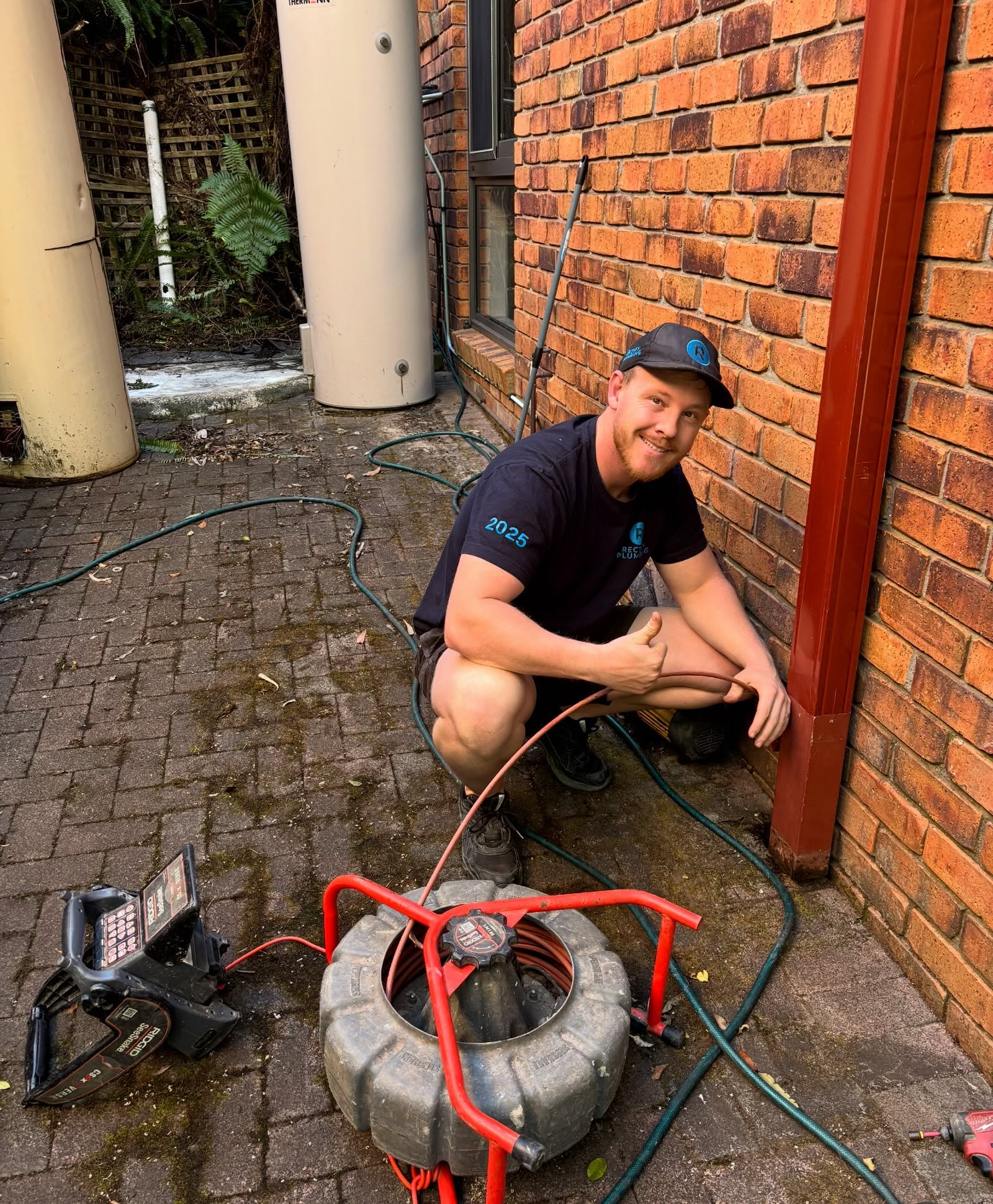
Blocked Drains Central Coast: Causes, Costs & Fast Fixes (Gosford, Wyoming, The Entrance)
Quick answer: what to do about a blocked drain on the Central Coast
If your drains are gurgling, draining slowly or overflowing at the outside gully, the blockage is almost always in your own sewer or stormwater line — and on the Central Coast the usual culprit is tree roots or silt after heavy rain. Stop using water in the house, lift the overflow relief gully grate outside so any overflow escapes there instead of inside, and get a licensed plumber with a jetter and CCTV camera on site. Rectify Plumbing covers Gosford, Wyoming, The Entrance, Terrigal and Wyong — call 0400 073 180.Why do drains block so often on the Central Coast?
Central Coast blocks come down to three things: mature gums and paperbarks whose roots chase moisture into old clay sewer joints, sandy soil that shifts and sags pipework, and stormwater systems that silt up under heavy coastal rain. Older Gosford and Wyoming homes still run vitrified clay, which roots enter easily at every rubber-ring joint.Common causes we see, suburb by suburb
- Gosford, East Gosford, Wyoming — tree-root intrusion in clay sewer lines on established blocks.
- The Entrance, Terrigal, Bateau Bay — sand and silt in stormwater lines and gully pits; salt-air corroded fittings.
- Wyong, Tuggerah — flatter ground means less fall in the line, so grease and paper settle instead of flushing through.
- Springfield, Green Point — sagging (bellied) pipes after ground movement, causing repeat blockages in the same spot.
What are the symptoms, and what do they usually mean?
Different symptoms point to different parts of the system. Use this table to work out whether you have a simple fixture blockage or a main sewer line problem before you call.| Symptom | Most likely cause | How urgent |
|---|---|---|
| One sink or basin draining slowly | Hair, soap or grease in that fixture's trap | Low — book a standard visit |
| Toilet gurgles when the shower runs | Partial blockage in the shared branch or main line | Medium — clear it before it fully blocks |
| Every drain in the house is slow | Main sewer line blockage, often tree roots | High — stop using water, call a plumber |
| Water overflowing at the outside gully | Main line blocked; gully is doing its job | High — same-day attention |
| Rotten-egg or sewage smell in the yard | Cracked pipe or blocked vent | Medium-high — needs a CCTV inspection |
| Stormwater pits overflowing in rain only | Silt, leaves or a collapsed stormwater line | Medium — fix before the next downpour |
| Same blockage returns every few months | Root intrusion, belly or broken pipe section | High — clearing alone will not fix it |
How do plumbers clear a blocked drain on the Central Coast?
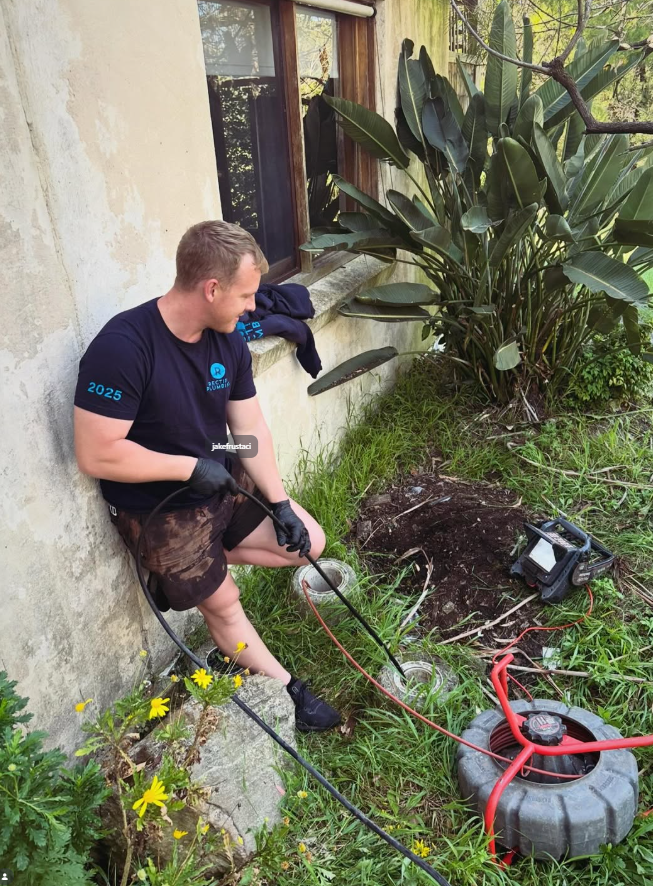
A proper job is diagnose, clear, then verify. We locate the blockage, clear it mechanically or with high-pressure water, then camera the line so you can see whether the pipe itself is sound. Clearing without a camera is how people end up paying twice.- Find the access point. Usually the inspection shaft or overflow relief gully near the boundary.
- Identify the blockage type. Roots, grease, silt, foreign objects or a structural fault all behave differently.
- Clear it. An electric drain machine cuts roots; a high-pressure water jetter scours grease and silt back to bare pipe.
- CCTV inspect. The camera shows cracks, bellies, offset joints and root entry points.
- Locate and mark faults. Depth and position are marked on the surface so any repair is targeted, not exploratory.
- Report and recommend. You get the footage and a plain-English explanation of whether a repair or reline is needed.
Is a blocked drain my responsibility or Sydney Water's?
On the Central Coast, water and wastewater services are provided by Central Coast Council rather than Sydney Water, but the ownership principle is the same: you own and maintain the wastewater pipes on your property up to the point where they connect to the network. That means a blockage inside your boundary is a job for a licensed plumber, not the utility. Sydney Water sets out the same split for its own area in its wastewater blockages guidance. If you are in the Hornsby or Epping part of our service area instead, we cover who pays in our guide to blocked drain council responsibility in Epping.What can I try before calling a plumber?
There are two safe things worth trying and several things worth avoiding. Boiling water and a plunger on a single slow fixture are fine. Anything beyond that risks damage.- Do pour hot (not boiling) water down a greasy kitchen drain and plunge the fixture.
- Do clear leaves and silt out of stormwater grates and gully pits by hand.
- Do not use caustic drain cleaners repeatedly — they can damage older pipes and make the line hazardous to work on.
- Do not force a garden hose or hired rod into the main line; it can push a blockage past the access point or crack a clay joint.
- Do not keep flushing if the outside gully is overflowing.
How do I stop a Central Coast drain blocking again?
Repeat blockages are a pipe problem, not a habits problem. If a line blocks more than once a year, the fix is usually root cutting plus a reline of the affected section, or replacing a sagging length of pipe. Regular maintenance jetting keeps grease-prone kitchen lines and leaf-prone stormwater lines clear.- Fit leaf guards over stormwater pits and clean them each autumn.
- Scrape fat and food scraps into the bin, never the sink.
- Only flush the three Ps — no wipes, even "flushable" ones.
- Schedule preventive jetting every 12-24 months where roots are known.
- Reline or repair the pipe once CCTV shows root entry or a crack.
- See also: why drains keep blocking.
Who should I call for an emergency blocked drain on the Central Coast?
For sewage backing up inside, overflowing gullies or a completely blocked main, you want a licensed local plumber who can be on site the same day with a machine and a camera. Rectify Plumbing is fully licensed and insured under NSW law, works across the Central Coast and northern Sydney, and turns up in a stocked vehicle so most blockages are cleared on the first visit.
Licensed, insured and locally based
All plumbing and drainage work in NSW must be done by a licensed tradesperson, and you can check any licence number yourself on the NSW Fair Trading register. We hold current plumbing and drainage licences and public liability insurance, and we give an upfront price before work starts.Book a blocked drain plumber on the Central Coast
Blocked drain in Gosford, Wyoming, The Entrance, Terrigal or Wyong? Call Rectify Plumbing on 0400 073 180 for same-day drain clearing with CCTV included, or send us your job details. You can also read more about our blocked drain services or our emergency response in Wyoming.Is it my sewer or my stormwater that is blocked?
They are two separate systems and the difference changes who fixes it and how. Sewer (wastewater) carries everything from toilets, showers and sinks and must be cleared by a licensed plumber. Stormwater carries roof and surface run-off to the street, kerb or an easement, and blocks with leaves, sand and silt rather than waste.- Sewer blockage clues: toilets and showers affected, sewage smell, overflow relief gully spilling.
- Stormwater blockage clues: only happens during or after rain, downpipes backing up, pits and grates ponding, water pooling against the house.
- Both at once usually means an illegal cross-connection or a collapsed shared line — that needs a camera before anything else.
What affects the cost of clearing a blocked drain?
We give an upfront price before starting, and it comes down to four things rather than a flat rate. Knowing them helps you compare quotes honestly instead of chasing the lowest hourly figure.- Access. A clear inspection shaft near the boundary is quick; no access point may mean lifting a pan or cutting an access.
- Blockage type. Grease and paper clear fast. Heavy root masses need cutting heads and more time.
- Method needed. A drain machine is enough for many jobs; badly silted or greased lines need high-pressure jetting.
- Pipe condition. If CCTV shows a crack, offset joint or belly, you are choosing between a spot repair, a reline or replacement.
What happens if you ignore a blocked drain?
A partial blockage does not stay partial. As waste catches on the obstruction the pipe loses more capacity each week, and the pressure finds the weakest point — usually an old joint, which then leaks into the surrounding soil. That is when a straightforward clear turns into an excavation.- Sewage overflow inside the house, which is a health hazard and an insurance claim.
- Saturated soil around the pipe, which accelerates root growth and pipe movement.
- Damage to slabs, paving and garden beds when the line finally has to be dug up.
- Blocked stormwater sending run-off against your foundations instead of to the street.
5 Signs of a Blocked Drain (and What to Do) – Epping, Hornsby & Surrounds
Quick answer: what are the signs of a blocked drain?
The five early signs of a blocked drain are slow-draining sinks or showers, gurgling from toilets and floor wastes, foul or rotten-egg smells, water backing up at the outside overflow relief gully, and drains that block again soon after being cleared. If more than one fixture is affected at once, the blockage is in your main sewer line and needs a licensed plumber, not a bottle of drain cleaner. Rectify Plumbing covers Epping, Ryde, Hornsby, Berowra and the Hills District — call 0400 073 180.Sign 1: Water drains away slowly
A basin, shower or kitchen sink that takes noticeably longer to empty is the earliest warning. One slow fixture usually means hair, soap scum or grease in that trap. Several slow fixtures at once means the shared branch or the main line is already partly blocked and losing capacity.Sign 2: Gurgling toilets and floor wastes
Gurgling is trapped air being pushed past a partial blockage. If the toilet burbles when you run the shower, or the laundry floor waste bubbles as the washing machine empties, air can no longer vent normally — the obstruction is downstream of both fixtures, in the main drain.Sign 3: Bad smells inside or in the yard
A sewage or rotten-egg smell means wastewater is sitting still instead of flowing away, or a pipe has cracked and is leaking into the soil. Smells near an external gully or a damp patch in the lawn point to a broken line, which is why we camera the drain rather than just clearing it.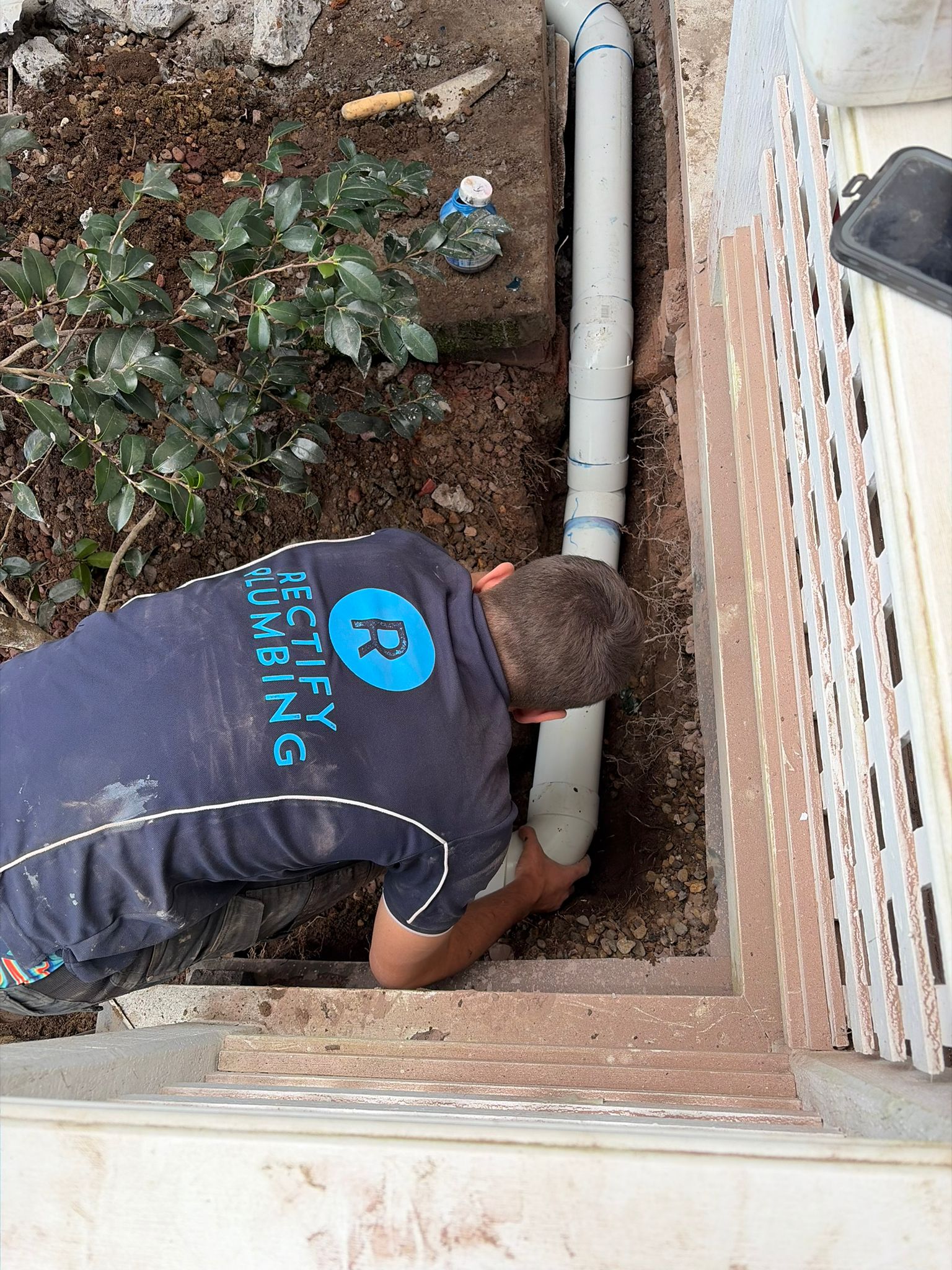
Sign 4: Water overflowing at the outside gully
The overflow relief gully is the grated drain outside, set lower than your indoor fixtures. It is designed to spill outside so sewage does not come up through your shower. If it overflows, your main sewer line is blocked — stop using water immediately and call a plumber the same day.Sign 5: The same drain blocks again and again
Repeat blockages are a structural warning, not bad luck. In Epping, Hornsby and Berowra, older clay sewer lines under mature gums are routinely invaded by tree roots, and ground movement leaves sagging sections where waste settles. Clearing helps for a few months; a CCTV inspection finds the actual fault.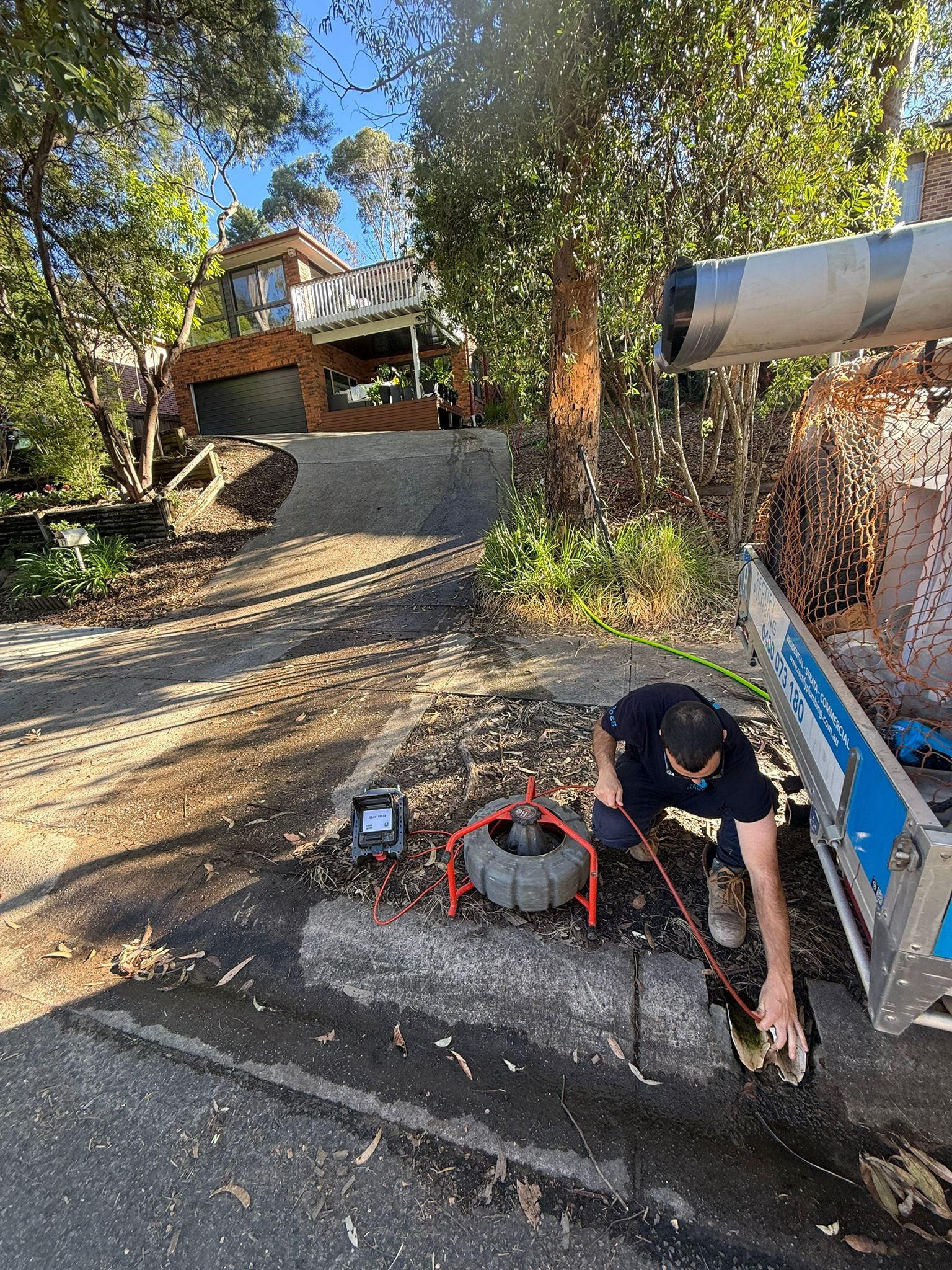
Which symptom means which problem?
Use this table to work out how serious your blockage is and whether it can wait for a booked appointment.| What you notice | Likely cause | Where the problem is | What to do |
|---|---|---|---|
| One slow basin or shower | Hair, soap, grease | Fixture trap | Plunge it; book a standard visit |
| Slow kitchen sink, greasy smell | Fat build-up | Kitchen branch line | Hot water and plunger; jetting if it returns |
| Toilet gurgles when shower runs | Partial main line blockage | Main sewer or vent | Book before it blocks fully |
| All drains slow at once | Tree roots or collapse | Main sewer line | Stop using water; same-day plumber |
| Gully overflowing outside | Fully blocked main | Between house and boundary | Emergency callout |
| Wet patch or smell in the lawn | Cracked or broken pipe | Underground section | CCTV inspection and locate |
| Blockage returns every few months | Root intrusion or sagging pipe | Specific pipe section | CCTV, then repair or reline |
What should I do the moment I spot a blocked drain?
- Stop adding water. No showers, washing machine or dishwasher until the line is clear.
- Check the outside gully. If it is overflowing, the main line is blocked and you need a plumber, not a plunger.
- Try a plunger on a single slow fixture. Cover the overflow, plunge firmly a dozen times.
- Clear grates and pits of leaves and silt by hand.
- Skip the caustic cleaners. They can damage older pipes and make the drain hazardous for the plumber.
- Call a licensed plumber if two or more fixtures are affected, or it has happened before.
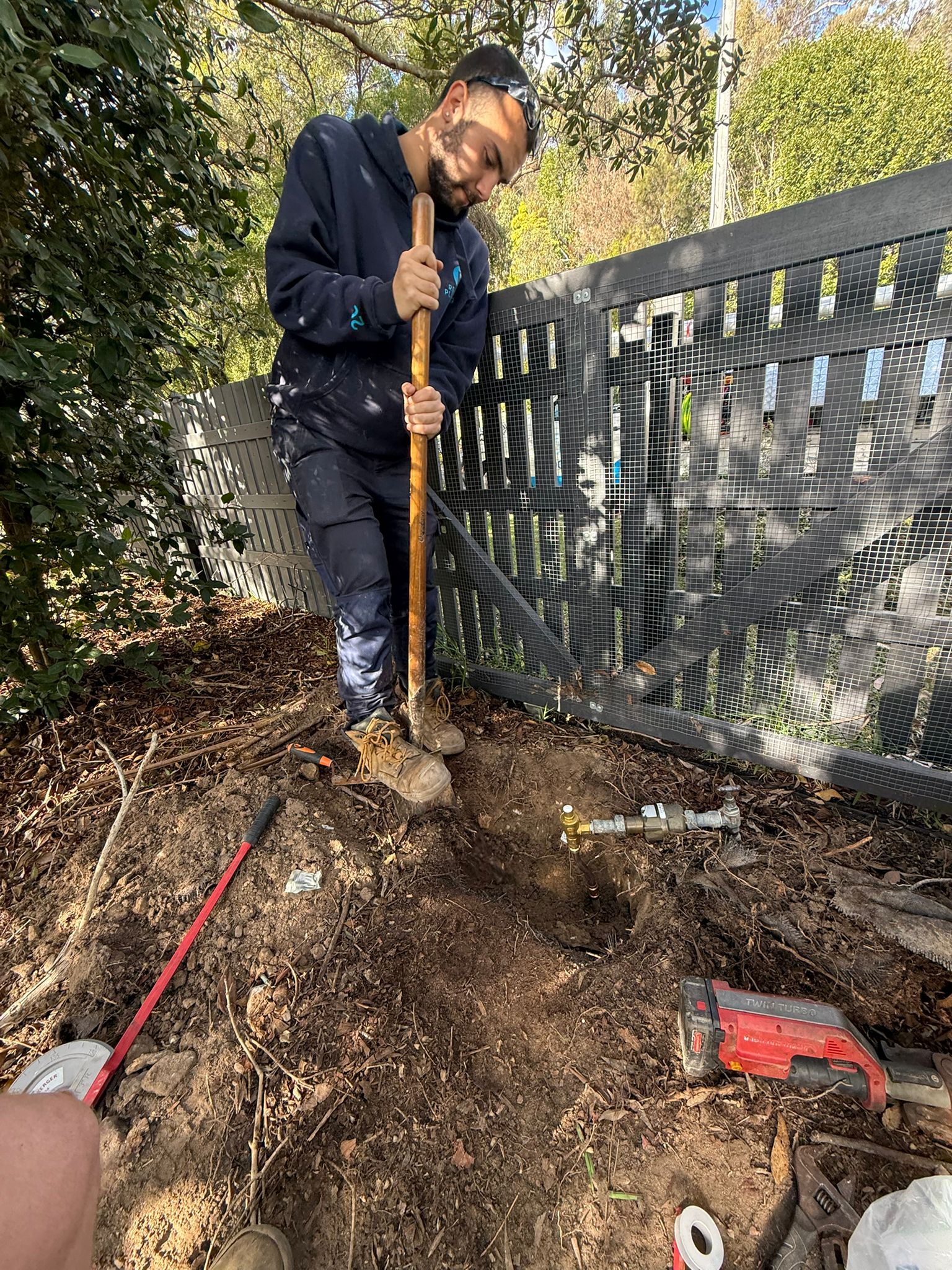
Is the blockage my responsibility or Sydney Water's?
In Epping, Ryde, Hornsby and Berowra you are responsible for the wastewater pipes on your property, right up to the point where they join the network. Sydney Water states plainly that owners maintain their pipes to the point of connection and must engage a licensed plumber to clear a blockage — see their wastewater blockages page. Where a council stormwater or street tree is involved, responsibility can shift; we cover that in our guide to blocked drain council responsibility in Epping.What does it cost to clear a blocked drain in the Hornsby Shire?
Cost depends on access, the type of blockage and whether the pipe itself is damaged, so we quote upfront after we know which of those applies. Our breakdown of what affects the price is here: cost to clear a blocked drain in Berowra and the Hornsby Shire. We do not charge for the camera when we clear the line.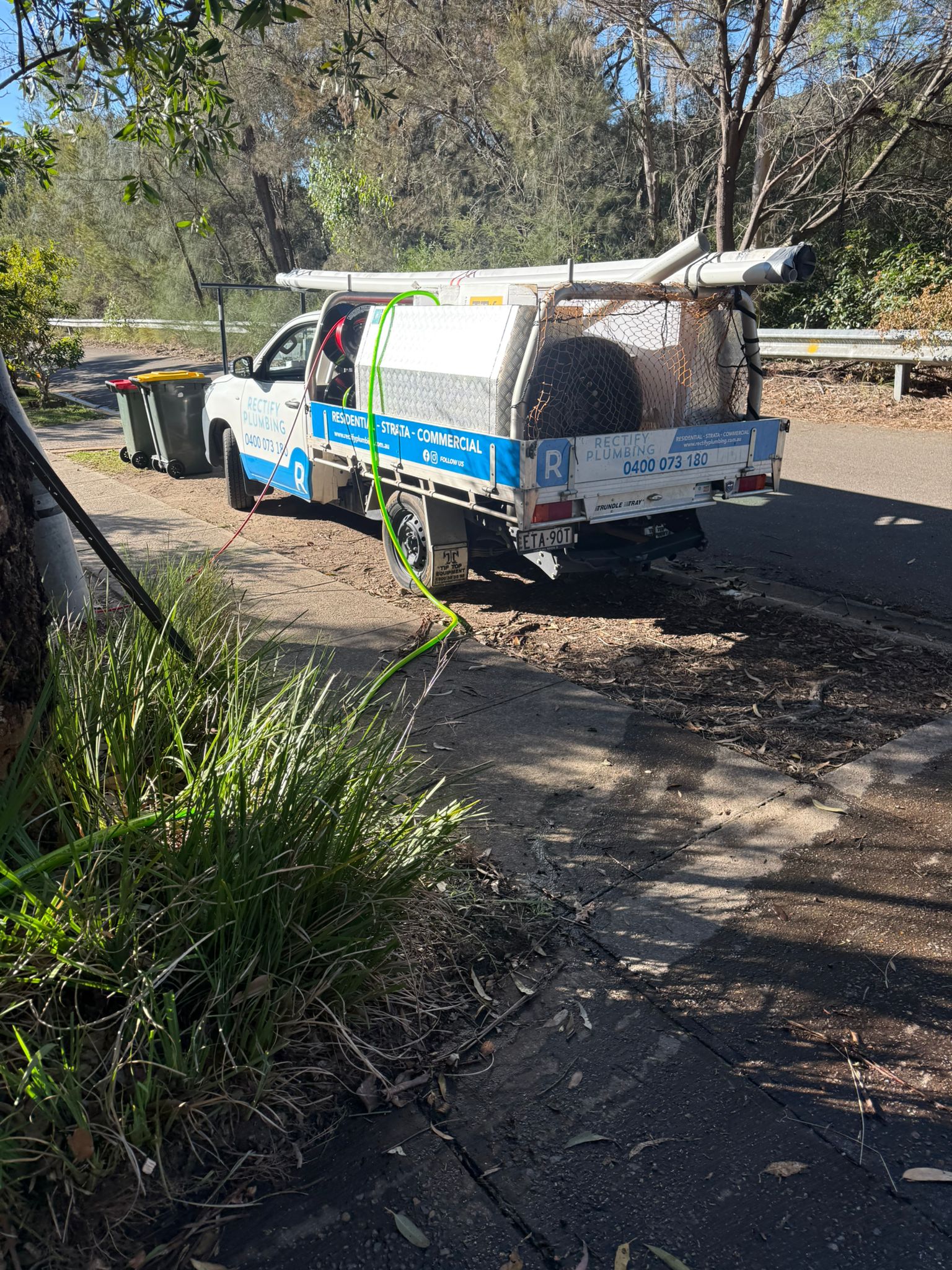
Licensed and insured local plumbers
All drainage work in NSW must be carried out by a licensed tradesperson, and licence numbers can be checked on the NSW Fair Trading register. Rectify Plumbing holds current plumbing and drainage licences and public liability insurance, and our vehicles carry drain machines, jetters and CCTV cameras so most blockages are diagnosed and cleared on the first visit.Book a blocked drain inspection in Epping or Hornsby
Spotted any of these five signs? Call Rectify Plumbing on 0400 073 180 for same-day drain clearing across Epping, Ryde, Hornsby, Berowra and Pennant Hills, or request a callback. More on our blocked drain services and why drains keep blocking in Hornsby.What actually causes blocked drains in Epping and Hornsby homes?
Most blockages in this area come from three sources: tree roots in older clay sewer lines, fat and food waste from kitchen sinks, and wipes or sanitary items that do not break down. Leaf litter from the bushland edge in Berowra, Hornsby Heights and Pennant Hills also chokes stormwater pits every autumn.- Tree roots — the number one cause on established blocks with mature gums and liquidambars.
- Fats, oils and grease — congeal in the cooler section of the kitchen branch line and trap everything after them.
- Wipes and sanitary products — including "flushable" wipes, which do not disperse like toilet paper.
- Sagging or cracked pipe — ground movement leaves a low point where waste settles every time.
- Leaves and silt — stormwater pits, downpipes and gully grates near bushland.
- Foreign objects — toys, cotton buds and dental floss, particularly in family bathrooms.
How do we find out where the drain is blocked?
We diagnose before we clear, so the fix is targeted and you can see the evidence. It is the same sequence on every job.- Symptom check. Which fixtures are affected tells us whether it is a trap, a branch or the main line.
- Open the access point. The inspection shaft or overflow relief gully near the boundary.
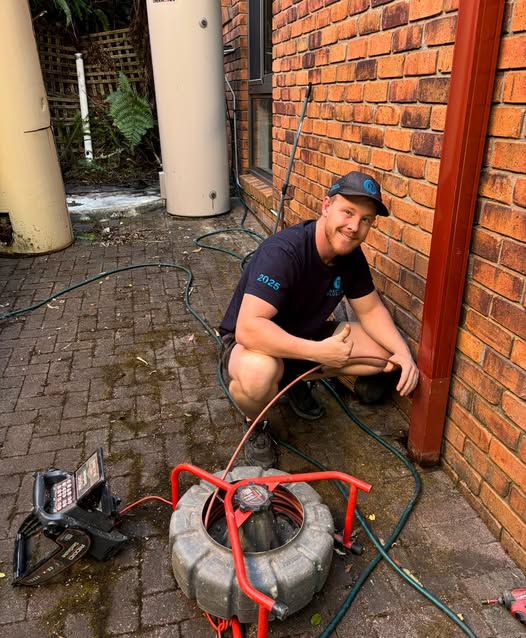
- Clear the line. An electric drain machine cuts roots; a high-pressure jetter scours grease and silt.
- CCTV inspection. The camera shows cracks, root entry points, offsets and sagging sections.
- Locate and mark. We mark depth and position on the surface so any repair is precise, not exploratory.
- Recommend. Clear and monitor, spot repair, or reline — with the footage to back it up.
How do I prevent blocked drains?
Prevention handles the habit-related blockages; the pipe-related ones need a repair. Both matter if you want to stop paying for the same blockage twice.- Scrape fat and food scraps into the bin, and never pour cooking oil down the sink.
- Use a mesh strainer in showers and basins to catch hair.
- Flush only the three Ps — pee, poo and paper. No wipes.
- Clear leaves from gully grates, pits and downpipes each autumn.
- Book preventive jetting every 12-24 months where roots are known to be present.
- Reline or repair the affected pipe section once CCTV confirms root entry or a crack.