
- 05Feb
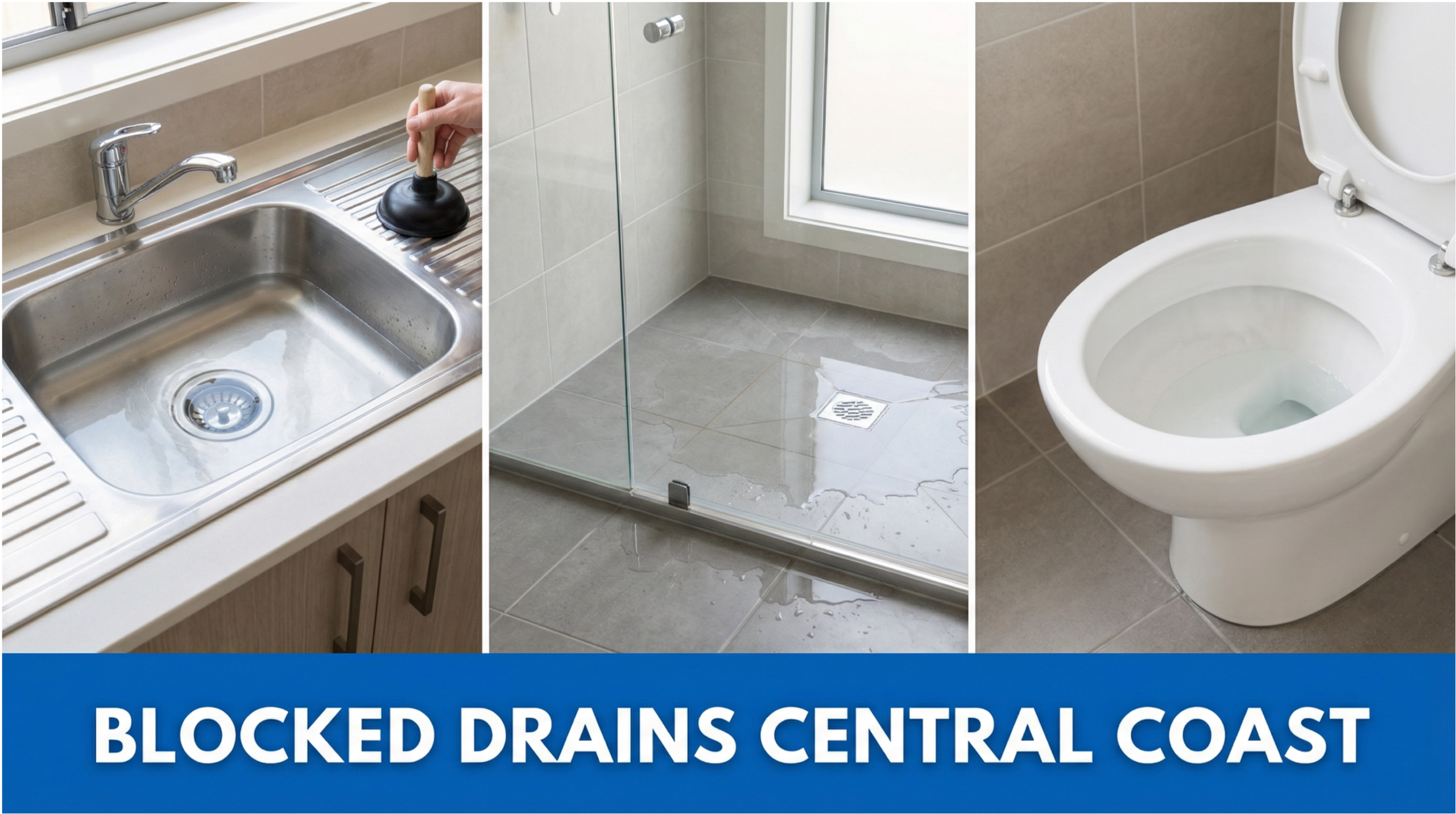
Blocked Drains Central Coast: Causes, Warning Signs & When to Call a Plumber
A slow-draining sink. A toilet that won’t flush properly. Water pooling in the shower long after you’ve stepped out. If you’re a homeowner on the Central Coast, you’ve probably run into at least one of these problems — and chances are, a blocked drain is behind it.
Blocked drains are one of the most common plumbing issues we see across Gosford, Wyoming, Erina, West Gosford, Niagara Park and the wider Central Coast region. Left untreated, a partial blockage can quickly turn into a complete one — and that’s when you start dealing with flooding, foul smells and costly water damage.
In this guide, we’ll walk you through why blocked drains are so common on the Central Coast, the early warning signs to watch for, what happens during a professional drain clear, and when it’s time to call a licensed plumber.
Why Blocked Drains Are So Common on the Central Coast
Clay Soils and Tree Root Intrusion
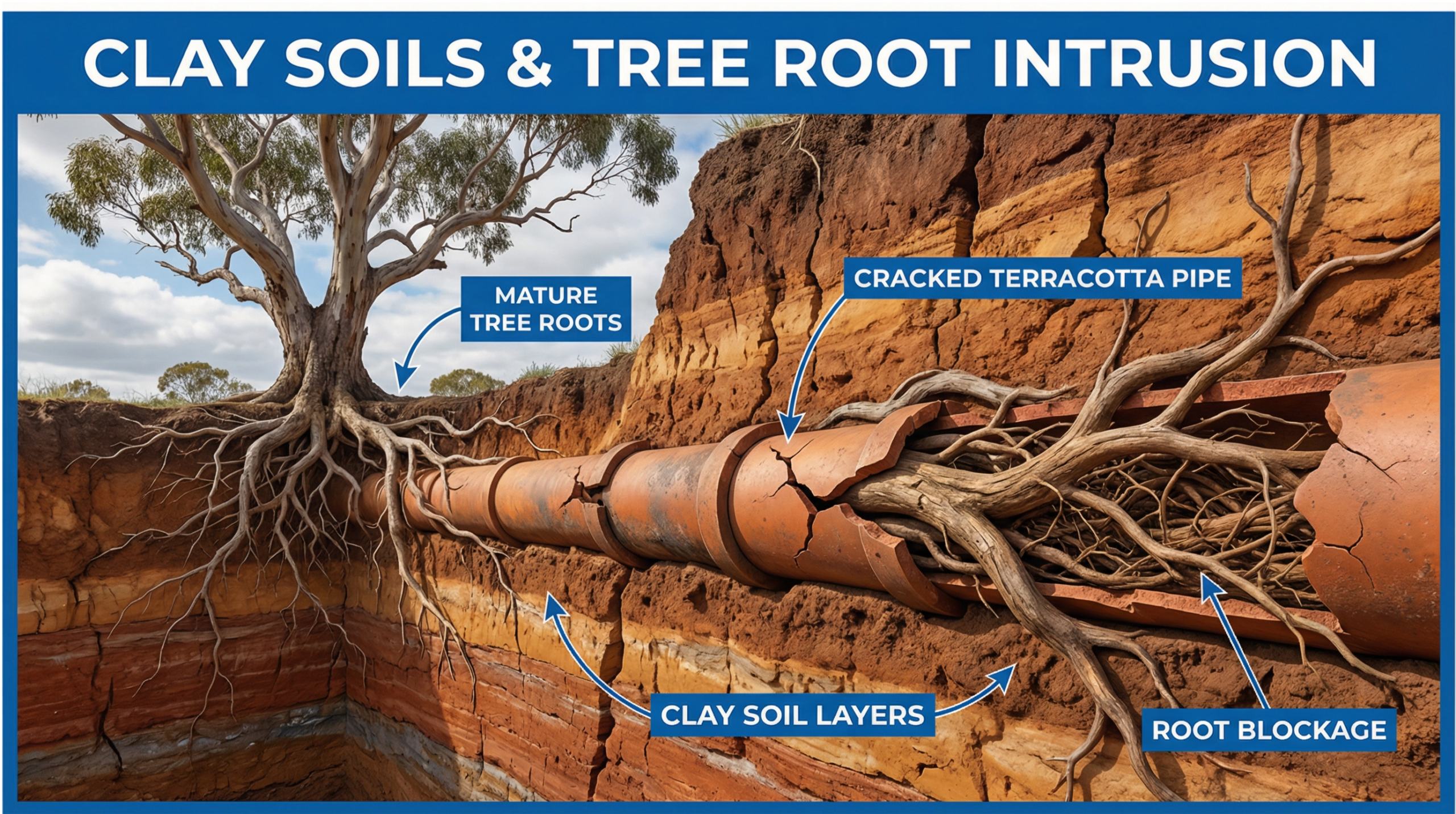
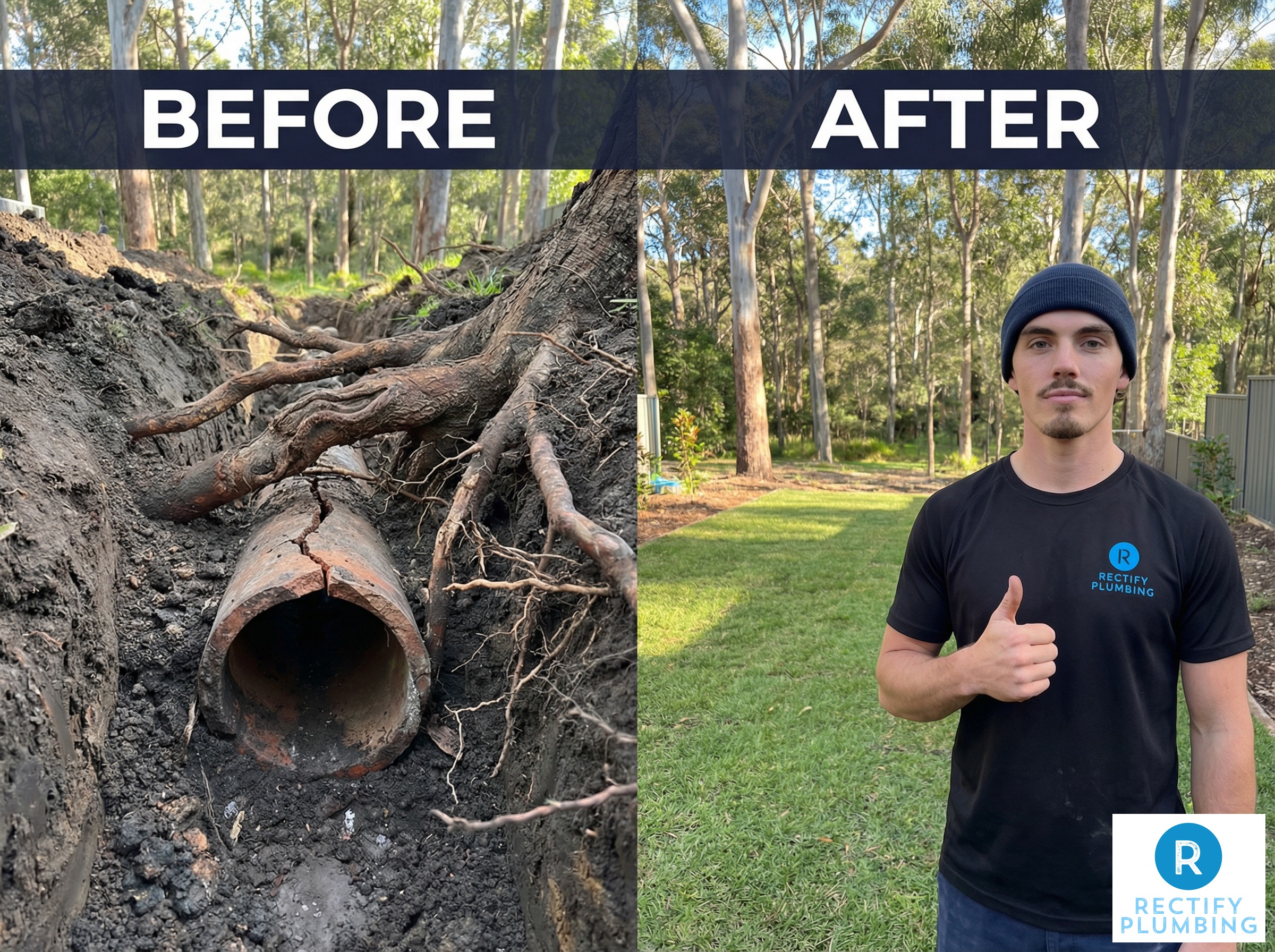
Much of the Central Coast sits on clay-heavy soils. Clay expands when wet and contracts when dry — and over years, this constant movement puts pressure on underground pipes, causing small cracks and joint separations to form. Once a pipe cracks, it becomes an open invitation for tree roots.
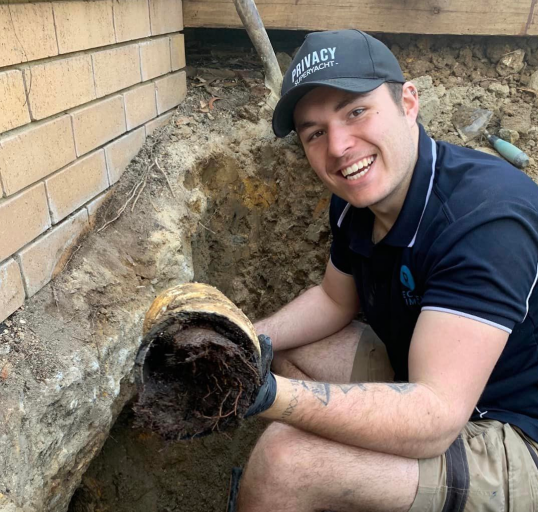
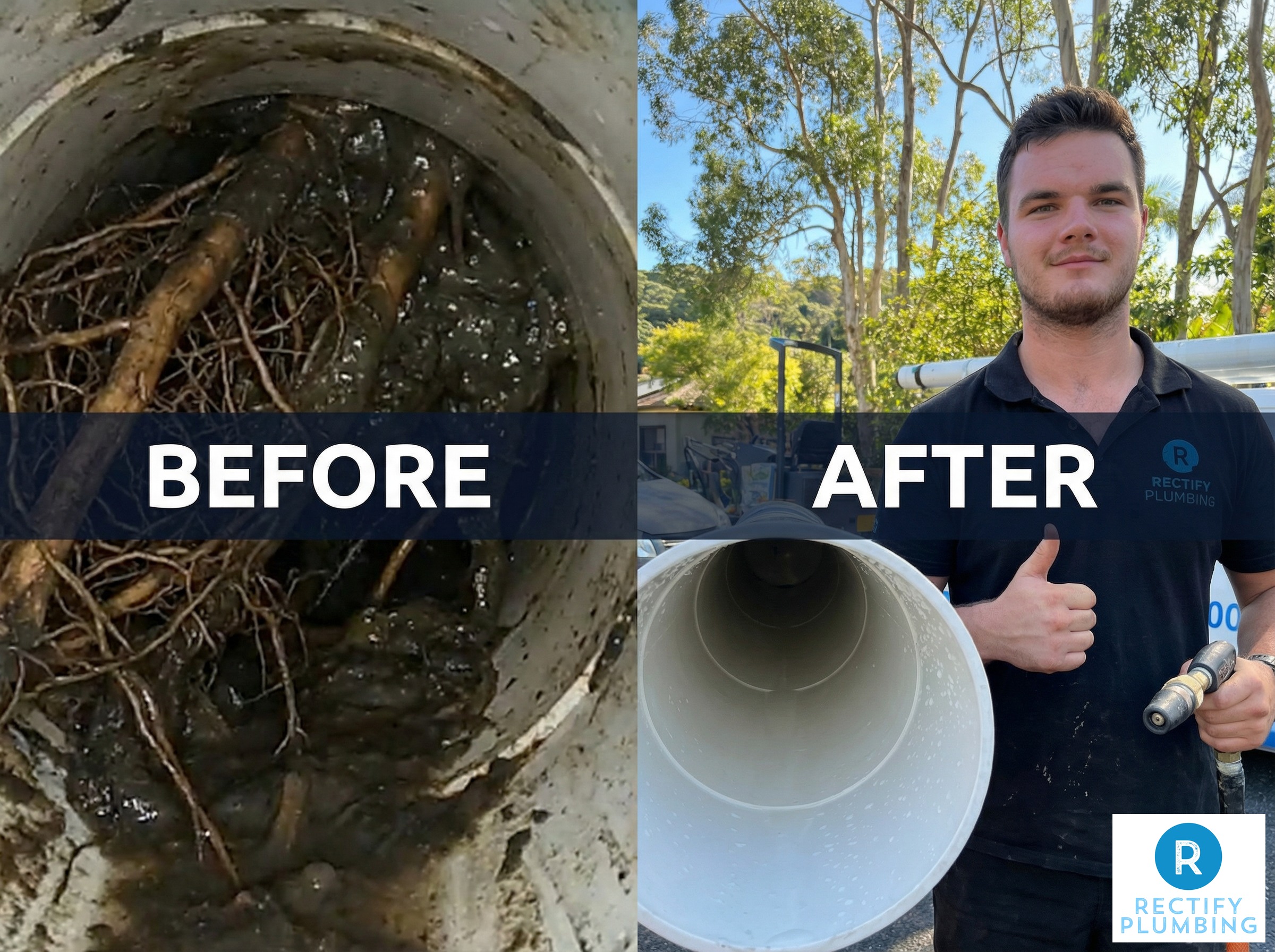
Roots are naturally drawn to moisture and can work their way into even the tiniest gap in a pipe. Once inside, they grow rapidly — eventually causing a full blockage. We regularly find mature root systems inside drainage pipes in older Gosford and Wyoming properties, particularly homes built before the 1990s with original terracotta pipes.
Ageing Pipe Infrastructure
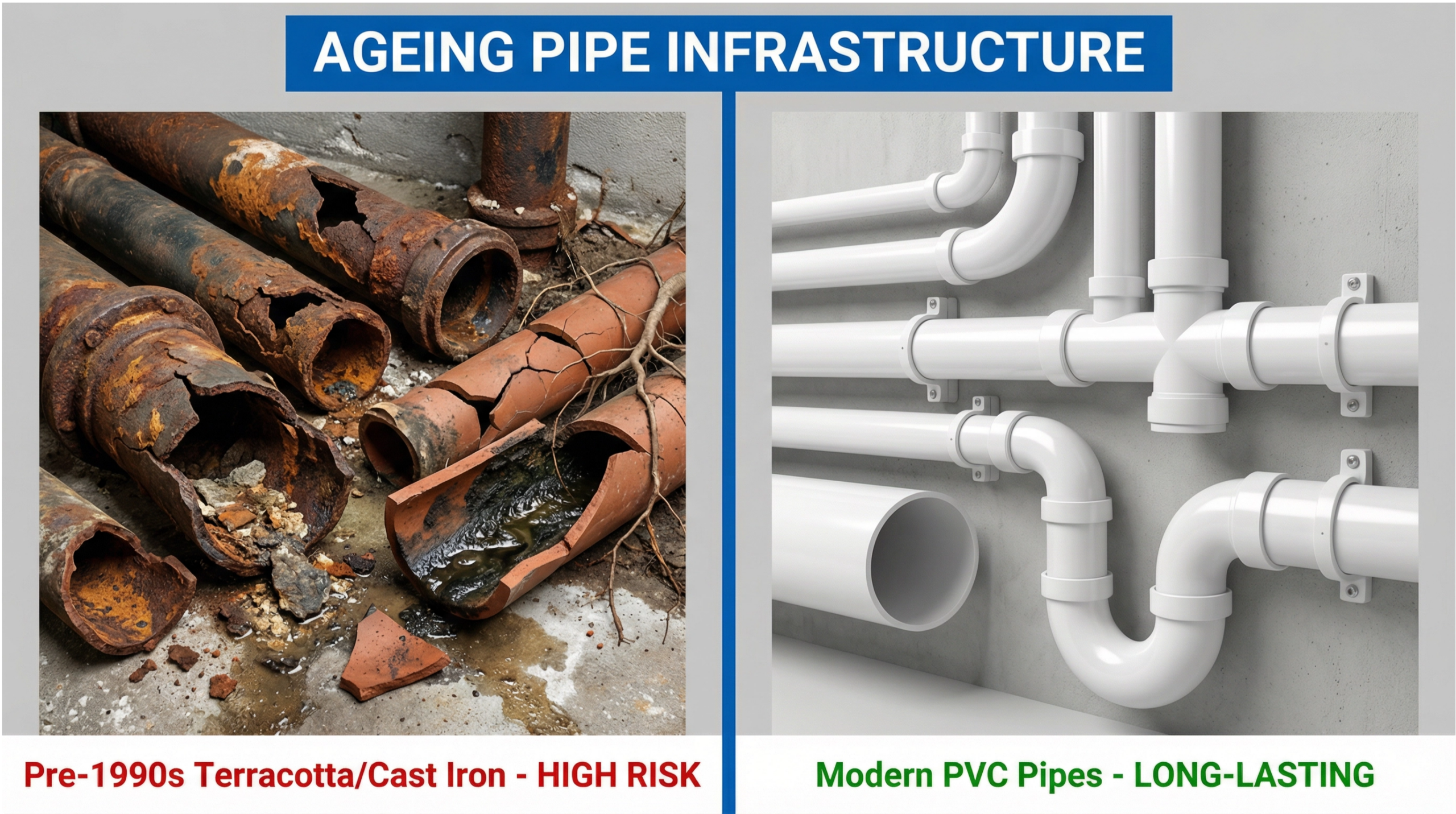
Many Central Coast homes — particularly in established suburbs like East Gosford, Springfield and Narara — still have the original clay or cast-iron pipes installed during construction. These pipes are well past their expected lifespan and are far more prone to cracking, collapsing and blockages than modern PVC pipes.
If your home is more than 30 to 40 years old and you’ve never had a drain inspection, there’s a good chance the pipes are showing signs of deterioration that are not visible from the surface.
What Goes Down the Drain
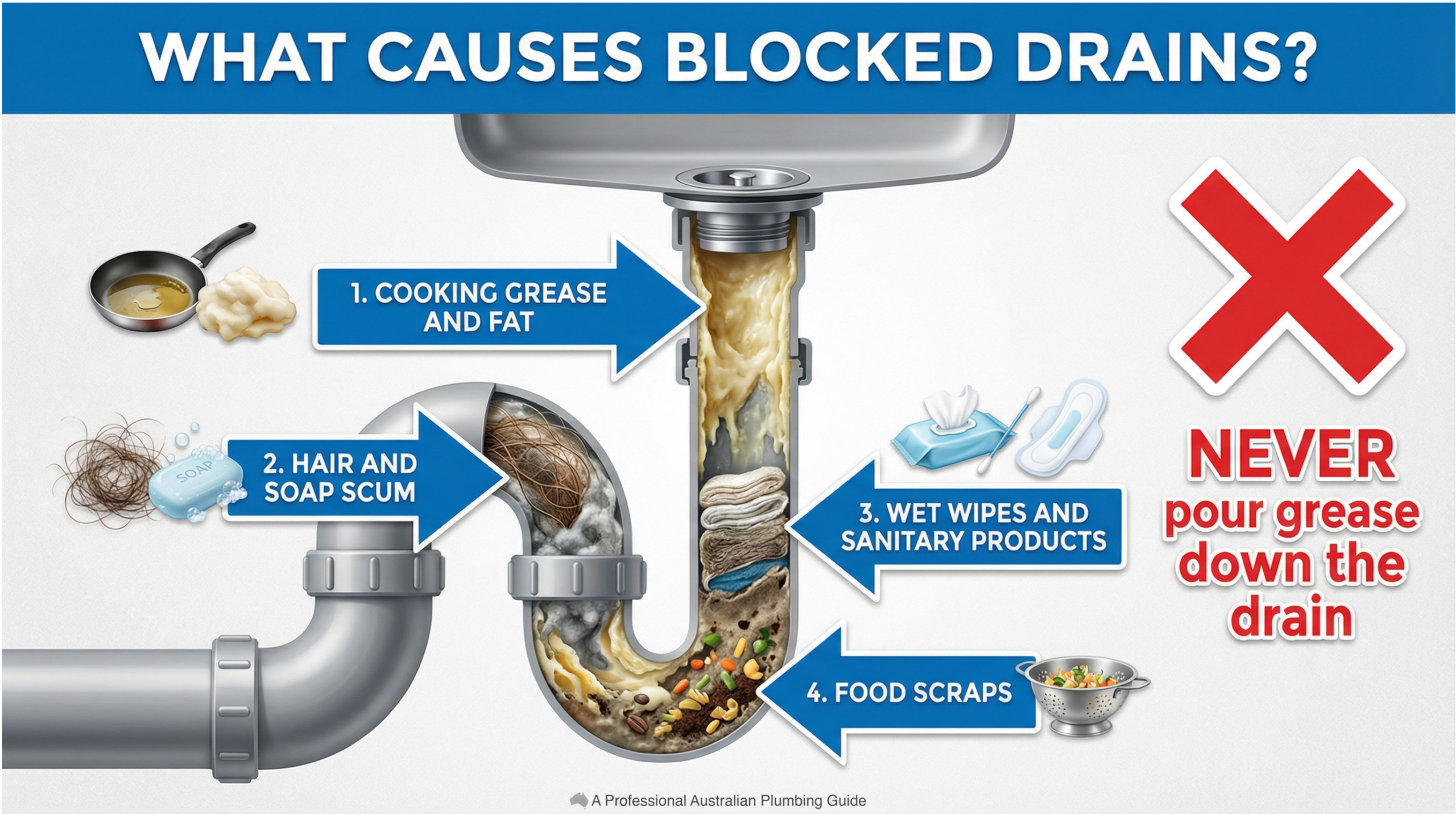
Beyond soil conditions and pipe age, the most common culprits for blocked drains are things that shouldn’t be going down them in the first place — cooking grease, wet wipes (including supposedly ‘flushable’ ones), food scraps, hair, soap scum and sanitary products.
Grease and fat are particularly problematic. They flow easily when hot, but as they cool inside your pipes they solidify and build up layer by layer, gradually narrowing the pipe until the flow is completely restricted.
Tip: Never pour cooking fat or oil down the sink. Let it cool and dispose of it in your general waste bin instead.
5 Warning Signs Your Drain Is About to Block Completely
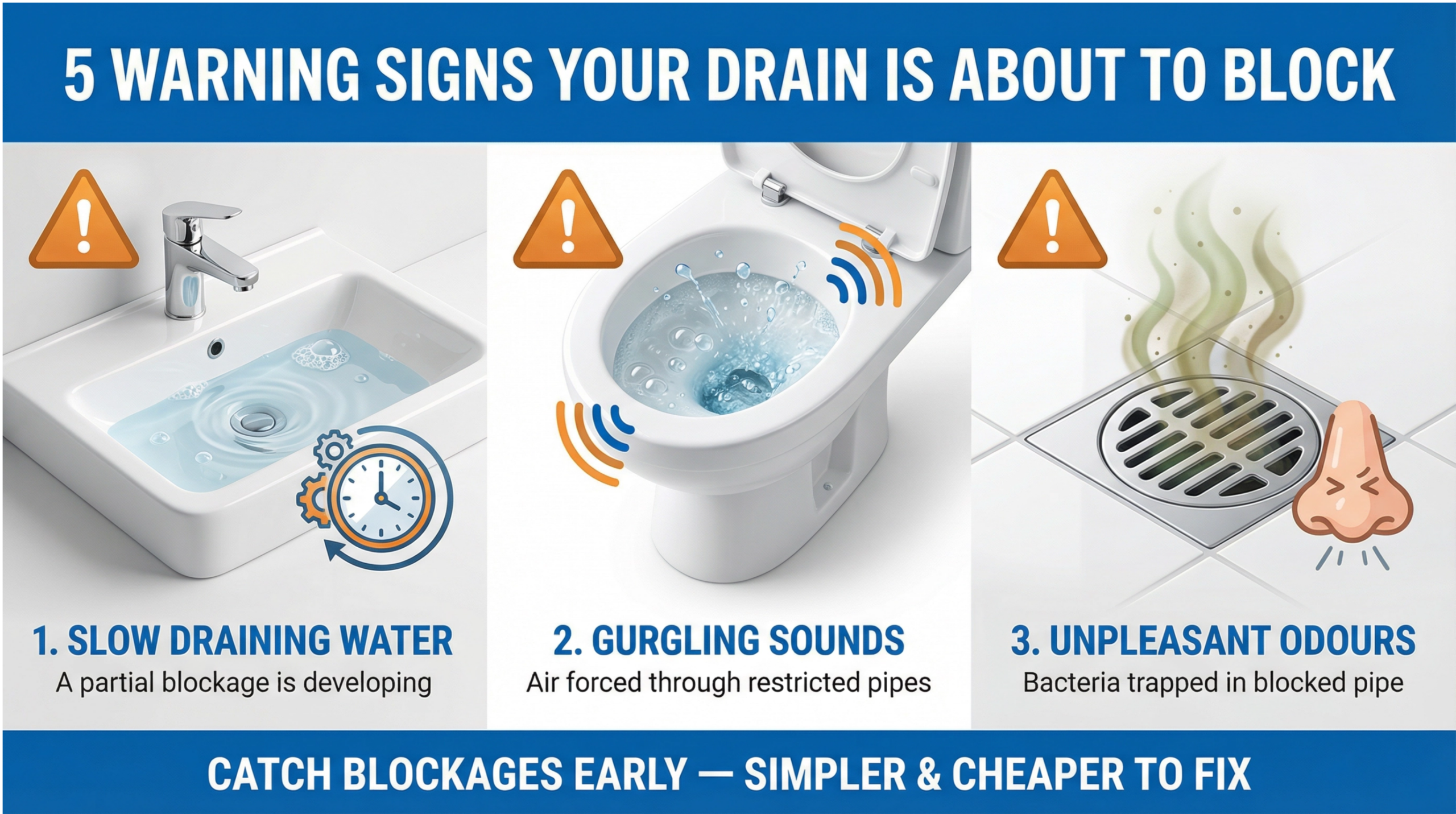
- Water Is Draining Slowly
A drain that used to clear in seconds but now takes several minutes is almost always a partial blockage developing. A partial block is much easier and cheaper to clear than a complete one — so don’t wait for it to worsen.
- Gurgling Sounds After Flushing or Draining
If you hear gurgling or bubbling from your toilet, sink or floor drain after using another fixture in the house, it’s a sign that air is being forced through restricted sections of your pipe. This almost always means a blockage is building somewhere in your drain line.
- Unpleasant Smells Coming from Drains
Foul or sewage-like odours coming from your drains — even when water seems to drain normally — often indicate a blockage trapping organic material and bacteria inside the pipe. This smell tends to intensify in warmer months.
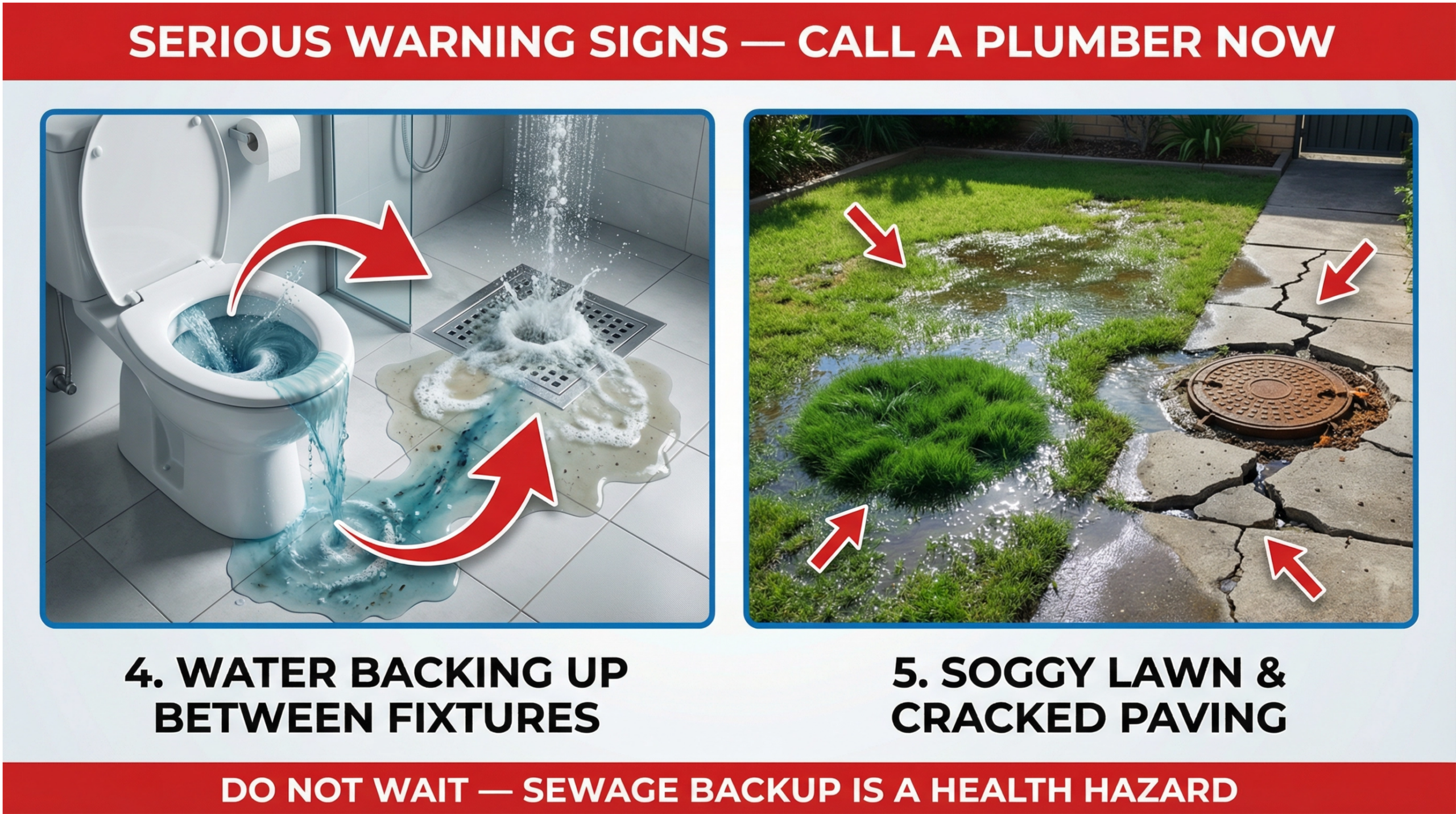
- Water Backing Up Into Other Fixtures
If flushing the toilet causes water to rise in the shower drain, or running the washing machine causes water to back up in the kitchen sink, you’ve likely got a blockage in your main drain line. This is a clear sign to call a plumber without delay.
- Changes in Your Lawn or Garden
Soggy patches in the garden, unusually lush grass in a specific area, or cracking paving near your sewer line can all point to an underground pipe issue. A cracked or blocked pipe can allow sewage to leach into the surrounding soil — which is both a structural and a health concern.
Tip: If you notice two or more of these signs together, don’t wait. Catching a blockage early almost always means a simpler, less expensive repair.
What Happens During a Professional Drain Inspection and Clear
Step 1 – CCTV Camera Inspection
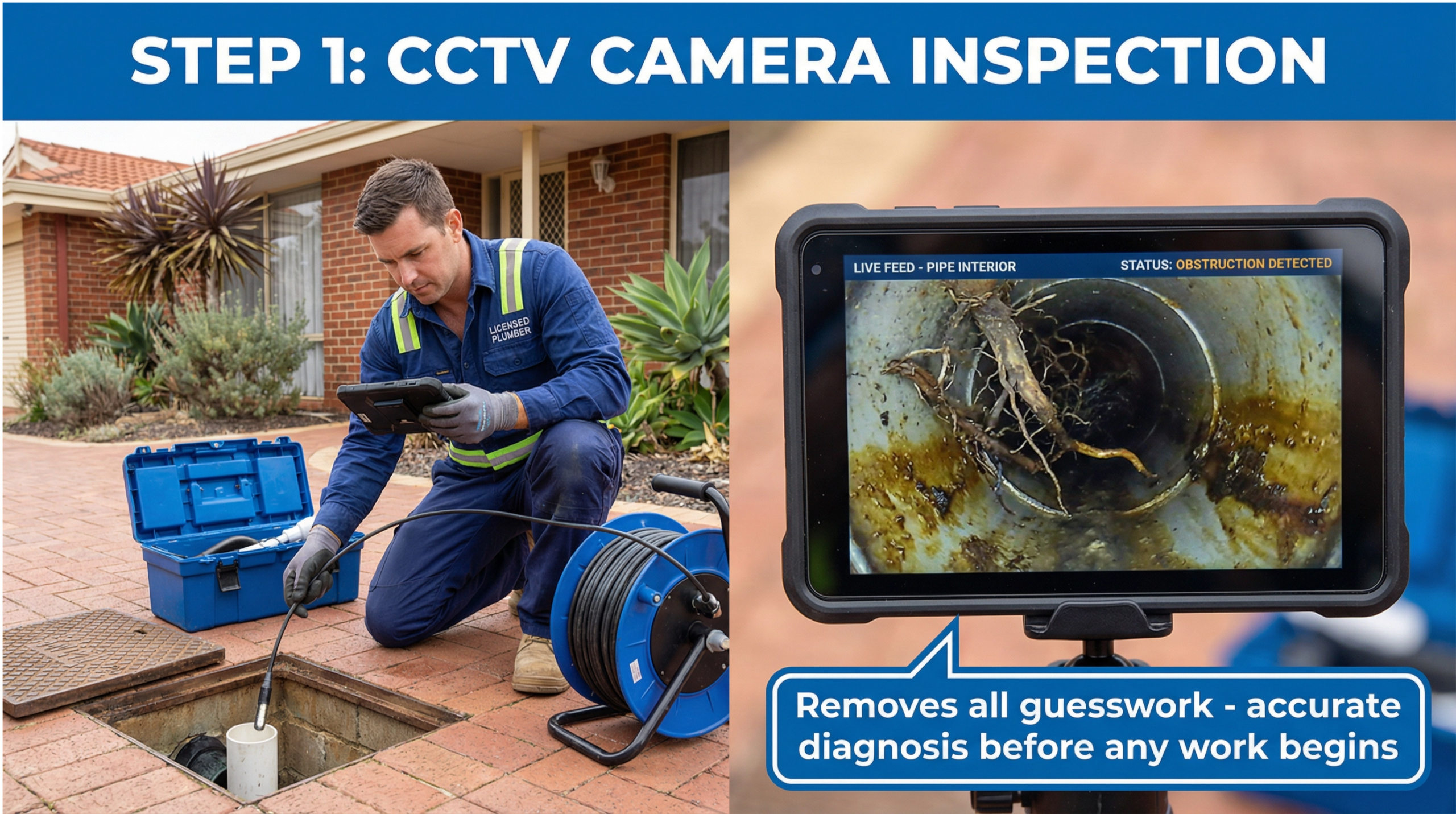
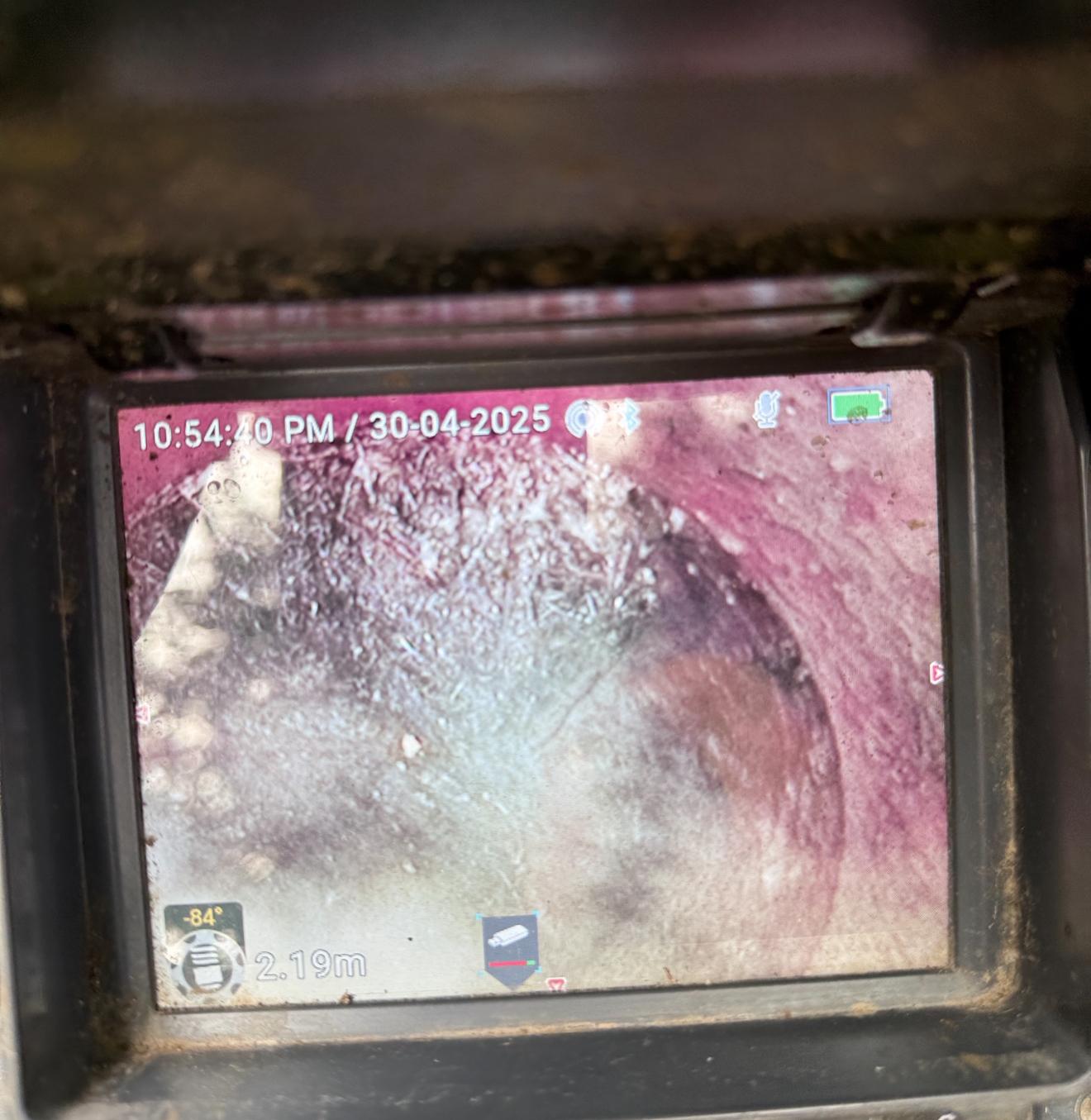
The first step is always understanding exactly what is causing the blockage and where it is located. Our team uses a CCTV drain camera inspection to pass a waterproof camera through your pipes and get a live video feed from inside your drain. This tells us precisely what we are dealing with — grease buildup, tree root intrusion, a cracked pipe section — before any work begins.
A camera inspection removes the guesswork entirely. It also means we can provide an accurate, honest quote upfront rather than uncovering additional problems partway through the job.
Step 2 – Jet Blasting to Clear the Blockage
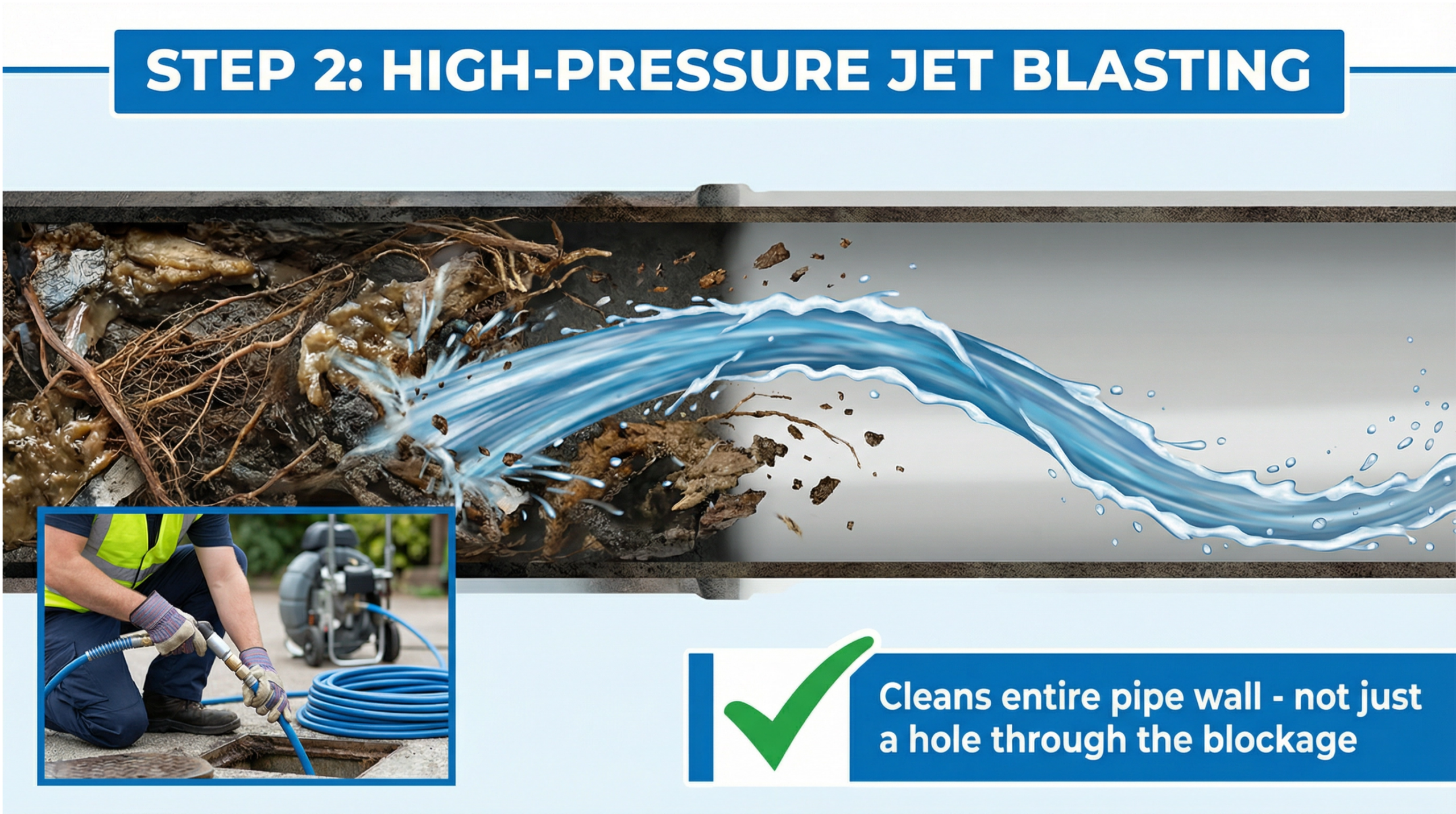
For most blocked drains, we use high-pressure water jet blasting. A jet blaster delivers a concentrated stream of water at extremely high pressure through your pipes, cutting through grease, flushing out debris and slicing through tree root growth. It is far more effective than a drain snake for anything beyond a very minor blockage, and it cleans the entire pipe wall — not just a hole through the middle of the blockage.
After jet blasting, we run the camera through again to confirm the pipe is fully clear and to check for any structural damage. Learn more about our blocked drain services and what to expect when you call us out.
Step 3 – Pipe Relining If Required
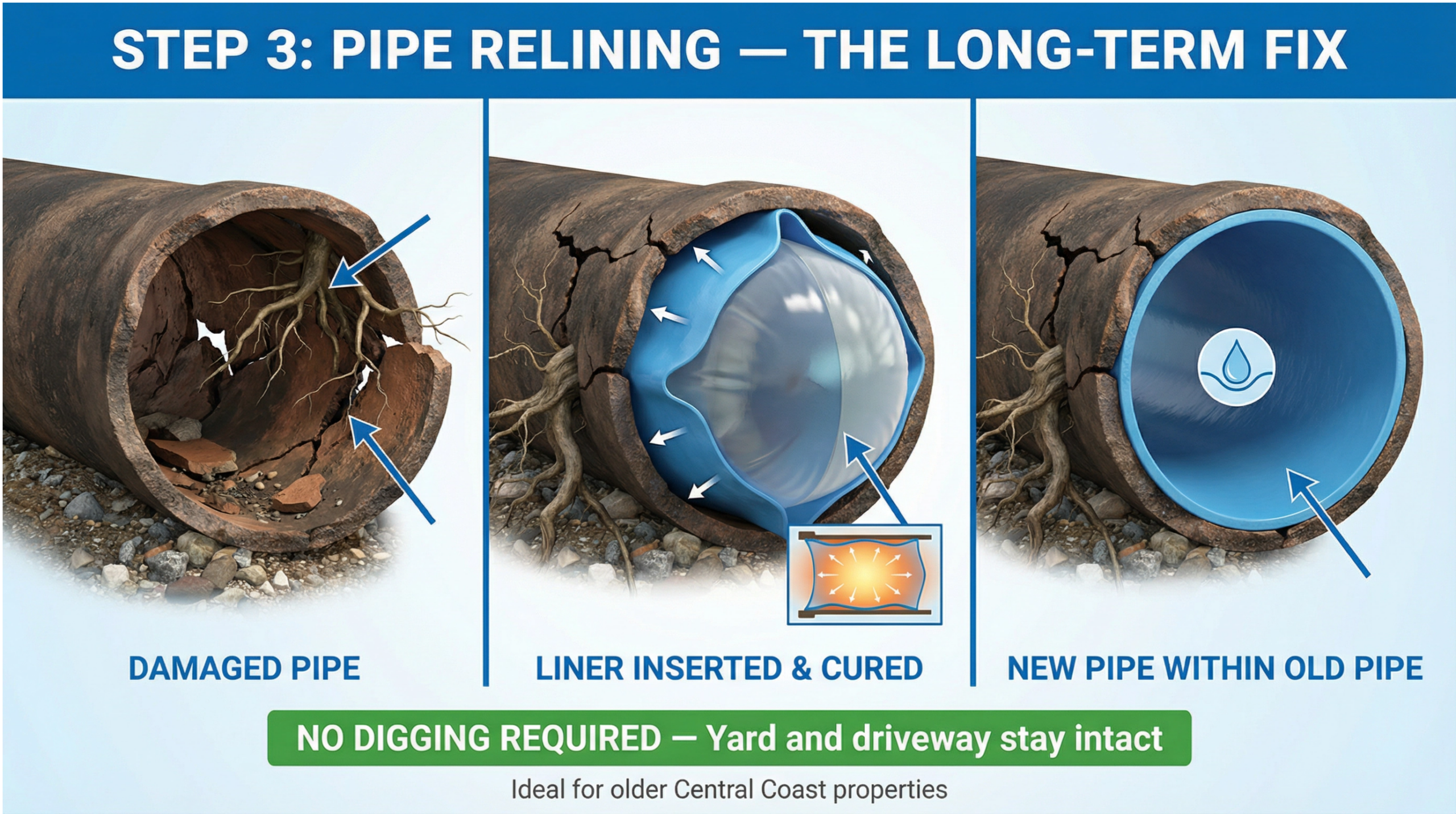
If the camera reveals cracks, joint damage or significant root intrusion that is likely to cause repeat blockages, we may recommend pipe relining as a long-term solution. Pipe relining involves inserting a flexible resin liner into the existing damaged pipe and curing it in place — creating a smooth, seamless new pipe surface without the need to dig up your yard or driveway.
It is a cost-effective and minimally invasive solution that is particularly well-suited to older Central Coast properties, where full pipe replacement would be highly disruptive and expensive.
Real example: A homeowner in Gosford recently contacted Rectify Plumbing after their bathroom drain had been slow for several months. Our team ran a CCTV camera inspection and located a significant root intrusion from a neighbouring fig tree approximately four metres inside the drain. We jet blasted the line clear and pipe relined the affected section. The homeowner has had no further issues since.
DIY vs. Professional Drain Clearing — What Is Safe to Try at Home
What You Can Try Yourself
For a very minor, slow-draining basin — likely caused by a hair or soap buildup right at the drain opening — a drain screen, a hand drain snake, or a mixture of bicarbonate soda and white vinegar can sometimes free the blockage. These are low-risk options for surface-level issues in basins or shower drains.
Start by removing the drain cover and clearing any visible debris by hand first. Then try your chosen method. If the drain clears quickly, great. If not, it is time to call a professional.
When to Call a Plumber for Blocked Drains on the Central Coast
If the blockage does not clear with basic methods, or if you are dealing with a toilet, a main sewer line, or a sewage smell, stop and call a licensed plumber. Using excessive force with a drain snake on older pipes can cause cracking, and pushing a blockage deeper into the system can make it significantly worse.
Chemical drain cleaners can clear a partial blockage temporarily, but they are corrosive and can damage older pipe materials over time. For anything more than a minor surface blockage, professional drain cleaning services are always the safer and more effective option.
How to Prevent Blocked Drains on the Central Coast
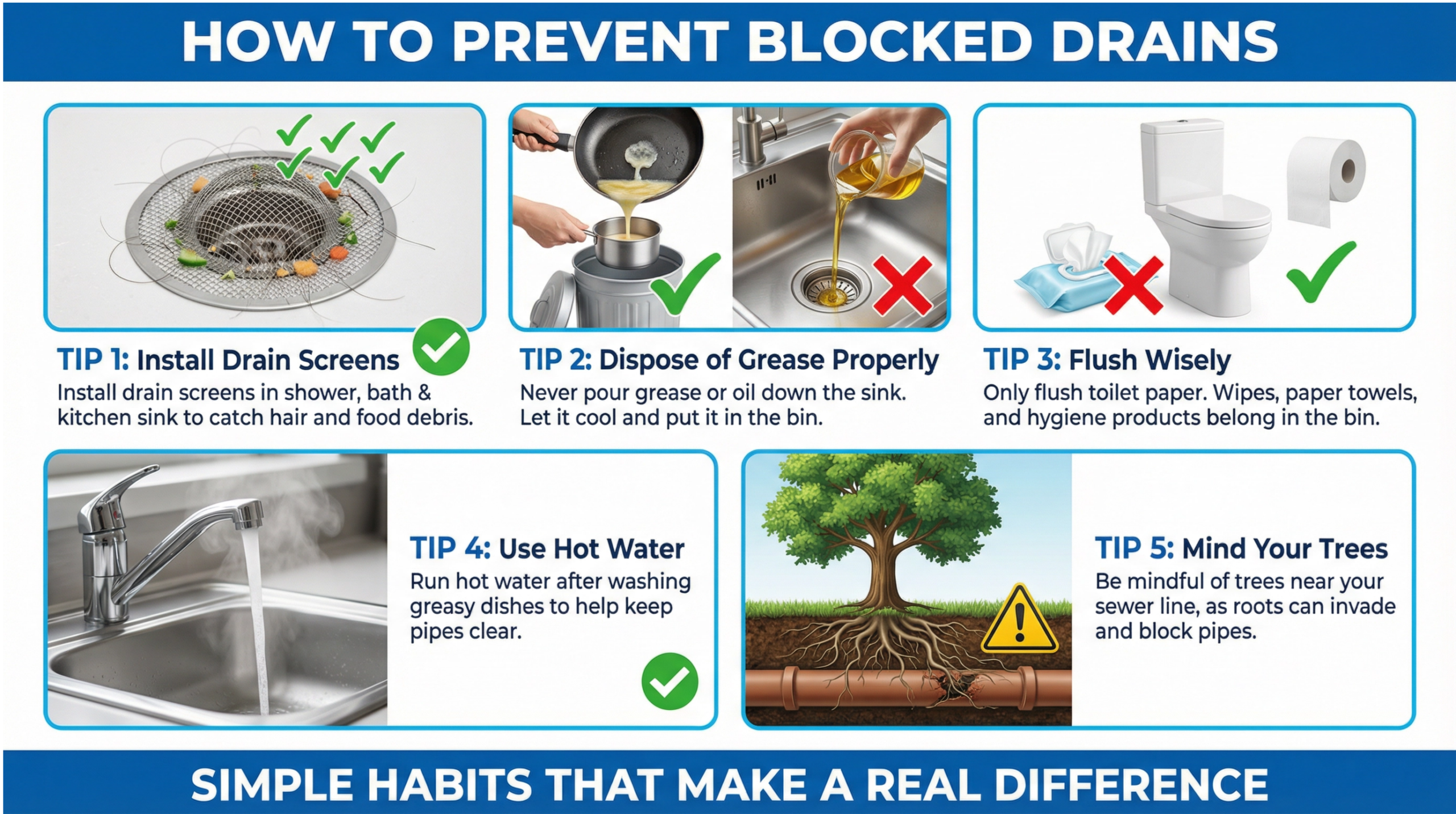
Simple Habits That Make a Real Difference
Many blocked drains are entirely preventable. A few consistent habits can dramatically reduce how often blockages occur in your home:
- Install drain screens in your shower, bath and kitchen sink to catch hair and food debris
- Never pour cooking fat, grease or oil down the sink — let it cool and dispose of it in the bin
- Only flush toilet paper — not wet wipes, tissues or sanitary products
- Run hot water through the kitchen sink for 30 seconds after washing greasy dishes
- Be mindful of trees planted near your sewer line, particularly large natives with aggressive root systems
Annual Preventative Drain Maintenance
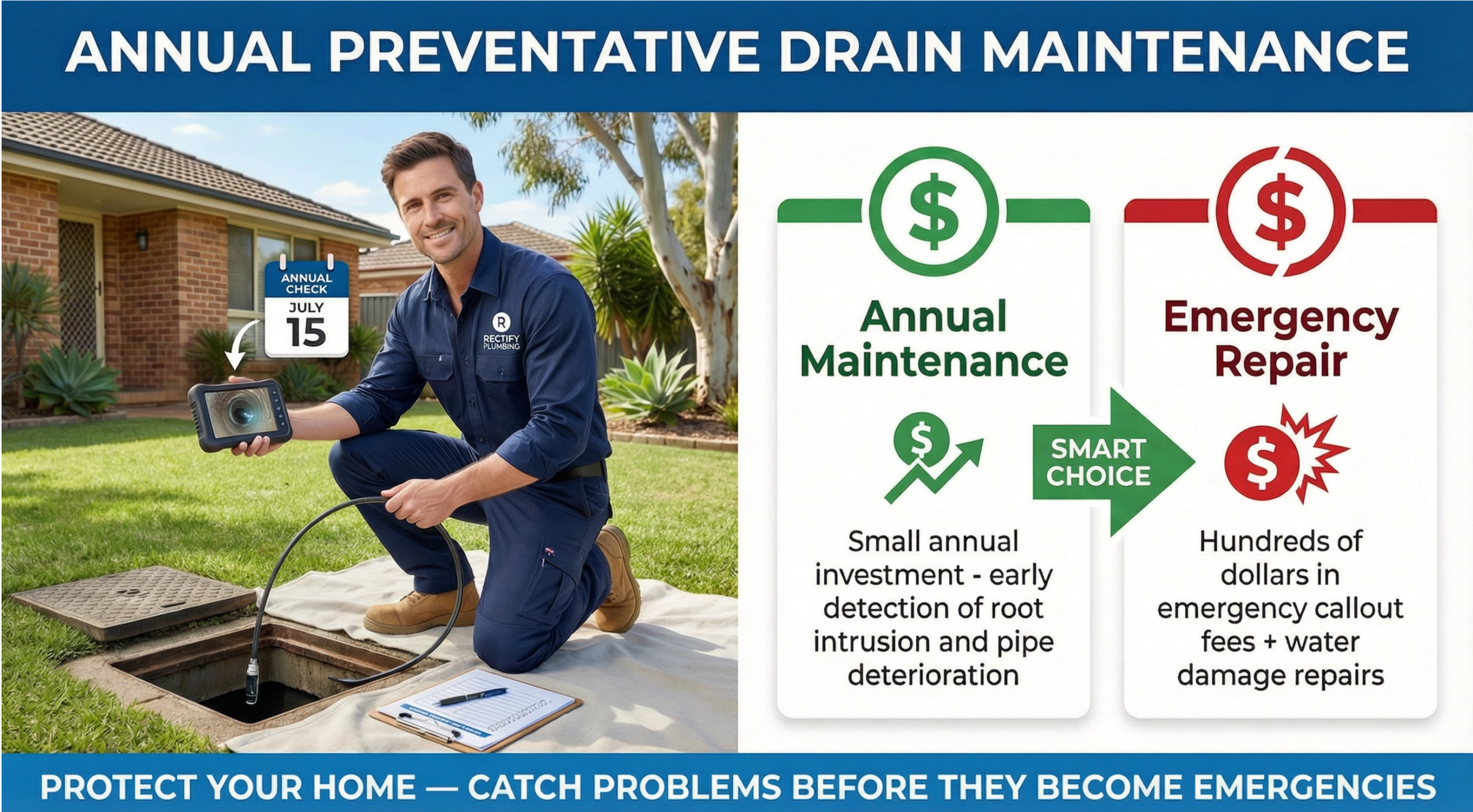
If your home is older, or you have experienced repeat blockages, an annual preventative maintenance inspection is a smart investment. A routine camera check can identify early signs of root intrusion or pipe deterioration long before they become an emergency — and a much smaller repair bill as a result.
Rectify Plumbing offers preventative maintenance plans across the Central Coast. A small annual investment that can save hundreds of dollars in emergency callout fees and water damage repairs.
Get Your Central Coast Drains Sorted — Call Rectify Plumbing

Blocked drains do not fix themselves — and a small problem left too long almost always turns into a bigger, more expensive one. Whether you are noticing slow drainage, hearing gurgling sounds, or dealing with a full backup, the sooner you get a professional assessment the better.
Rectify Plumbing provides fast, reliable blocked drain services across the entire Central Coast — including Gosford, Wyoming, Erina, West Gosford, Niagara Park, East Gosford and Springfield. We are available 24/7 for emergency blocked drain callouts and arrive equipped to clear, inspect and repair on the same visit wherever possible.
Our team is fully licensed, experienced with older Central Coast pipe systems, and backed by a 100% satisfaction guarantee. Explore our full range of plumbing services or get in touch today to book your inspection.
We also provide gas plumbing on the Central Coast and hot water system repair and installation across Gosford, Wyoming, Erina and surrounding suburbs. Call our Central Coast line on or request a quote online.
Request a Quote or Make an Enquiry -> rectifyplumbing.com.au
Contact Us
Rectify Plumbing offers comprehensive solutions for all of your residential and commercial plumbing needs across Sydney. Contact us today for a fast quote!
Get startedRelated Articles
How to Clear a Blocked Drain: DIY Methods That Work (and When to Stop)
How do you clear a blocked drain yourself?
Work from the least invasive method up. Most kitchen, basin and shower blockages sit within the first metre of pipe and clear with a trap clean, a bicarb-and-vinegar soak or a plunger. Chemical drain cleaner is the one method we ask people to avoid: it rarely shifts a real blockage and it makes the pipe dangerous for the plumber who opens it next.- Clear the visible stuff. Lift the shower or floor grate, pull out hair, soap scum and leaf litter. In the kitchen, unscrew the plastic P-trap under the sink into a bucket and clean it out.
- Bicarb soda and white vinegar. Half a cup of bicarb, then a cup of vinegar. Cover the plughole, wait 20 minutes, then flush with hot tap water. This softens grease and soap build-up; it will not touch tree roots.
- Plunge properly. Fill the fixture with 5–10 cm of water and tape over the overflow hole so you actually build pressure. Twenty sharp pumps, keeping the seal, beats one big shove.
- Hand-held drain snake. A 3–5 m hardware-store snake reaches most basin and shower blockages. Turn the handle steadily and pull debris out rather than pushing it deeper.
- Wet-and-dry vacuum. On a wet setting, with a tight seal over the plughole, a shop vac can pull out a lodged object that a plunger only pushes further along.
What causes blocked drains in Sydney and the Central Coast?
Cause decides cure. Roots and pipe damage will never respond to anything you can buy at Bunnings, while grease and hair almost always do. This is the split we see across Berowra, Hornsby, Epping, Ryde, Gosford and the wider Central Coast.| Symptom | Most likely cause | Can you DIY it? |
|---|---|---|
| Slow kitchen sink, smells worse in warm weather | Congealed fat and food scraps in the trap or branch line | Yes — trap clean, hot water, plunger |
| Shower pools around your feet | Hair and soap scum at the waste | Yes — grate clean and drain snake |
| Toilet rises then drains slowly | Wet wipes, sanitary products or a partial main-line blockage | Sometimes — plunger only, never a chemical |
| Gurgling in one fixture when you use another | Venting problem or main sewer line restriction | No — licensed drainer |
| Every fixture is slow; the overflow relief gully outside is wet | Blocked main sewer line, usually tree roots | No — drain machine and CCTV |
| Blockage returns every few months | Cracked or root-invaded clay pipe | No — camera inspection, then pipe relining or repair |
Why do tree roots block drains so often in northern Sydney?
Older suburbs such as Berowra, Mount Colah, Hornsby, Pennant Hills and Epping still run vitrified clay sewer lines with rubber-ring or mortar joints. Eucalypts, figs and camphor laurels send fine roots toward the moisture at those joints, and once inside, they fan out and catch paper and fat. Clearing the roots restores flow, but unless the pipe is relined the roots return — typically within 9 to 18 months. We explain the pattern in more detail in why drains keep blocking in Hornsby.When should you stop and call a licensed plumber?
Call a licensed plumber straight away if sewage is backing up, if more than one fixture is affected, if the overflow relief gully outside has lifted, or if the same drain has blocked more than twice this year. Those are main-line symptoms, and in NSW work on sanitary drainage must be done by a licensed plumber or drainer. Reach us on 0400 073 180.- Waste water coming up through a floor waste, shower or gully
- Toilet and shower blocked at the same time
- Sewage smell in the yard or a soggy patch over the pipe run
- You have already tried a plunger and a snake without progress
- The property is a strata unit or shared line — get it cameraed before anyone digs
How do plumbers clear a blocked drain?
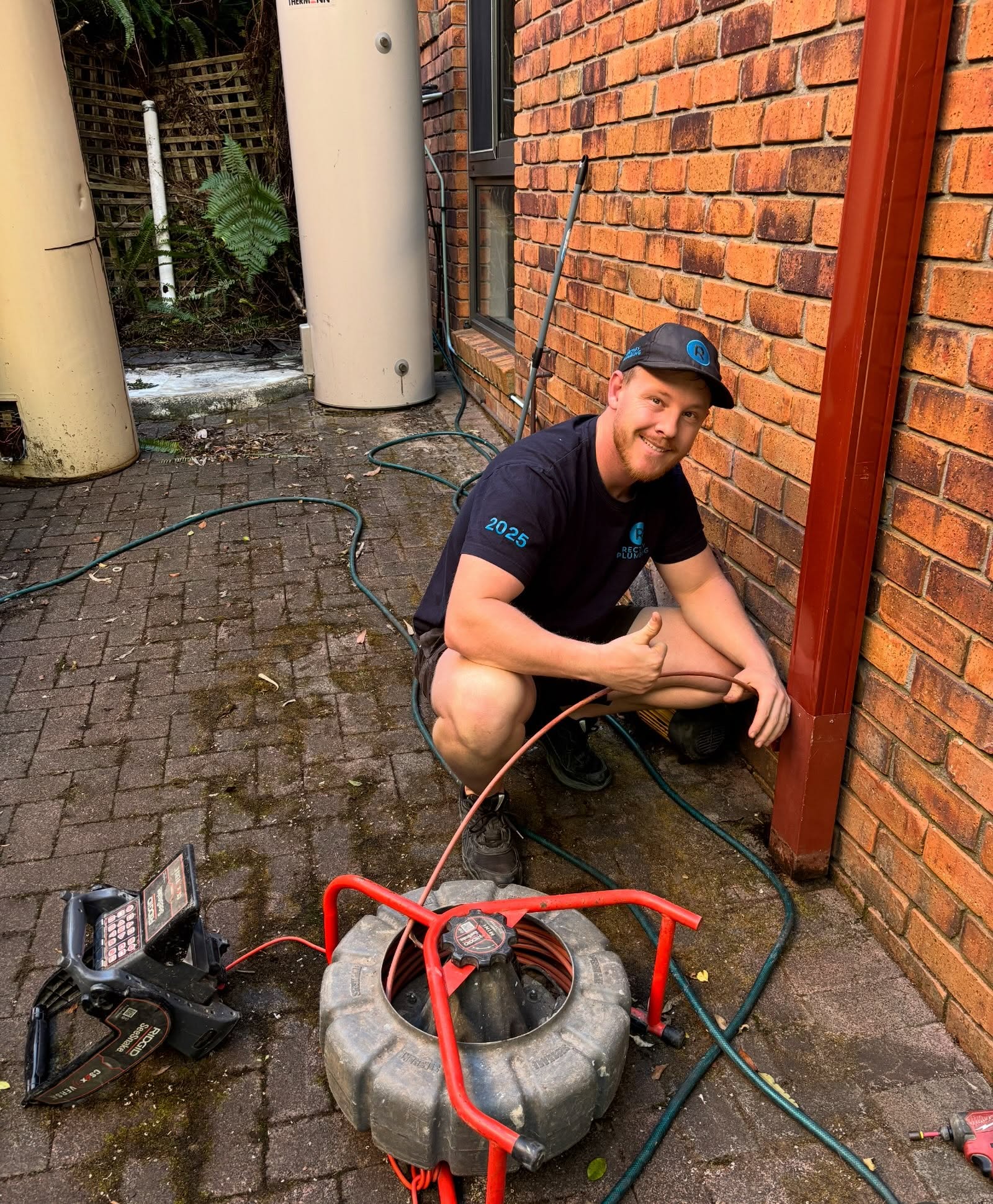
A professional clear is a two-step job: remove the blockage, then find out why it happened. We run an electric drain machine or a high-pressure water jetter to open the line, then put a camera down it so the cause is on screen rather than guesswork.- Locate the access. Usually the overflow relief gully or an inspection opening in the yard.
- Drain machine or jetter. A cutting head shears roots; high-pressure jetting scours fat and silt off the pipe wall rather than just punching a hole through it.
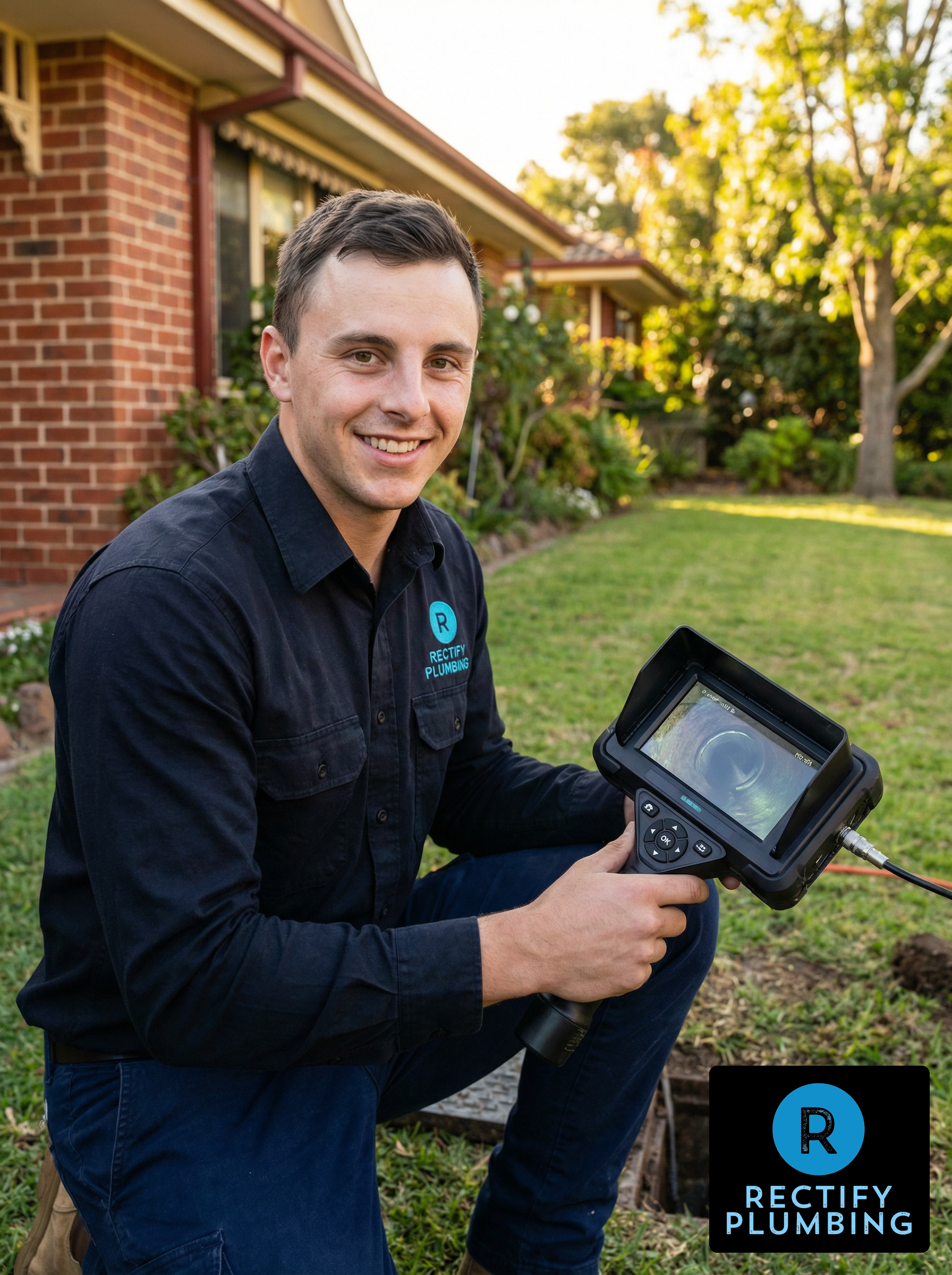
- CCTV inspection. A drain camera inspection shows cracks, sags, root entry points and misaligned joints, and locates them to the metre from the surface.
- Report and options. Clear-only, jetting plus a maintenance interval, or a permanent repair such as relining.
How much does it cost to clear a blocked drain?
Cost depends on access, the equipment needed and whether the line has to be cameraed afterwards. A straightforward fixture blockage cleared with a drain machine sits at the low end; a jetting job on a long, root-affected main sewer line with a CCTV report costs more. We quote before we start rather than by the hour — there is a local breakdown in our guide to the cost to clear a blocked drain in Berowra and Hornsby Shire.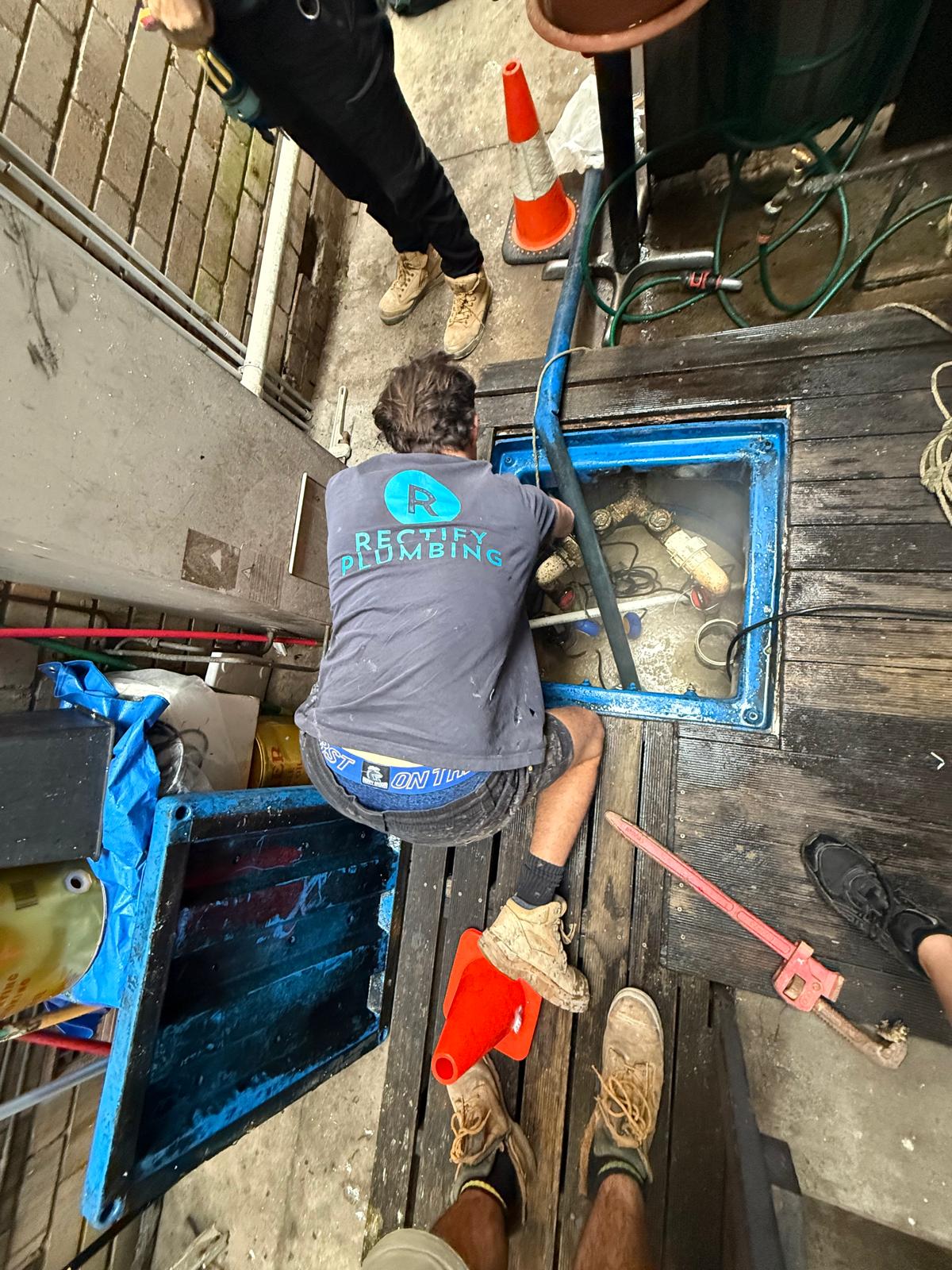
Who is responsible for a blocked drain — you or the water authority?
As a general rule in NSW, the property owner is responsible for the pipes on their property up to the connection point, and Sydney Water is responsible for the main in the street. Shared or downstream lines and strata properties complicate that, so it is worth confirming before you pay for excavation — see our note on blocked drain responsibility in Epping. You can also check a plumber's licence on the NSW Government licence check.How do you stop drains blocking again?
Prevention is mostly about what goes down the drain and what grows above the pipe. Three habits prevent most repeat call-outs.- Pour cooking fat into a jar and bin it — never down the sink, even with hot water behind it.
- Bin wet wipes, cotton buds and sanitary products. "Flushable" wipes do not break down in a sewer line.
- Fit hair catchers in showers, and clean gutters and yard grates before storm season on the Central Coast.
- If you have mature trees over an old clay line, book a preventative jet and camera every 12–18 months rather than waiting for the overflow. See preventative maintenance.
Need a blocked drain cleared today?
Rectify Plumbing is a licensed plumbing, draining and gasfitting business servicing Sydney's North Shore, Hornsby Shire, the Hills District, Epping, Ryde and the Central Coast. Every drain we clear is cameraed so you can see the cause, and we quote up front. Call 0400 073 180 or book a plumber online. If you want the commercial, Sydney-wide version of this guide, read blocked drain Sydney: how to clear it and when to call a plumber, or see our blocked drains service.Blocked drain FAQs
[service_faqs]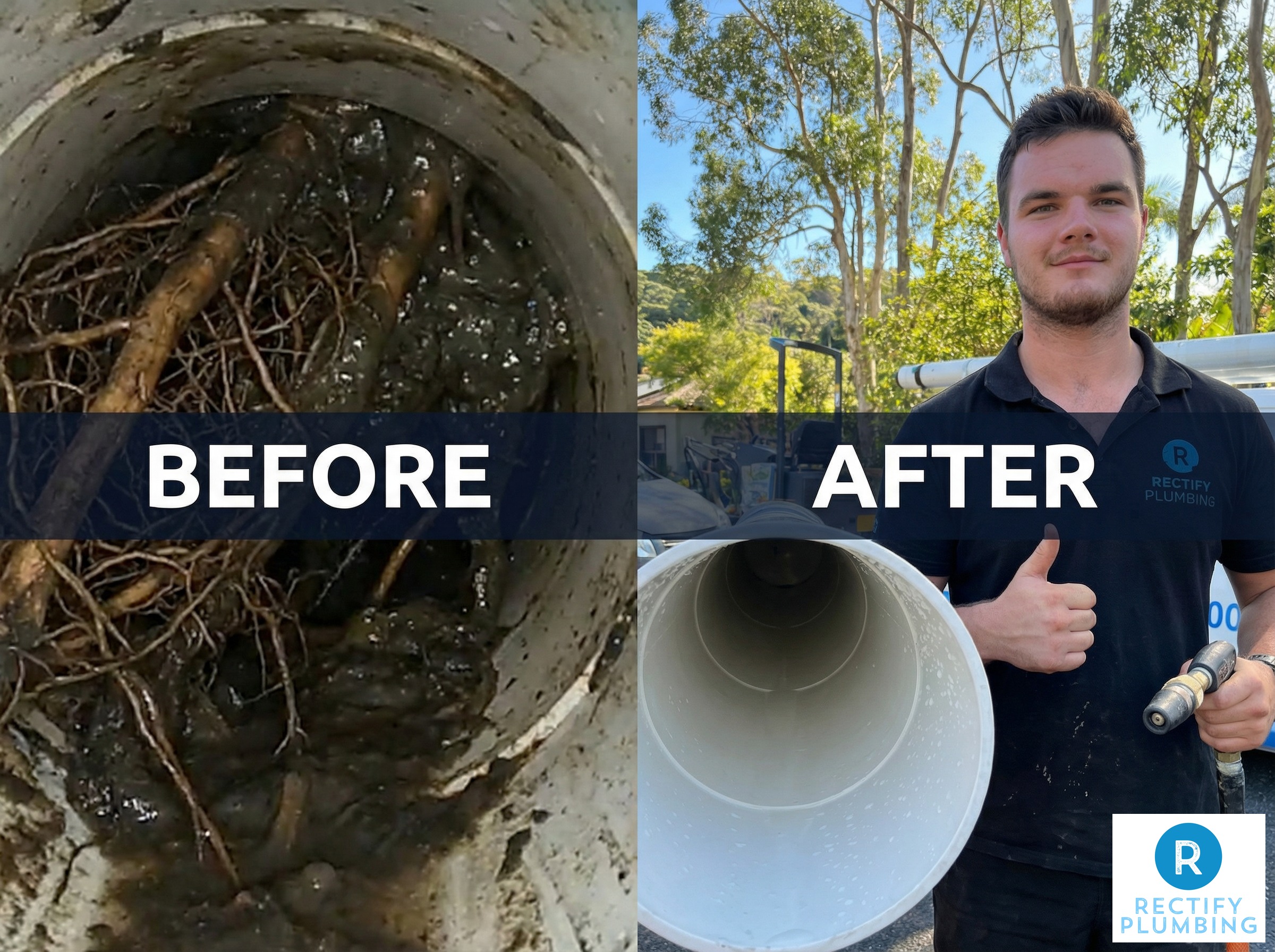
Blocked Drain Sydney: How to Clear It and When to Call a Plumber
Quick answer: how to clear a blocked drain
To clear a blocked drain, flush a slow sink or shower with boiling water and plunge it with the overflow covered; if more than one fixture is affected, the blockage is in your main sewer line and needs a licensed plumber with a drain camera and water jetter. Skip supermarket drain chemicals — they rarely reach a main-line blockage and can damage older Sydney pipework. For a same-day blocked drain plumber across Sydney and the Central Coast, call Rectify Plumbing on 0400 073 180.What actually causes blocked drains in Sydney?
Tree roots are the number one cause we find. Large parts of Sydney and the Central Coast still run on clay or earthenware sewer lines with rubber-ring joints, and roots from figs, paperbarks and gums push straight into those joints. Kitchen fat, wet wipes, hair and collapsed pipe sections make up most of the rest.Symptom to cause: what your drain is telling you
| What you notice | Most likely cause | What it needs |
|---|---|---|
| One slow sink, everything else fine | Fat, soap or hair in the trap | Boiling water, plunger, clean the trap |
| Gurgling toilet when the washing machine drains | Main sewer line partially blocked | CCTV inspection + jetting |
| Multiple fixtures backing up at once | Main line blockage downstream | Same-day licensed plumber |
| Water pooling at the overflow relief gully in the yard | Sewer blockage forcing water out by design | Emergency call-out |
| Same drain blocks every few months | Tree roots or a cracked, misaligned pipe | Camera inspection then pipe relining or repair |
| Sewage smell outside with no visible water | Cracked pipe or dry trap | CCTV drain inspection |
| Stormwater pit overflowing in heavy rain | Silt, leaves or root-choked stormwater line | Jetting and pit clean-out |
What can you safely try yourself before calling a plumber?
If only one fixture is affected, it is worth ten minutes of your time. These steps are safe on Sydney's older pipework and will clear a fair share of kitchen and bathroom blockages without any chemicals.- Boiling water. Pour a full kettle slowly down the drain in three stages. Best on kitchen sinks where cooking fat has set.
- Clear the trap. Put a bucket under the P-trap beneath the sink, unscrew it by hand, and pull out the hair and gunk. This is the single most effective DIY fix for a basin or kitchen sink.
- Plunge properly. Cover the overflow hole with a wet cloth, fill the basin with a few centimetres of water so the plunger seals, then push and pull firmly about twenty times.
- Bicarb and vinegar. Half a cup of bicarbonate of soda, then a cup of white vinegar, left for fifteen minutes and flushed with hot water. Gentle on pipes and works on light grease.
- Hand auger on the shower. A small drain snake will pull out the matted hair sitting just below a shower waste.
- Stop and call. If none of that shifts it in ten minutes, or a second fixture is misbehaving, the problem is past the trap. Further DIY at that point usually just adds to the mess.
What makes a blocked drain worse
- Caustic drain cleaners. Corrosive, ineffective on main-line blockages, and dangerous for whoever opens the pipe next.
- Repeated flushing. Every flush adds to water that has nowhere to go, which is how a blocked drain becomes a sewage overflow inside the house.
- Forcing a garden hose down the line. Can push the blockage into a tighter section or damage an already cracked pipe.
- Lifting a maintenance hole cover yourself. Sewer gas and contaminated water are genuine health risks.
How do professionals clear a blocked drain?
The order matters. We look before we cut, because clearing a blockage without knowing why it formed means you will see us again in three months. A typical Rectify Plumbing blocked drain job runs like this.- Locate the access point. Usually an inspection opening or the overflow relief gully in the yard.
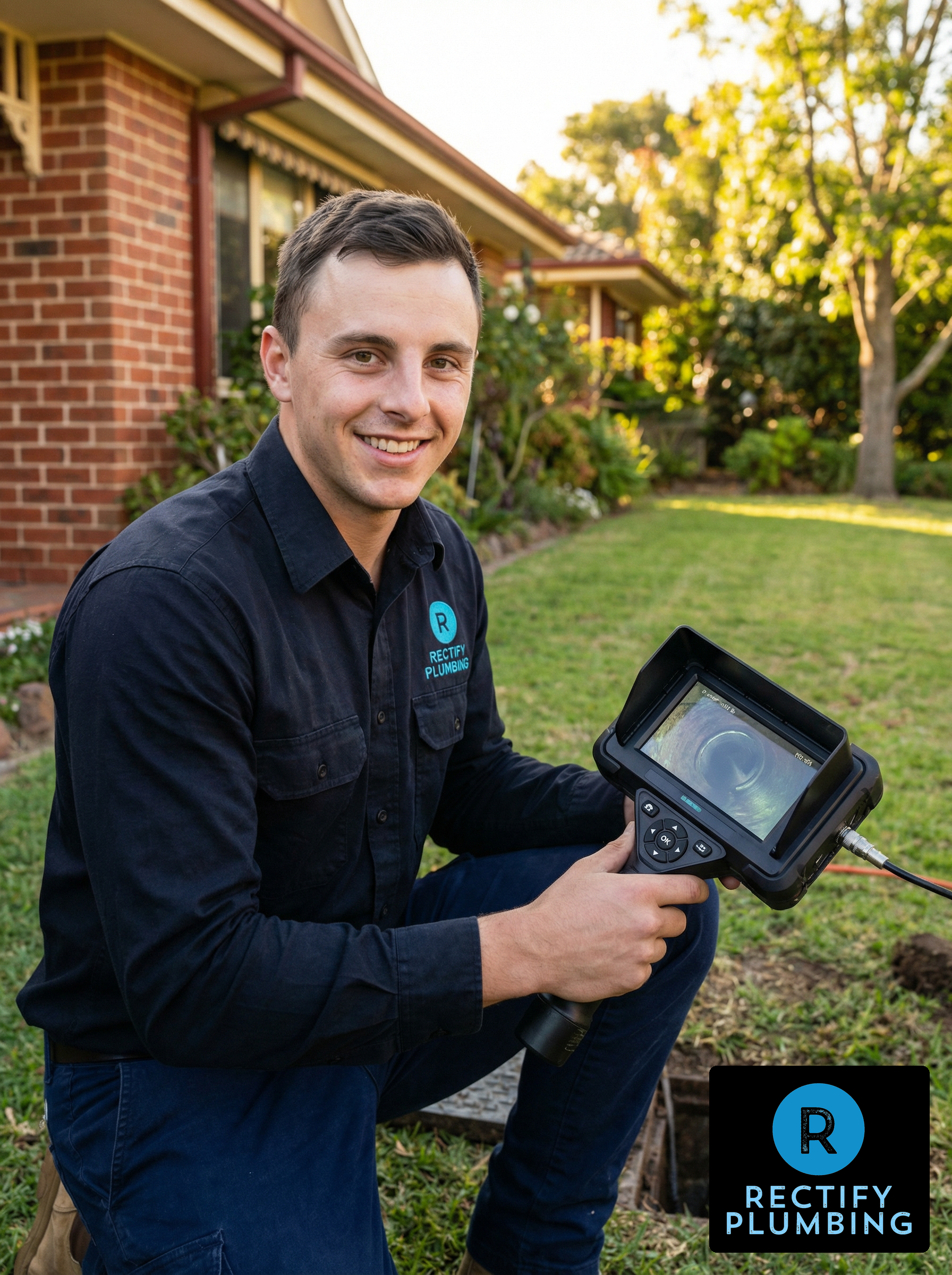
- CCTV drain camera. We push a camera down the line to find the blockage, measure how far along it sits, and see whether the pipe itself is damaged.
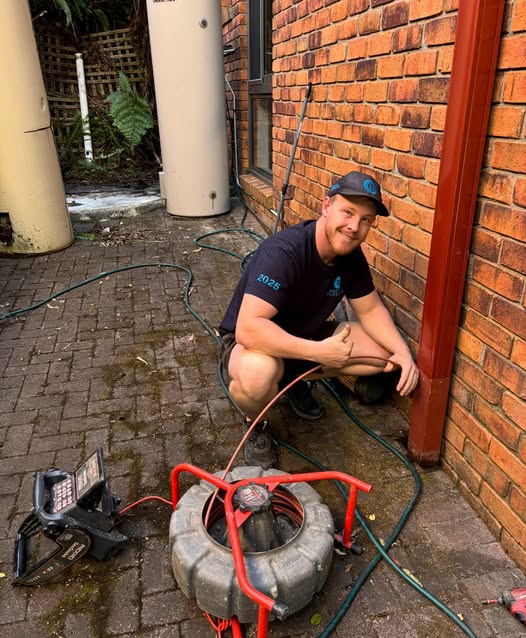
- Clear it. An electric eel cuts through roots and compacted debris; a high-pressure water jetter scours the pipe walls clean of fat and silt.
- Re-camera and show you. We run the camera again and show you the footage, so you can see the pipe is clear rather than take our word for it.
- Recommend a fix if the pipe is damaged. If roots are entering through a broken joint, clearing alone is a temporary result — relining or replacing that section is the permanent one.
Who is responsible for a blocked drain — you or Sydney Water?
You are responsible for the pipework on your property up to the point of connection with Sydney Water's system. Sydney Water looks after its own network. If the overflow is outside your boundary, your neighbours have the same trouble, or the street is flooding, it is Sydney Water's problem — call them on 13 20 90. Sydney Water sets out the split in its wastewater blockages guidance. When it is not obvious, a camera and pipe locator settles it. We regularly find blockages sitting within a metre of the boundary, and knowing which side it is on decides who pays.When is a blocked drain an emergency?
Call straight away if sewage is surfacing inside the house or at the gully, if you have no usable toilet, or if water is backing up faster than it drains. Those situations do not improve on their own and every hour of use makes the clean-up bigger.- Sewage or grey water coming up through a floor waste, shower or laundry tub
- The only toilet in the house is unusable
- Water pooling around the overflow relief gully in the yard
- A strong sewage smell inside the house
- Repeat blockages within weeks of each other
Which suburbs does Rectify Plumbing cover for blocked drains?
We are a licensed Sydney and Central Coast plumbing business working from Berowra Heights and the Central Coast. Blocked drain work takes our team through Epping, Ryde, Hornsby, Berowra, Mount Colah, Thornleigh, Pennant Hills, Chatswood, Terrey Hills, St Ives and Parramatta, and north to Gosford, Wyoming, Erina and the wider Central Coast. Same-day service is standard for blockages and we carry cameras, eels and jetters on every ute.- Blocked drain services — what we do and how we price it
- Blocked drains Hornsby and blocked drains Epping
- Blocked drains Chatswood and Terrey Hills
- Why drains keep blocking in Hornsby
- Council and Sydney Water responsibility explained
How do you stop drains blocking again?
Prevention is mostly about what goes in and what grows nearby. These habits cut repeat call-outs more than any product you can buy.- Scrape fat and oil into the bin, never down the sink — it sets solid in the line
- Bin wet wipes, cotton buds and sanitary products; only the three Ps go down a toilet
- Fit a hair strainer to shower and basin wastes
- Clear leaves from stormwater pits and gutters before storm season
- Think twice about planting large trees over a sewer line, and get a camera inspection if you already have them
- Book a CCTV inspection before buying a property with mature trees — it is cheap insurance
Why choose a licensed plumber for blocked drains?
In NSW it is illegal to carry out plumbing or drainage work without a licence, regardless of the size of the job — the rules are set out by NSW Government licensing. Rectify Plumbing is fully licensed and insured, our drainage work is done by our own tradespeople rather than subcontractors, and every job is quoted at a fixed price before we start.Get your blocked drain cleared today
If your drain is backing up right now, do not wait it out. Call Rectify Plumbing on 0400 073 180 for a same-day blocked drain plumber across Sydney and the Central Coast, or request a call back. We will camera the line, tell you exactly what we find, and quote a fixed price before any work begins.Blocked drain FAQs
[service_faqs]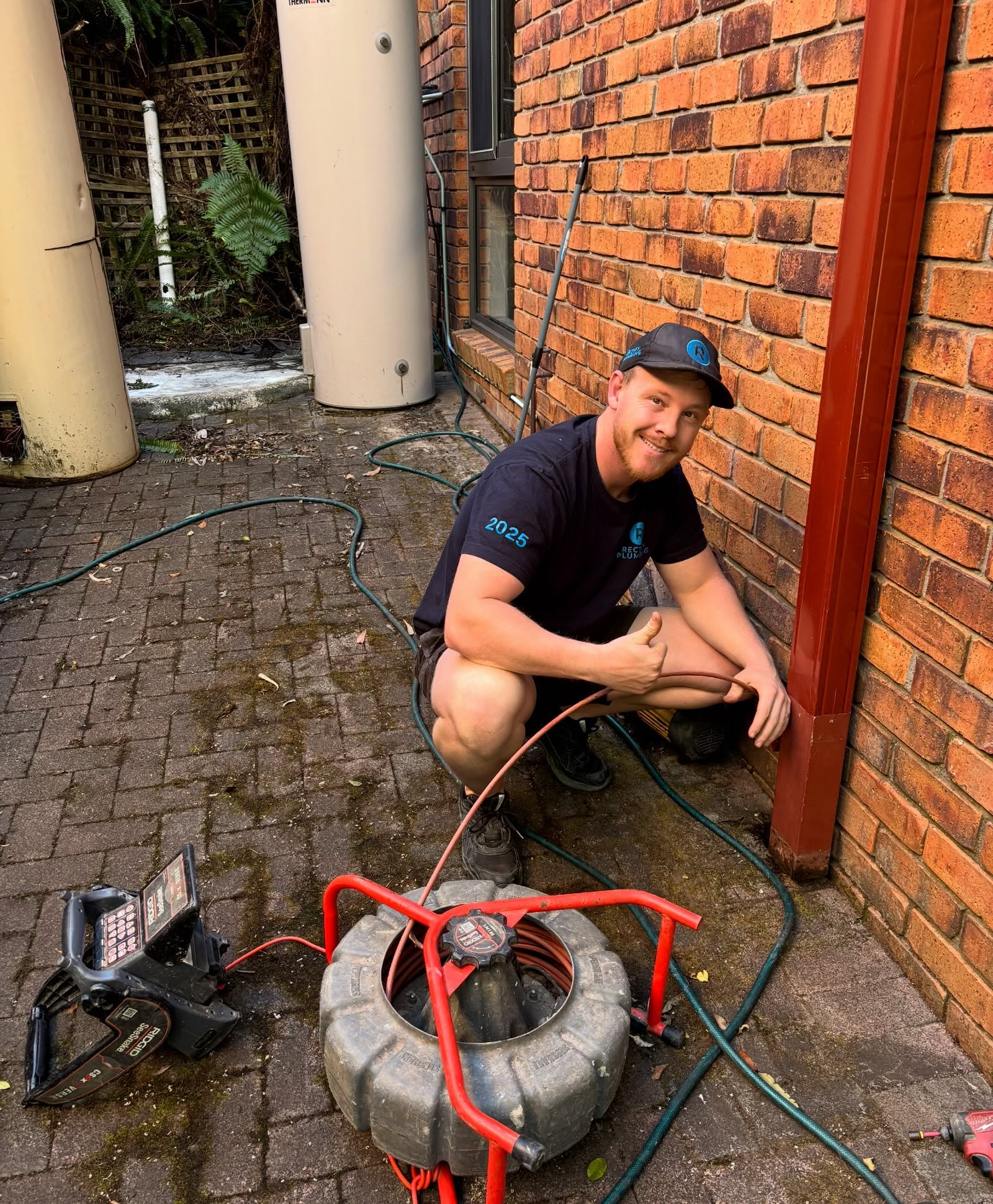
Blocked Drains Central Coast: Causes, Costs & Fast Fixes (Gosford, Wyoming, The Entrance)
Quick answer: what to do about a blocked drain on the Central Coast
If your drains are gurgling, draining slowly or overflowing at the outside gully, the blockage is almost always in your own sewer or stormwater line — and on the Central Coast the usual culprit is tree roots or silt after heavy rain. Stop using water in the house, lift the overflow relief gully grate outside so any overflow escapes there instead of inside, and get a licensed plumber with a jetter and CCTV camera on site. Rectify Plumbing covers Gosford, Wyoming, The Entrance, Terrigal and Wyong — call 0400 073 180.Why do drains block so often on the Central Coast?
Central Coast blocks come down to three things: mature gums and paperbarks whose roots chase moisture into old clay sewer joints, sandy soil that shifts and sags pipework, and stormwater systems that silt up under heavy coastal rain. Older Gosford and Wyoming homes still run vitrified clay, which roots enter easily at every rubber-ring joint.Common causes we see, suburb by suburb
- Gosford, East Gosford, Wyoming — tree-root intrusion in clay sewer lines on established blocks.
- The Entrance, Terrigal, Bateau Bay — sand and silt in stormwater lines and gully pits; salt-air corroded fittings.
- Wyong, Tuggerah — flatter ground means less fall in the line, so grease and paper settle instead of flushing through.
- Springfield, Green Point — sagging (bellied) pipes after ground movement, causing repeat blockages in the same spot.
What are the symptoms, and what do they usually mean?
Different symptoms point to different parts of the system. Use this table to work out whether you have a simple fixture blockage or a main sewer line problem before you call.| Symptom | Most likely cause | How urgent |
|---|---|---|
| One sink or basin draining slowly | Hair, soap or grease in that fixture's trap | Low — book a standard visit |
| Toilet gurgles when the shower runs | Partial blockage in the shared branch or main line | Medium — clear it before it fully blocks |
| Every drain in the house is slow | Main sewer line blockage, often tree roots | High — stop using water, call a plumber |
| Water overflowing at the outside gully | Main line blocked; gully is doing its job | High — same-day attention |
| Rotten-egg or sewage smell in the yard | Cracked pipe or blocked vent | Medium-high — needs a CCTV inspection |
| Stormwater pits overflowing in rain only | Silt, leaves or a collapsed stormwater line | Medium — fix before the next downpour |
| Same blockage returns every few months | Root intrusion, belly or broken pipe section | High — clearing alone will not fix it |
How do plumbers clear a blocked drain on the Central Coast?
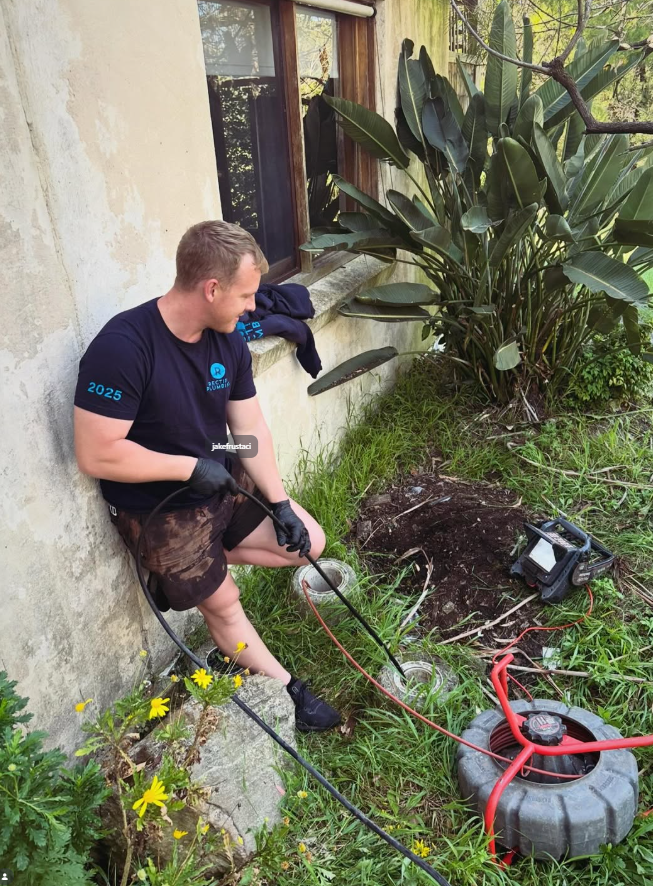
A proper job is diagnose, clear, then verify. We locate the blockage, clear it mechanically or with high-pressure water, then camera the line so you can see whether the pipe itself is sound. Clearing without a camera is how people end up paying twice.- Find the access point. Usually the inspection shaft or overflow relief gully near the boundary.
- Identify the blockage type. Roots, grease, silt, foreign objects or a structural fault all behave differently.
- Clear it. An electric drain machine cuts roots; a high-pressure water jetter scours grease and silt back to bare pipe.
- CCTV inspect. The camera shows cracks, bellies, offset joints and root entry points.
- Locate and mark faults. Depth and position are marked on the surface so any repair is targeted, not exploratory.
- Report and recommend. You get the footage and a plain-English explanation of whether a repair or reline is needed.
Is a blocked drain my responsibility or Sydney Water's?
On the Central Coast, water and wastewater services are provided by Central Coast Council rather than Sydney Water, but the ownership principle is the same: you own and maintain the wastewater pipes on your property up to the point where they connect to the network. That means a blockage inside your boundary is a job for a licensed plumber, not the utility. Sydney Water sets out the same split for its own area in its wastewater blockages guidance. If you are in the Hornsby or Epping part of our service area instead, we cover who pays in our guide to blocked drain council responsibility in Epping.What can I try before calling a plumber?
There are two safe things worth trying and several things worth avoiding. Boiling water and a plunger on a single slow fixture are fine. Anything beyond that risks damage.- Do pour hot (not boiling) water down a greasy kitchen drain and plunge the fixture.
- Do clear leaves and silt out of stormwater grates and gully pits by hand.
- Do not use caustic drain cleaners repeatedly — they can damage older pipes and make the line hazardous to work on.
- Do not force a garden hose or hired rod into the main line; it can push a blockage past the access point or crack a clay joint.
- Do not keep flushing if the outside gully is overflowing.
How do I stop a Central Coast drain blocking again?
Repeat blockages are a pipe problem, not a habits problem. If a line blocks more than once a year, the fix is usually root cutting plus a reline of the affected section, or replacing a sagging length of pipe. Regular maintenance jetting keeps grease-prone kitchen lines and leaf-prone stormwater lines clear.- Fit leaf guards over stormwater pits and clean them each autumn.
- Scrape fat and food scraps into the bin, never the sink.
- Only flush the three Ps — no wipes, even "flushable" ones.
- Schedule preventive jetting every 12-24 months where roots are known.
- Reline or repair the pipe once CCTV shows root entry or a crack.
- See also: why drains keep blocking.
Who should I call for an emergency blocked drain on the Central Coast?
For sewage backing up inside, overflowing gullies or a completely blocked main, you want a licensed local plumber who can be on site the same day with a machine and a camera. Rectify Plumbing is fully licensed and insured under NSW law, works across the Central Coast and northern Sydney, and turns up in a stocked vehicle so most blockages are cleared on the first visit.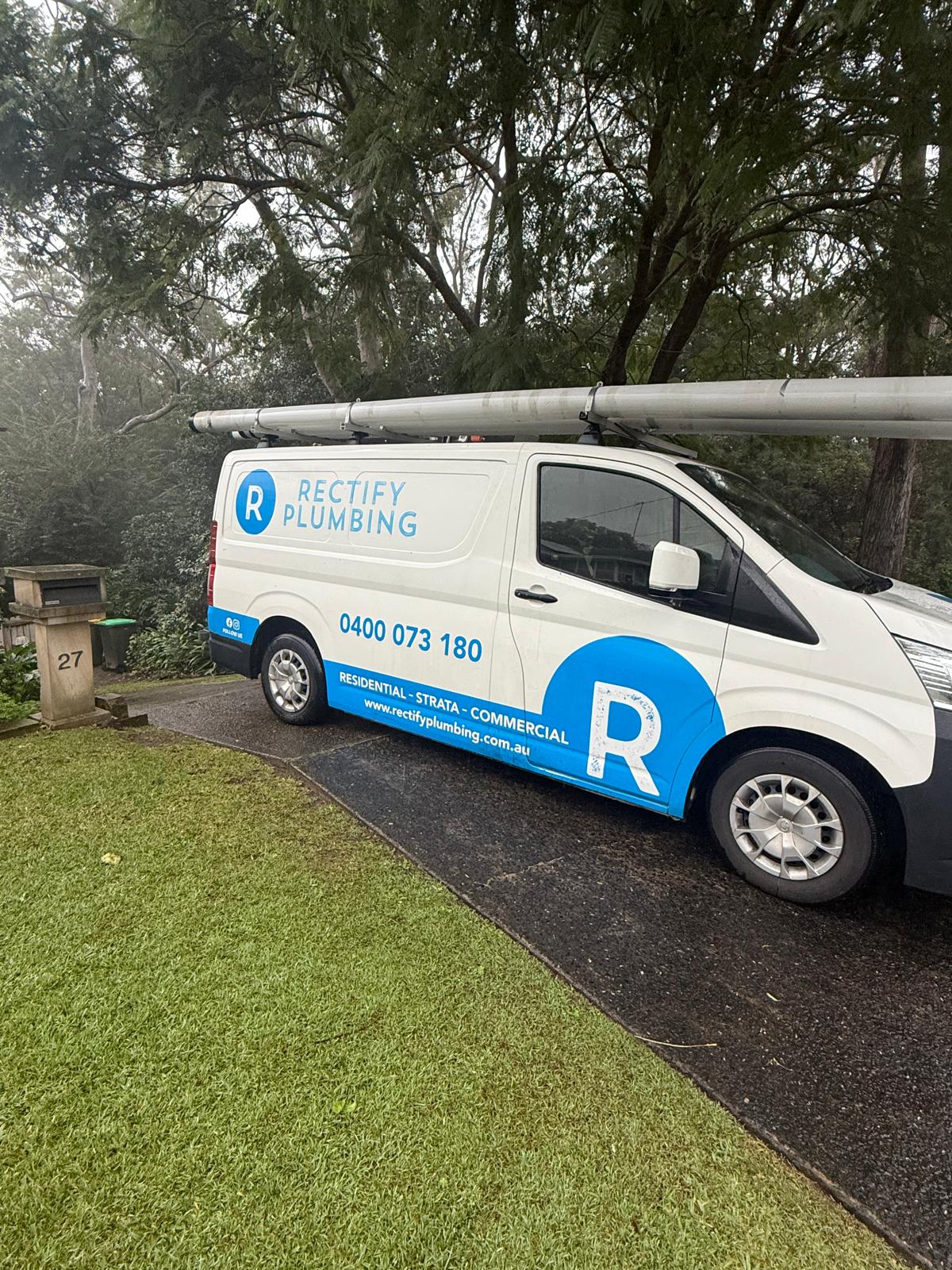
Licensed, insured and locally based
All plumbing and drainage work in NSW must be done by a licensed tradesperson, and you can check any licence number yourself on the NSW Fair Trading register. We hold current plumbing and drainage licences and public liability insurance, and we give an upfront price before work starts.Book a blocked drain plumber on the Central Coast
Blocked drain in Gosford, Wyoming, The Entrance, Terrigal or Wyong? Call Rectify Plumbing on 0400 073 180 for same-day drain clearing with CCTV included, or send us your job details. You can also read more about our blocked drain services or our emergency response in Wyoming.Is it my sewer or my stormwater that is blocked?
They are two separate systems and the difference changes who fixes it and how. Sewer (wastewater) carries everything from toilets, showers and sinks and must be cleared by a licensed plumber. Stormwater carries roof and surface run-off to the street, kerb or an easement, and blocks with leaves, sand and silt rather than waste.- Sewer blockage clues: toilets and showers affected, sewage smell, overflow relief gully spilling.
- Stormwater blockage clues: only happens during or after rain, downpipes backing up, pits and grates ponding, water pooling against the house.
- Both at once usually means an illegal cross-connection or a collapsed shared line — that needs a camera before anything else.
What affects the cost of clearing a blocked drain?
We give an upfront price before starting, and it comes down to four things rather than a flat rate. Knowing them helps you compare quotes honestly instead of chasing the lowest hourly figure.- Access. A clear inspection shaft near the boundary is quick; no access point may mean lifting a pan or cutting an access.
- Blockage type. Grease and paper clear fast. Heavy root masses need cutting heads and more time.
- Method needed. A drain machine is enough for many jobs; badly silted or greased lines need high-pressure jetting.
- Pipe condition. If CCTV shows a crack, offset joint or belly, you are choosing between a spot repair, a reline or replacement.
What happens if you ignore a blocked drain?
A partial blockage does not stay partial. As waste catches on the obstruction the pipe loses more capacity each week, and the pressure finds the weakest point — usually an old joint, which then leaks into the surrounding soil. That is when a straightforward clear turns into an excavation.- Sewage overflow inside the house, which is a health hazard and an insurance claim.
- Saturated soil around the pipe, which accelerates root growth and pipe movement.
- Damage to slabs, paving and garden beds when the line finally has to be dug up.
- Blocked stormwater sending run-off against your foundations instead of to the street.