
- 07Feb
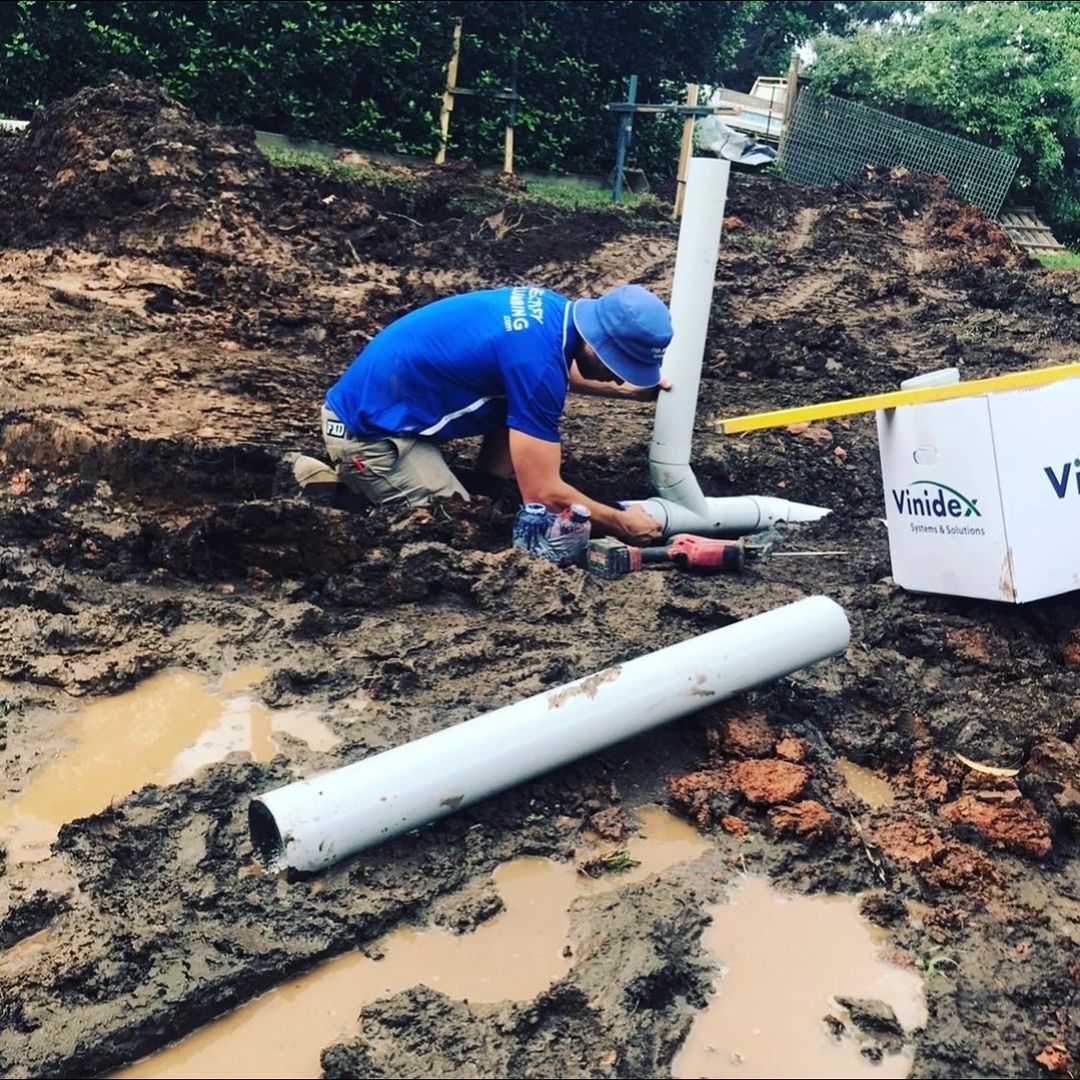
How To Safely Unblock An External Drain
A blocked external drain can quickly become a messy and inconvenient problem for homeowners. Whether due to debris, leaves, or a buildup of foreign objects, tackling a blocked drain outside your house requires a systematic approach to prevent a disaster. In this step-by-step guide, we’ll explore how to unblock external drains safely and effectively to prevent any potential damage or inconvenience. Rectify Plumbing is a leader in unblocking outdoor drains so read on.
Identifying the Blocked External Drain
The first step in resolving an issue related to drain blockage outside your house is identifying the location of the blockage. Take note of any signs, such as water pooling around the drain, foul odours, or slow drainage. Once you’ve pinpointed the blocked external drain, gather the necessary tools for the task.
Tree Roots
One common cause of external drain blockages is the intrusion of tree roots into the pipes. If you suspect tree roots are the culprit, consider using root-killing products specifically designed for drains. These products, usually available at hardware stores, can help eliminate tree roots without causing significant harm to your landscaping.
Community Collaboration
If you notice recurring external drain blockages in your neighbourhood, consider collaborating with your community to address the root causes. Organise clean-up events to remove debris from common drain areas and raise awareness about proper waste disposal. By working together, you can create a cleaner and more efficient drainage system for the entire community.
Safety Precautions You Should Know
Before you proceed with unblocking the outdoor drain, ensure your safety by wearing gloves and, if needed, protective eyewear. Additionally, keep in mind that certain chemical drain cleaners can be harmful to both you and the environment, so consider opting for more eco-friendly alternatives.
Clearing Debris from the Drain Entrance
Begin by removing any visible debris or leaves from the drain entrance. Before you proceed, ensure your safety by wearing gloves and, if needed, protective eyewear. A pair of gloves and a small shovel or trowel can be handy for this task. This preliminary step helps create easier access to the underlying blockage.
Using a Plunger
If the drain blockage outside persists, try using a plunger specifically designed for outdoor drains. Apply firm, rhythmic pressure to create a vacuum and dislodge the blockage. Repeat this process several times until you notice improved water flow.
Homemade Drain Cleaner
For a natural and environmentally-friendly solution to unblocking an outside drain pipe, create a homemade drain cleaner. Mix equal parts of baking soda and vinegar, and pour the mixture down the blocked drain. Allow it to sit for at least 30 minutes before flushing the drain with hot water. This combination can help break down organic matter causing the blockage.
Drain Snake or Auger
If the blockage persists, it’s time to bring out the heavy artillery – a drain snake or auger. Insert the tool into the drain and turn the handle clockwise to navigate through the pipe. The rotating motion helps dislodge and break apart stubborn blockages. Be patient and persistent, as it may take some time to reach the source of the issue.
High-Pressure Water Jet
For more challenging blockages, consider using a high-pressure water jet. This tool can be particularly effective in clearing away accumulated grime, grease, or tree roots. Exercise caution and follow the manufacturer’s instructions to prevent any potential damage to the drain pipes.
Chemical Drain Cleaner (as a Last Resort)
As a last resort on how to unblock a drain pipe outside, consider using a chemical drain cleaner. However, use these products with extreme caution, as they can be harsh on both your plumbing and the environment. Follow the instructions carefully, and ensure proper ventilation during application.
Take Professional Assistance
In some cases, despite your best efforts, a blocked external drain may persist. If you’re unable to resolve the issue on your own, it’s wise to seek assistance from a blocked drain expert. Drainage experts have specialised tools and knowledge to tackle complex blockages efficiently. Contacting a professional can save you time and frustration and potentially prevent further damage to your drainage system.
Regular Maintenance to Prevent Future Blockages
Once you’ve successfully unblocked the external drain, implement regular maintenance to prevent future issues. Install drain guards or covers to catch debris and leaves before they enter the drainage system. Periodically flush the drains with hot water to minimise the accumulation of grease and soap scum.
Bottom-line
How to fix a blocked drain is a very challenging task, but with the right approach, you can safely and effectively resolve the issue. By following this step-by-step guide and incorporating regular maintenance practices, you can keep the blocked drain outside your house clear and prevent future blockages.
Recent Articles
 Plumbing Problems in Ryde, Carlingford & the Parramatta Area: A Local Plumber’s GuideApril 1, 2026Ryde, Carlingford and the Parramatta ...
- Gas Plumbing in Sydney: What Needs a Licensed Gas Fitter — and What Happens If You DIYMarch 25, 2026There’s a version of this ...
- Blocked Drains in Chatswood, Mosman & the Lower North Shore: What’s Actually Causing ThemMarch 20, 2026If you live in Mosman, Chatswood, ...
- Emergency Plumber Blacktown, Dural, Belrose & Western Sydney: What to Do When It Goes WrongMarch 15, 2026It’s always the worst moment. ...


Contact Us
Rectify Plumbing offers comprehensive solutions for all of your residential and commercial plumbing needs across Sydney. Contact us today for a fast quote!
Get startedRelated Articles
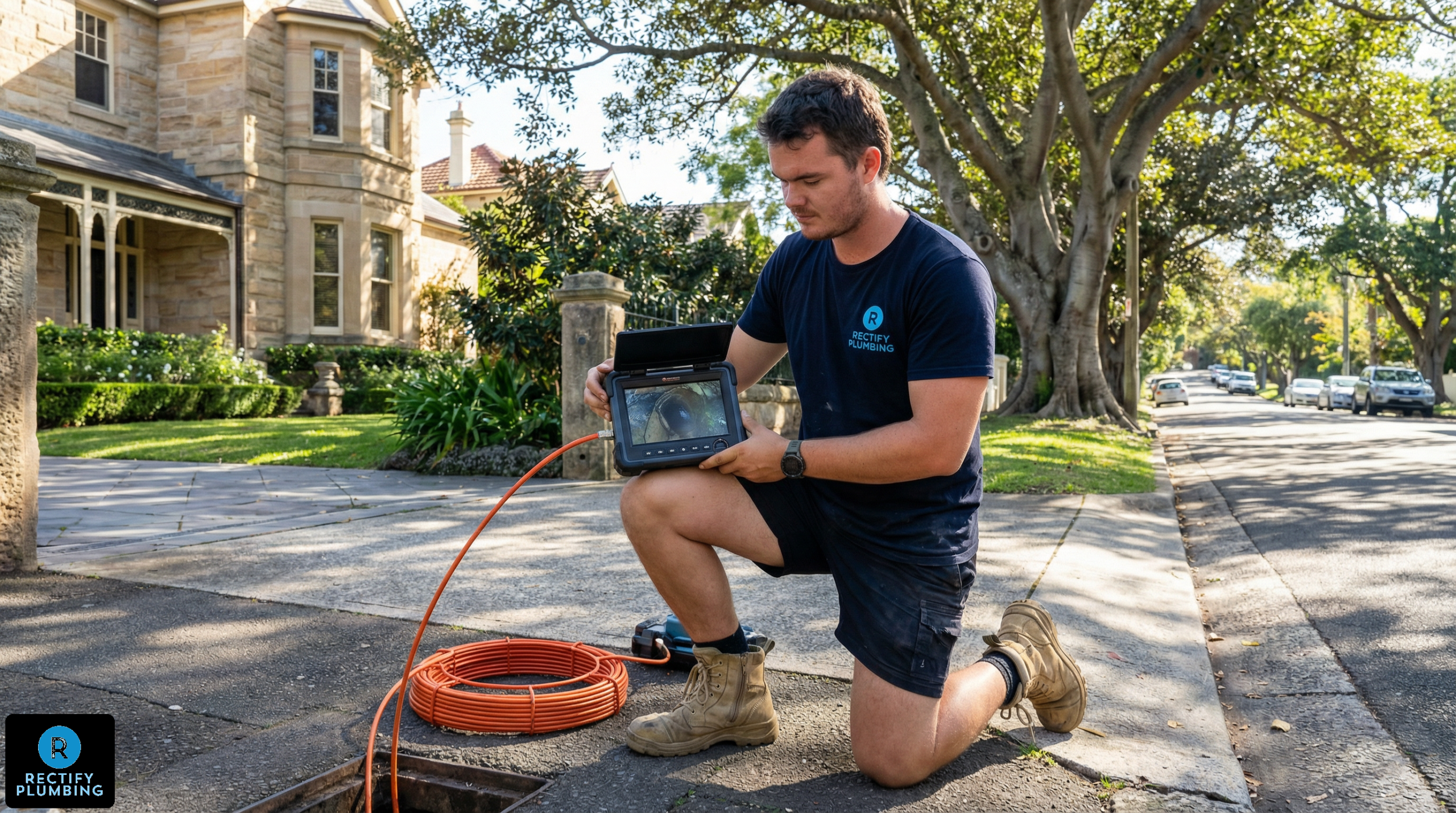
Blocked Drains in Chatswood, Mosman & the Lower North Shore: What’s Actually Causing Them
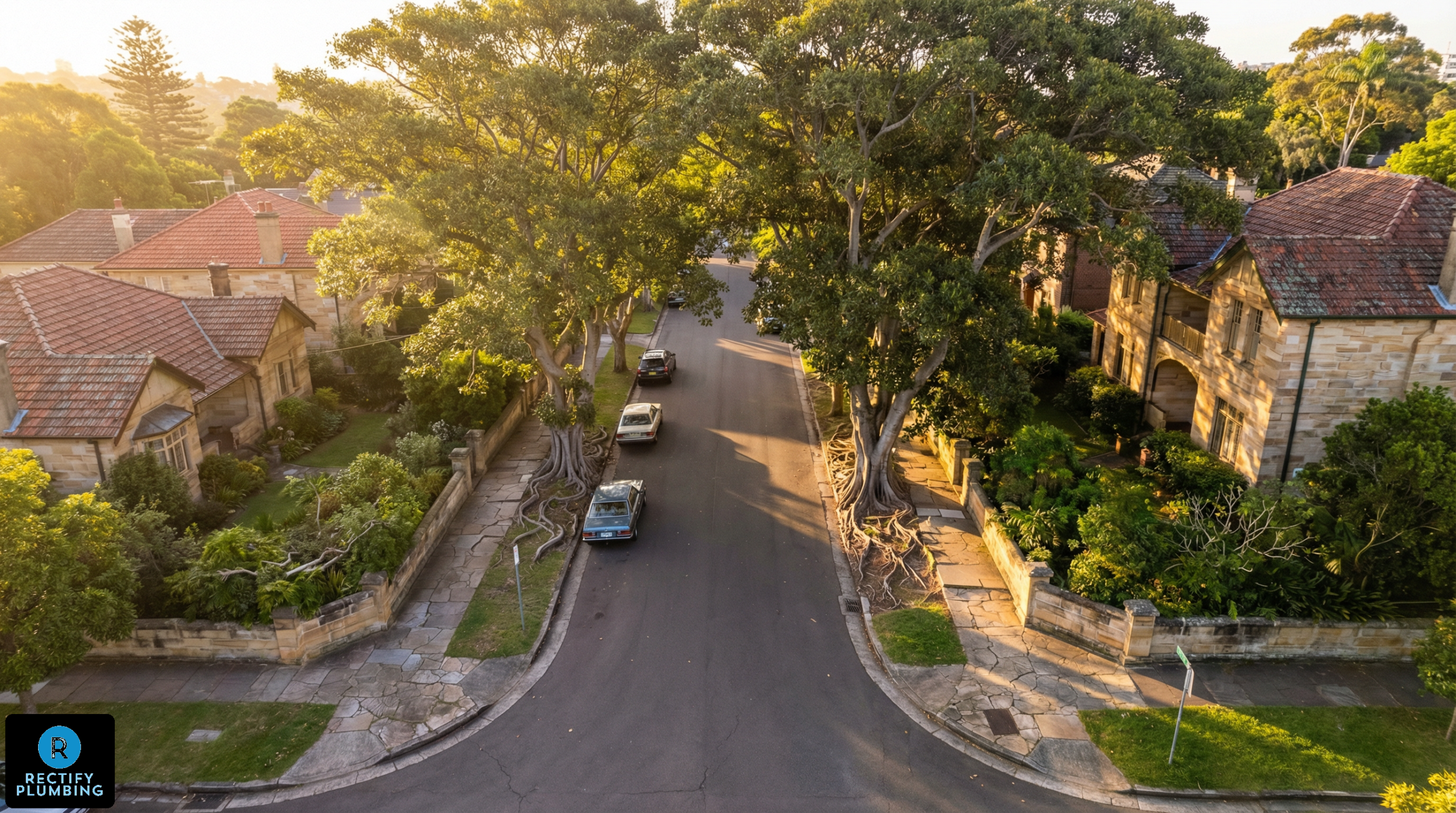 The Pipes Are Old — Really Old in Some Streets
A large proportion of homes in Mosman, Chatswood, Castlecrag, Willoughby and the surrounding suburbs were built between the 1920s and the 1960s. The drainage pipes installed during that era were predominantly terracotta clay or cast iron. Both materials were the right choice for their time. But they were installed between 60 and 100 years ago, and neither lasts indefinitely.
Clay pipes develop hairline cracks over time as the ground moves. Joints that were mortared together start to separate. Cast iron corrodes slowly from the outside in areas with moisture. None of this happens overnight — it's a gradual process that happens over decades — but the result is a network of pipes across many lower North Shore streets that have multiple points of weakness, even if they're still technically functioning.
The moment a pipe develops a crack or a gap at a joint, it becomes a target for tree roots. And this is where the lower North Shore's second major problem comes in.
The Tree Root Problem Is Worse Here Than Almost Anywhere Else in Sydney
The lower North Shore has some of the most significant residential tree canopy in Sydney. Heritage properties in Mosman and Castlecrag typically sit on large blocks with established trees that have been growing for 50 to 80 years. Moreton Bay figs, Port Jackson figs, liquidambars, camphor laurels — these are species with extensive, aggressive root systems that actively seek out moisture underground.
A fig tree root can travel 10 to 15 metres laterally from the base of the tree in its search for water. And the most reliable source of water in a residential block is a drainage pipe carrying household wastewater. Once a root finds a crack in a clay pipe, it doesn't stop. Left for two or three years without intervention, a root intrusion can completely fill a 100mm pipe and cause chronic blockages that come back every few weeks regardless of how many times the drain is cleared.
The Chatswood Apartment Problem
Chatswood has a different character from Mosman — it's been significantly developed over the past 20 years with high-rise residential and commercial buildings alongside its older housing stock. That mix creates a specific drainage issue: shared sewer infrastructure serving multiple tenancies, grease buildup from the commercial strips near the station and shopping precinct, and building managers trying to identify who's responsible when something blocks in a line shared between multiple units.
In apartment buildings, blocked shared drain lines often go unreported by individual tenants who assume someone else is dealing with it — until the backup is severe enough to affect multiple units simultaneously. By that point, what could have been a straightforward drain clear has become a much larger job.
Quick tip: If you're a strata manager or property manager in Chatswood and you've had multiple tenants report slow drains in the same period, that's almost always one blockage in a shared line — not several individual problems. One camera inspection identifies it and one jet blast fixes it.
What We Actually Find When We Put the Camera Down
The camera goes in first — always. And what it shows us in this area is fairly consistent across jobs.
Root Intrusion at Pipe Joints and Cracks
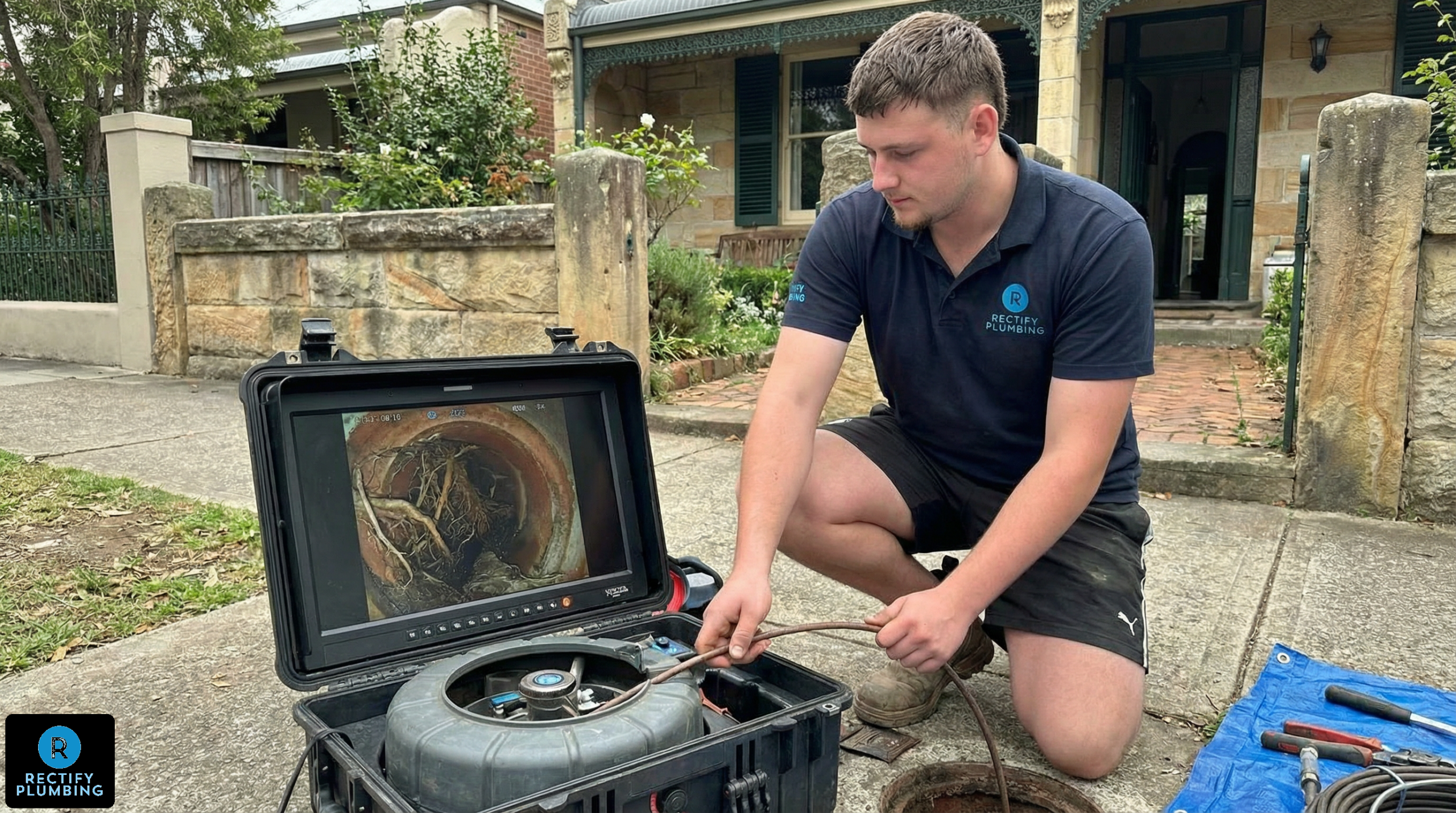
By far the most common finding across Mosman, Castlecrag, Willoughby and the older parts of Chatswood is root intrusion. Usually at pipe joints that have separated enough to allow entry, sometimes through cracks in the pipe wall itself. In some cases the roots are a relatively recent intrusion — a few centimetres of fine root growth that jet blasting removes cleanly. In others we find established root masses that have been growing in the pipe for years.
Our CCTV drain camera gives us a precise location and a clear picture of how extensive the intrusion is before we do anything. That tells us whether we're looking at a jet blast job or whether the pipe has structural issues that will cause the same problem to return.
The Pipes Are Old — Really Old in Some Streets
A large proportion of homes in Mosman, Chatswood, Castlecrag, Willoughby and the surrounding suburbs were built between the 1920s and the 1960s. The drainage pipes installed during that era were predominantly terracotta clay or cast iron. Both materials were the right choice for their time. But they were installed between 60 and 100 years ago, and neither lasts indefinitely.
Clay pipes develop hairline cracks over time as the ground moves. Joints that were mortared together start to separate. Cast iron corrodes slowly from the outside in areas with moisture. None of this happens overnight — it's a gradual process that happens over decades — but the result is a network of pipes across many lower North Shore streets that have multiple points of weakness, even if they're still technically functioning.
The moment a pipe develops a crack or a gap at a joint, it becomes a target for tree roots. And this is where the lower North Shore's second major problem comes in.
The Tree Root Problem Is Worse Here Than Almost Anywhere Else in Sydney
The lower North Shore has some of the most significant residential tree canopy in Sydney. Heritage properties in Mosman and Castlecrag typically sit on large blocks with established trees that have been growing for 50 to 80 years. Moreton Bay figs, Port Jackson figs, liquidambars, camphor laurels — these are species with extensive, aggressive root systems that actively seek out moisture underground.
A fig tree root can travel 10 to 15 metres laterally from the base of the tree in its search for water. And the most reliable source of water in a residential block is a drainage pipe carrying household wastewater. Once a root finds a crack in a clay pipe, it doesn't stop. Left for two or three years without intervention, a root intrusion can completely fill a 100mm pipe and cause chronic blockages that come back every few weeks regardless of how many times the drain is cleared.
The Chatswood Apartment Problem
Chatswood has a different character from Mosman — it's been significantly developed over the past 20 years with high-rise residential and commercial buildings alongside its older housing stock. That mix creates a specific drainage issue: shared sewer infrastructure serving multiple tenancies, grease buildup from the commercial strips near the station and shopping precinct, and building managers trying to identify who's responsible when something blocks in a line shared between multiple units.
In apartment buildings, blocked shared drain lines often go unreported by individual tenants who assume someone else is dealing with it — until the backup is severe enough to affect multiple units simultaneously. By that point, what could have been a straightforward drain clear has become a much larger job.
Quick tip: If you're a strata manager or property manager in Chatswood and you've had multiple tenants report slow drains in the same period, that's almost always one blockage in a shared line — not several individual problems. One camera inspection identifies it and one jet blast fixes it.
What We Actually Find When We Put the Camera Down
The camera goes in first — always. And what it shows us in this area is fairly consistent across jobs.
Root Intrusion at Pipe Joints and Cracks
By far the most common finding across Mosman, Castlecrag, Willoughby and the older parts of Chatswood is root intrusion. Usually at pipe joints that have separated enough to allow entry, sometimes through cracks in the pipe wall itself. In some cases the roots are a relatively recent intrusion — a few centimetres of fine root growth that jet blasting removes cleanly. In others we find established root masses that have been growing in the pipe for years.
Our CCTV drain camera gives us a precise location and a clear picture of how extensive the intrusion is before we do anything. That tells us whether we're looking at a jet blast job or whether the pipe has structural issues that will cause the same problem to return.
 Pipe Sections That Have Started to Collapse
In the oldest properties — particularly those built before the 1950s — we occasionally find sections of clay pipe that have started to sag or partially collapse rather than just crack. This creates a low point in the drainage line where water pools and debris accumulates, causing repeated blockages that have nothing to do with root intrusion. Clearing these drains gives temporary relief but the low point in the pipe will keep catching debris until the underlying structural issue is addressed.
Grease Buildup in Kitchen Drain Lines
Less dramatic than roots but extremely common, particularly in areas with a lot of terrace houses and older kitchen configurations where the drain run to the sewer is long. Years of cooking fat going down the sink — even in small quantities — builds up as a coating on the inside of the pipe that gradually narrows the diameter. When we jet blast a grease-blocked kitchen drain, the volume of material that comes out is often surprising to homeowners who assumed their drain was fine because it was only 'a bit slow.'
Jet Blasting vs Pipe Relining — Which One Is Right?
This is the question we get asked most often on jobs in this area, and the answer depends entirely on what the camera shows.
When Jet Blasting Is the Right Answer
If the camera shows a clear blockage — roots, grease, debris — but the pipe itself is structurally intact with no significant cracks or separating joints, jet blasting is the right treatment. Our jet blasting service fires a focused high-pressure water stream through the pipe, cutting through root growth, stripping grease from the pipe walls, and flushing everything clear. On a structurally sound pipe, a good jet blast leaves the drainage line performing like new. The camera goes back in after to confirm it's clear.
Jet blasting is also the right first step even when the pipe does have structural issues — it clears the blockage so we can assess the pipe condition properly without the obstruction in the way.
When Pipe Relining Is the Better Long-Term Answer
If the camera reveals cracked sections, separated joints, or points where roots have entered the pipe, clearing the blockage addresses the symptom but not the cause. The same root intrusion will recur within months — sometimes weeks — because the entry point is still there. In these cases, pipe relining is the fix that actually solves the problem.
Relining involves inserting a flexible resin-impregnated liner into the damaged pipe and curing it in place. Once set, it creates a smooth, seamless new pipe surface inside the existing pipe — one that roots can't penetrate and that corrects minor structural deformation. It's particularly well suited to the lower North Shore because it works without excavation, which matters enormously when pipes run under sandstone foundations, established gardens, or heritage landscaping.
Pipe Sections That Have Started to Collapse
In the oldest properties — particularly those built before the 1950s — we occasionally find sections of clay pipe that have started to sag or partially collapse rather than just crack. This creates a low point in the drainage line where water pools and debris accumulates, causing repeated blockages that have nothing to do with root intrusion. Clearing these drains gives temporary relief but the low point in the pipe will keep catching debris until the underlying structural issue is addressed.
Grease Buildup in Kitchen Drain Lines
Less dramatic than roots but extremely common, particularly in areas with a lot of terrace houses and older kitchen configurations where the drain run to the sewer is long. Years of cooking fat going down the sink — even in small quantities — builds up as a coating on the inside of the pipe that gradually narrows the diameter. When we jet blast a grease-blocked kitchen drain, the volume of material that comes out is often surprising to homeowners who assumed their drain was fine because it was only 'a bit slow.'
Jet Blasting vs Pipe Relining — Which One Is Right?
This is the question we get asked most often on jobs in this area, and the answer depends entirely on what the camera shows.
When Jet Blasting Is the Right Answer
If the camera shows a clear blockage — roots, grease, debris — but the pipe itself is structurally intact with no significant cracks or separating joints, jet blasting is the right treatment. Our jet blasting service fires a focused high-pressure water stream through the pipe, cutting through root growth, stripping grease from the pipe walls, and flushing everything clear. On a structurally sound pipe, a good jet blast leaves the drainage line performing like new. The camera goes back in after to confirm it's clear.
Jet blasting is also the right first step even when the pipe does have structural issues — it clears the blockage so we can assess the pipe condition properly without the obstruction in the way.
When Pipe Relining Is the Better Long-Term Answer
If the camera reveals cracked sections, separated joints, or points where roots have entered the pipe, clearing the blockage addresses the symptom but not the cause. The same root intrusion will recur within months — sometimes weeks — because the entry point is still there. In these cases, pipe relining is the fix that actually solves the problem.
Relining involves inserting a flexible resin-impregnated liner into the damaged pipe and curing it in place. Once set, it creates a smooth, seamless new pipe surface inside the existing pipe — one that roots can't penetrate and that corrects minor structural deformation. It's particularly well suited to the lower North Shore because it works without excavation, which matters enormously when pipes run under sandstone foundations, established gardens, or heritage landscaping.
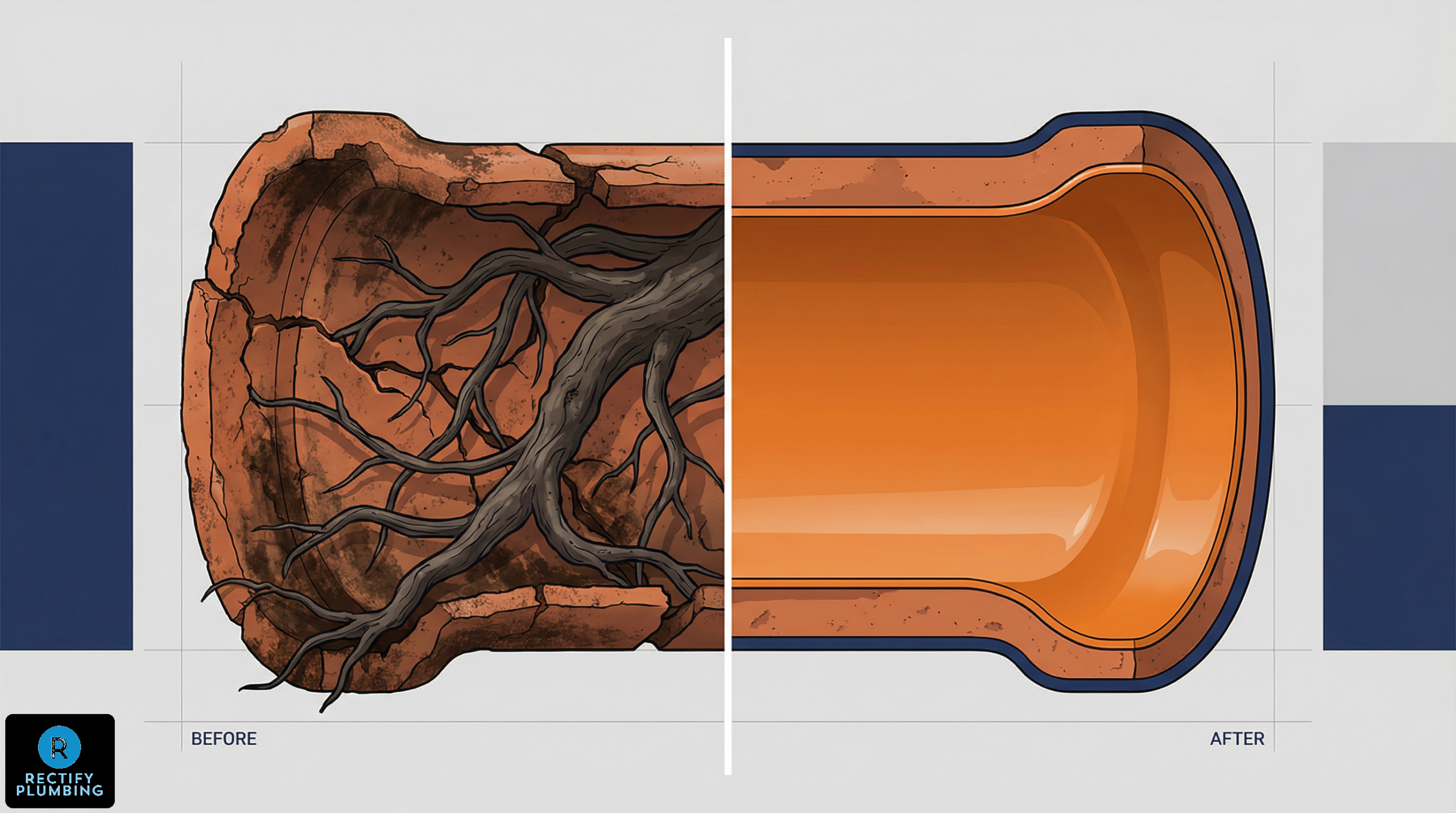
We had a call from a homeowner in Mosman whose kitchen drain had blocked three times in eighteen months. Each time, someone had come out and cleared it. When we put our camera down, we found a fig tree root mass growing from a separated clay pipe joint about four metres from the kitchen, plus two smaller cracks further along the same line. We jet blasted the blockage clear, then relined the two affected sections — about eight metres in total. That was eleven months ago. She hasn't had a blocked drain since. The previous three callouts hadn't fixed anything because nobody looked at what was actually causing the problem.What Makes Drainage Work on Heritage Properties More Complicated Sandstone Foundations A significant number of heritage properties across Mosman, Cremorne, Neutral Bay and Castlecrag have sandstone foundations — either original sandstone block construction or properties built over sandstone bedrock with minimal excavation from the original build. Running a drain line through or under sandstone requires more careful planning than standard residential excavation, and in many cases makes excavation impractical without significant cost and heritage impact. Pipe relining bypasses this entirely. Because the liner goes in through existing access points and cures inside the existing pipe, no new excavation is required regardless of what the pipe runs under. This is one of the main reasons relining has become the standard approach for drainage remediation on heritage properties across the lower North Shore. Heritage Overlay Considerations Some properties in Mosman and Castlecrag fall within heritage conservation areas under Mosman Council's LEP. This doesn't directly affect drainage pipe work within the property, but it does affect what can be done to front gardens, fences and footpaths if excavation were required. Pipe relining again avoids this issue because there's nothing visible happening at the surface during the installation. Large Gardens with Significant Trees Many of the properties we work on in this area have trees that are covered by Council tree preservation orders — figs, turpentines, spotted gums that have been growing for 60 or 70 years and contribute to the character of the area. Excavating a drain line through the root zone of a protected tree is not a straightforward proposition. Camera inspection followed by relining allows us to fix the drainage problem without touching the tree at all. Quick tip: If you have a large established tree within 10 metres of your main drain line and you've been having recurring blockages, the tree's roots are almost certainly involved. Get a camera inspection done before the problem becomes urgent — it's far easier to address on your terms than in the middle of a blocked drain emergency. Keeping Your Drains Running in This Area — What Actually Helps There's no way to completely prevent root intrusion if you have old clay pipes and established trees nearby. But there are things that extend the time between problems and keep the drains functioning well between professional inspections.
- Annual camera inspection for any property over 40 years old with established trees near the sewer line. Catching root intrusion early — when it's a few centimetres of fine root growth — means a jet blast fixes it. Leaving it until the pipe is 80% blocked means relining.
- Drain screens in all shower and bath drains. Hair and soap scum buildup is completely preventable with a screen that costs a few dollars and takes two minutes to clean.
- No cooking fat down the kitchen sink — ever. In older drain runs with narrower diameters, grease buildup adds to any existing structural restriction and accelerates blockages.
- If you notice a drain getting gradually slower, address it sooner rather than later. A slow drain in a clay-pipe property is almost always a sign of developing root intrusion, not just light debris.
[service_faqs]
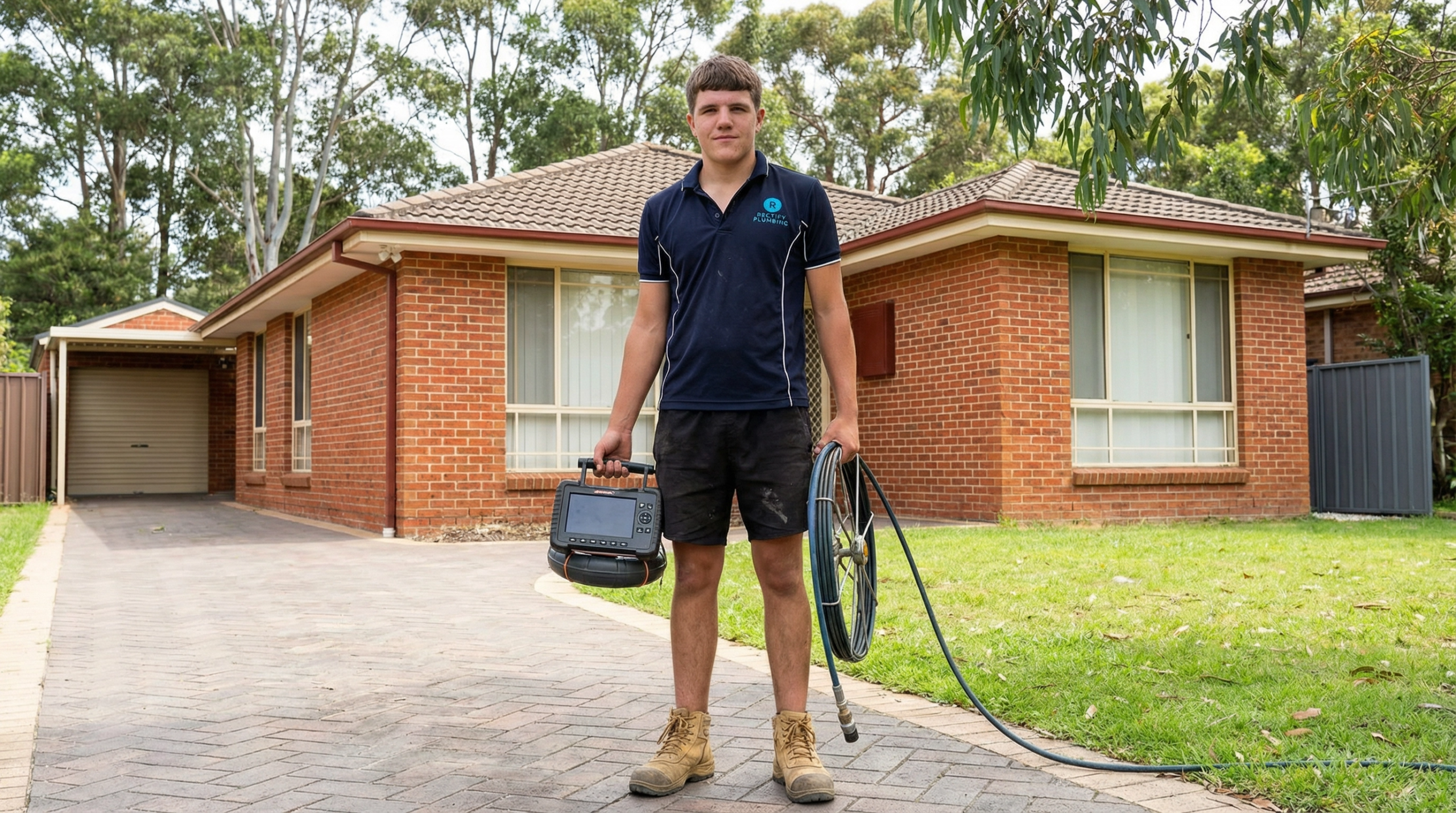
How to Clear a Blocked Drain: What Works, What Doesn’t, and When to Call a Plumber
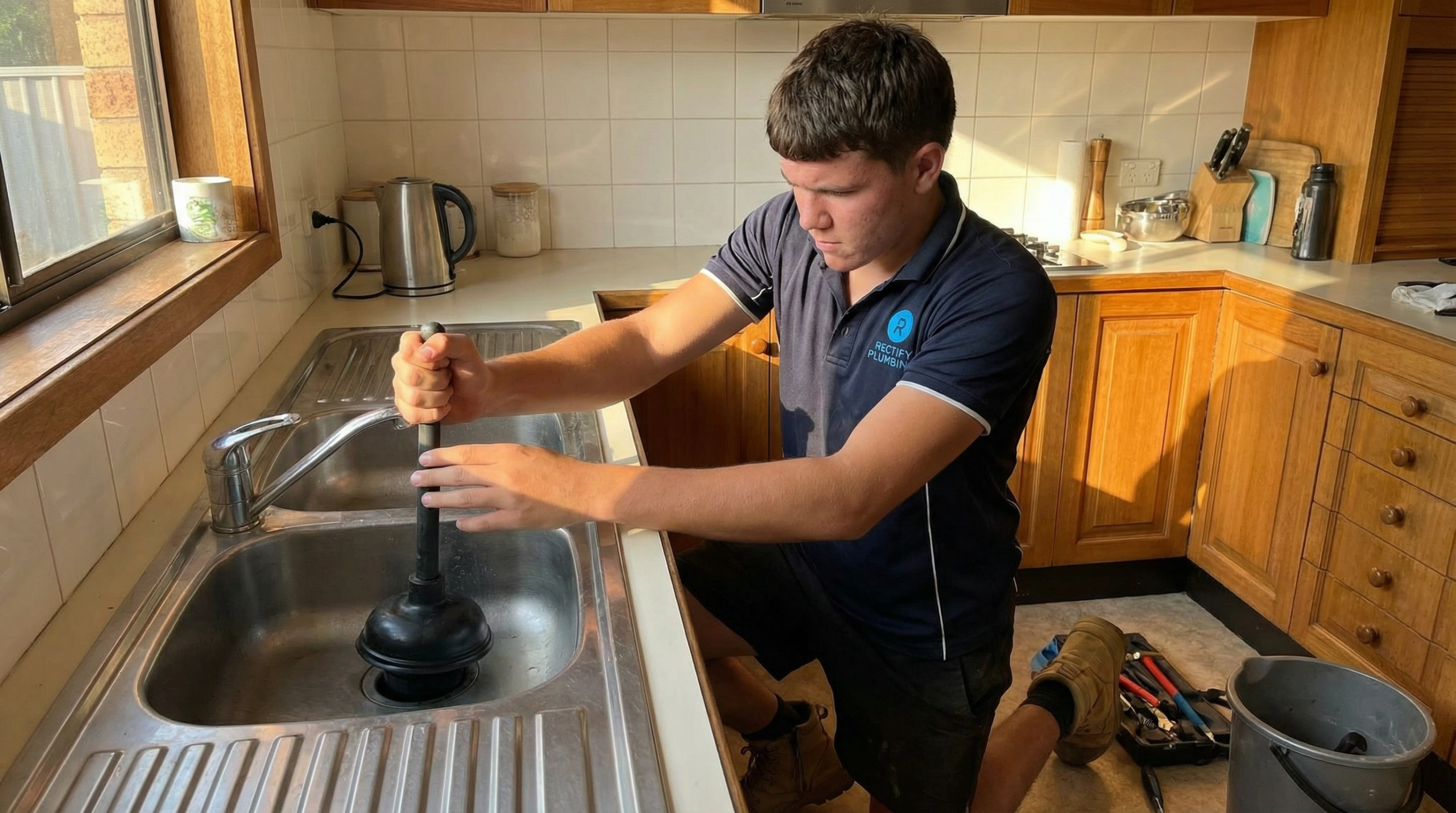 The Plunber — For Toilet and Sink Blockages Close to the Surface
A plunber works by creating pressure and suction to dislodge whatever is sitting near the drain opening. It's genuinely useful for toilet blockages where something has been flushed that shouldn't have been, and for bathroom sinks where a hair clump is sitting just below the drain screen. The technique matters: fill the basin or bowl with enough water to cover the plunger cup, create a seal, and pump firmly — don't just tap at it.
The important caveat: a plunger does nothing for a blockage that's further into the pipe system, for root intrusions, or for grease buildup that has accumulated over months. If 10 good attempts don't shift it, you're dealing with something that's not sitting near the surface.
Hot Water and Bicarb — For Grease-Based Kitchen Blockages
If your kitchen sink is draining slowly and you've been putting cooking fat or food scraps down it, a bicarb soda and vinegar flush followed by very hot water can work on early-stage grease buildup. The bicarb and vinegar reaction breaks down the surface layer of grease; the hot water flushes it through. Do this once a month as a habit and you'll rarely have a grease blockage.
It doesn't work on root intrusions, doesn't work on significant grease buildup that's been accumulating for years, and doesn't work on anything structural. But as a maintenance step and an early intervention, it's cheap and it's safe for your pipes.
Removing and Cleaning the Drain Screen
This sounds too simple, but a blocked drain screen — full of hair, soap scum or food debris — is one of the most common calls we get. Before you do anything else, pull out the drain cover and clean it. Showers especially. If the drain has been slow for a while and the screen is visibly clogged, that might be the entire problem.
Quick tip: Put a drain screen in every shower and bath if you don't already have one. Clean them every two weeks. This eliminates the majority of bathroom blockages before they start.
What Doesn't Work — and What Makes Things Worse
Chemical Drain Cleaners
This is the one that causes us the most problems when we arrive at a job. Chemical drain cleaners — the products you buy at the supermarket — contain caustic lye or sulphuric acid that dissolves organic material. They work on light soap and grease buildup in very early-stage blockages. They do nothing for tree roots, do nothing for collapsed or cracked pipe sections, and do nothing for a complete blockage.
The problems start when the chemical doesn't clear the blockage — which is most of the time. Now you have a full sink or bath of highly caustic liquid that you can't drain, that's corrosive to your older pipes, and that creates a safety hazard for any plumber who then has to work on it. We've turned up to jobs where homeowners had poured three different products down the drain over two days and still had a blocked pipe — just with added chemical damage.
On older clay or cast-iron pipes, which are common across many North Shore and Hills District homes, repeated chemical treatments accelerate corrosion. The pipe was going to last another 15 years; now it might not.
'Flushable' Wipes
They don't break down in pipes the way toilet paper does. We pull them out of drain pipes constantly — often years' worth of them that have accumulated at a low point in the line. Every packet that says 'flushable' is, at best, misleading. Only toilet paper belongs in the toilet.
Aggressive Use of a Drain Snake
A basic hand drain snake from a hardware store can clear a hair clog near the drain opening — that's about its useful range. Used aggressively on an older pipe with a junction further into the system, it can crack already-weakened terracotta or dislodge a joint that was barely holding. We've done jobs where a homeowner has turned a partial blockage into a cracked pipe by pushing a snake too hard into old drainage. The repair cost was significantly higher than it would have been if they'd called us first.
The Plunber — For Toilet and Sink Blockages Close to the Surface
A plunber works by creating pressure and suction to dislodge whatever is sitting near the drain opening. It's genuinely useful for toilet blockages where something has been flushed that shouldn't have been, and for bathroom sinks where a hair clump is sitting just below the drain screen. The technique matters: fill the basin or bowl with enough water to cover the plunger cup, create a seal, and pump firmly — don't just tap at it.
The important caveat: a plunger does nothing for a blockage that's further into the pipe system, for root intrusions, or for grease buildup that has accumulated over months. If 10 good attempts don't shift it, you're dealing with something that's not sitting near the surface.
Hot Water and Bicarb — For Grease-Based Kitchen Blockages
If your kitchen sink is draining slowly and you've been putting cooking fat or food scraps down it, a bicarb soda and vinegar flush followed by very hot water can work on early-stage grease buildup. The bicarb and vinegar reaction breaks down the surface layer of grease; the hot water flushes it through. Do this once a month as a habit and you'll rarely have a grease blockage.
It doesn't work on root intrusions, doesn't work on significant grease buildup that's been accumulating for years, and doesn't work on anything structural. But as a maintenance step and an early intervention, it's cheap and it's safe for your pipes.
Removing and Cleaning the Drain Screen
This sounds too simple, but a blocked drain screen — full of hair, soap scum or food debris — is one of the most common calls we get. Before you do anything else, pull out the drain cover and clean it. Showers especially. If the drain has been slow for a while and the screen is visibly clogged, that might be the entire problem.
Quick tip: Put a drain screen in every shower and bath if you don't already have one. Clean them every two weeks. This eliminates the majority of bathroom blockages before they start.
What Doesn't Work — and What Makes Things Worse
Chemical Drain Cleaners
This is the one that causes us the most problems when we arrive at a job. Chemical drain cleaners — the products you buy at the supermarket — contain caustic lye or sulphuric acid that dissolves organic material. They work on light soap and grease buildup in very early-stage blockages. They do nothing for tree roots, do nothing for collapsed or cracked pipe sections, and do nothing for a complete blockage.
The problems start when the chemical doesn't clear the blockage — which is most of the time. Now you have a full sink or bath of highly caustic liquid that you can't drain, that's corrosive to your older pipes, and that creates a safety hazard for any plumber who then has to work on it. We've turned up to jobs where homeowners had poured three different products down the drain over two days and still had a blocked pipe — just with added chemical damage.
On older clay or cast-iron pipes, which are common across many North Shore and Hills District homes, repeated chemical treatments accelerate corrosion. The pipe was going to last another 15 years; now it might not.
'Flushable' Wipes
They don't break down in pipes the way toilet paper does. We pull them out of drain pipes constantly — often years' worth of them that have accumulated at a low point in the line. Every packet that says 'flushable' is, at best, misleading. Only toilet paper belongs in the toilet.
Aggressive Use of a Drain Snake
A basic hand drain snake from a hardware store can clear a hair clog near the drain opening — that's about its useful range. Used aggressively on an older pipe with a junction further into the system, it can crack already-weakened terracotta or dislodge a joint that was barely holding. We've done jobs where a homeowner has turned a partial blockage into a cracked pipe by pushing a snake too hard into old drainage. The repair cost was significantly higher than it would have been if they'd called us first.
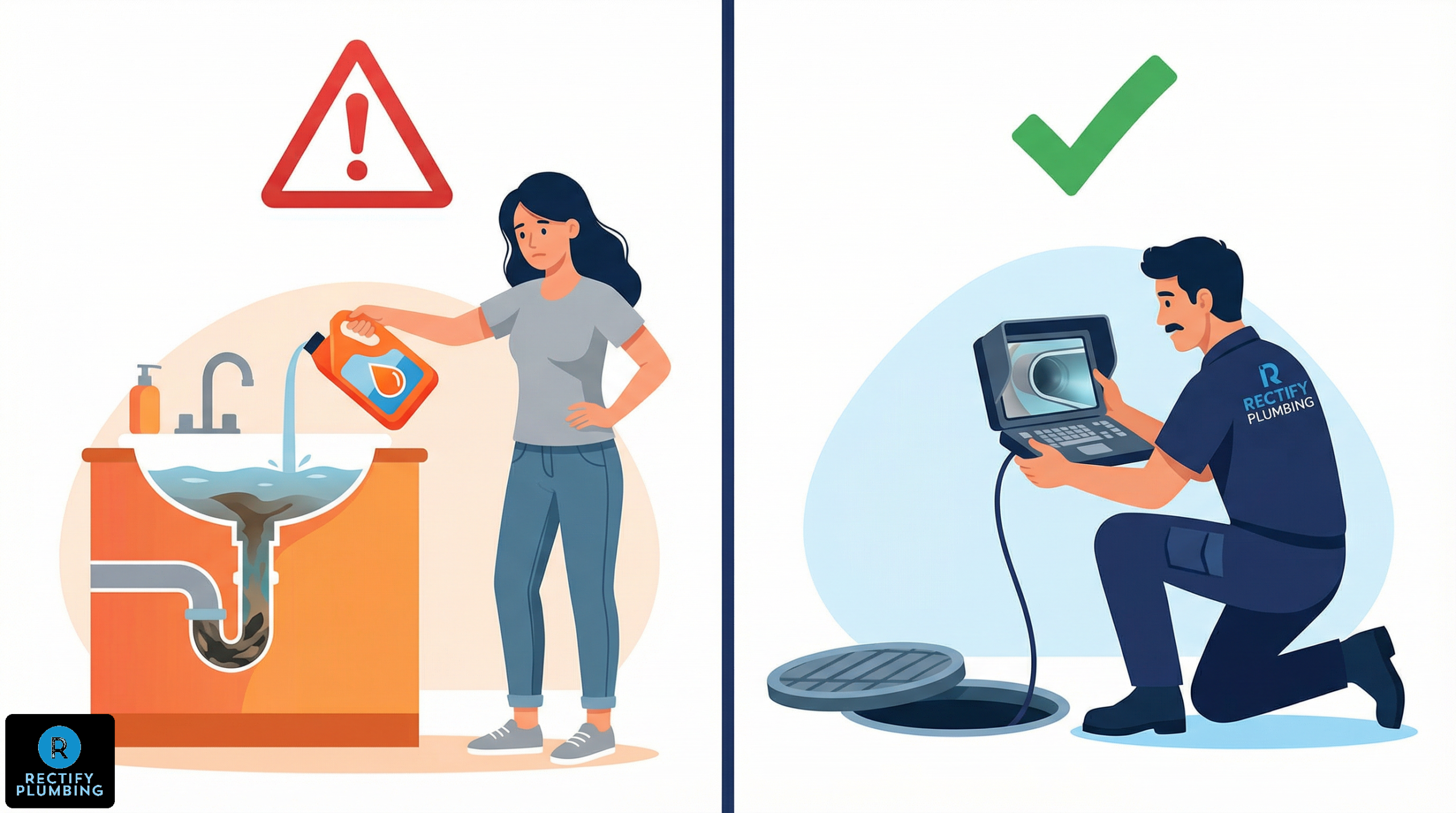 Warning Signs That It's Beyond a DIY Fix
These are the signals that tell us a blockage is either deep in the drainage system, structural in nature, or both. Any one of them means stop trying to fix it yourself and call a licensed plumber.
Warning Signs That It's Beyond a DIY Fix
These are the signals that tell us a blockage is either deep in the drainage system, structural in nature, or both. Any one of them means stop trying to fix it yourself and call a licensed plumber.
- The same drain blocks repeatedly within weeks or months — clearing it once didn't fix the cause
- You can hear gurgling from drains or toilets you're not currently using — air is being pushed through the system by a partial blockage somewhere in the main line
- More than one fixture is slow or backed up at the same time — bathroom sink, shower and laundry tub all draining slowly simultaneously means the issue is in the shared main drain, not an individual pipe
- Sewage smell inside the house — even faint, even occasional. This means organic waste is sitting somewhere in your drainage system and not moving
- Water backing up out of a drain rather than just draining slowly — a toilet that overflows when you flush, or water coming up through the shower when you run the washing machine
- A wet or unusually green patch in your garden above where the sewer line runs — a cracked or blocked underground pipe can leak sewage into the surrounding soil
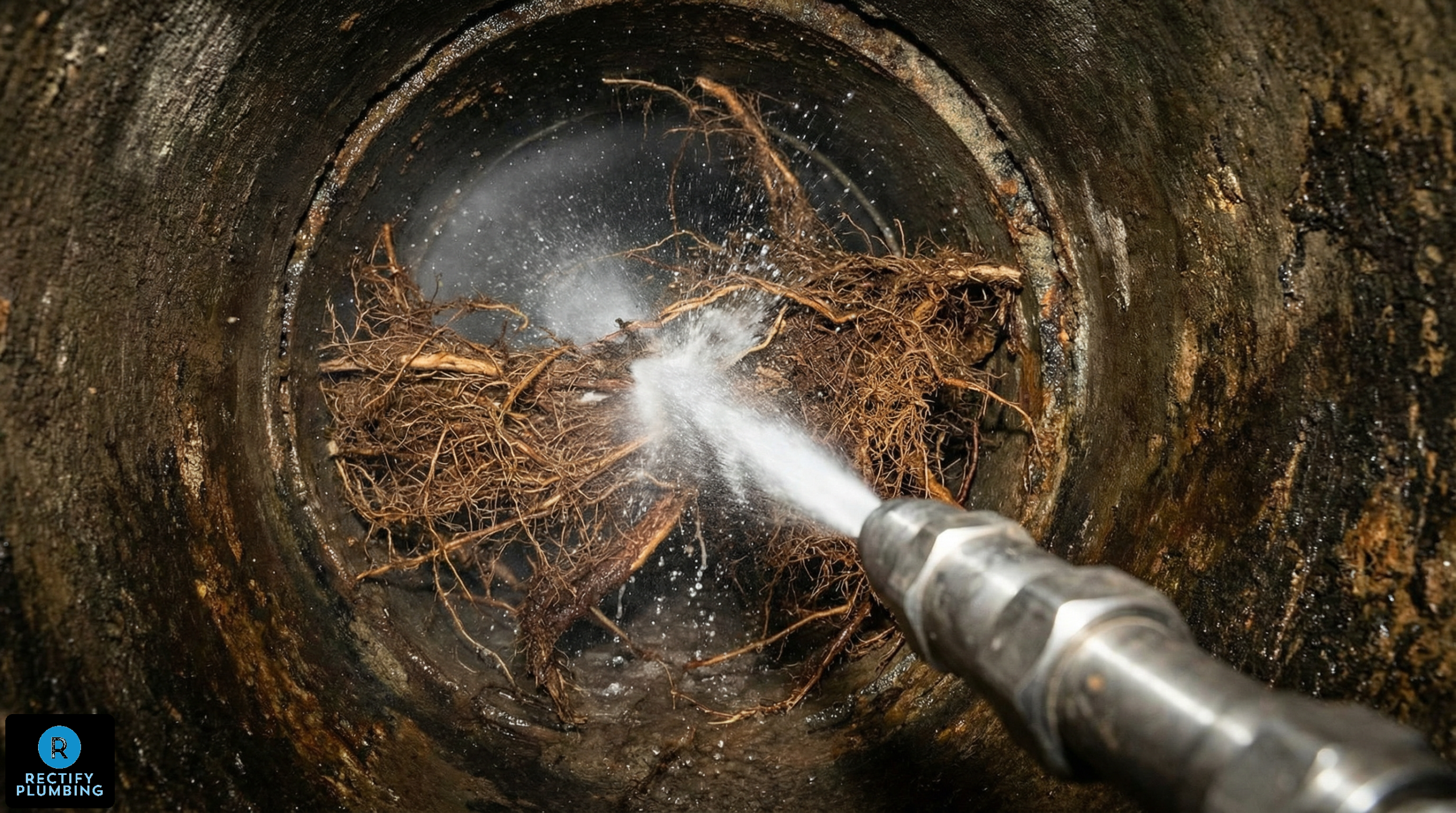 When the Pipe Needs More Than Clearing
Sometimes clearing the blockage isn't enough because the underlying pipe has a problem that will cause the same issue to come back. A crack that's letting roots in. A joint that's separated. A section that's started to sag and is pooling water and debris.
In these cases we'll usually recommend pipe relining — inserting a resin liner into the damaged section and curing it in place. You end up with a new pipe surface inside your existing pipe, without excavation. It's especially useful in areas with established gardens, sandstone, or concrete slabs where digging would be very disruptive.
When the Pipe Needs More Than Clearing
Sometimes clearing the blockage isn't enough because the underlying pipe has a problem that will cause the same issue to come back. A crack that's letting roots in. A joint that's separated. A section that's started to sag and is pooling water and debris.
In these cases we'll usually recommend pipe relining — inserting a resin liner into the damaged section and curing it in place. You end up with a new pipe surface inside your existing pipe, without excavation. It's especially useful in areas with established gardens, sandstone, or concrete slabs where digging would be very disruptive.
We got a call from a homeowner in Castle Hill who had blocked the same drain four times in eighteen months. Each time, a different plumber had cleared it and charged her for the job. When we put the camera in, we found a badly deteriorated terracotta pipe with three separate sections of root intrusion. Clearing it had never been the solution — the pipe itself was the problem. We relined a 9-metre section and she hasn't had a blockage since. The relining cost more than a single clear, but it was a fraction of what she'd spent on four callouts that didn't fix anything.How to Prevent Blocked Drains — What Actually Makes a Difference We're not going to tell you to never put anything down your drains — that's not realistic. But a few consistent habits will genuinely reduce how often your drains block.
- Drain screens in every shower, bath and kitchen sink. Clean them regularly. This is the single most effective prevention step.
- Cooking fat and grease goes in the bin — every time. Not down the sink, even with hot water. It cools and sets inside your pipes.
- Hot water flush and bicarb monthly in kitchen drains — takes two minutes and prevents grease accumulation.
- Nothing in the toilet except toilet paper. No wet wipes, no cotton pads, no sanitary products.
- If you have large trees near your sewer line — figs, liquidambars, eucalypts — keep an eye on your drains. Root intrusion is slow but relentless.
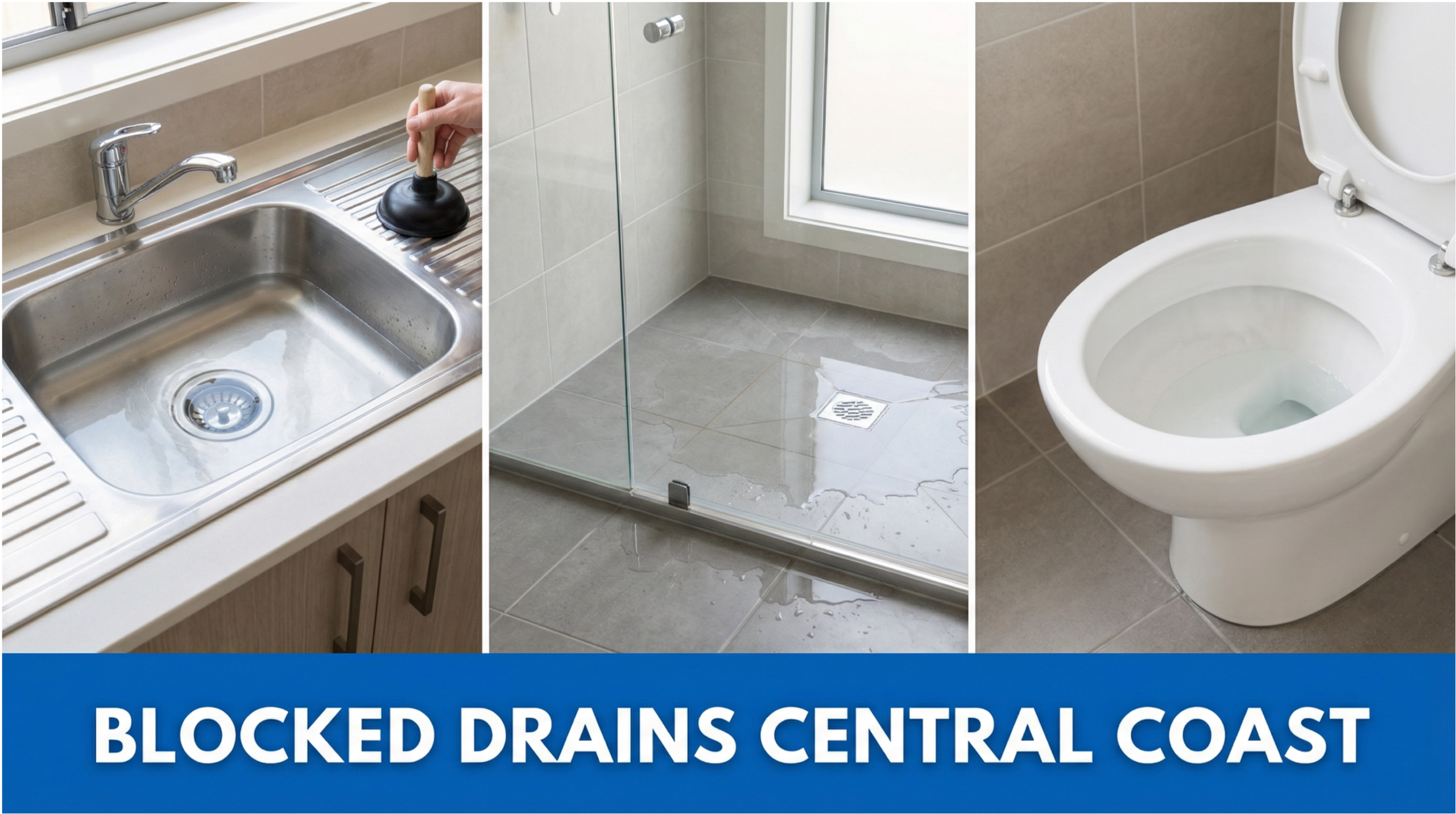
Blocked Drains Central Coast: Causes, Warning Signs & When to Call a Plumber
Why Blocked Drains Are So Common on the Central Coast
Clay Soils and Tree Root Intrusion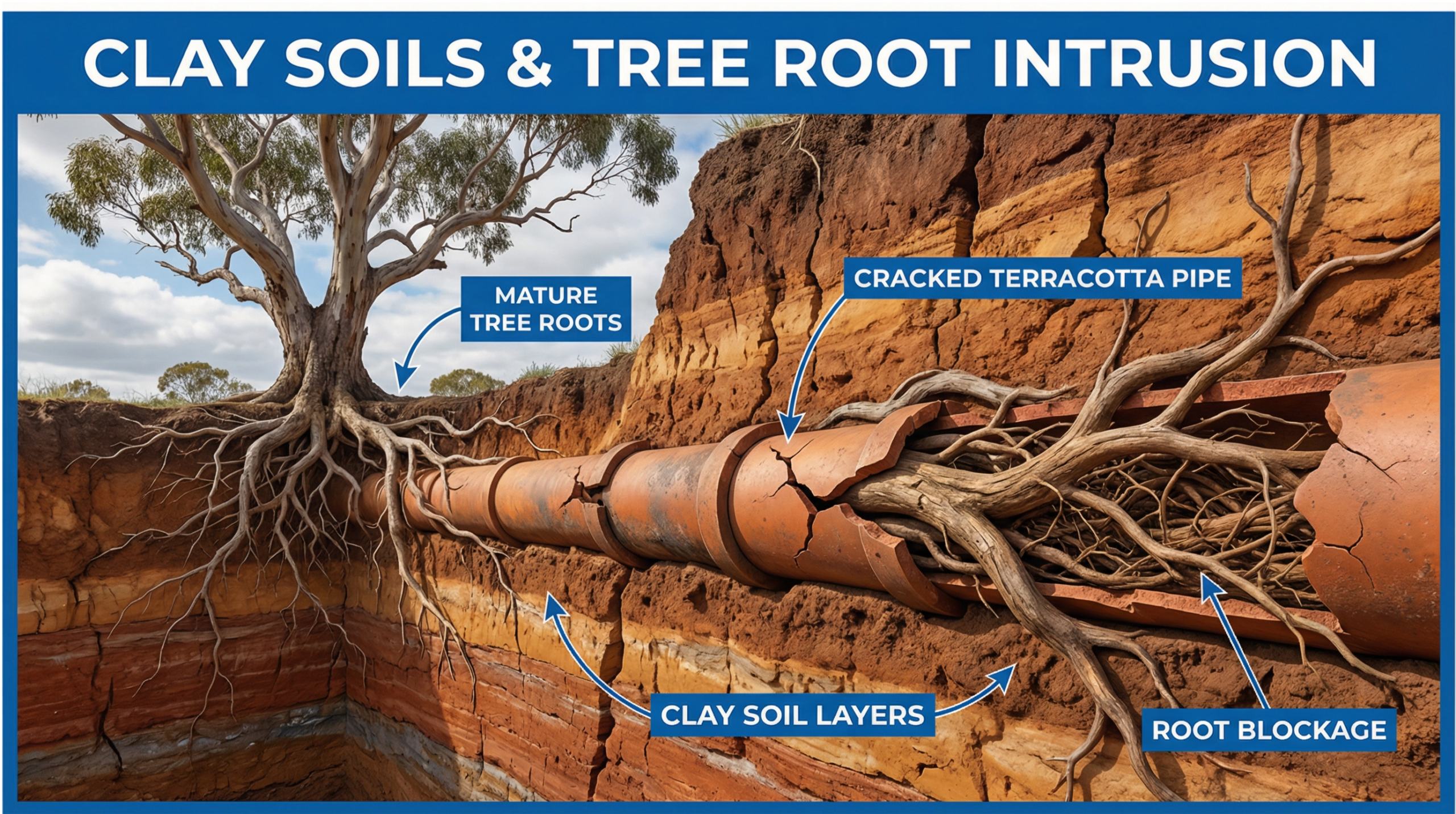 Much of the Central Coast sits on clay-heavy soils. Clay expands when wet and contracts when dry — and over years, this constant movement puts pressure on underground pipes, causing small cracks and joint separations to form. Once a pipe cracks, it becomes an open invitation for tree roots.
Roots are naturally drawn to moisture and can work their way into even the tiniest gap in a pipe. Once inside, they grow rapidly — eventually causing a full blockage. We regularly find mature root systems inside drainage pipes in older Gosford and Wyoming properties, particularly homes built before the 1990s with original terracotta pipes.
Ageing Pipe Infrastructure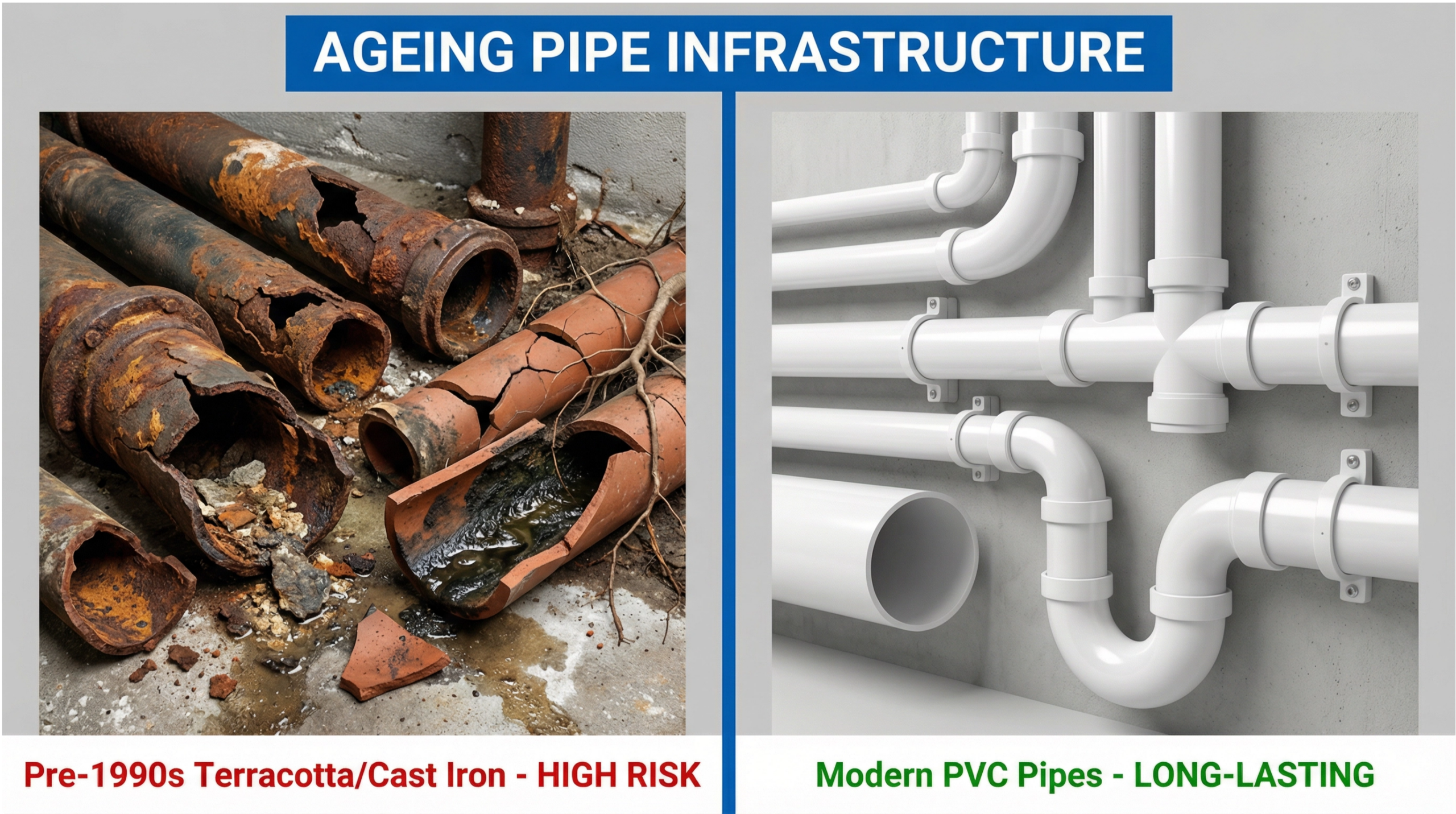 Many Central Coast homes — particularly in established suburbs like East Gosford, Springfield and Narara — still have the original clay or cast-iron pipes installed during construction. These pipes are well past their expected lifespan and are far more prone to cracking, collapsing and blockages than modern PVC pipes.
If your home is more than 30 to 40 years old and you've never had a drain inspection, there's a good chance the pipes are showing signs of deterioration that are not visible from the surface.
What Goes Down the Drain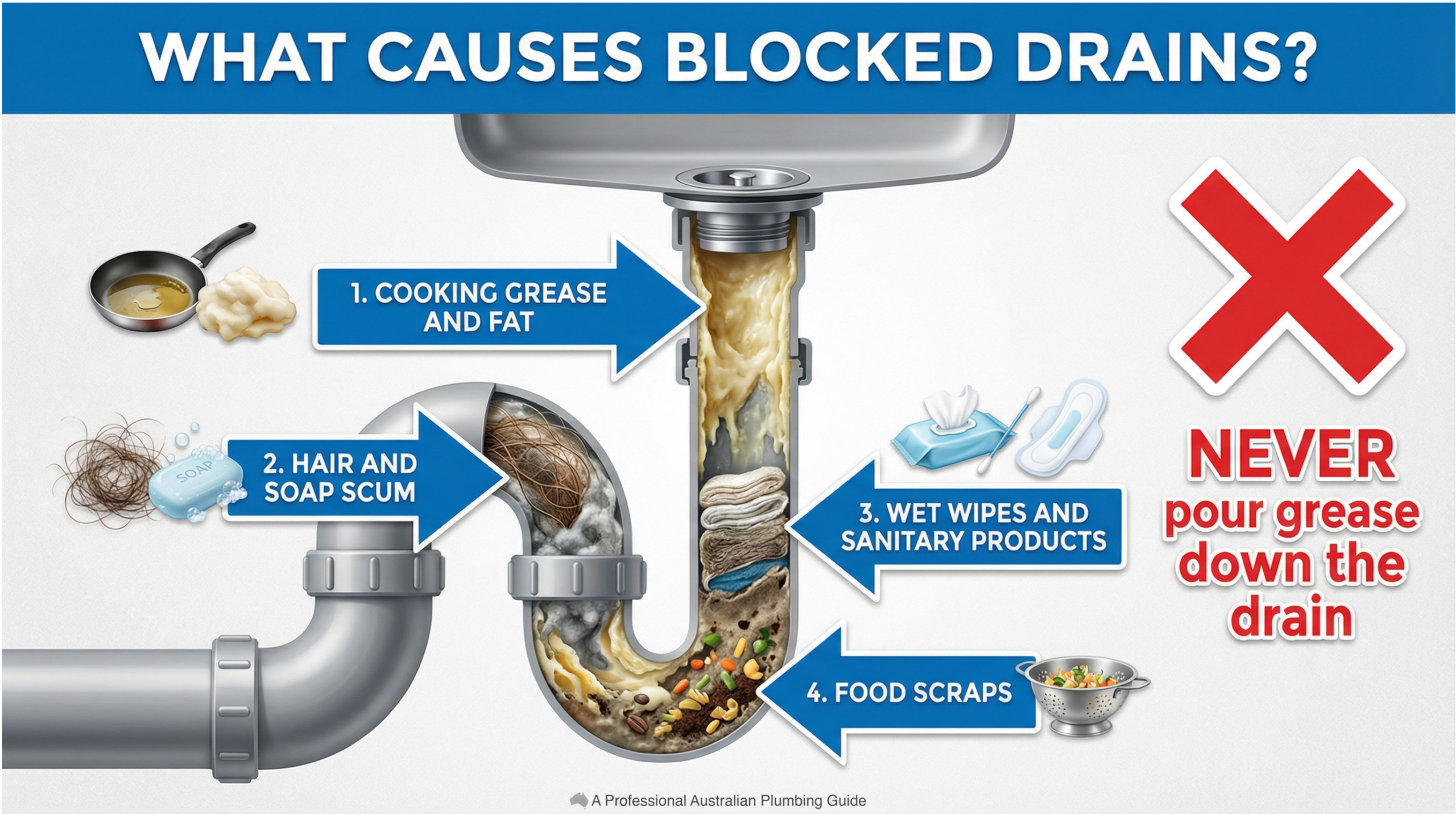
Beyond soil conditions and pipe age, the most common culprits for blocked drains are things that shouldn't be going down them in the first place — cooking grease, wet wipes (including supposedly 'flushable' ones), food scraps, hair, soap scum and sanitary products.
Grease and fat are particularly problematic. They flow easily when hot, but as they cool inside your pipes they solidify and build up layer by layer, gradually narrowing the pipe until the flow is completely restricted.
Tip: Never pour cooking fat or oil down the sink. Let it cool and dispose of it in your general waste bin instead.
5 Warning Signs Your Drain Is About to Block Completely
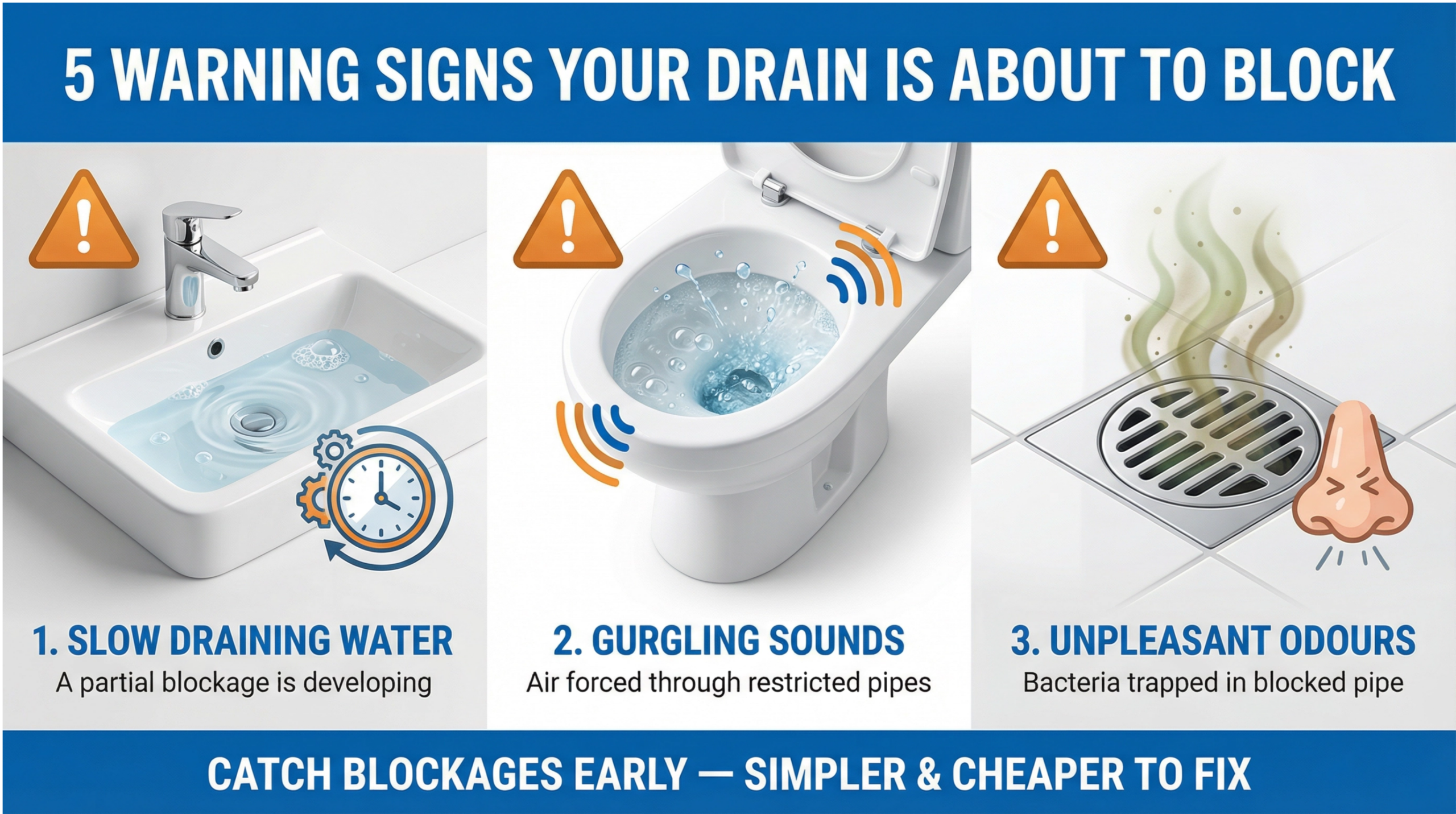
- Water Is Draining Slowly
- Gurgling Sounds After Flushing or Draining
- Unpleasant Smells Coming from Drains
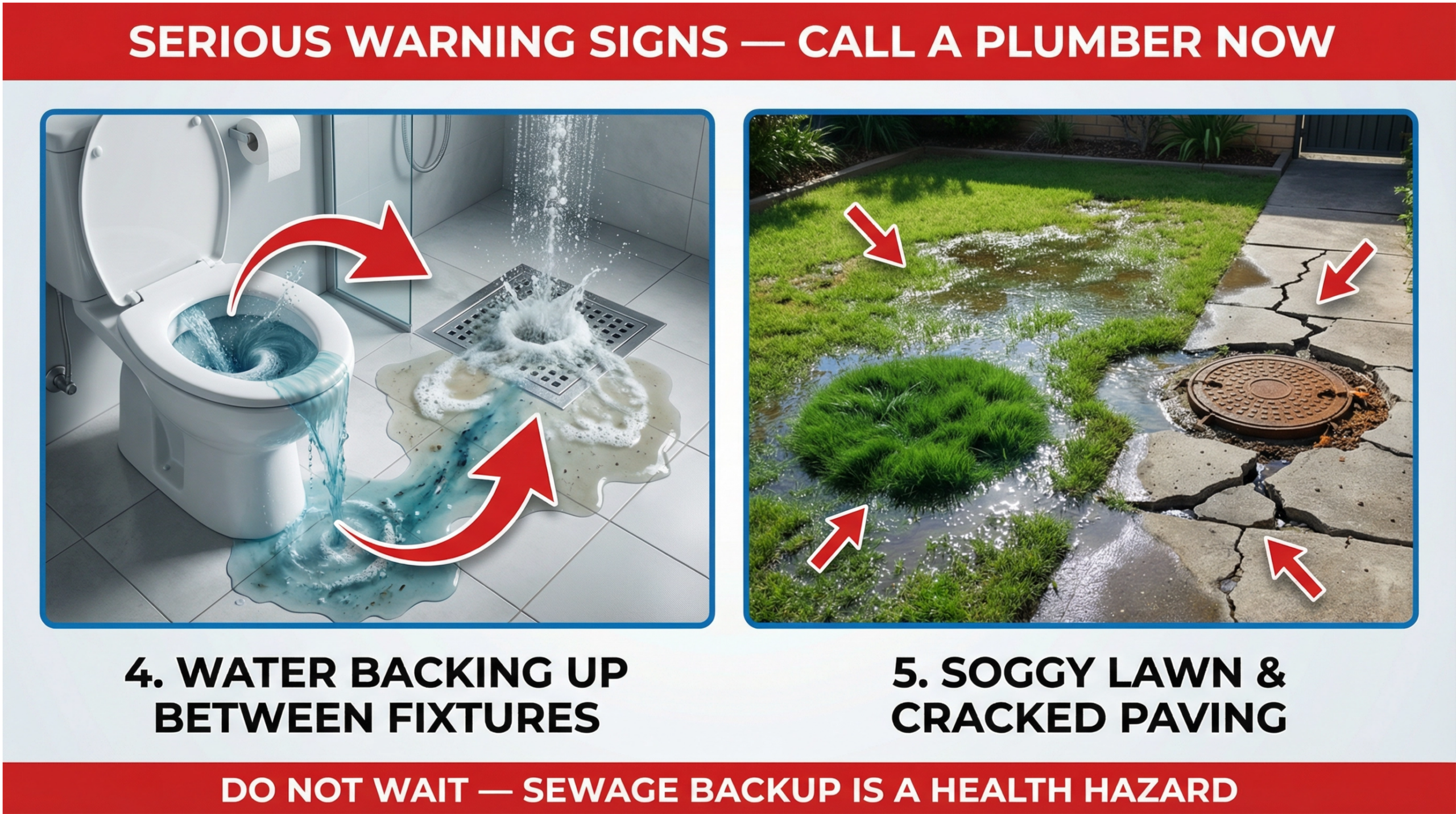
- Water Backing Up Into Other Fixtures
- Changes in Your Lawn or Garden
Tip: If you notice two or more of these signs together, don't wait. Catching a blockage early almost always means a simpler, less expensive repair.
What Happens During a Professional Drain Inspection and Clear
Step 1 – CCTV Camera Inspection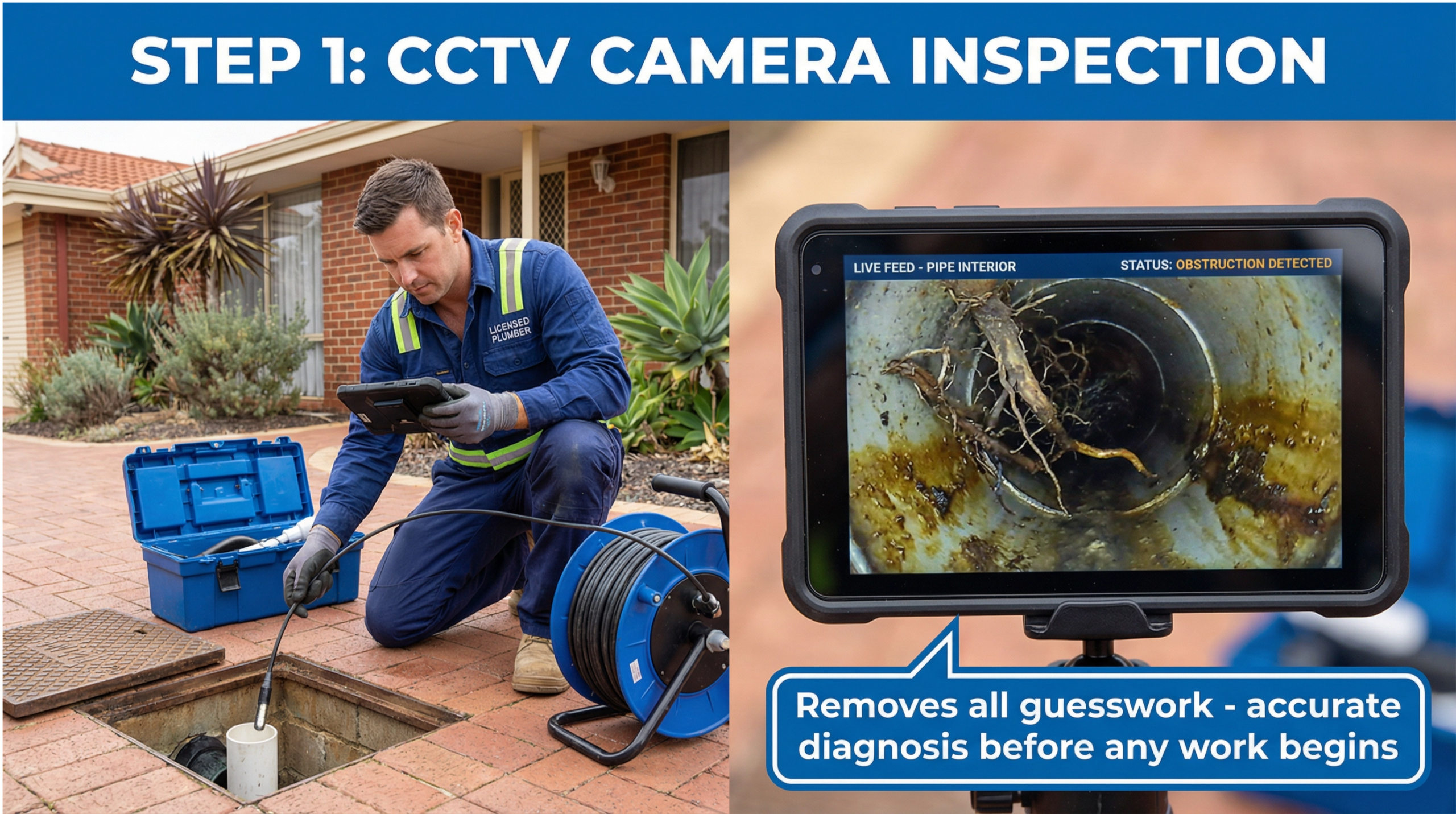
The first step is always understanding exactly what is causing the blockage and where it is located. Our team uses a CCTV drain camera inspection to pass a waterproof camera through your pipes and get a live video feed from inside your drain. This tells us precisely what we are dealing with — grease buildup, tree root intrusion, a cracked pipe section — before any work begins.
A camera inspection removes the guesswork entirely. It also means we can provide an accurate, honest quote upfront rather than uncovering additional problems partway through the job.
Step 2 – Jet Blasting to Clear the Blockage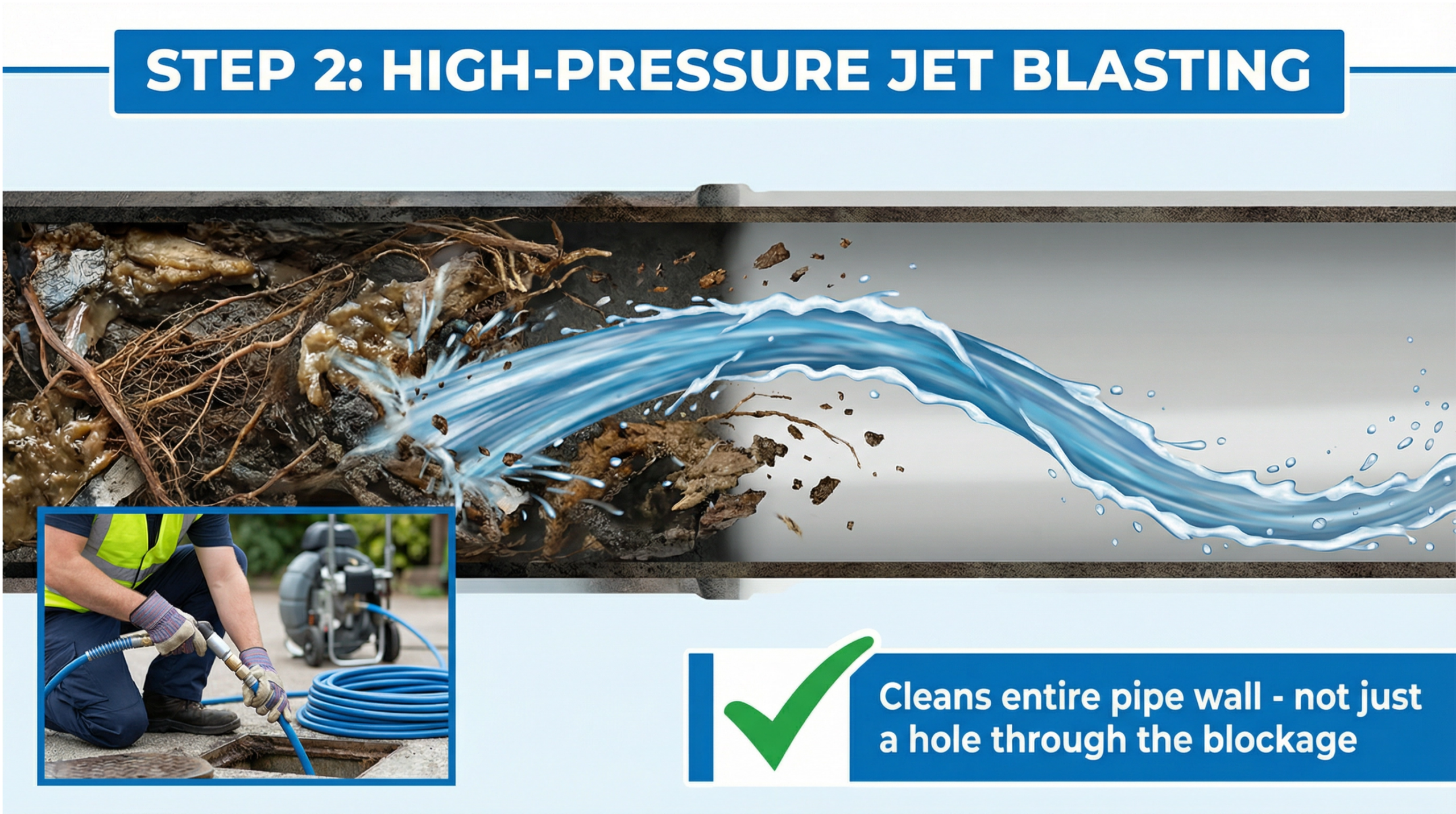
For most blocked drains, we use high-pressure water jet blasting. A jet blaster delivers a concentrated stream of water at extremely high pressure through your pipes, cutting through grease, flushing out debris and slicing through tree root growth. It is far more effective than a drain snake for anything beyond a very minor blockage, and it cleans the entire pipe wall — not just a hole through the middle of the blockage.
After jet blasting, we run the camera through again to confirm the pipe is fully clear and to check for any structural damage. Learn more about our blocked drain services and what to expect when you call us out.
Step 3 – Pipe Relining If Required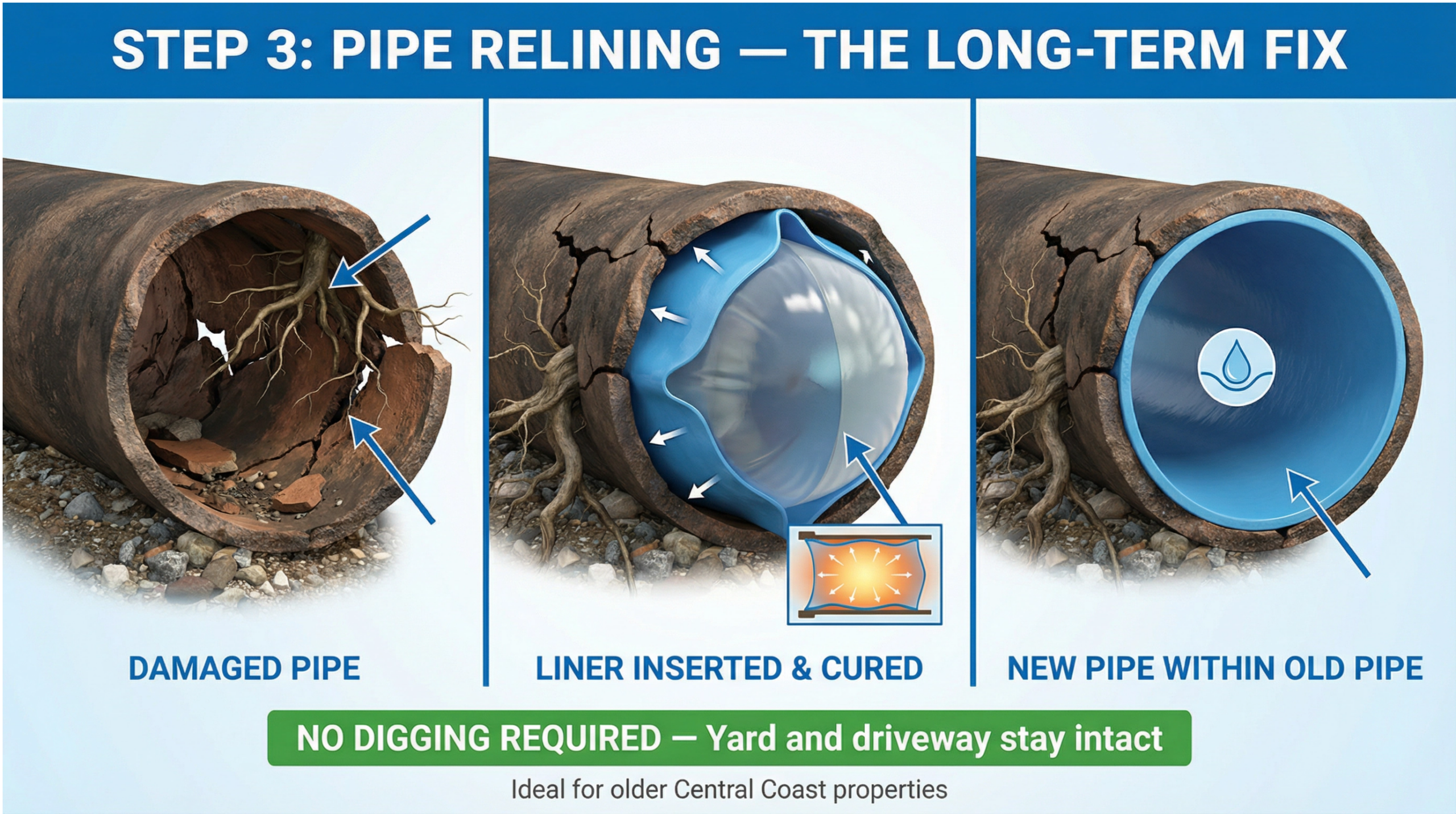
If the camera reveals cracks, joint damage or significant root intrusion that is likely to cause repeat blockages, we may recommend pipe relining as a long-term solution. Pipe relining involves inserting a flexible resin liner into the existing damaged pipe and curing it in place — creating a smooth, seamless new pipe surface without the need to dig up your yard or driveway.
It is a cost-effective and minimally invasive solution that is particularly well-suited to older Central Coast properties, where full pipe replacement would be highly disruptive and expensive.
Real example: A homeowner in Gosford recently contacted Rectify Plumbing after their bathroom drain had been slow for several months. Our team ran a CCTV camera inspection and located a significant root intrusion from a neighbouring fig tree approximately four metres inside the drain. We jet blasted the line clear and pipe relined the affected section. The homeowner has had no further issues since.
DIY vs. Professional Drain Clearing — What Is Safe to Try at Home
What You Can Try YourselfFor a very minor, slow-draining basin — likely caused by a hair or soap buildup right at the drain opening — a drain screen, a hand drain snake, or a mixture of bicarbonate soda and white vinegar can sometimes free the blockage. These are low-risk options for surface-level issues in basins or shower drains.
Start by removing the drain cover and clearing any visible debris by hand first. Then try your chosen method. If the drain clears quickly, great. If not, it is time to call a professional.
When to Call a Plumber for Blocked Drains on the Central CoastIf the blockage does not clear with basic methods, or if you are dealing with a toilet, a main sewer line, or a sewage smell, stop and call a licensed plumber. Using excessive force with a drain snake on older pipes can cause cracking, and pushing a blockage deeper into the system can make it significantly worse.
Chemical drain cleaners can clear a partial blockage temporarily, but they are corrosive and can damage older pipe materials over time. For anything more than a minor surface blockage, professional drain cleaning services are always the safer and more effective option.
How to Prevent Blocked Drains on the Central Coast
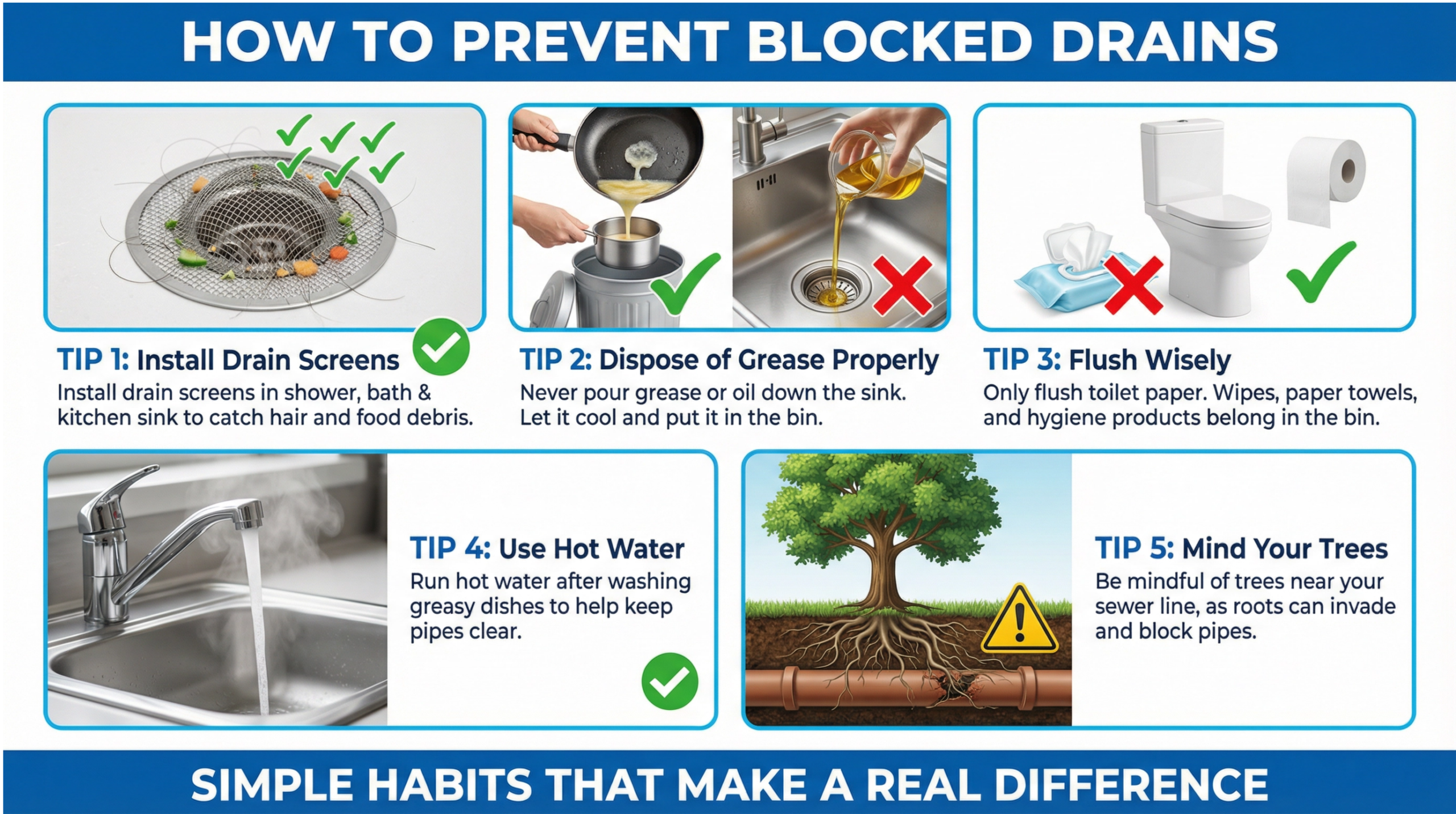 Simple Habits That Make a Real Difference
Many blocked drains are entirely preventable. A few consistent habits can dramatically reduce how often blockages occur in your home:
- Install drain screens in your shower, bath and kitchen sink to catch hair and food debris
- Never pour cooking fat, grease or oil down the sink — let it cool and dispose of it in the bin
- Only flush toilet paper — not wet wipes, tissues or sanitary products
- Run hot water through the kitchen sink for 30 seconds after washing greasy dishes
- Be mindful of trees planted near your sewer line, particularly large natives with aggressive root systems
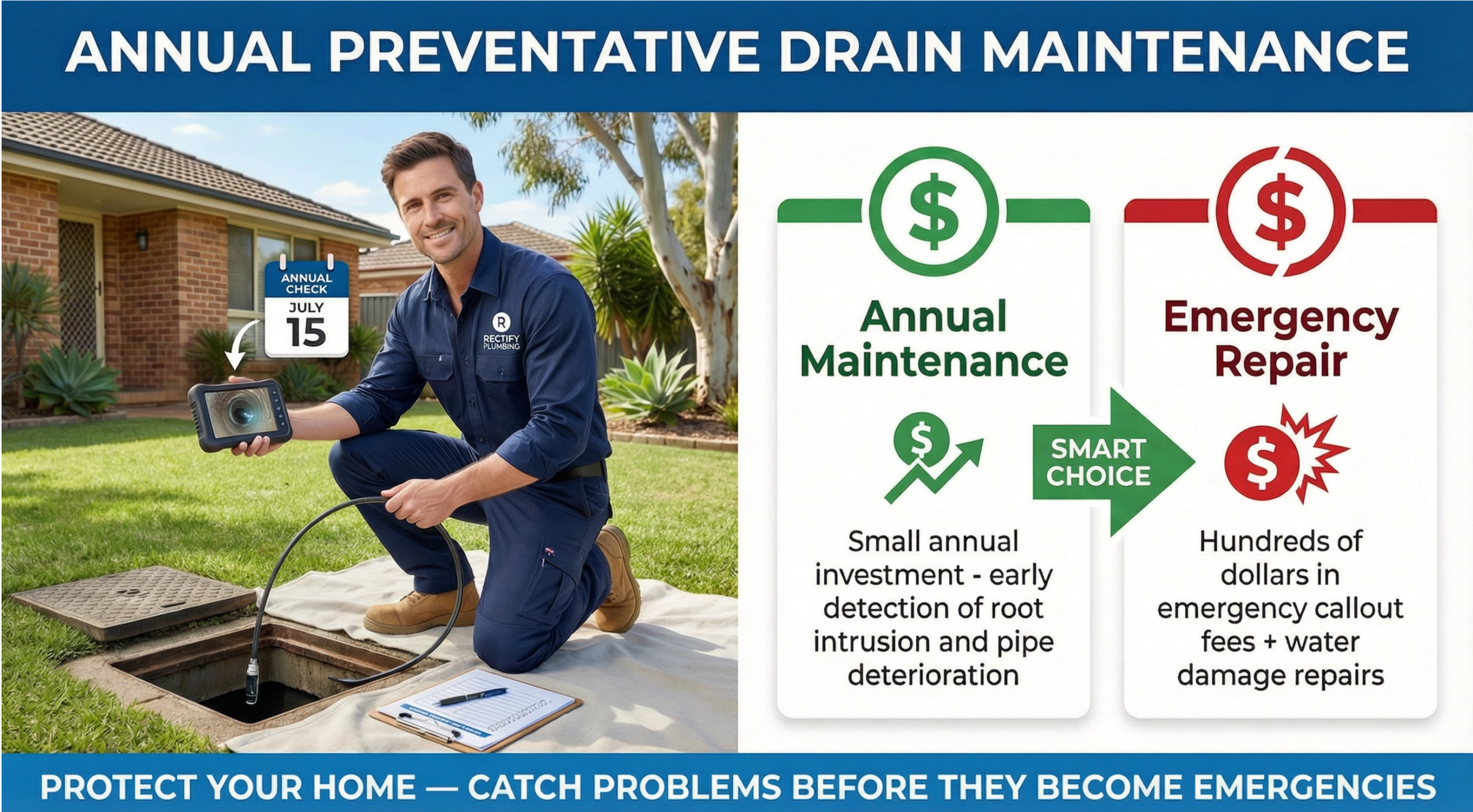
If your home is older, or you have experienced repeat blockages, an annual preventative maintenance inspection is a smart investment. A routine camera check can identify early signs of root intrusion or pipe deterioration long before they become an emergency — and a much smaller repair bill as a result.
Rectify Plumbing offers preventative maintenance plans across the Central Coast. A small annual investment that can save hundreds of dollars in emergency callout fees and water damage repairs.
Get Your Central Coast Drains Sorted — Call Rectify Plumbing
Blocked drains do not fix themselves — and a small problem left too long almost always turns into a bigger, more expensive one. Whether you are noticing slow drainage, hearing gurgling sounds, or dealing with a full backup, the sooner you get a professional assessment the better.
Rectify Plumbing provides fast, reliable blocked drain services across the entire Central Coast — including Gosford, Wyoming, Erina, West Gosford, Niagara Park, East Gosford and Springfield. We are available 24/7 for emergency blocked drain callouts and arrive equipped to clear, inspect and repair on the same visit wherever possible.
Our team is fully licensed, experienced with older Central Coast pipe systems, and backed by a 100% satisfaction guarantee. Explore our full range of plumbing services or get in touch today to book your inspection.
We also provide gas plumbing on the Central Coast and hot water system repair and installation across Gosford, Wyoming, Erina and surrounding suburbs. Call our Central Coast line on or request a quote online. Request a Quote or Make an Enquiry -> rectifyplumbing.com.au [service_faqs]