
- 25Aug
Licensed Gasfitter NSW: What Gas Work Needs a Licence and a Compliance Certificate
Quick answer: In NSW you must hold a gasfitting licence or certificate to do any gasfitting work — installing, altering, extending or repairing a gas installation, working on its flue, or connecting and disconnecting a gas appliance, regulator or container. Swapping over a gas cylinder is the only common exemption. The gasfitter must also lodge a certificate of compliance (network gas) or give you a certificate of inspection (bottled LPG) within five business days. Rectify Plumbing’s gasfitters are licensed and insured across Sydney and the Central Coast — call 0400 073 180.
What counts as gasfitting work in NSW?
Under the Gas and Electricity (Consumer Safety) Act 2017, gasfitting work covers the installation, alteration, extension or repair of a gas installation, the same work on any flue attached to it, and connecting or disconnecting a gas container, regulator or appliance. It applies regardless of the value of the work and regardless of whether the property is residential, commercial or industrial.
- Running or extending a gas line — including a bayonet point for a heater or an outdoor BBQ line
- Installing or replacing a gas cooktop, oven, heater or gas hot water unit
- Any work on the flue serving a gas appliance
- Connecting or disconnecting an LPG cylinder installation, regulator or appliance
- Leak repairs on gas pipework, meters and fittings
Changing over a gas cylinder that is designed to be readily detachable is exempt. Everything else needs a licence. The full definition is on the NSW Government gasfitter compliance page.
Can a general plumber do gas work?
No — not unless they are separately licensed in the gasfitting category. In NSW a licence lists the categories the holder may work in: plumbing, draining, gasfitting and endorsements such as Type B appliance work. A plumber licensed for water and drainage only cannot legally touch your gas installation, and a certificate holder can only work under the supervision arrangements attached to their certificate.
What certificate should you receive after gas work?
Two different certificates apply, and which one you get depends on whether the property is on the reticulated gas network or on bottled LPG. Since 1 March 2026, gasfitters must lodge these through BCNSW eCert — a posted or emailed PDF is no longer accepted for compliance lodgement.
| Network (reticulated) gas | Bottled LPG / non-networked | |
|---|---|---|
| Document | Certificate of compliance | Certificate of inspection |
| Who receives it | Lodged with Building Commission NSW | Given to the owner of the installation |
| Deadline | Within 5 business days of completing the work | Within 5 business days of completing the work |
| Also required | Test the installation for defects | Inspect all containers, regulators and appliances, test the whole installation, fit a compliance plate |
| Record keeping | Held by BCNSW | Gasfitter keeps a copy for 5 years |
If a gasfitter cannot tell you which certificate you are getting, that is your cue to stop the job.
How do you check a gasfitter’s licence?
Ask for the licence number, then verify it yourself — it takes about a minute. Do it before work starts, not after.
- Ask for the licence number and the name it is held in.
- Search it on the NSW Government licence check.
- Confirm the gasfitting category is listed — not just plumbing or draining.
- Confirm the licence is current and unrestricted, and that the tradesperson on site is the licence holder or is supervised.
- Ask for a certificate of currency for public liability insurance.
We walk local customers through the same process in licensed gas fitters in Hornsby: how to verify and what it costs.
What is Type A and Type B gas work?
Type A covers the certified domestic and light commercial appliances most homes have — cooktops, ovens, space heaters, gas hot water units. Type B covers uncertified or industrial appliances such as commercial boilers, kilns and large process burners, and requires a separate authorisation on top of a gasfitting licence. If you are quoting out work for a restaurant kitchen, a strata boiler or a plant room, ask specifically whether the gasfitter holds Type B authorisation for that appliance class.
What are the risks of unlicensed gas work?
Unlicensed gas work is an offence in NSW, but the practical risks land on the property owner. Carbon monoxide from an incorrectly flued heater, an unpressure-tested joint behind a wall, or a missing compliance certificate can all surface later — often when a home is being sold or a claim is being assessed.
- Insurance. Insurers routinely ask for the compliance certificate after a gas incident.
- Sale and conveyancing. Missing certificates for gas appliances hold up settlement.
- Safety. Flue and ventilation faults are the most common serious defects we find on second-hand heater installs.
- Rework. Non-compliant pipework usually has to be replaced, not patched.
What does a licensed gasfitter do on a typical job?
On a standard Sydney gas hot water or cooktop changeover, the licensed part of the job is mostly the parts you do not see: sizing the line, pressure testing, checking the flue and ventilation, and certifying the result.
- Isolate the supply and check the meter or cylinder regulator.
- Size and run the pipework for the appliance’s gas load.
- Pressure test the installation and check for leaks at every joint.
- Commission the appliance and verify the flue and ventilation clearances.
- Lodge the certificate of compliance or issue the certificate of inspection and compliance plate.
Where does Rectify Plumbing do gas work?
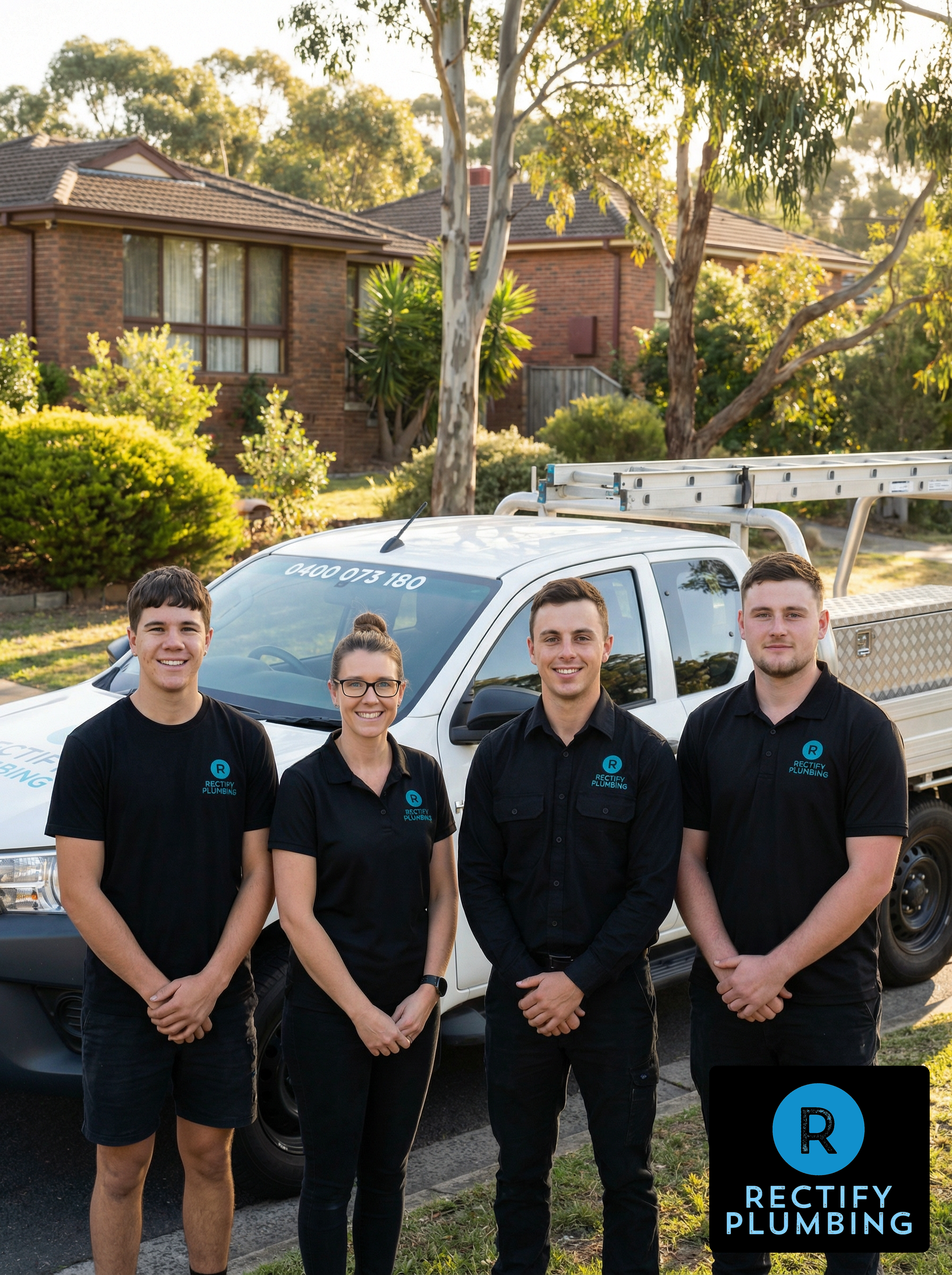
We are a licensed plumbing, draining and gasfitting business working across Epping, Ryde, Berowra, Mount Colah, Hornsby Shire, Pennant Hills, Turramurra, the Hills District, greater Sydney and the Central Coast including Gosford. Common jobs are gas hot water changeovers, cooktop installs, BBQ points, heater servicing and LPG-to-natural-gas conversions. Call 0400 073 180 or request a quote.
Related reading: gas plumber Sydney: what only a licensed gas fitter can do, gas hot water installation and repair, and our full service list.
Gasfitter NSW FAQs
Contact Us
Rectify Plumbing offers comprehensive solutions for all of your residential and commercial plumbing needs across Sydney. Contact us today for a fast quote!
Get startedRelated Articles
Gas Plumber Sydney: What Only a Licensed Gas Fitter Can Do
Quick answer: can a plumber do gas work in Sydney?
A plumber can only carry out gas work in NSW if they hold a separate gasfitting licence — plumbing, draining and gasfitting are distinct licence categories, and unlicensed gasfitting is illegal regardless of the size of the job. So before anyone touches your cooktop, heater or gas hot water unit, ask for their NSW gasfitting licence number. Rectify Plumbing holds both plumbing and gasfitting licences across Sydney and the Central Coast — call 0400 073 180.What is the difference between a gas fitter and a gas plumber?
They describe the same licensed work from two directions. "Gasfitter" is the term used in NSW licensing and in the Gas Supply Act 1996; "gas plumber" is what homeowners type into Google when they want a plumber who can also legally work on gas. The job title is not what protects you — the licence category is.Plumber, drainer or gas fitter: which licence covers what
| The job | Licence category needed | Can a general plumber do it? |
|---|---|---|
| Replace a tap or toilet | Plumbing | Yes |
| Clear or repair a sewer or stormwater line | Draining | Only if licensed for draining |
| Install or connect a gas cooktop | Gasfitting | No — gasfitting licence required |
| Run a new gas line or gas point | Gasfitting | No |
| Find and repair a gas leak | Gasfitting | No |
| Swap an electric hot water unit for gas | Plumbing + gasfitting | Only with both |
| Install a gas space heater | Gasfitting | No |
| Commercial or industrial gas installations | Type B gasfitting authorisation | No — separate authorisation |
What counts as gasfitting work in NSW?
Gasfitting work is defined broadly by the Gas Supply Act 1996 and covers far more than most homeowners expect. If gas flows through it, or could, it is gasfitting.- Connecting, disconnecting, altering or relocating any gas appliance
- Installing or modifying gas piping, meters, regulators and gas points
- Converting an appliance between natural gas and LPG
- Leak detection and repair on a gas installation
- Commissioning and testing an appliance after installation
- Decommissioning and capping a redundant gas line
What happens if unlicensed gas work is done on your home?
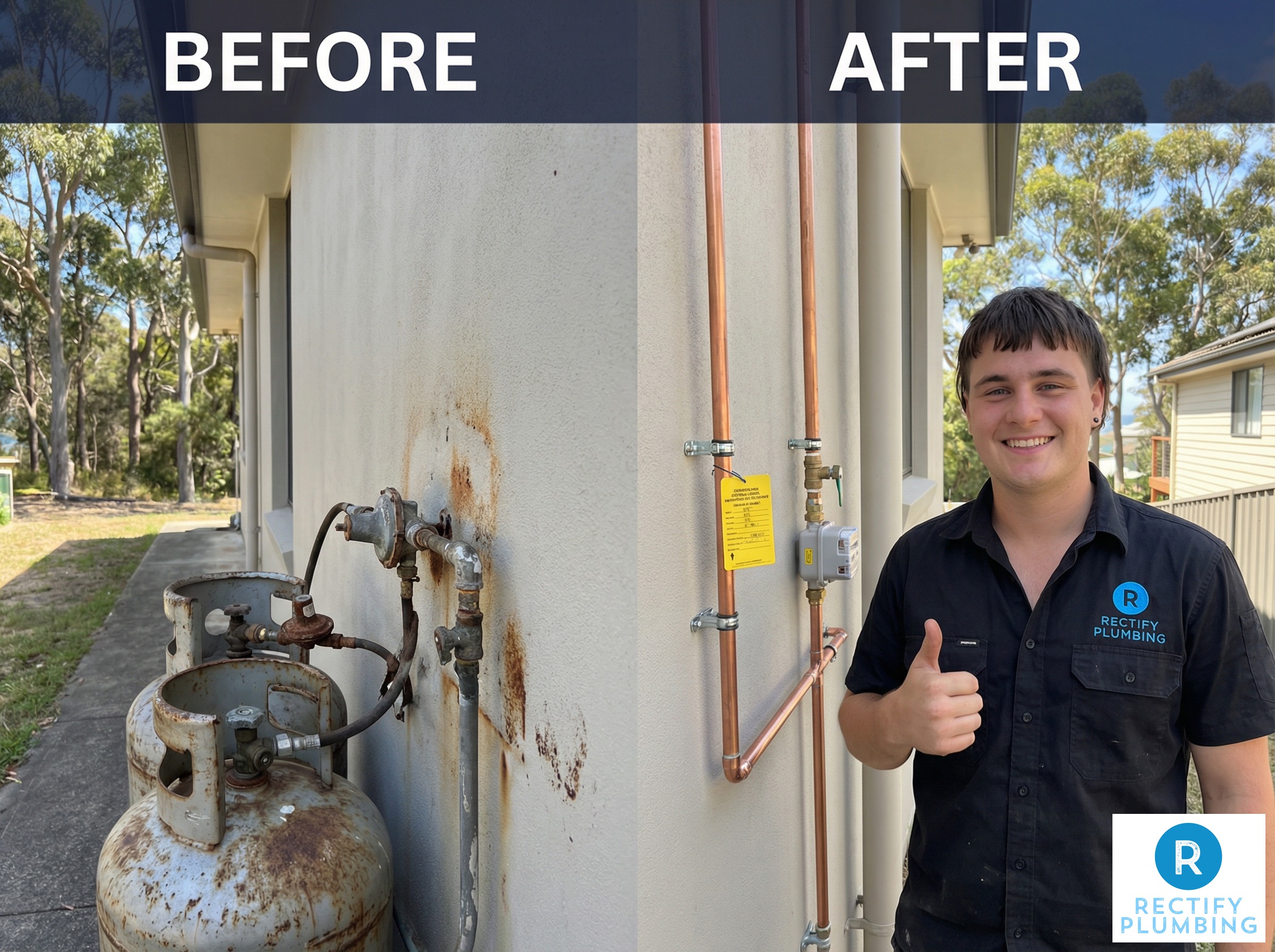
The penalties are the least of it. Unlicensed gasfitting is a breach of the Home Building Act 1989 with fines up to $22,000 for an individual and $110,000 for a company — but the real risk is a gas leak or carbon monoxide from an appliance that was never commissioned properly.- Insurance. A claim arising from unlicensed work can be refused.
- Warranty. Appliance manufacturers void warranties on installations without a compliance certificate.
- Selling the property. Undocumented gas work becomes a problem at contract stage.
- Safety. An incorrectly sized line or unflued appliance can produce carbon monoxide, which you cannot smell.
How do you check a gas fitter is licensed?
It takes two minutes and it is the single best thing you can do before booking. Ask for the licence number, then verify it yourself rather than relying on a logo on a website.- Ask for the licence or certificate number in writing — a text message is fine.
- Check it on the NSW Government licence check and confirm gasfitting is listed, not just plumbing.
- Confirm the licence is current and in the name of the business or person attending.
- Ask whether the work is notifiable and whether you will receive a gas compliance certificate.
- Get the quote in writing before work starts.
What gas jobs does Rectify Plumbing do most often?
Our licensed gasfitters work through Epping, Ryde, Hornsby, Berowra, Mount Colah, Thornleigh, Pennant Hills, St Ives, Parramatta and up to Gosford, Wyoming, Erina and the wider Central Coast. The bread-and-butter jobs are these.- Gas hot water installs and changeovers — continuous flow and storage units, including electric-to-gas conversions. See our hot water services.
- Cooktop and oven connections during kitchen renovations
- New gas points for heaters, outdoor kitchens and BBQs
- Gas leak detection and repair, including pressure testing the installation
- Appliance servicing and safety checks, especially older space heaters
- LPG to natural gas conversions where the street main is available
- Decommissioning and safely capping redundant gas lines
What does a gas fitter check on a safety inspection?
A proper gas safety check is more than a sniff test. We pressure-test the installation for leaks, inspect flueing and ventilation, check the burner flame is blue and stable rather than yellow and sooting, verify appliance clearances, and confirm the meter and regulator suit the total appliance load. Older unflued heaters get the closest look, because that is where carbon monoxide risk sits.Signs you should book a gas safety check now
- A yellow or orange flame instead of a crisp blue one
- Soot or black marks around an appliance or its flue
- A faint gas smell that comes and goes
- Headaches, nausea or drowsiness when a gas heater is running
- A pilot light that keeps going out
- Gas bills climbing with no change in how you use gas
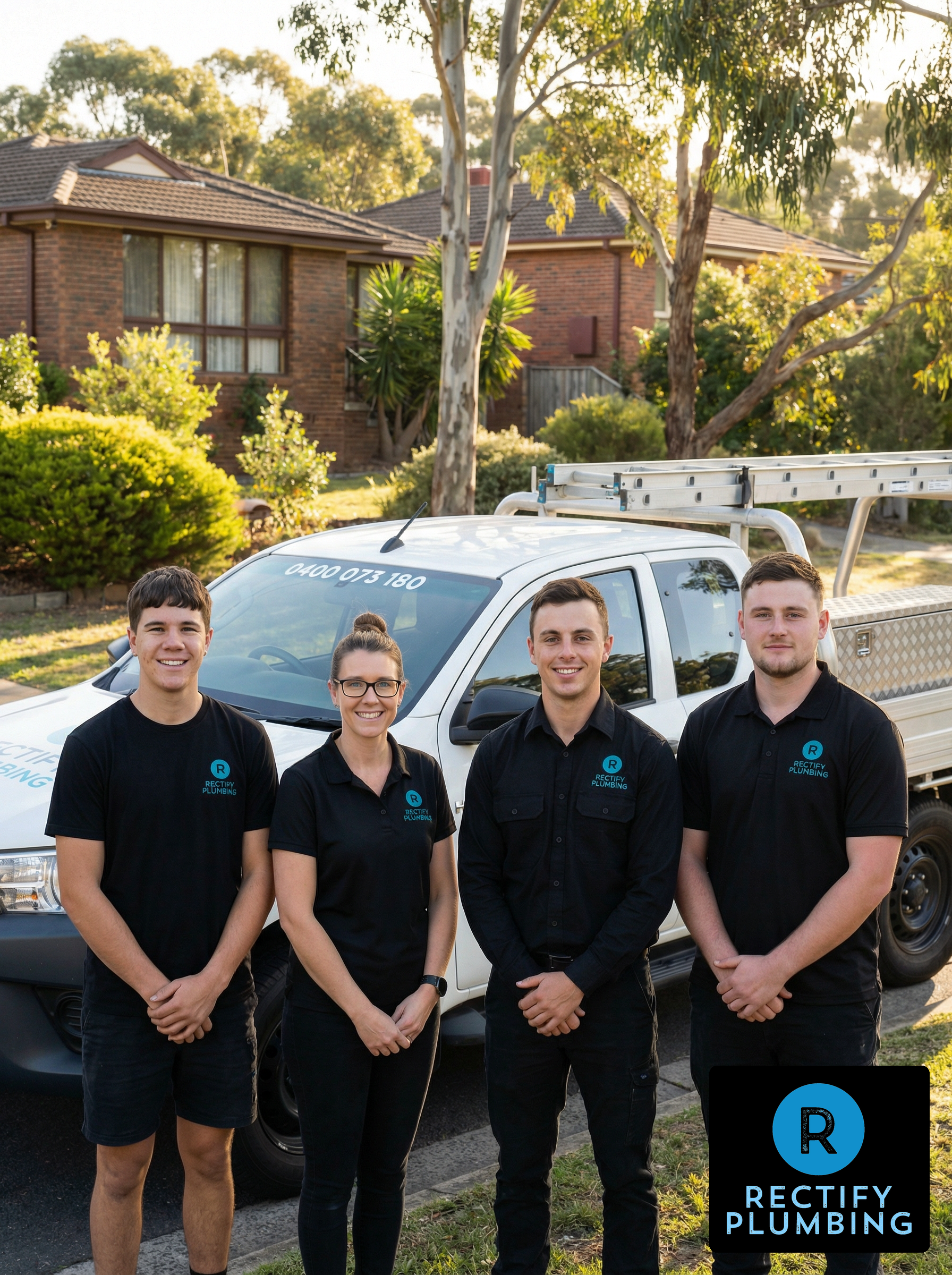
Why homeowners use Rectify Plumbing for gas work
We are a family-run Sydney and Central Coast plumbing business based at Berowra Heights, licensed and insured for plumbing, draining and gasfitting. Gas work is done by our own tradespeople, you get a fixed price before we start, and you get the compliance paperwork for notifiable work without having to chase it. If a job needs a Type B authorisation we will tell you rather than take it on.- All plumbing and gas services
- Gas and electric hot water
- Plumber Berowra, Epping, Hornsby and Gosford
- About our team and licences
Need a licensed gas fitter in Sydney?
Whether it is a cooktop connection, a gas hot water changeover or a leak you are worried about, call Rectify Plumbing on 0400 073 180 and speak to a licensed gasfitter today, or request a call back. If you can smell gas right now, turn it off at the meter, get outside, and call Jemena on 131 909 first.Gas plumbing FAQs
[service_faqs]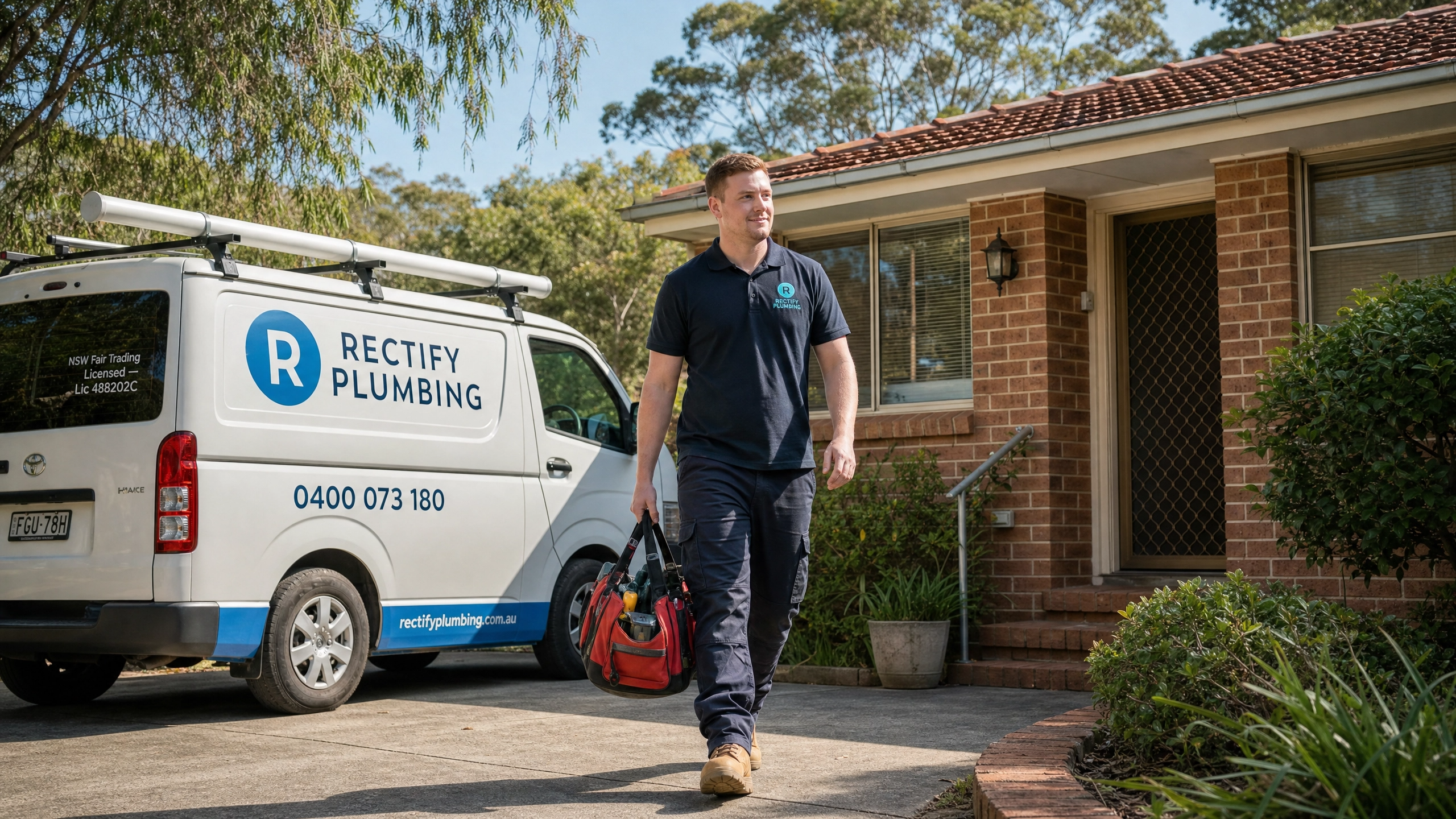
Best Licensed Gas Fitters in Hornsby: How to Verify and What It Costs (2026)
How to Verify a Gas Fitter's NSW Licence in 30 Seconds
There's exactly one place in NSW where licence verification lives — NSW Fair Trading's free public lookup tool. Anyone telling you otherwise (including the gas fitter themselves) is wrong.Step 1: Find the licence number on their van, business card, or website
A legitimate NSW gas fitter is legally required to display their licence number on:- Their work vehicle (visible on the side, not just inside the cab)
- Their business card
- Their website footer or contact page
- Their written quote and invoice
Step 2: Go to NSW Fair Trading's licence check tool
Open fairtrading.nsw.gov.au — Check a licence on your phone. It's free, no login required, takes about 10 seconds to load.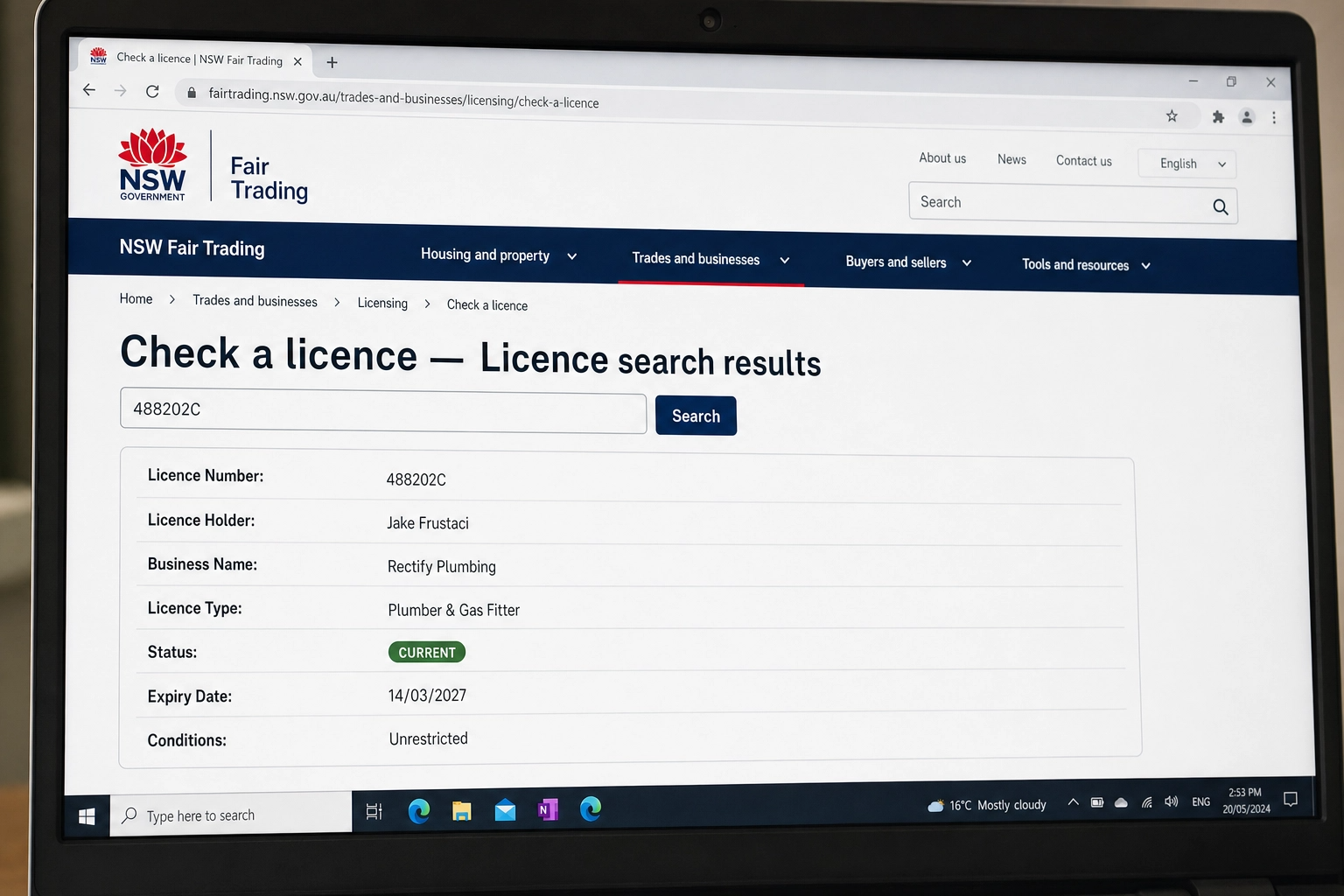
Step 3: Enter the number and match three things
Type in the licence number, hit search, and the result shows:- The licence holder's name (should match the person quoting you, or their business)
- The business name (should match the van or invoice)
- The status — must say "Current" and not be expired, suspended, or cancelled
- The conditions — which categories of gas work they're allowed to do
What "restricted" or "conditional" licences mean
Some NSW gas licences carry restrictions. The most common ones are:- Gas Fitting (Restricted) — limited to specific appliance types or work classes
- Conditional licences — issued during training or transition periods
- Endorsement-specific licences — for niche work like LPG installation only
Red flags before you even pick up the phone
You can usually spot a problem before you book:- No licence number anywhere visible — van, website, business card, Google profile
- Generic phone number (1300/1800) with no local Hornsby Shire address
- No ABN listed anywhere (Rectify's is 93 647 087 394 if you're checking)
- Reviews mention "quote changed on site" or "tried to upsell"
- Refuses to write the callout fee down before arriving
7 Things Only a Licensed Gas Fitter Can Legally Do in NSW
This is a short list because the law is short. If the work touches the gas system, a licensed gas fitter must do it. There are no DIY exceptions, no "small jobs" carve-outs, and no "handyman who used to be a plumber" workarounds.1. Install or replace any gas appliance
That includes hot water systems, gas cooktops, gas ovens, gas space heaters, BBQs that are hard-plumbed to natural gas, and pool heaters. Buying the appliance from a retailer doesn't change the rule — only a licensed gas fitter can connect it.2. Repair gas leaks — no exceptions
If you smell gas, the only legal path is to call the gas supplier (Jemena's emergency line is 131 909) to isolate supply, then have a licensed gas fitter repair the leak. Tightening a fitting yourself or using sealant tape is illegal and dangerous.3. Modify or extend gas lines
Adding a new gas outlet for an outdoor kitchen, extending a line for a fireplace, or relocating a stove all require a licensed gas fitter. Even moving the line by half a metre is regulated.4. Disconnect or reconnect gas at the meter
This includes the gas isolation work that's needed before a renovation, demolition, or any plumbing work near the gas line. Sydney Water and other tradies will not work near a gas line that hasn't been properly isolated by a licensed fitter.5. Certify gas work for insurance and property sales
When you sell a Hornsby home, the buyer's solicitor often requests a gas compliance certificate. Only a licensed gas fitter can issue one — and only after inspecting work they did themselves. If you've had unlicensed gas work in the past, this often surfaces at the worst possible time.6. LPG to natural gas appliance conversions
Common when you move from a regional property to a Hornsby home, or when a previous owner installed an LPG appliance and you've since had natural gas connected. Conversions require correct jets, regulator changes, and pressure testing — all licensed work.7. Test for gas leaks after a quake, tree fall, or major works
After ground movement (or after Sydney Water digs near your line for water mains work), a leak test is the only safe way to confirm your gas system is intact. Licensed gas fitter only — they have the calibrated pressure-test equipment and the legal authority to recertify the system.What Gas Work in Hornsby Specifically Costs (2026)
Honest pricing. These are real Hornsby Shire ranges from this year's jobs.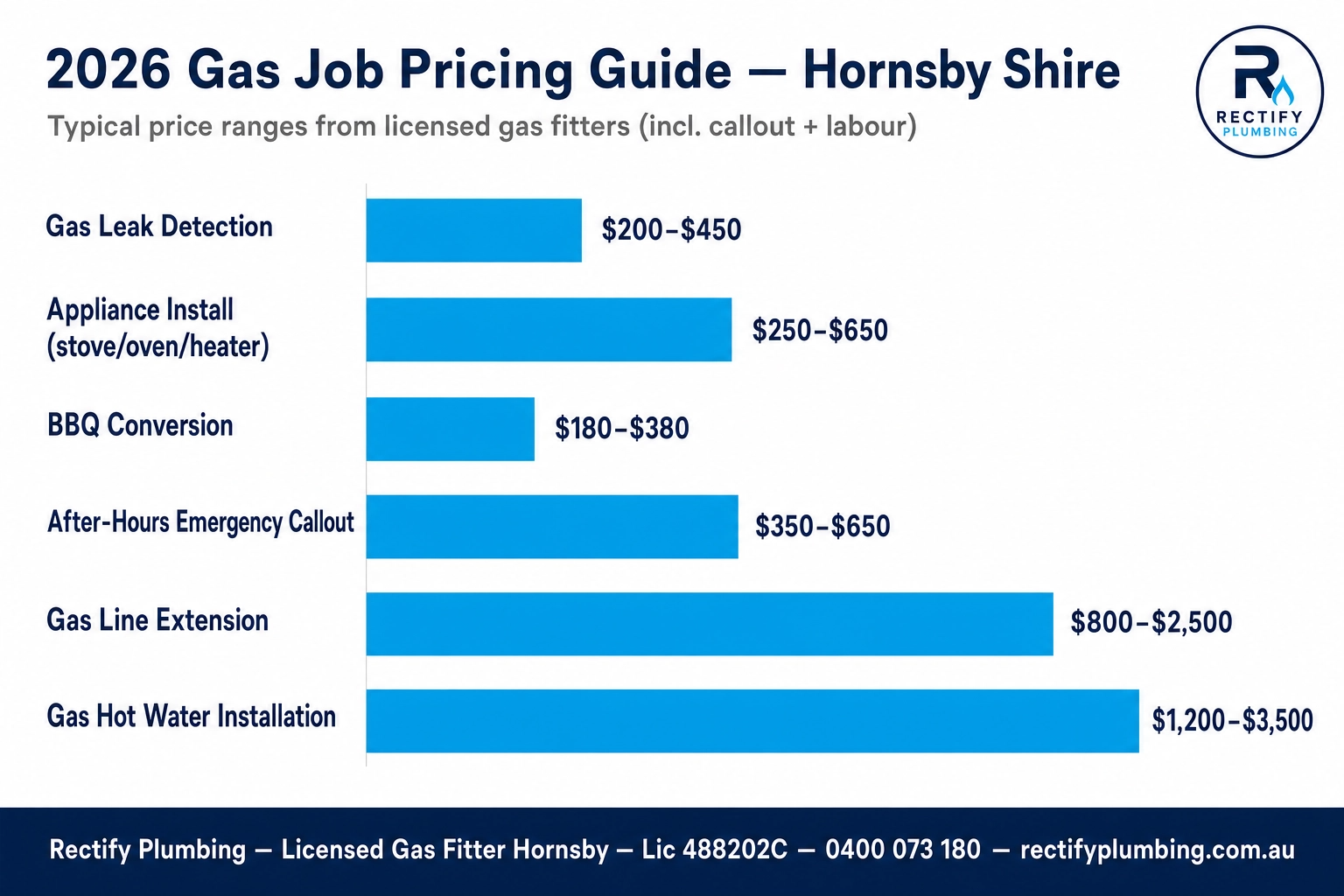
Standard gas leak detection callout: $200–$450
Licensed gas fitter arrives, isolates supply if needed, runs pressure test, locates the leak, gives a fixed-price quote for the repair. The callout fee covers diagnosis. Repair is quoted separately and confirmed before work starts.Gas hot water installation: $1,200–$3,500 supplied + installed
Range depends on system type (storage, continuous flow, heat pump), brand (Rinnai, Rheem, Dux, Bosch), and any extras like new gas line length or electrical work. We carry common units on the van for same-day swaps on most Hornsby callouts. See our hot water installation page for the brand and capacity-specific pricing.New gas appliance installation (stove, oven, heater): $250–$650
The appliance you've bought from Harvey Norman or Reece sits in the garage for a week because the retailer's installer can't get to you for ten days. We can fit a stove or oven in 60–90 minutes — but if the existing connection isn't compliant, expect another $150–$300 in upgrades.BBQ conversion (natural gas to LPG or vice versa): $180–$380
Includes the correct jet/orifice replacement, regulator change if needed, and pressure test. A 30-minute job for an experienced gas fitter, but absolutely not a DIY job — wrong jets cause incomplete combustion and carbon monoxide.New gas line extension: $800–$2,500
Depending on length, access, and whether it's running through walls, under floors, or external. Common quotes in Hornsby are for extending the line to a new outdoor kitchen, adding a gas heater in a renovated bathroom, or relocating the stove during a kitchen renovation.Emergency after-hours gas leak: $350–$650 callout + parts
If you smell gas at 2am, you call us, we attend within 30–45 minutes across Hornsby, Waitara, Asquith, Mount Colah and Hornsby Heights. The after-hours callout is higher than business hours — that's standard across the industry — but the repair pricing is exactly the same as daytime.Why Hornsby Has More Gas Service Calls Than Newer Suburbs
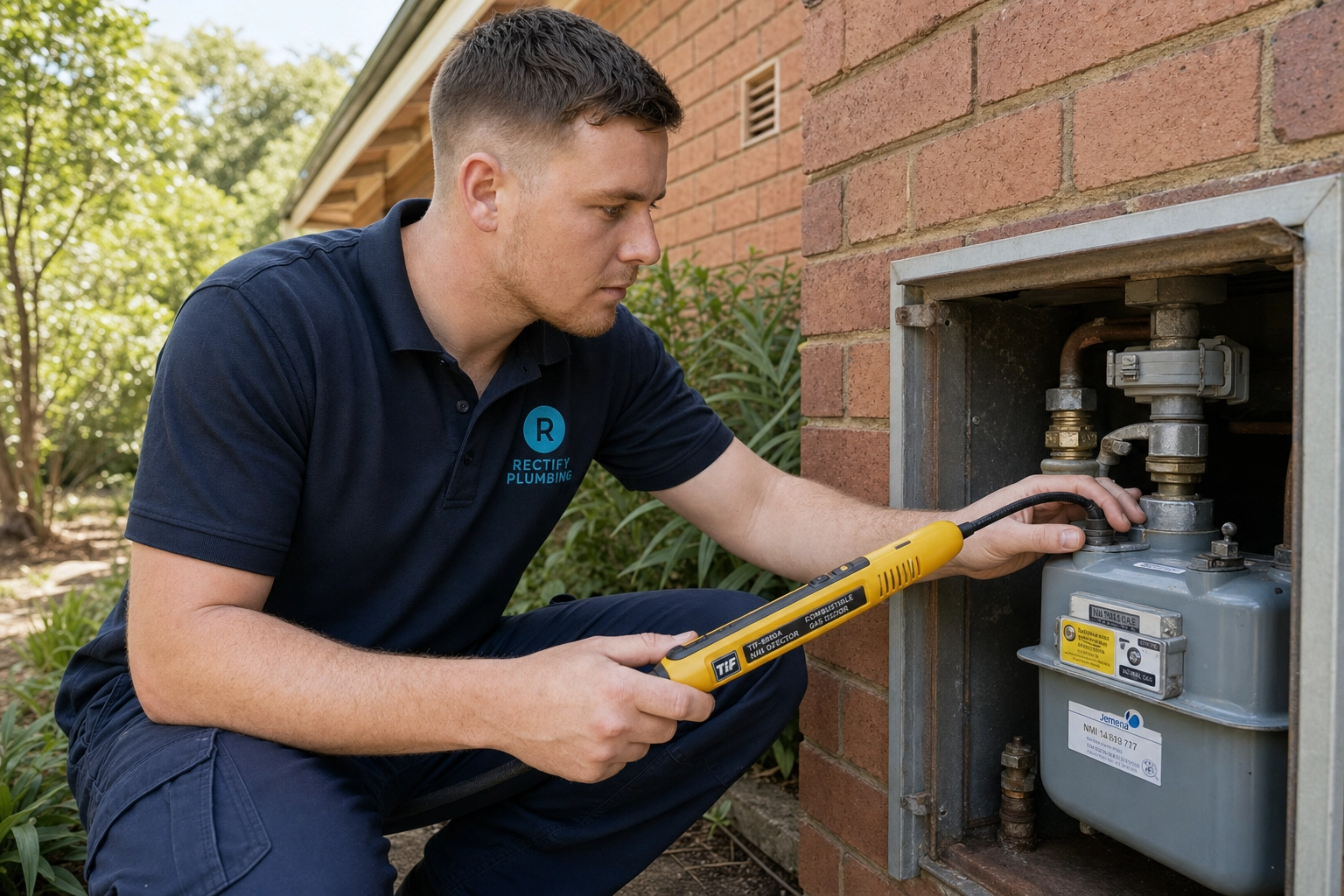 If you've owned a Hornsby home for a while, you've probably noticed that you get more gas-related plumbing issues than friends in newer Western Sydney estates. There's a reason.
A large share of the housing stock in Hornsby, Waitara, Asquith, Mount Colah and Hornsby Heights was built between the 1950s and the early 1980s. The original gas service pipes in those homes were typically wrought iron or early galvanised steel, designed for the appliances of the era. Sixty years on, those pipes have corroded internally, the threaded joints have worked loose with thermal cycling, and the rubber regulators at the meter have hardened.
At the same time, the appliances those homes were built around are reaching end of life — original gas hot water systems, old wall furnaces, ovens installed in the 1990s. The combination of ageing pipework and end-of-life appliances drives a constant stream of repair, replacement and compliance work.
The Energy & Water Ombudsman NSW reports that complaints related to gas appliance safety and installation defects have risen consistently across older Sydney suburbs over the past decade — the pattern matches what we see weekly across Hornsby Shire.
The honest read: if your home is older than 35 years and the gas appliances haven't been inspected this decade, it's not a question of if you'll need a licensed gas fitter, it's when.
If you've owned a Hornsby home for a while, you've probably noticed that you get more gas-related plumbing issues than friends in newer Western Sydney estates. There's a reason.
A large share of the housing stock in Hornsby, Waitara, Asquith, Mount Colah and Hornsby Heights was built between the 1950s and the early 1980s. The original gas service pipes in those homes were typically wrought iron or early galvanised steel, designed for the appliances of the era. Sixty years on, those pipes have corroded internally, the threaded joints have worked loose with thermal cycling, and the rubber regulators at the meter have hardened.
At the same time, the appliances those homes were built around are reaching end of life — original gas hot water systems, old wall furnaces, ovens installed in the 1990s. The combination of ageing pipework and end-of-life appliances drives a constant stream of repair, replacement and compliance work.
The Energy & Water Ombudsman NSW reports that complaints related to gas appliance safety and installation defects have risen consistently across older Sydney suburbs over the past decade — the pattern matches what we see weekly across Hornsby Shire.
The honest read: if your home is older than 35 years and the gas appliances haven't been inspected this decade, it's not a question of if you'll need a licensed gas fitter, it's when.
How to Choose Between 3 Quoted Hornsby Gas Fitters
You should always get at least two quotes for any gas job over $500. Here's how to compare them so price isn't the only factor.Compare licence numbers (cross-check each on NSW Fair Trading)
The 30-second check from Step 1 above. Three quotes, three licence numbers, three lookups. Any fitter who isn't on the register doesn't get a third look.Ask: "What's your gas work warranty?"
Standard for licensed work in NSW is 12 months on workmanship and the manufacturer's warranty on parts. Some fitters offer longer — Rectify warranties workmanship for 25 years on continuous-flow hot water installation. A 30-day warranty is a red flag.Ask: "Can I see your insurance certificate of currency?"
Public liability insurance for gas work is legally required — the minimum cover is $10 million. A current certificate of currency takes the fitter five minutes to send. If they hesitate or send something that doesn't say "current" with a clear expiry date, walk away.Ask: "Will you give me a written gas safety certificate when finished?"
For new appliance installations and major modifications, a signed gas safety certificate is your proof for insurance, council records, and future property sale. It costs nothing to provide if the work is licensed. Anyone who says "we don't do certificates" is telling you they're not doing licensed work.Look at recent Google reviews — filter for gas-related jobs
Sort the fitter's Google reviews by recent and skim for the word "gas." Read those specific reviews. A fitter with 200 plumbing reviews and zero gas-specific reviews probably doesn't do much gas work. You want recent, specific gas-related reviews that mention named appliances or types of work.Common Hornsby Gas Issues We See Weekly
The same five issues account for most of our Hornsby gas callouts:- Pilot light failure on older hot water systems — usually a worn thermocouple, occasionally a gas valve fault. Standard fix is the thermocouple replacement ($180–$280 all in)
- Gas smell at the meter after Sydney Water digs — ground movement loosens the meter-side fittings. Pressure test, retighten or replace fittings, recertify
- Leaking BBQ regulator — the small rubber diaphragm hardens over 5–8 years. Replacement is $80–$160 supplied + fitted
- Gas heater not igniting in winter — usually a pilot or ignition fault that's been dormant since last winter. Same-day diagnosis and repair
- LPG to natural gas conversion after renovation — common when a home gets connected to natural gas mains for the first time. Jet change on every appliance plus regulator change
Need a licensed gas fitter in Hornsby today? Call Jake direct on 0400 073 180. NSW Plumber & Gas Fitter Licence 488202C — verify it in 30 seconds at NSW Fair Trading before you call. We cover Hornsby, Waitara, Asquith, Mount Colah and Hornsby Heights, 24 hours a day.For more on what work specifically requires a licensed gas fitter in NSW, read our companion guide on gas plumbing in Sydney and what only a licensed gas fitter can legally do. If you're in or near Hornsby and need a general plumber as well as gas work, our Hornsby plumber page covers all services across the Hornsby Shire. For any other gas-related service we offer across Sydney, see the gas plumbers hub. ----------------------------------------------------------------------------------------------------------------------------------- [service_faqs]
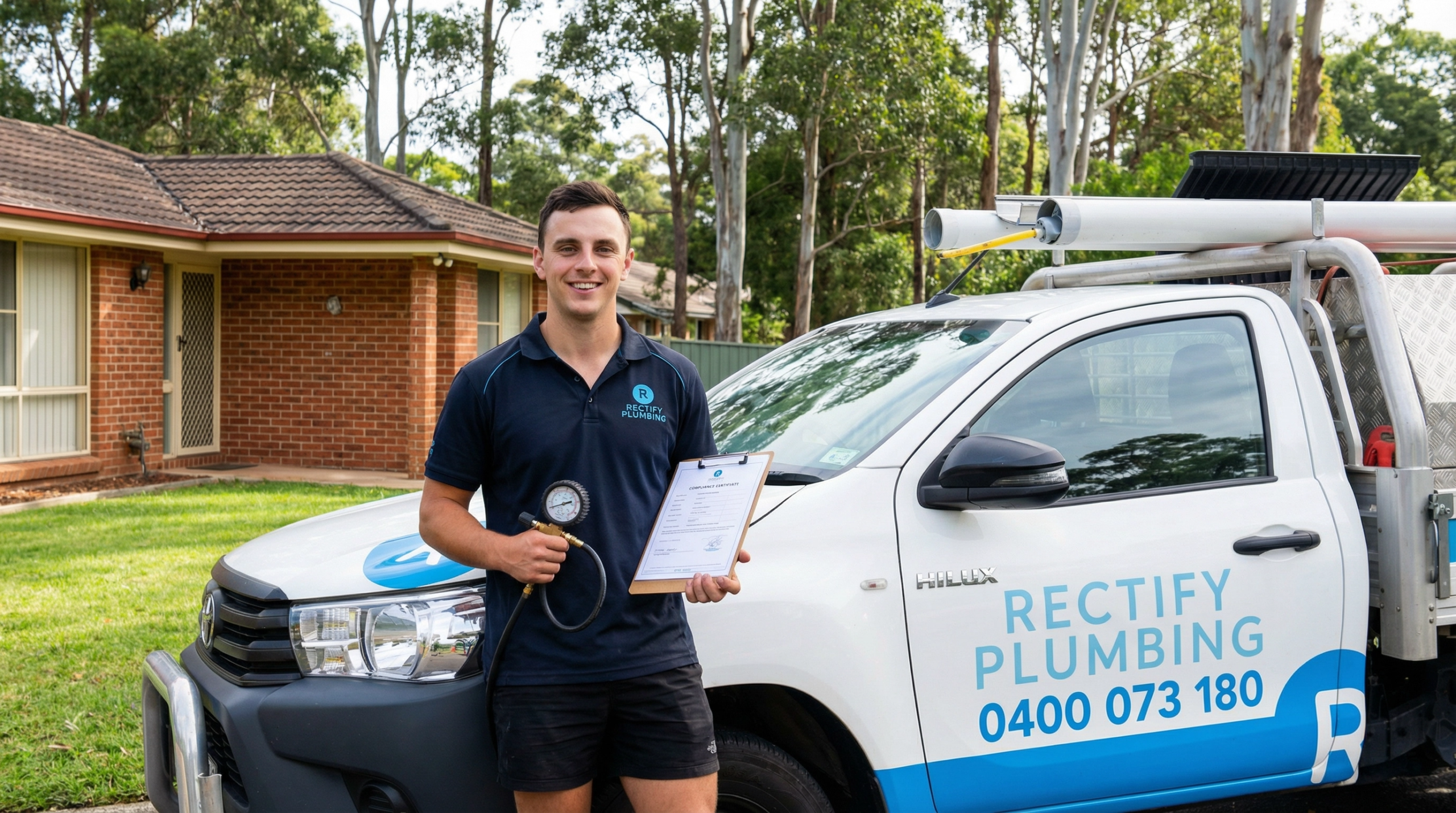
Gas Plumbing in Sydney: What Needs a Licensed Gas Fitter — and What Happens If You DIY
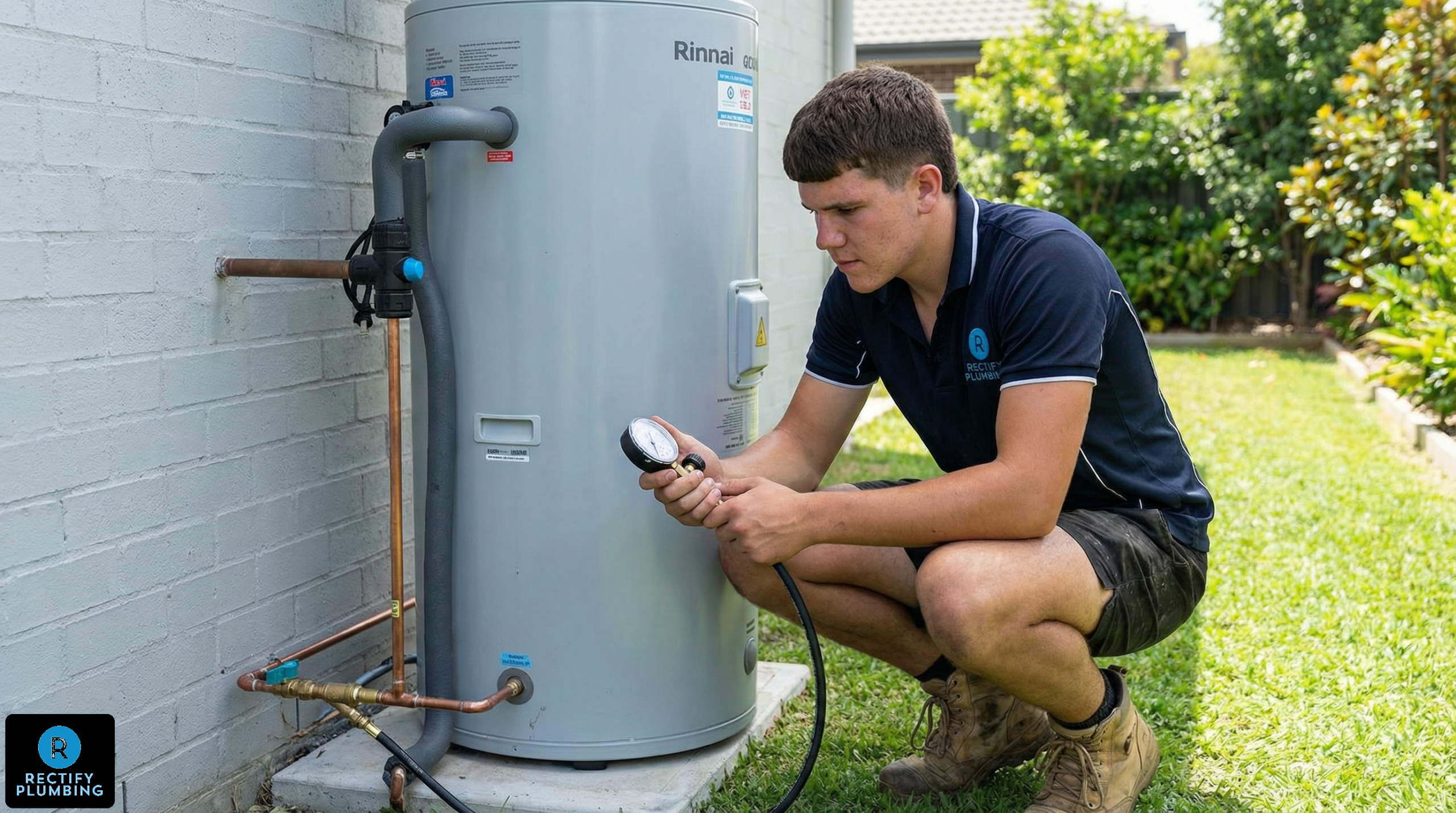 Gas Fitting Is a Licensed Trade — Separate from Plumbing
In NSW, gas fitting and plumbing are regulated separately under the Home Building Act 1989 and the Gas and Electricity (Consumer Safety) Act 2017. A plumbing licence does not automatically authorise gas fitting work. A licensed plumber who has not completed the specific gas fitting endorsement cannot legally work on your gas system — even if they're fully licensed to do everything else.
When you call a tradesperson for gas work, ask specifically whether they hold a gas fitting endorsement on their plumbing licence. A general plumbing licence alone is not sufficient. Rectify Plumbing holds both — licence number 488202C, verifiable at NSW Fair Trading — which is why we handle everything from gas line installation to appliance connection to compliance testing in a single visit.
What Counts as Gas Work Under NSW Law
The scope of what requires a licence is broader than most homeowners expect. Under Australian Standard AS/NZS 5601, which governs gas installations in Australia, licensed gas fitting work includes:
Gas Fitting Is a Licensed Trade — Separate from Plumbing
In NSW, gas fitting and plumbing are regulated separately under the Home Building Act 1989 and the Gas and Electricity (Consumer Safety) Act 2017. A plumbing licence does not automatically authorise gas fitting work. A licensed plumber who has not completed the specific gas fitting endorsement cannot legally work on your gas system — even if they're fully licensed to do everything else.
When you call a tradesperson for gas work, ask specifically whether they hold a gas fitting endorsement on their plumbing licence. A general plumbing licence alone is not sufficient. Rectify Plumbing holds both — licence number 488202C, verifiable at NSW Fair Trading — which is why we handle everything from gas line installation to appliance connection to compliance testing in a single visit.
What Counts as Gas Work Under NSW Law
The scope of what requires a licence is broader than most homeowners expect. Under Australian Standard AS/NZS 5601, which governs gas installations in Australia, licensed gas fitting work includes:
- Installing, altering, extending or repairing any gas fitting — including supply pipes, valves, flexible connectors and appliance connections
- Connecting or disconnecting any gas appliance from a fixed supply — cooktops, ovens, gas heaters, hot water systems, pool heaters, outdoor kitchen equipment
- Installing new gas points or extending existing gas lines — including outdoor BBQ points, fire pit connections and outdoor kitchen supplies
- Commissioning and pressure testing any gas installation after work is complete
- Gas leak detection and repair on fixed installations
We attended a property in Hornsby last year that had been sold six months earlier. The new owners had discovered during the sale process that the gas cooktop — installed by the previous owners as part of a kitchen renovation — had no compliance certificate. The previous owners had connected it themselves. We inspected the installation: the flexible connector was the wrong type for the appliance, the isolation valve was positioned incorrectly, and the connection had not been pressure tested. The installation had been in use for three years. We disconnected it, replaced the connector and valve, pressure tested the connection, and issued the compliance certificate. The house had been occupied for three years with a gas installation that had never been properly tested.How to Check a Gas Fitter Is Licensed in NSW
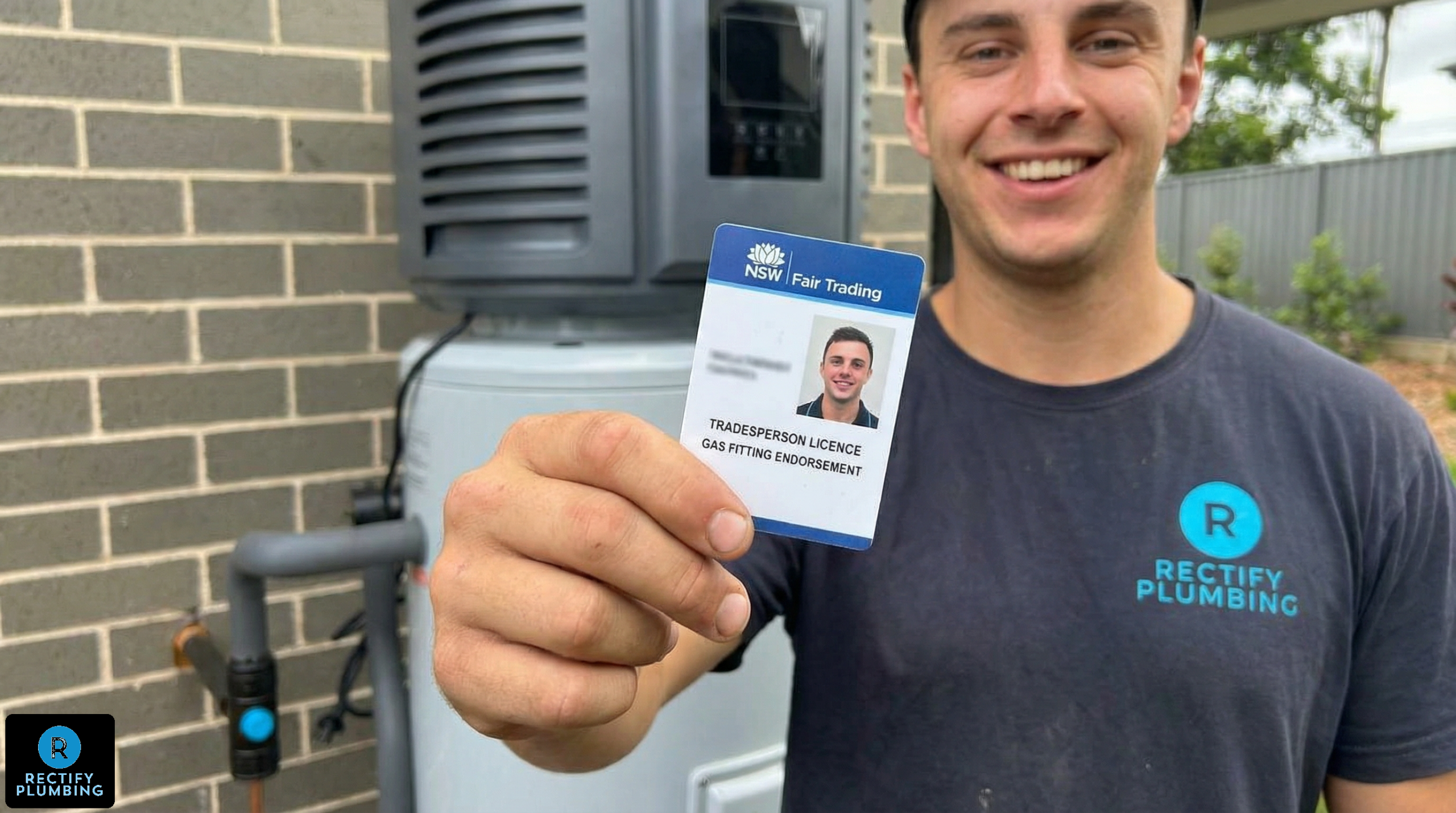 The NSW Fair Trading Licence Check
The NSW Government maintains a public licence register at www.fairtrading.nsw.gov.au. You can search by the tradesperson's name or licence number to confirm they hold a current plumbing and drainage licence with a gas fitting endorsement. Both the licence and the endorsement need to be current — a licence that has lapsed or an endorsement that was not renewed does not authorise gas fitting work.
This takes about 30 seconds and can be done from your phone. We encourage every customer to check before booking any gas tradesperson — including us. Rectify Plumbing's licence number is 488202C. Look it up. Confirm the gas fitting endorsement is current. That's exactly what you should do with anyone who works on your gas system.
What to Ask Before Work Starts
Three questions before any gas work begins on your property:
The NSW Fair Trading Licence Check
The NSW Government maintains a public licence register at www.fairtrading.nsw.gov.au. You can search by the tradesperson's name or licence number to confirm they hold a current plumbing and drainage licence with a gas fitting endorsement. Both the licence and the endorsement need to be current — a licence that has lapsed or an endorsement that was not renewed does not authorise gas fitting work.
This takes about 30 seconds and can be done from your phone. We encourage every customer to check before booking any gas tradesperson — including us. Rectify Plumbing's licence number is 488202C. Look it up. Confirm the gas fitting endorsement is current. That's exactly what you should do with anyone who works on your gas system.
What to Ask Before Work Starts
Three questions before any gas work begins on your property:
- Are you licensed for gas fitting in NSW specifically — not just general plumbing?
- Can I have your licence number to verify on Fair Trading before you start?
- Will I receive a Certificate of Compliance when the job is complete?
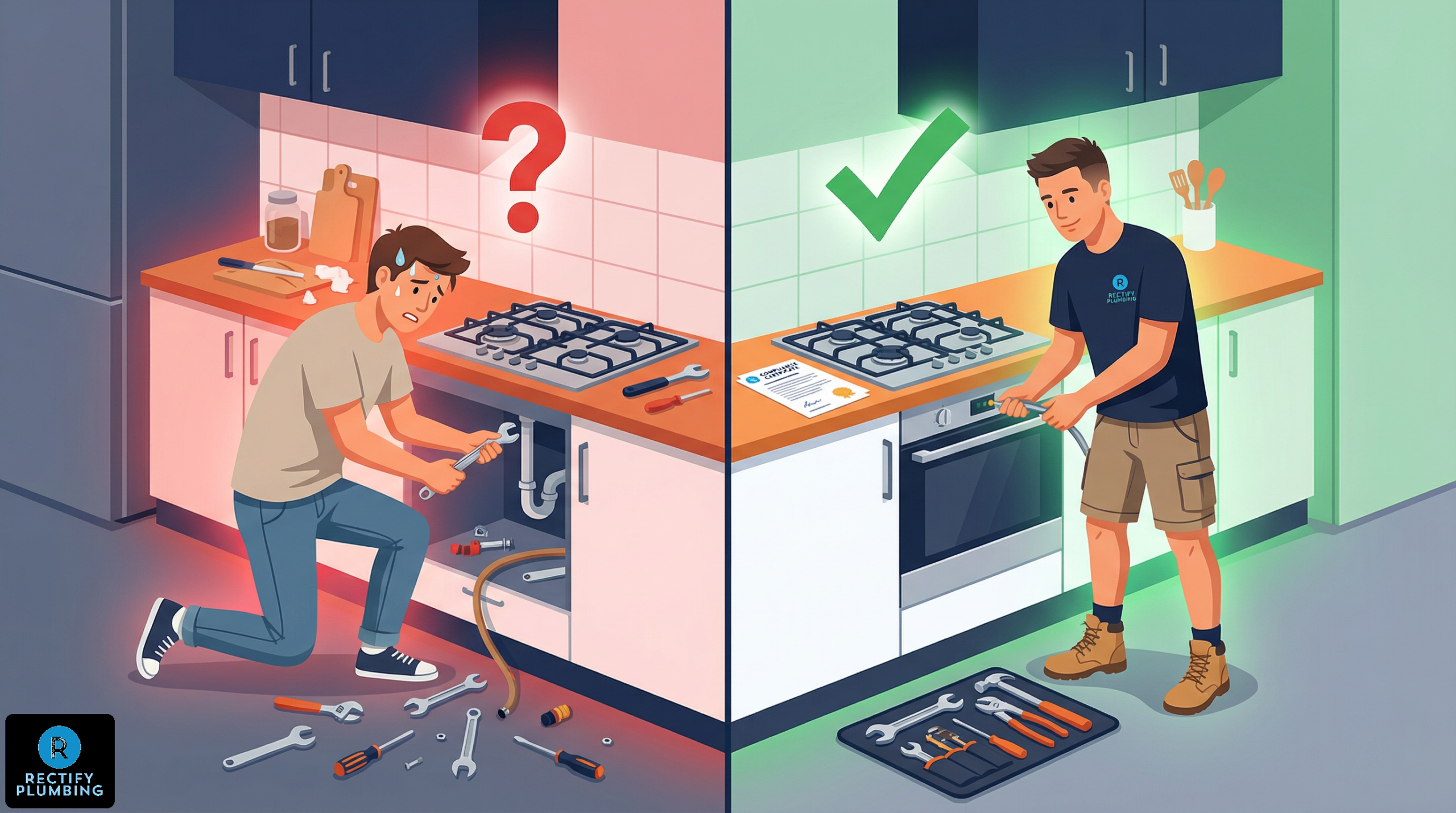 Our gas plumbing team handles the full range of residential and light commercial gas work across Sydney's North Shore, Hills District, Central Coast and inner west. Here's what we do regularly:
Gas Appliance Installation and Connection
Cooktops, ovens, gas heaters, pool and spa heaters, outdoor kitchen equipment. Every connection includes an appropriate isolation valve, the correct flexible connector for the appliance type, and a pressure test before the appliance is commissioned. Every job produces a compliance certificate.
Gas Hot Water System Installation and Replacement
Gas hot water is the most common gas job we handle. Storage systems, continuous flow, and heat pump-gas hybrid systems across all major brands. Our hot water installation and repair team carries common replacement units on the van for same-day installation — including emergency replacements when a system fails overnight. All hot water installations include gas commissioning and compliance certification as standard.
New Gas Lines and Outdoor Gas Points
Running a new gas supply line from your existing gas meter — for an outdoor BBQ point, a fire pit connection, an outdoor kitchen, or a new appliance location inside the home. We design the line to deliver the correct flow rate for the appliances it will supply, install isolation valves at appropriate points, and pressure test the entire installation before certifying.
Gas Leak Detection and Repair
If you can smell gas — even faintly, even intermittently — treat it seriously and call us. We use gas detection equipment to locate leaks in supply lines, at appliance connections, and at meter fittings. We do not try to locate leaks by smell alone or by turning appliances on and off. Detection equipment finds small leaks that haven't yet reached a concentration you can detect reliably.
Compliance Inspections for Property Sales and Renovations
If you're selling a property and need compliance documentation for existing gas installations, or if you're buying a property and want the gas system inspected before settlement, we carry out compliance inspections and issue certificates for installations that meet the standard. A preventative maintenance inspection that includes the gas system is something we recommend for any home over 15 years old — gas flexible connectors have a service life that most homeowners are unaware of.
Suburbs We Service for Gas Work
Our gas fitting team based in Berowra and Berowra Heights services the North Shore, Upper North Shore and Hills District as our home ground — Hornsby, Waitara, Asquith, Mount Colah, Turramurra, St Ives, Pymble, Gordon, Castle Hill, Dural, Epping, Carlingford, Chatswood, and surrounding suburbs. We also cover the Central Coast and inner west. If you're not sure whether we service your area, call us — the answer is almost certainly yes.
Get the Gas Work Done Right — First Time
Gas plumbing is not an area where cutting corners saves money. The short-term saving of not paying a licensed gas fitter is routinely outweighed by insurance complications, compliance issues at property sale, and in the worst cases, outcomes that no amount of money can fix.
Rectify Plumbing holds a current gas fitting licence — number 488202C, verifiable at NSW Fair Trading in 30 seconds. Every gas job we complete includes a pressure test and a Certificate of Compliance as a matter of course. We work across Berowra, Berowra Heights, Hornsby, Castle Hill, Epping, Carlingford, Chatswood and wider Sydney — 24 hours a day for gas emergencies.
Browse our full range of gas plumbing and general plumbing services or call Jake directly on 0400 073 180 any time. If you can smell gas right now, get outside first and call from there.
Request a Quote or Make an Enquiry → rectifyplumbing.com.au
------------------------------------------------------------------------------------------------------------------
[service_faqs]
Our gas plumbing team handles the full range of residential and light commercial gas work across Sydney's North Shore, Hills District, Central Coast and inner west. Here's what we do regularly:
Gas Appliance Installation and Connection
Cooktops, ovens, gas heaters, pool and spa heaters, outdoor kitchen equipment. Every connection includes an appropriate isolation valve, the correct flexible connector for the appliance type, and a pressure test before the appliance is commissioned. Every job produces a compliance certificate.
Gas Hot Water System Installation and Replacement
Gas hot water is the most common gas job we handle. Storage systems, continuous flow, and heat pump-gas hybrid systems across all major brands. Our hot water installation and repair team carries common replacement units on the van for same-day installation — including emergency replacements when a system fails overnight. All hot water installations include gas commissioning and compliance certification as standard.
New Gas Lines and Outdoor Gas Points
Running a new gas supply line from your existing gas meter — for an outdoor BBQ point, a fire pit connection, an outdoor kitchen, or a new appliance location inside the home. We design the line to deliver the correct flow rate for the appliances it will supply, install isolation valves at appropriate points, and pressure test the entire installation before certifying.
Gas Leak Detection and Repair
If you can smell gas — even faintly, even intermittently — treat it seriously and call us. We use gas detection equipment to locate leaks in supply lines, at appliance connections, and at meter fittings. We do not try to locate leaks by smell alone or by turning appliances on and off. Detection equipment finds small leaks that haven't yet reached a concentration you can detect reliably.
Compliance Inspections for Property Sales and Renovations
If you're selling a property and need compliance documentation for existing gas installations, or if you're buying a property and want the gas system inspected before settlement, we carry out compliance inspections and issue certificates for installations that meet the standard. A preventative maintenance inspection that includes the gas system is something we recommend for any home over 15 years old — gas flexible connectors have a service life that most homeowners are unaware of.
Suburbs We Service for Gas Work
Our gas fitting team based in Berowra and Berowra Heights services the North Shore, Upper North Shore and Hills District as our home ground — Hornsby, Waitara, Asquith, Mount Colah, Turramurra, St Ives, Pymble, Gordon, Castle Hill, Dural, Epping, Carlingford, Chatswood, and surrounding suburbs. We also cover the Central Coast and inner west. If you're not sure whether we service your area, call us — the answer is almost certainly yes.
Get the Gas Work Done Right — First Time
Gas plumbing is not an area where cutting corners saves money. The short-term saving of not paying a licensed gas fitter is routinely outweighed by insurance complications, compliance issues at property sale, and in the worst cases, outcomes that no amount of money can fix.
Rectify Plumbing holds a current gas fitting licence — number 488202C, verifiable at NSW Fair Trading in 30 seconds. Every gas job we complete includes a pressure test and a Certificate of Compliance as a matter of course. We work across Berowra, Berowra Heights, Hornsby, Castle Hill, Epping, Carlingford, Chatswood and wider Sydney — 24 hours a day for gas emergencies.
Browse our full range of gas plumbing and general plumbing services or call Jake directly on 0400 073 180 any time. If you can smell gas right now, get outside first and call from there.
Request a Quote or Make an Enquiry → rectifyplumbing.com.au
------------------------------------------------------------------------------------------------------------------
[service_faqs]